Saturday, December 28, 2019
One Full Day in Bangkok
Friday I arrived in Bangkok very tired after the long journey from Los Angeles. Sunday (tomorrow) I shall leave for Chiang Mai after breakfast. So today, Saturday, is my one day in Bangkok to see a few of my favorite sights, namely Wat Arun, Wat Pho, and depending on time and my energy level, Wat Phrea Kaew.
After breakfast (seen in the previous post), I cleaned up and headed out to see the sights. The plan, as I have done in the past, is to take the Sky Train back to Siam Square interchange stop, change trains, take the second train to the Sapphan Taksin stop, walk to the Central Pier and take a boat to Wat Arun. While in the second Sky Train, I met five friends from the San Francisco Bay Area, two couples who had never been to Thailand, and a Thai man who was born in Thailand but who was raised mostly in the United States. He is essentially leading the group, showing them around Thailand for a short 10 days. They asked me how to get to Wat Arun, and I told them my plans. When we arrived at Central Pier, the Thai gentleman opted to take a long-tail boat on a tour of the canals ending up at Wat Arun. This is a 75-90 minute tour of the canals. They asked me to join them, and I accepted. Looking back, the canals are not really interesting. Their water level is lower than the river, so the boat, with several others, had to wait for the locks when entering and exiting the canals; it is a slow process.
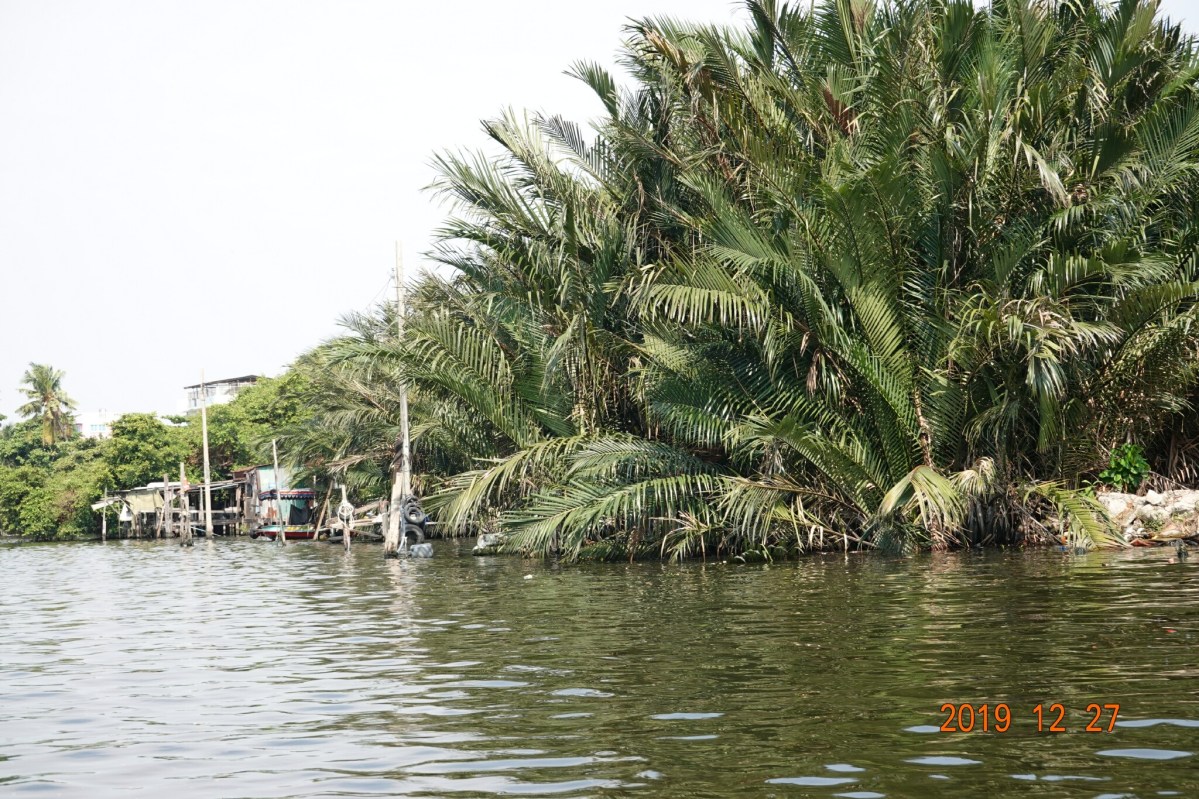
View of the canal from the boat.
Wat Arun – Temple of the Dawn
We finally made it out of the canals, back onto the river just by Wat Arun, and as we docked, I took this picture of the very famous Wat Arun:
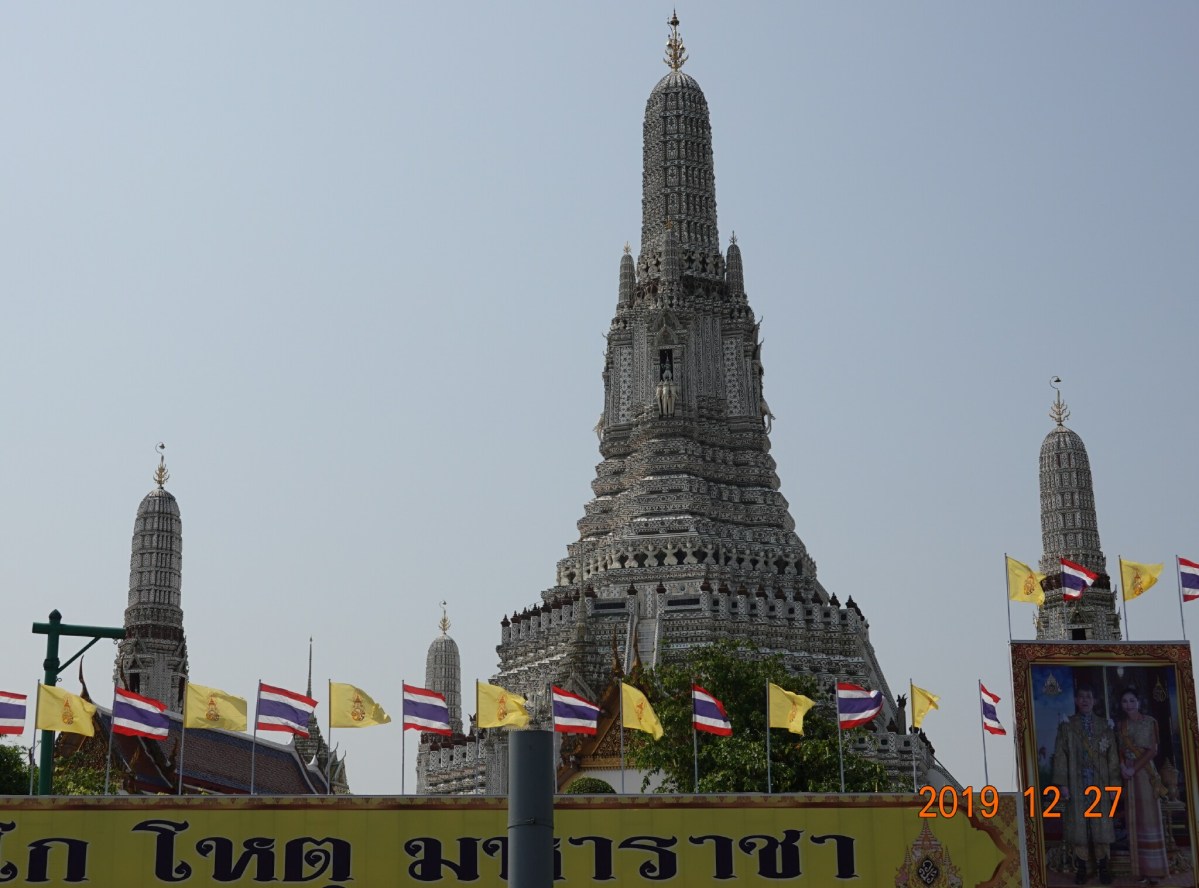
Wat Arun is significant in Thai history, one of Bangkok’s best known landmarks, and is depicted on one of their coins. It is classified as a Royal Temple of the First Class, a category consisting of only six Thai temples (there are 35,000 active Buddhist temples in Thailand). In the 1700s, Wat Arun was then known as Wat Makok, after the village of Bang Makok in which it was situated. It is likely that the current city name Bangkok evolved from the village name Bang Makok.
When the former capital Ayutthaya was overthrown in 1774, King Taksin and what was left of his army moved south along the Chao Phraya River, and it is believed that when Taksin saw the temple at dawn, he decided to make this his new seat of government. He vowed to restore the temple and rename it Wat Arun for Aruna, the Hindu Goddess of the dawn. Almost all Thai Buddhist temples have a formal or official name, a short name, and sometimes a nickname. Wat Arun’s actual or formal name is Wat Arun Ratchawararam Ratchawaramahawihan. The most recent renovation of Wat Arun took place from 2013 – 2017 during which time the towers were covered with scaffolding as workers carefully restored the surfaces.
Wat Arun, like many Thai temples, is something of a small campus, with several buildings and structures. The entrances to the first viharn (worship hall) at Wat Arun is guarded be two large yak or yaksha figures. From Wikipedia, “yaksha are a broad class of nature-spirits, usually benevolent, but sometimes mischievous or capricious, connected with water, fertility, trees, the forest, treasure and wilderness.” Here are the yaks standing guard at the entrance:
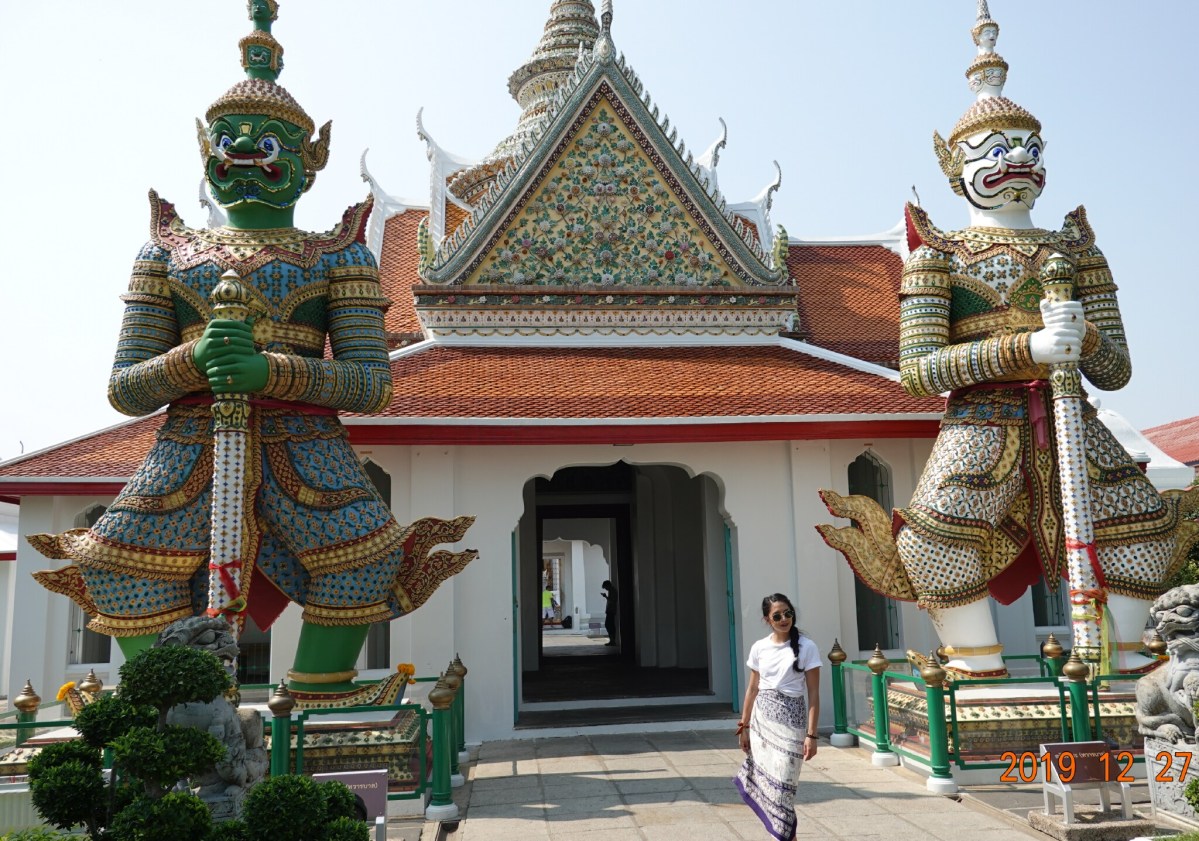
Yaks guarding the entrance to Wat Arun.
After we found restrooms, we headed into the main part of Wat Arun to see the towers and enjoy the view from part way up the main tower. The towers are very large, and the stairs very steep, with no handrails.
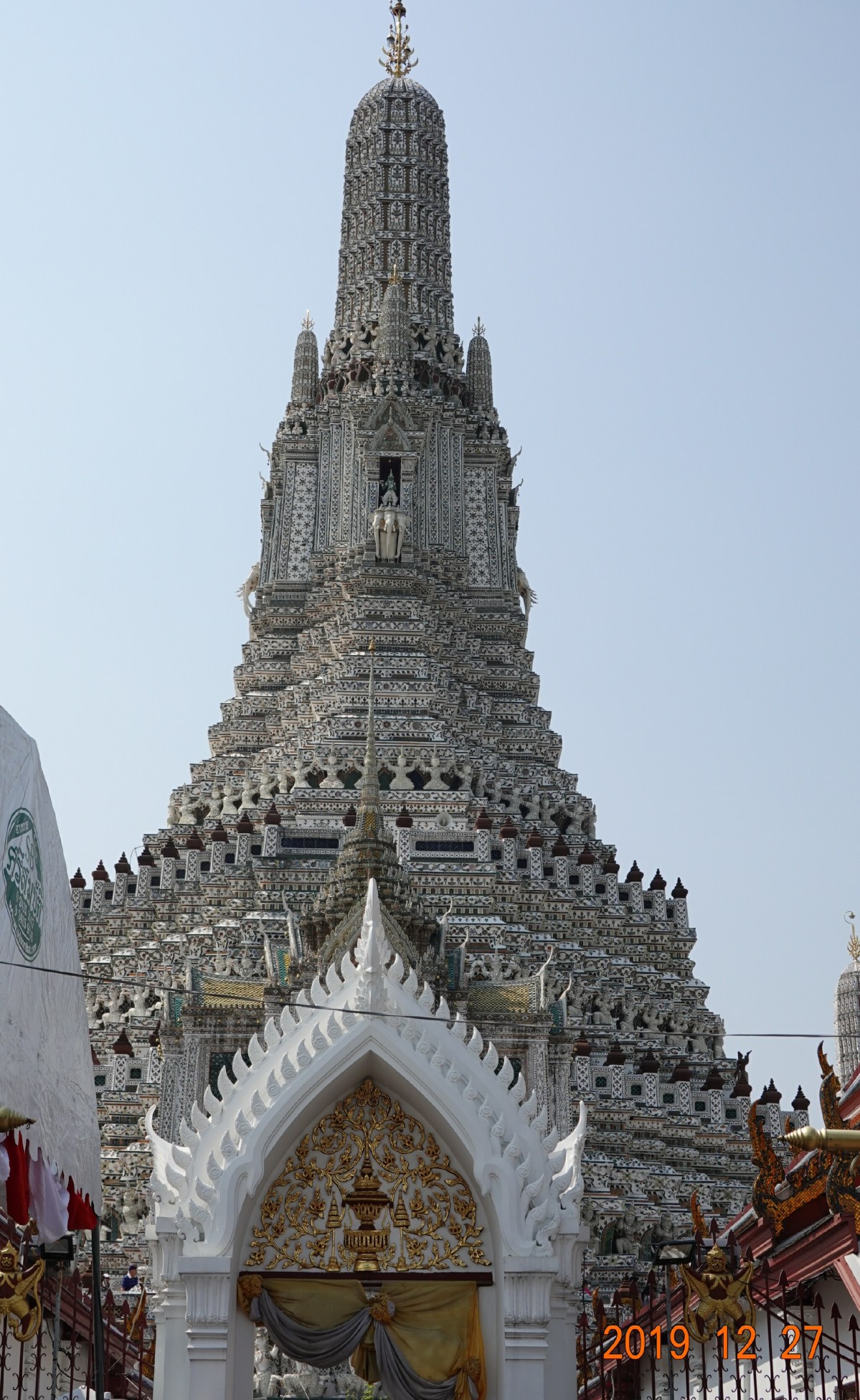
Main tower at Wat Arun
Although the temple had existed since at least the seventeenth century, its distinctive prang (a prang is a Khmer-style spire or tower) were built in the early nineteenth century during the reign of King Rama II.
Detail of the figured holding up the tower at various levels:


From the central tower, a view of one of the four satellite towers:
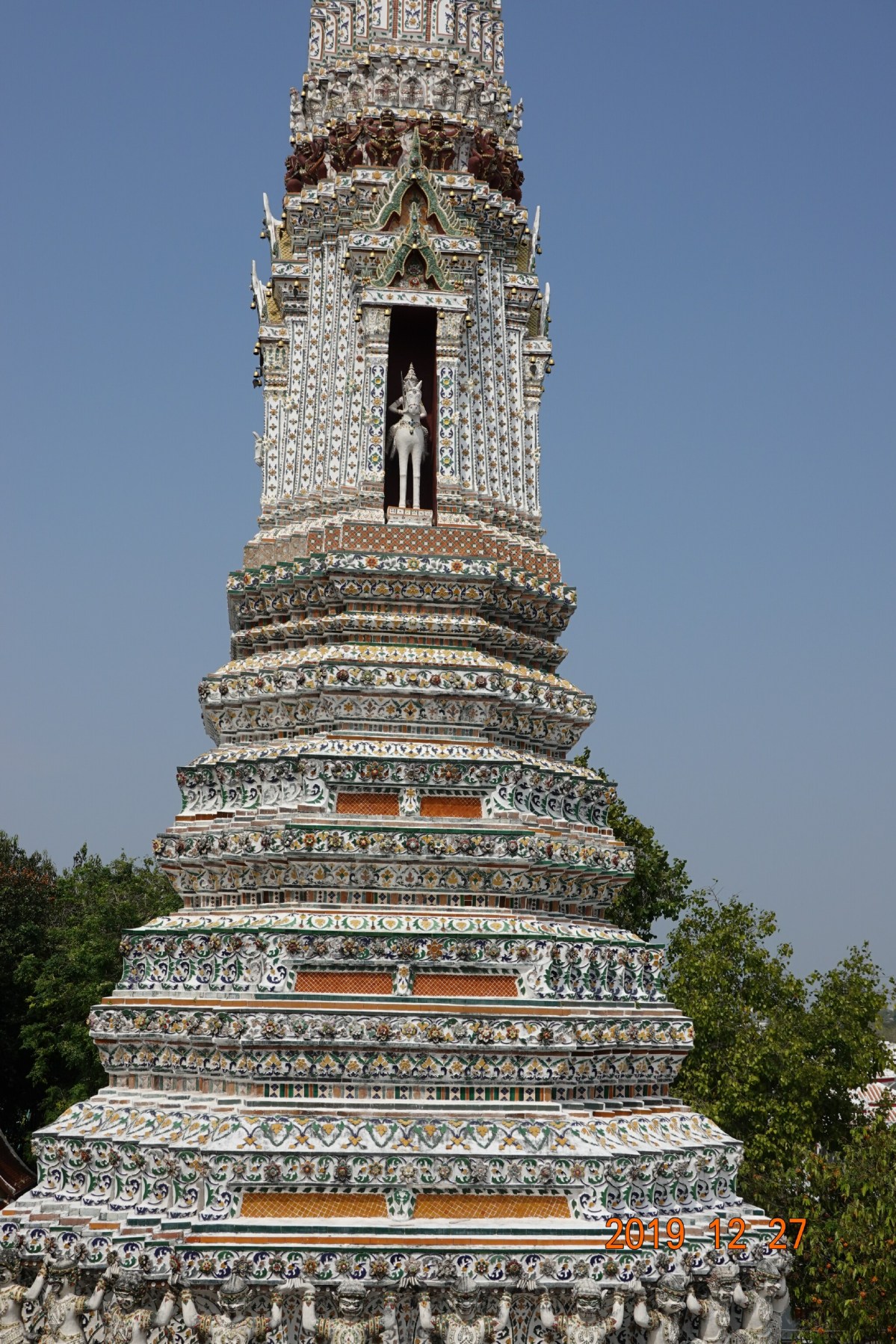
One of the four satellite towers at Wat Arun
After a break for some fruit-flavored iced tea, we got the 4 Baht tickets for the ferry to take us directly across the river to Wat Pho and the great Reclining Buddha. We all crossed on the ferry, and much of the group was hungry, so we found a place to sit down and eat lunch. Then it was on to Wat Pho and the Reclining Buddha.
Wat Pho – The Reclining Buddha
Wat Pho is known as the Temple of the Reclining Buddha, and its official name is Wat Phra Chetuphon Vimolmangklararm Rajwaramahaviharn. Wat Pho is first on the list of six temples in Thailand classed as royal temples of the first class. Wat Pho was built under the rein of King Rama I in the late 1800s. The most significant feature is the large Reclining Buddha, a 46 meter-long (155 feet) reclining Buddha statue. Every time I have been here, there are many, many tourists, but I still love standing near the large statue and taking in the history, the relevance, and the beauty of this relic. It is difficult to get a good picture, because of the structure’s support columns, but here are a few photos:
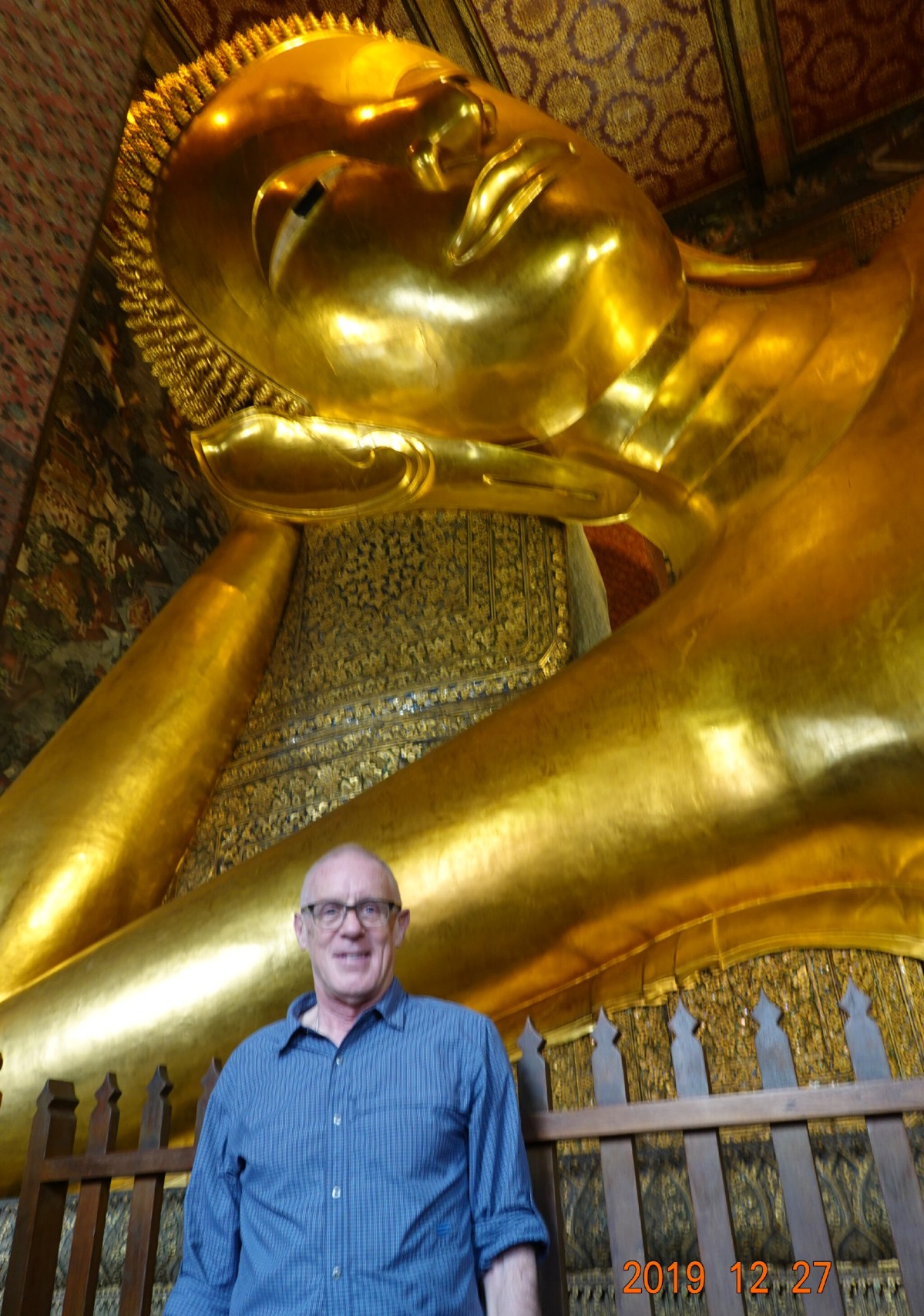
Me near and under the head of the reclining Buddha.
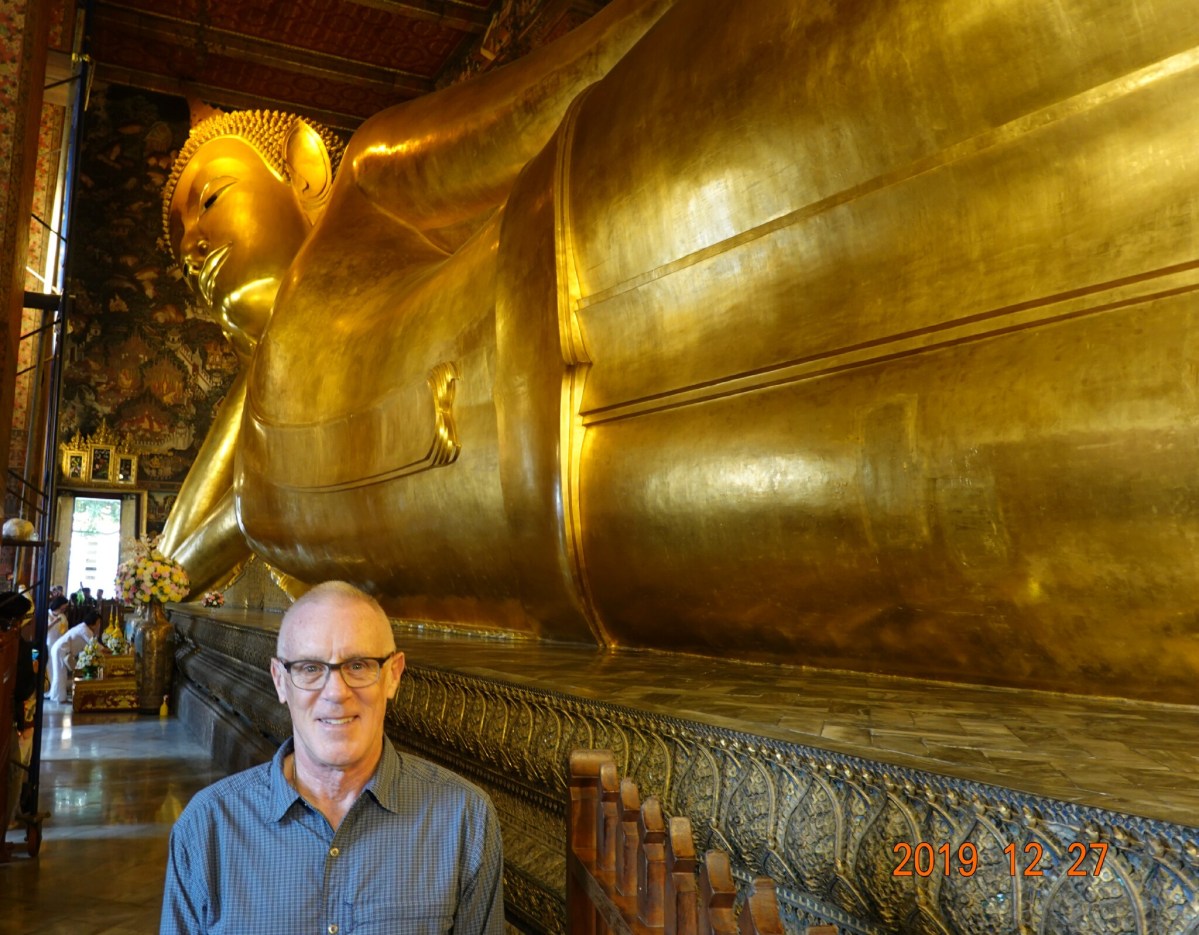
Me in a longer shot showing more of the 155 feet of length of the reclining Buddha
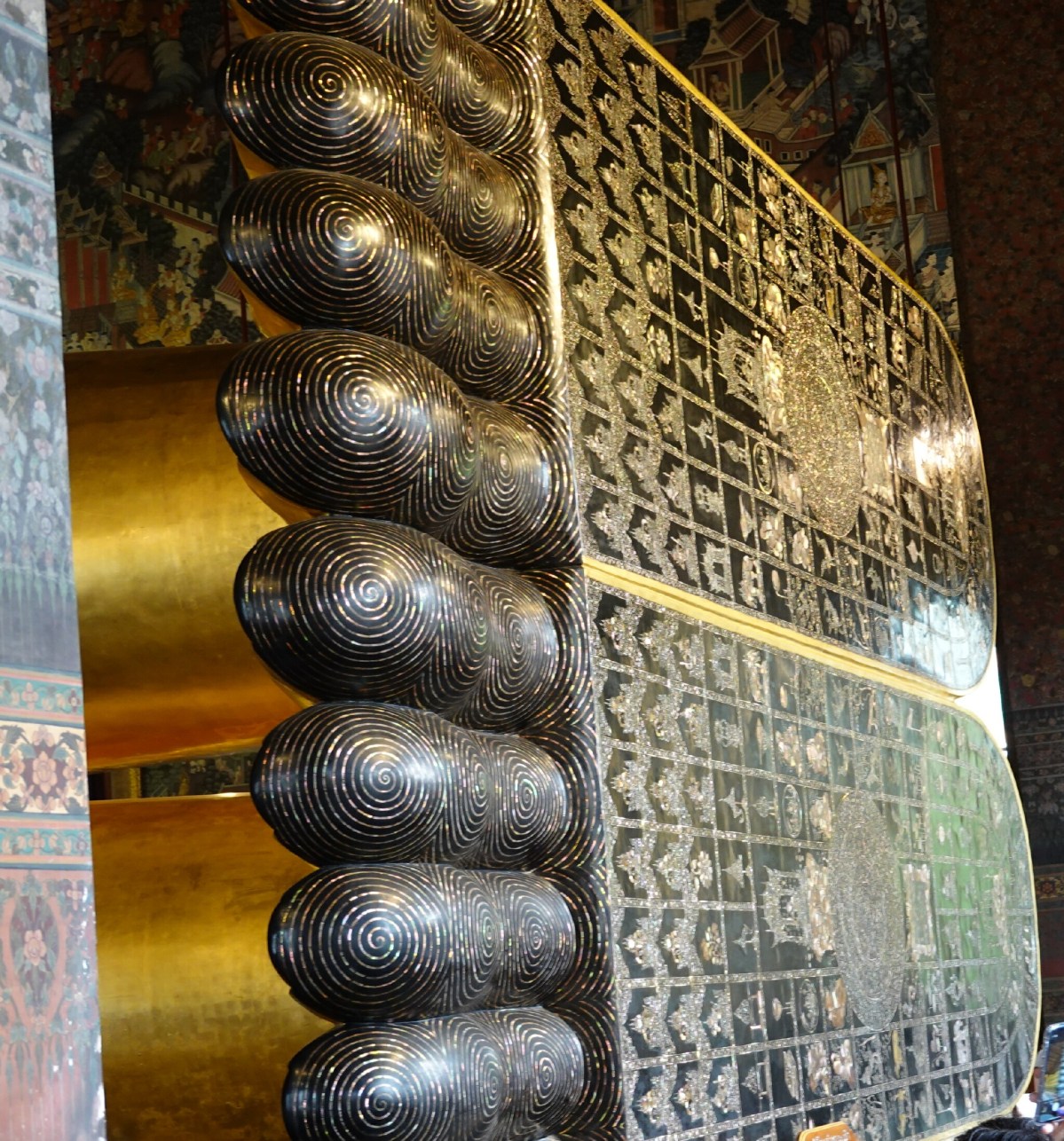
Bottoms of the Reclining Buddha’s feet.
After walking around Wat Pho, a bit, fatigue started setting it, and being almost 2:30 PM and knowing that the Grand Palace closes to visitors at 3:00 PM, we headed back across the river to the docks at Wat Arun to catch a boat directly to the Central Pier. A final picture of Wat Arun as we crossed the river to its dock:
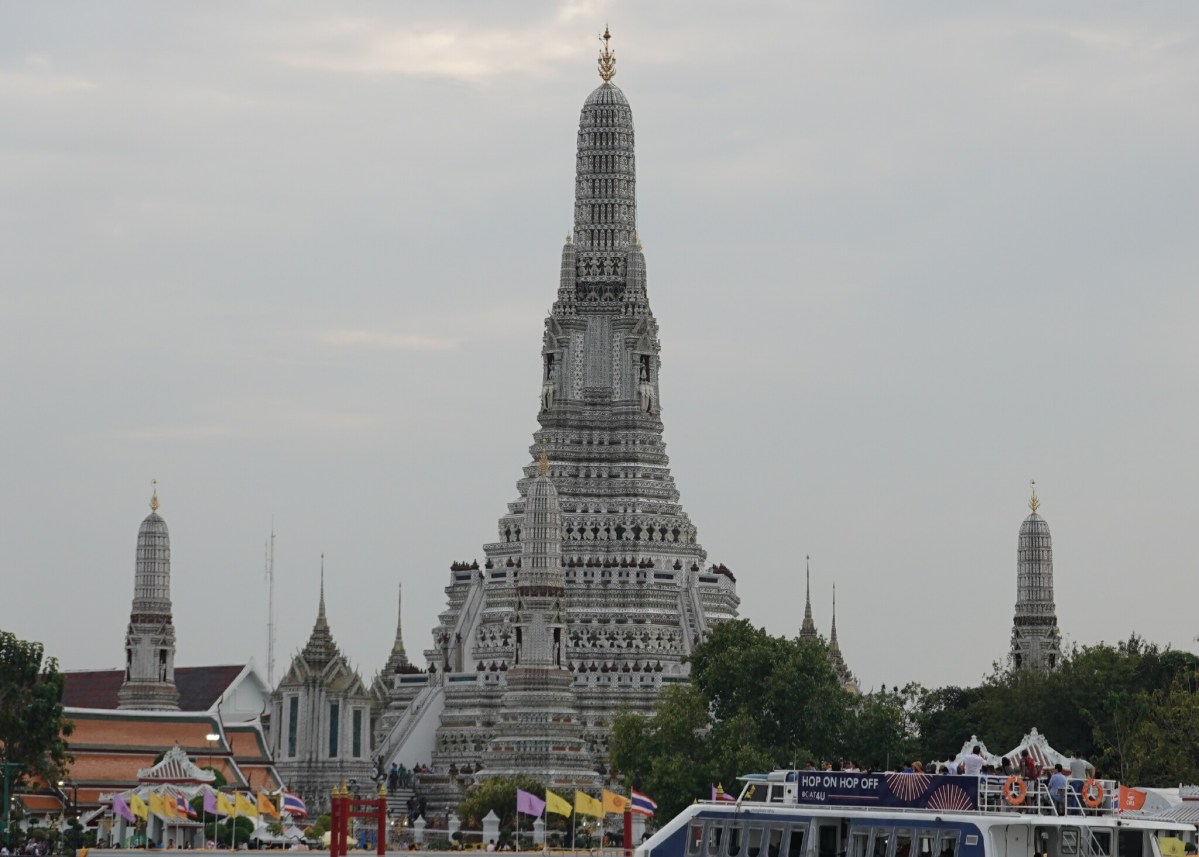
Wat Arun as seen approaching from the ferry from Wat Pho
Once back at the Central Pier, it is a very short walk to the Sapphan Taksin Sky Train stop. We boarded the train, made the transfer at Siam Square, and I bid the group goodbye as I got off at Ploen Chit and the Novotel Sukhumvit hotel.
Next: Return to Chiang Mai

 James the Intrepid Pilgrim