Monday, January 28, 2019
Return to Two Favorite Temples on My Last Day
After our visit to Wat Suan Dok, our driver took us up the canal road to the north of the old city and Wat Jed Yod, right by the rather nice Chiang Mai Historical Museum.
Wat Jed Yod History
Wat Jed Yod, sometimes translated as Wat Chet Yot, is a major temple in the Chiang Mai area, outside and north of the old city. I have been here many times, and reported those visits in past year’s blog entries. Wat Jed Yod is a temple associated with the Year of the Small Snake (in Thailand, there is a Year of the Great Snake instead of the Year of the Dragon, and thus the Year of the Small Snake instead of the Year of the Snake. Also, they use the Year of the Water Buffalo instead of the Year of the Ox, as oxen are not native to Thailand, whereas water buffalo are.)
The construction of Wat Jed Yod was commissioned by King Tilokkarat, the 12th monarch of the Mengrai Dynasty in 1455 (it was King Mengrai who founded Chiang Mai in 1296). It was modeled after the Mahabodhi temple in Bagan, Burma, itself a copy of the Mahabodhi Temple of Bhdh Gaya in northern India, the location where Siddhartha Gautama, the Buddha, attained enlightenment.
King Tilokkarat planted a bodhi tree on the spot where the temple was to be built, and that bodhi tree is still at the temple entrance. It was also King Tilokkarat who initiated the expansion of the chedi at Wat Chedi Luang to house the Emerald Buddha.
By 1476 there was a large monestary at Wat Chedi Luang for the celebration commemorating 2000 years of Buddhism. The following year, the 8th Buddhist World Council was held at Wat Jed Yod.
The name Wat Jed Yod comes from there being seven spires on the otherwise flat roof of the main (albeit small) viharn at Wat Jed Yod. Jed or Jet means seven, and “yod” means spire.
Main Viharn at Wat Jed Yod
I did not get a good picture of the main viharn (worship hall) showing the top with the seven spires. However, I found a reasonably good photo from my visit in 2013. They are difficult to see clearly, and thus difficult to get a good photograph, but there are seven spires on the top.
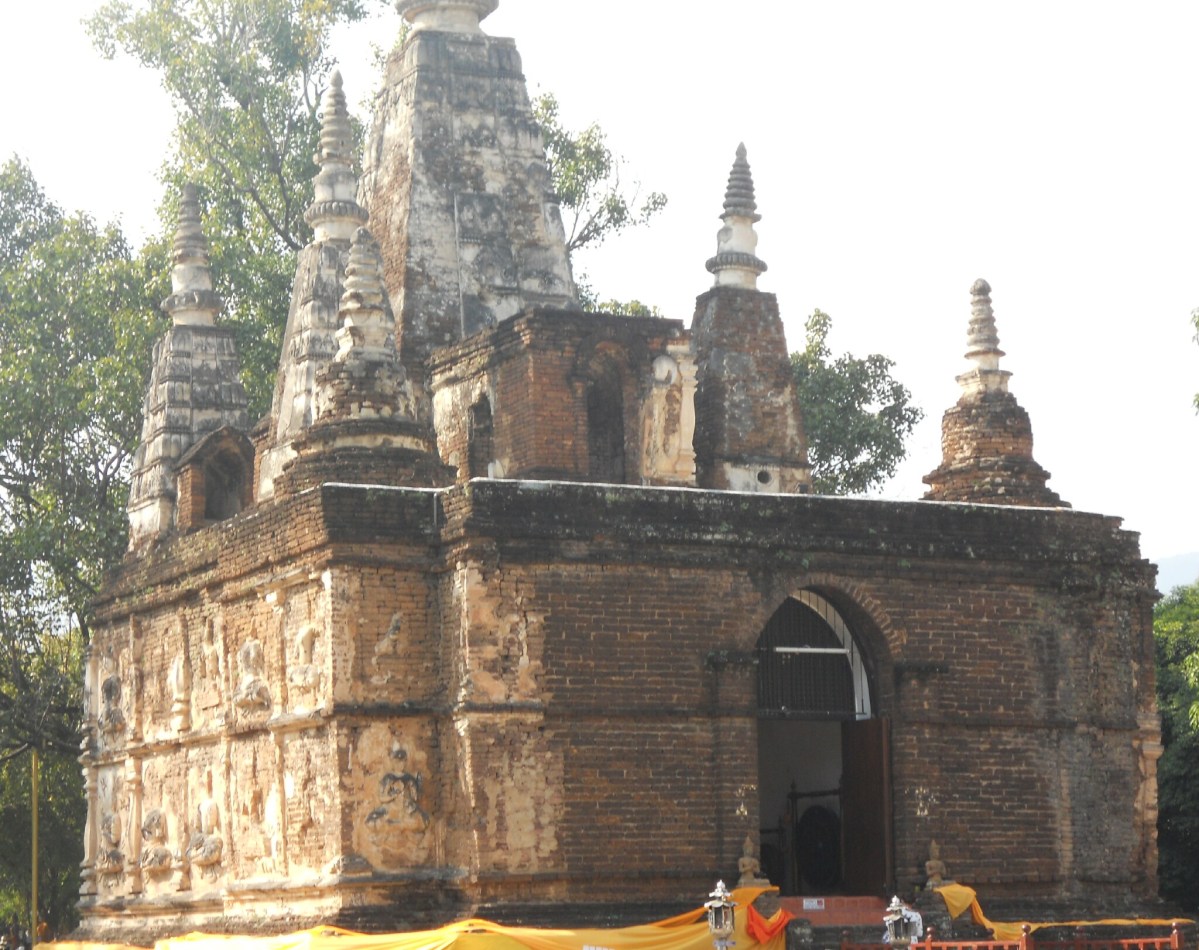
Main viharn at Wat Jed Yod showing the spires.
One of my favorite aspects of the main and very small viharn are the large stucco carvings of thewada on the sides.
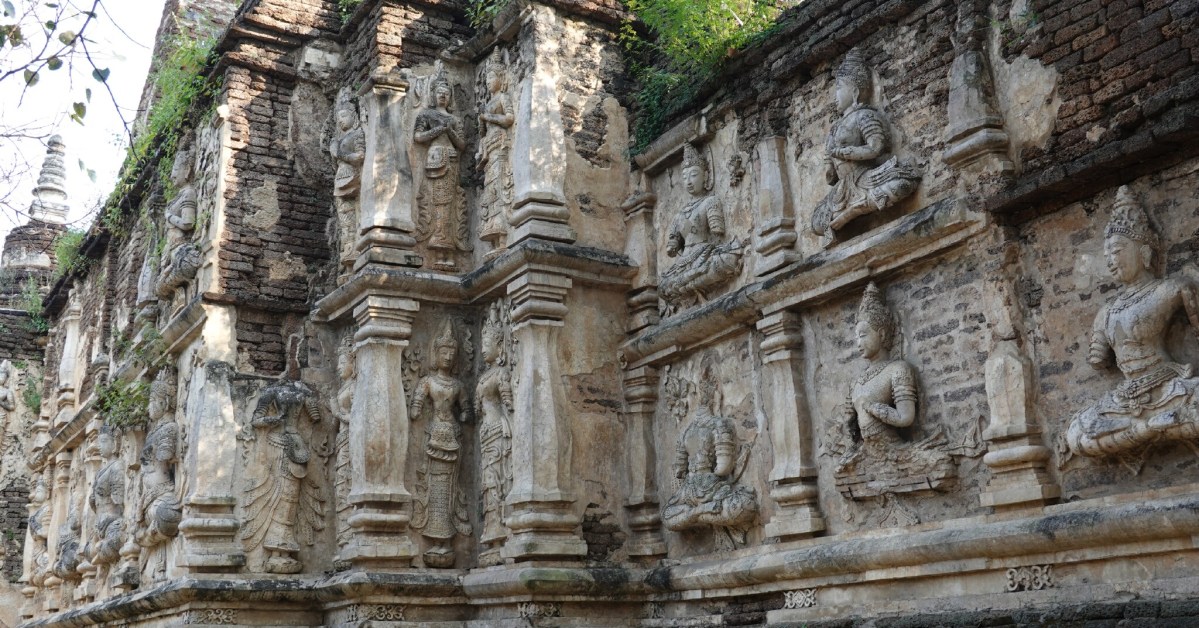
View of the thewada carvings on the main viharn at Wat Jed Yod
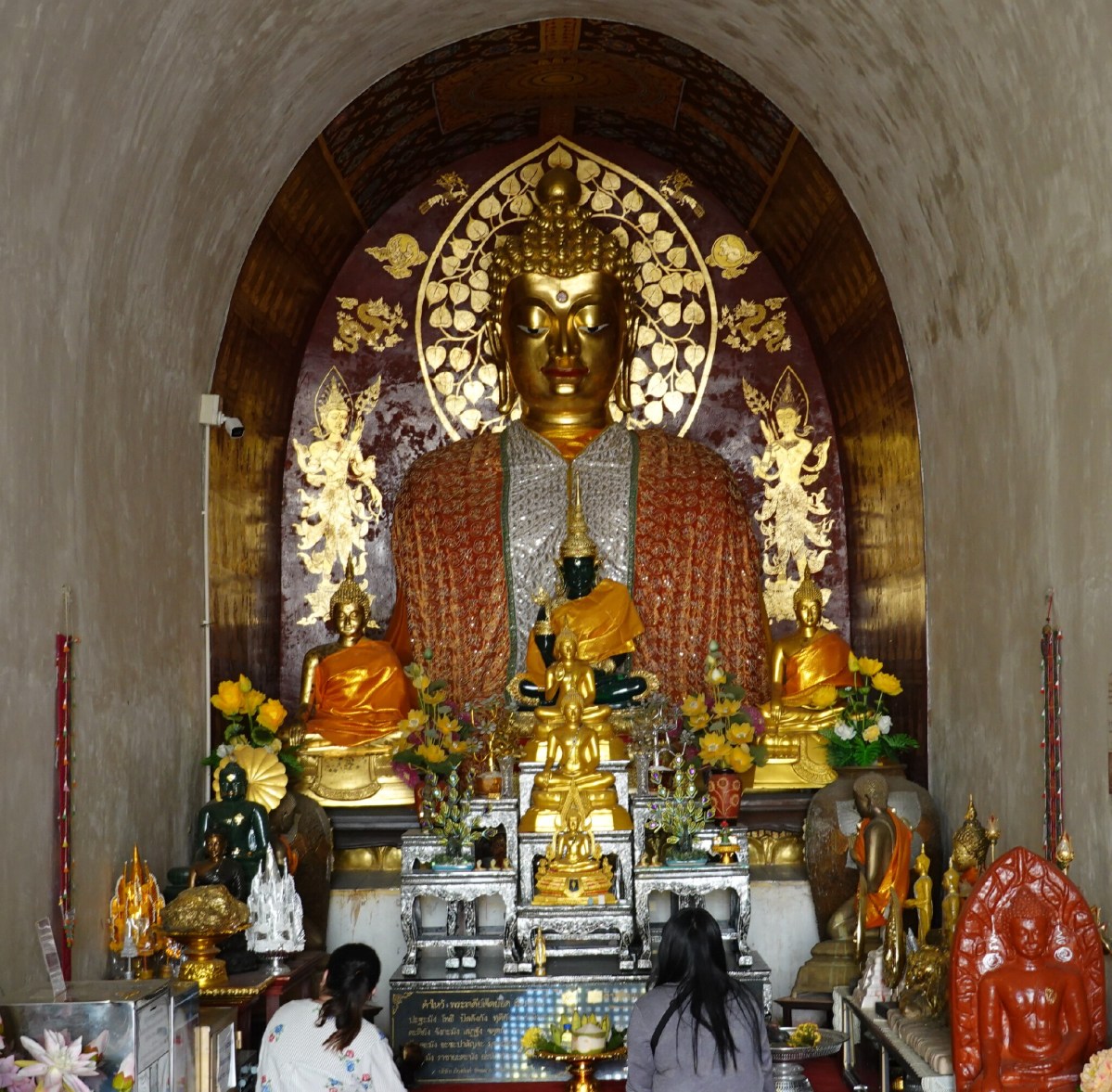
After hundreds of years, the carvings are deteriorating, but still very striking and elaborate. This is a very small viharn. Inside there is room for only a handful of people worshiping.
There are four or five chedis at Wat Jed Yod, all in the Lanna style: bell-shaped chedis set on bases, with alcoves on four sides containing Buddha statues. The largest of the chedis at Wat Jed Yod contains the ashes of King Tilokkarat.
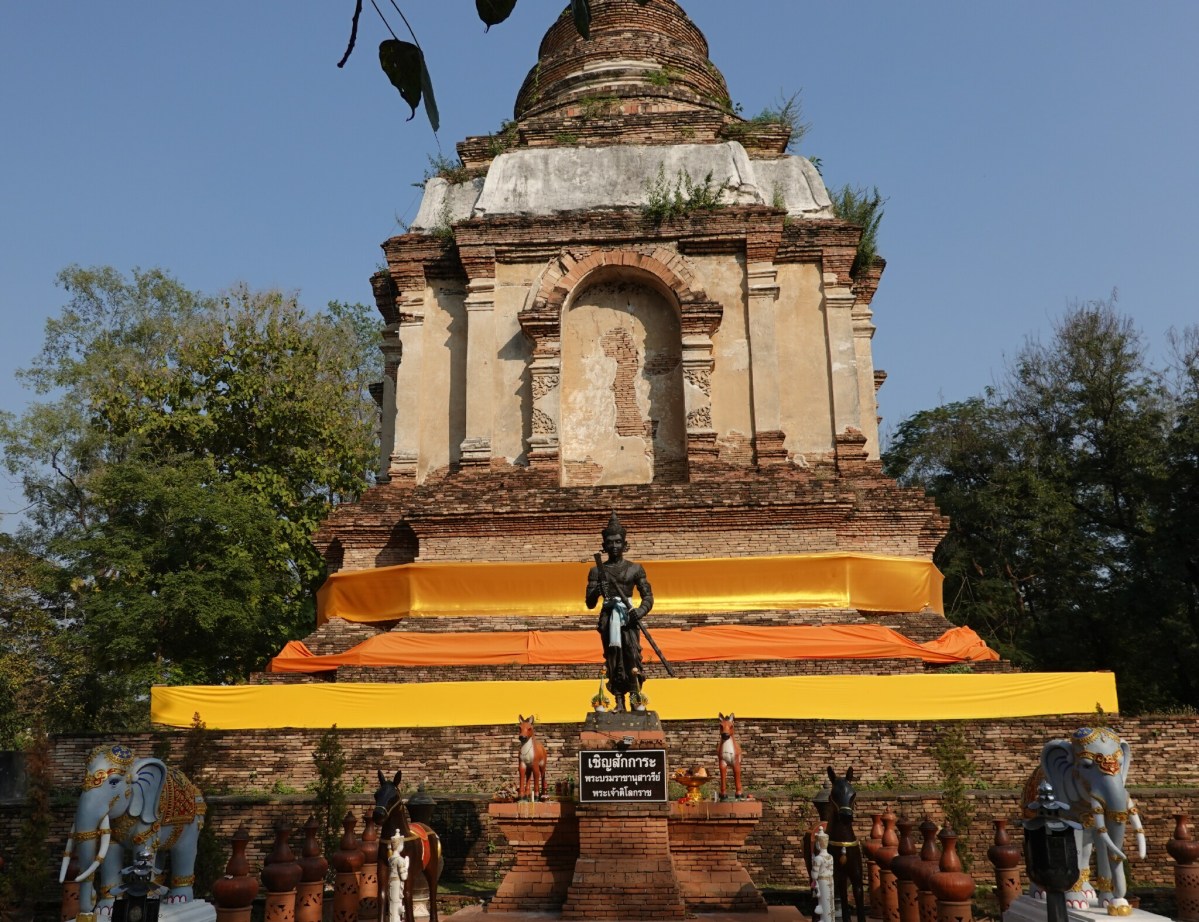
Largest chedi at Wat Jed Yod & statue of King Tilokkarat
A second view of this chedi, giving another perspective of its fairly large size.
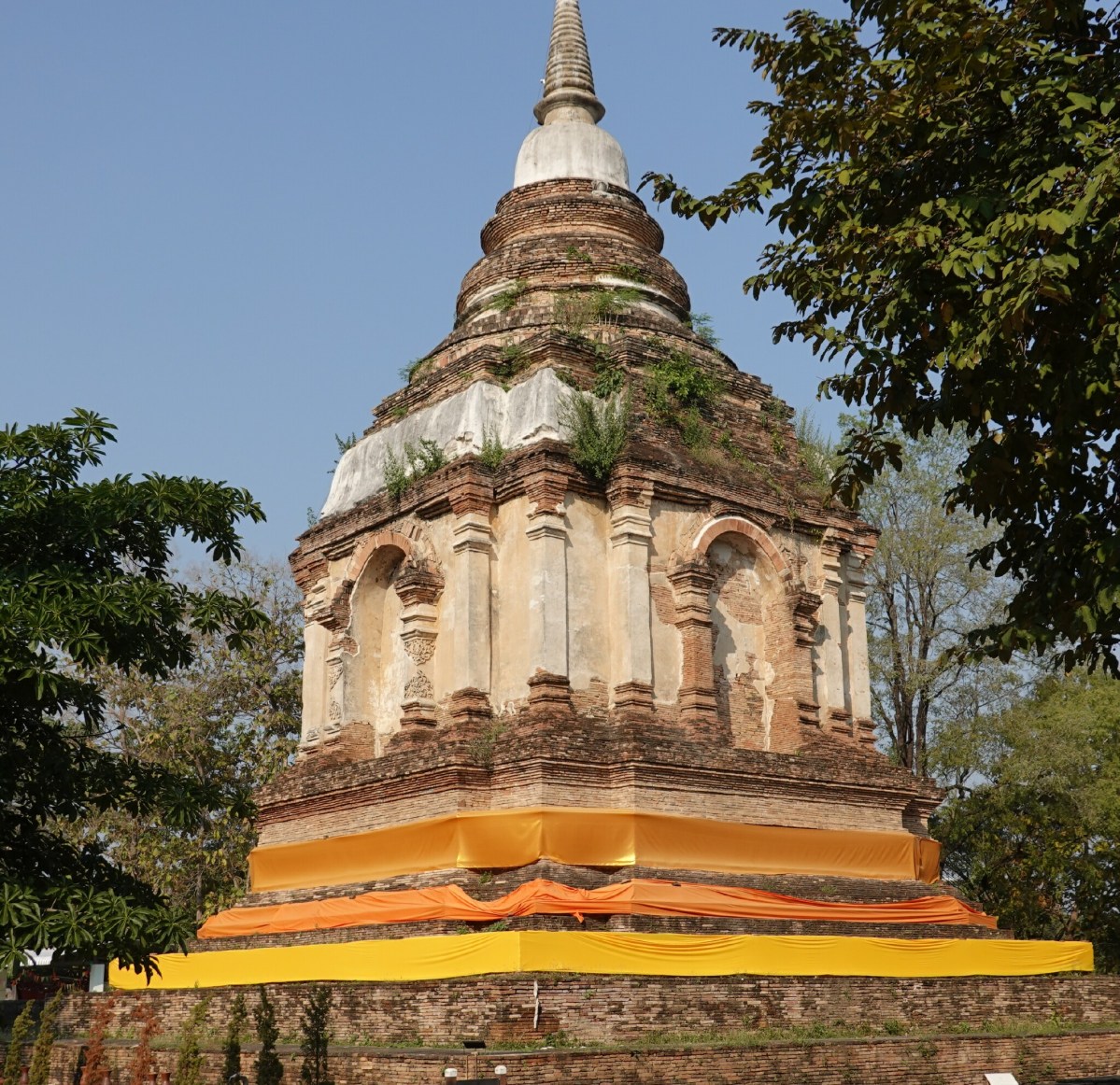
Second view of chedi at Wat jed Yod housing ashes of King Tilokkarat
A second chedi at Wat Jed Yod:
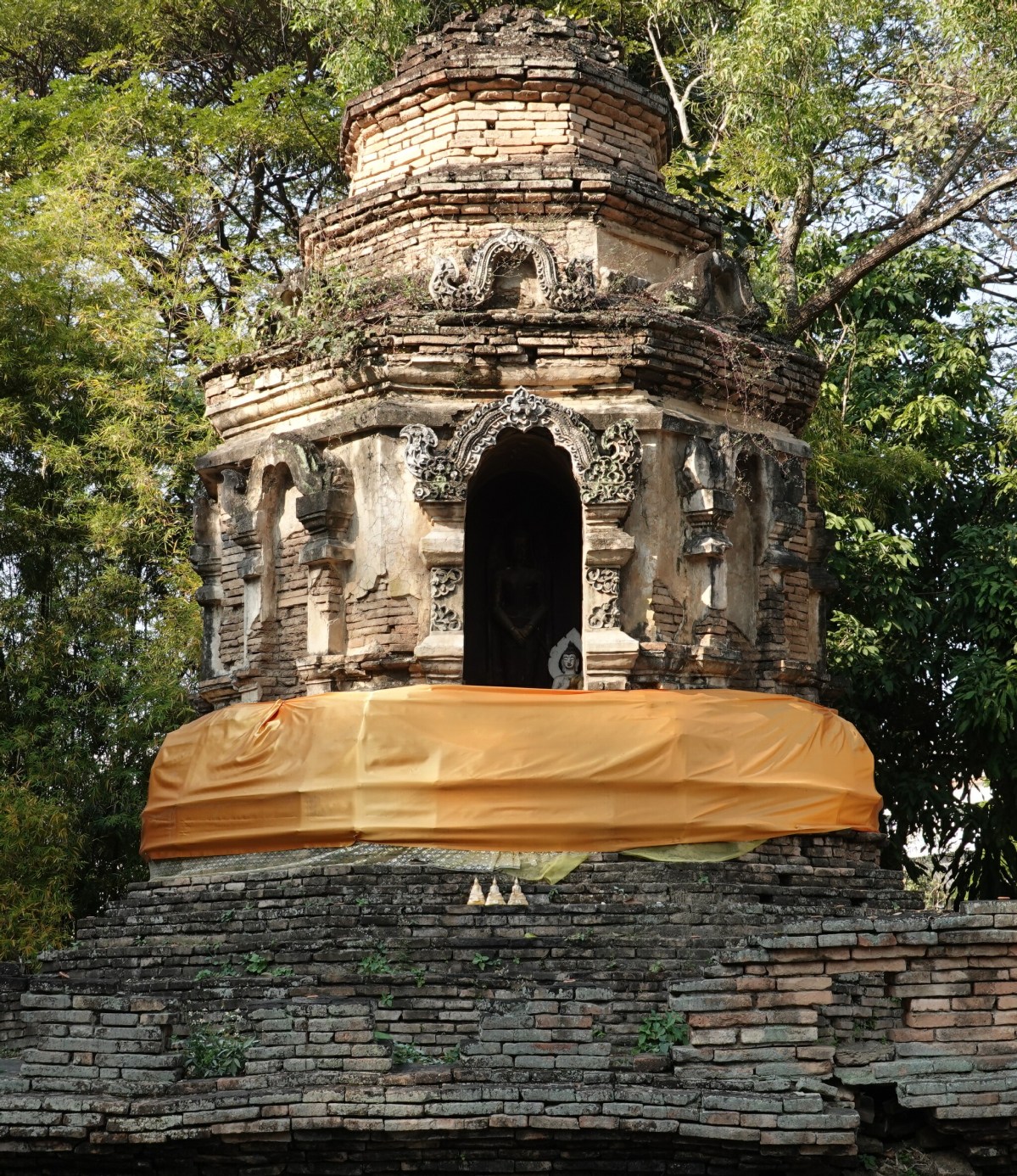
Second chedi at Wat Jed Yod set in the trees
With the trees in the background, the green, park-like setting of Wat Jed Yod is evident. And in this view of the third chedi at Wat Jed Yod, the park-like setting continues.
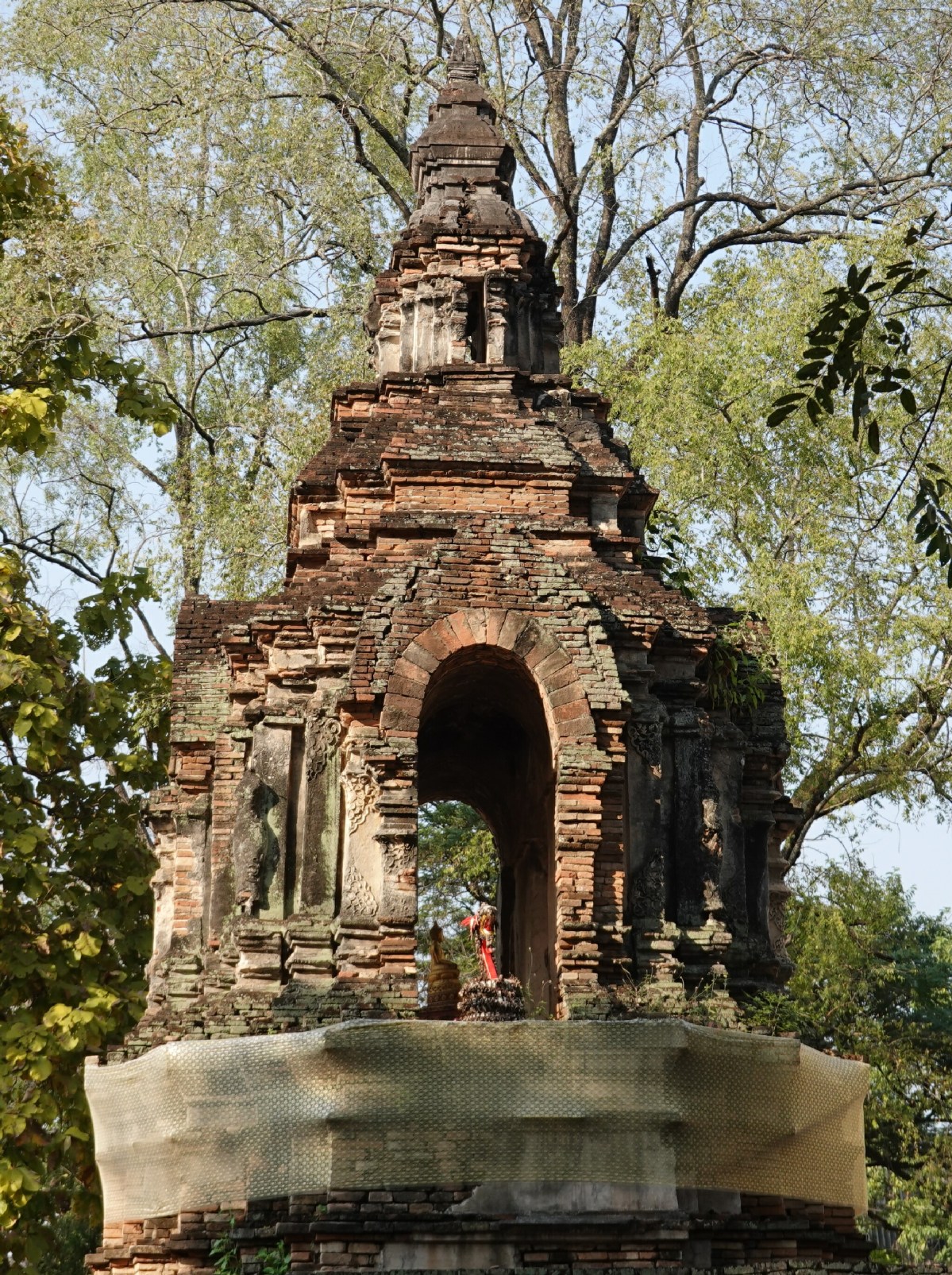
A third chedi at Wat Jed Yod
Off to the east of the main viharn is a large open section with many trees, almost like a small forest. And in the tees, easily passed by unnoticed is this Buddha statue with a small worship area.
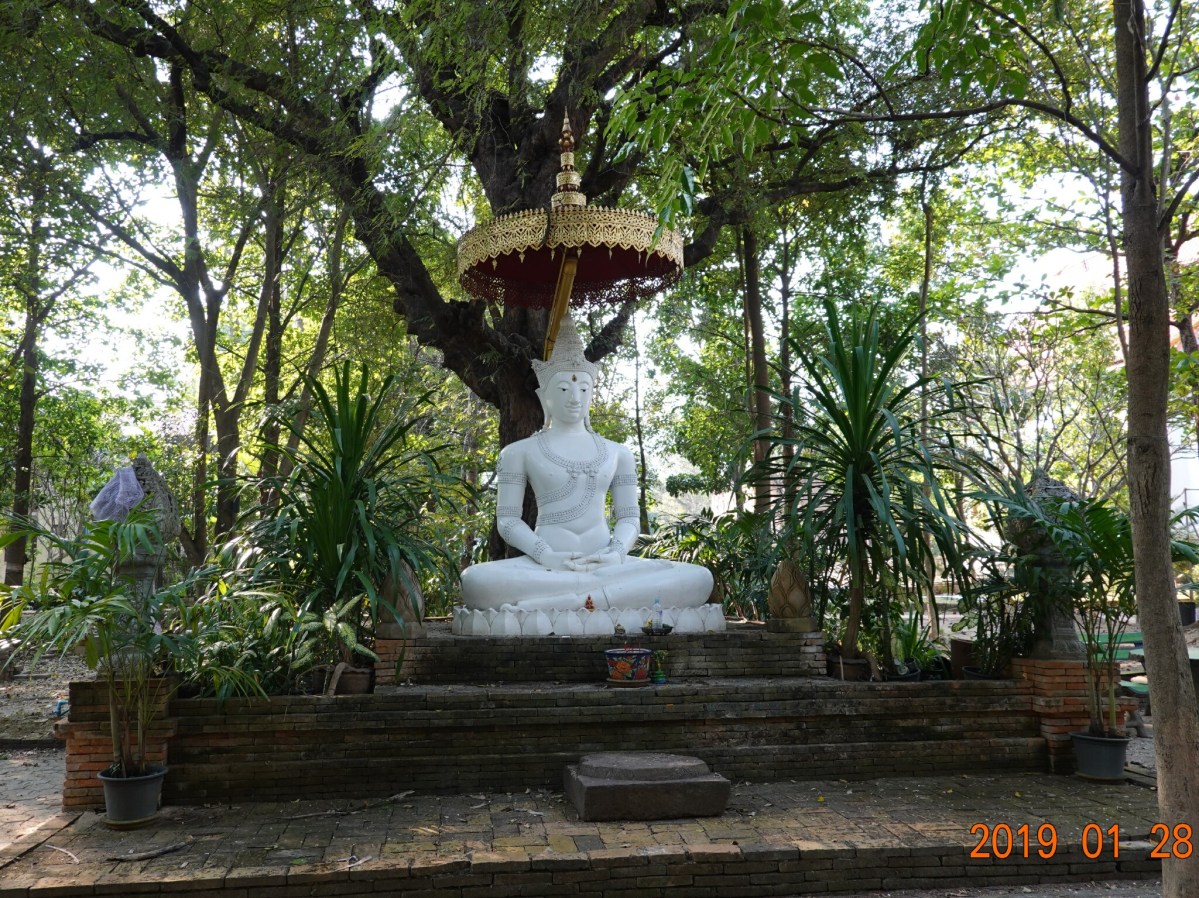
Buddha statue in the trees at Wat Jed Yod
Then just to the north of this Buddha in the trees is a more modern viharn:
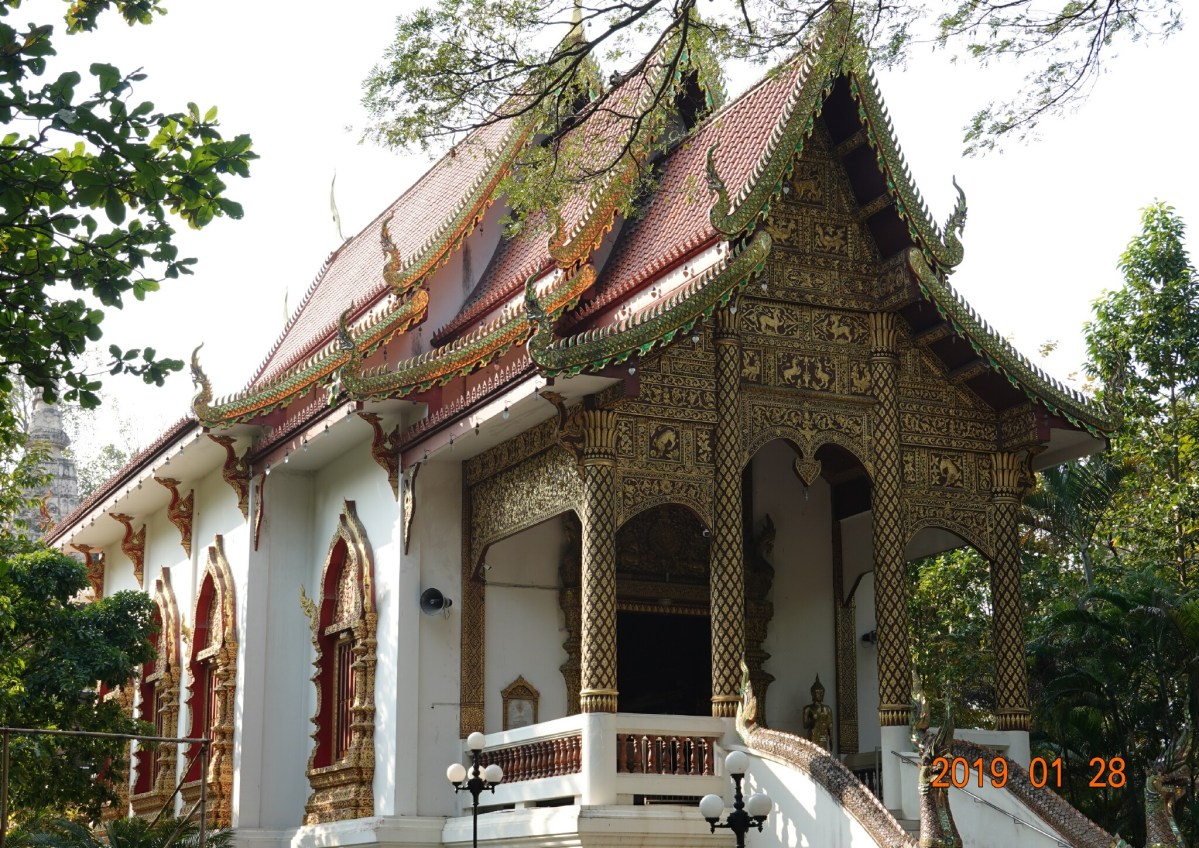
Modern viharn at Wat Jed Yod
A closer view of the naga stairway, so very typical of a Lanna-style viharn:
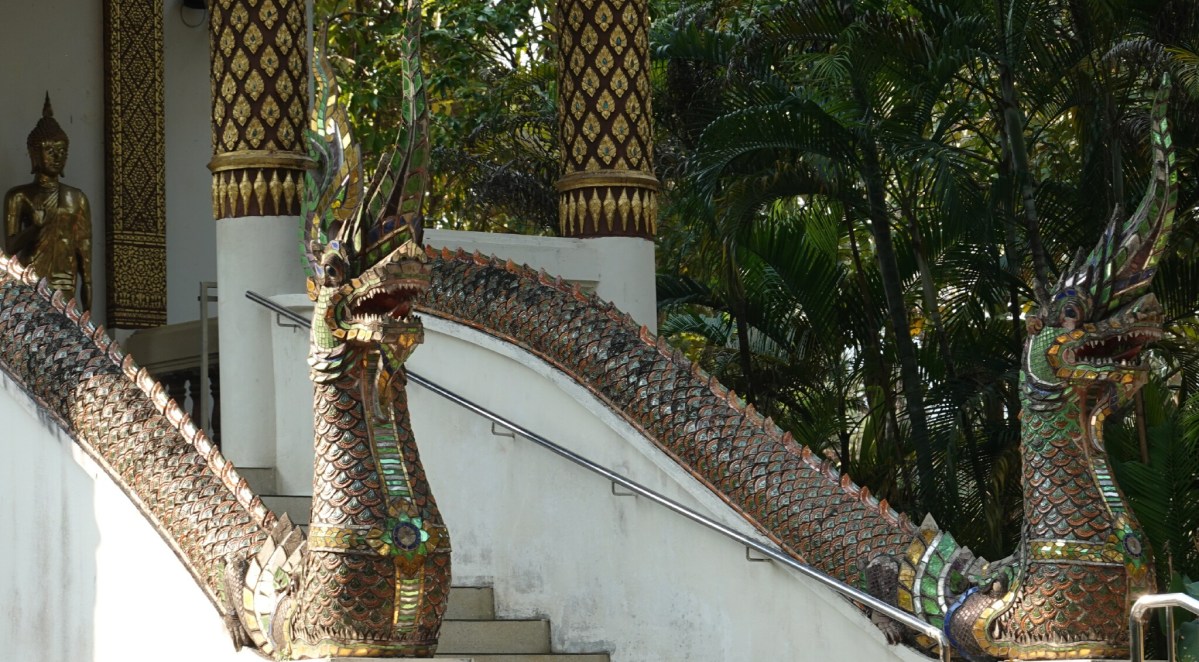
Naga stairway at the more modern viharn at Wat Jed Yod
Inside the viharn, the decoration is elaborate. I especially like the various thewada depictions on the window shutters, about 6-7 feet high each:


Wat Jed Yod is a nice, peaceful place to visit as it is well-spread out over a large, park-like grounds. On a warm day as today, being spread out means a good amount of walking, and while we made our way over all of the grounds, by the time we returned to the entrance, we were fairly tired. Given the challenges of weekday Chiang Mai traffic (not unlike our own), the drive back into the old city takes about 45 minutes.
I said goodbye to Liz and Bryan and headed back to See You Soon at about 5:00 PM to get some clothes together. I had arranged with Poppy, the owner of The 3-Sis to get a shower there before going to the airport. The taxi will pick me up at about 7:30 PM. All went well, and I was soon in the taxi and on my way to the Chiang Mai airport and home. Another yoga-inspired winter in Chiang Mai has come to an end. The yoga was better than ever, the food outstanding as before, and I just love the people I know in Chiang Mai.
Next: The Journey Home

 James the Intrepid Pilgrim