Saturday, January 26, 2019
Walking Along the South and West Side of the Wall – Part 1
It is Saturday, and I leave late Monday. After yoga, a cleanup, lunch, and some shopping (for a few souvenirs for friends at home), I decided to take a walk. I intended to walk south from Chiang Mai Gate along the south end of the wall/moat, then up along the west side to Suan Dok Gate, and check out a few temples along the way. I have not been to Wat Phra Singh yet this year, and being that it is a very important temple, it is worth a visit. Like Wat Chedi Luang, Wat Phra Singh is always busy or even crowded.
Wat Muen Tum
Across the street from the Ford dealership, about 80 meters south of See You Soon (where I am staying), is this small, local temple Wat Muen Tum. It was almost hidden and all but deserted in the past, but this year, the western (back) entrance is under renovation, and the second entrance at the north on the soi is open and there are people to be seen.
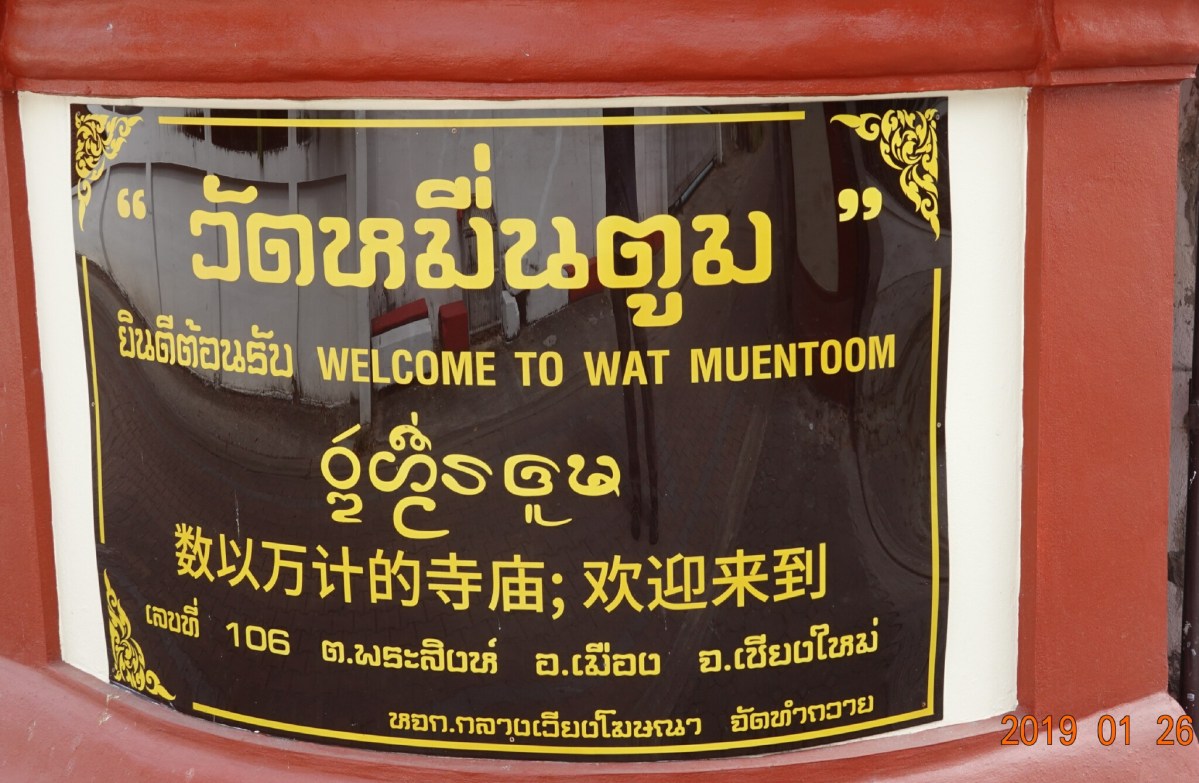
Wat Muen Tum Entrance
The entrance to Wat Muen Tum has a sign with the welcome in Thai, English, Old Thai, and Chinese. I am pretty sure this sign is new, maybe to go along with the renovations.
The viharn (worship hall) at almost all Buddhist temples open to the east to greet the rising sun, as the rising sun represents birth or the beginning, and the setting sun, to the west, represents the end or death. This is why the chedi is to the west of the viharn, because the chedi is where the ashes of someone important are interred. Wat Muen Tum has a bit of a predicament – there is no street to the east, so the “main” entrance is on a small soi (lane) off a main street. The main street (Prapokkloa Road) runs to the west of Wat Mueng Tum, so the entrance that most people see is technically at the back of the temple. Here is that entrance, now covered with bamboo scaffolding and under renovation:

Wat Mueng Tum entrance under renovation on Prapokkloa Road
I walked over to the main entrance, took the picture of the welcome sign, and wandered in to see the current state of this very quiet local temple. The viharn was closed, but appears to be in good condition, and artistically decorated:
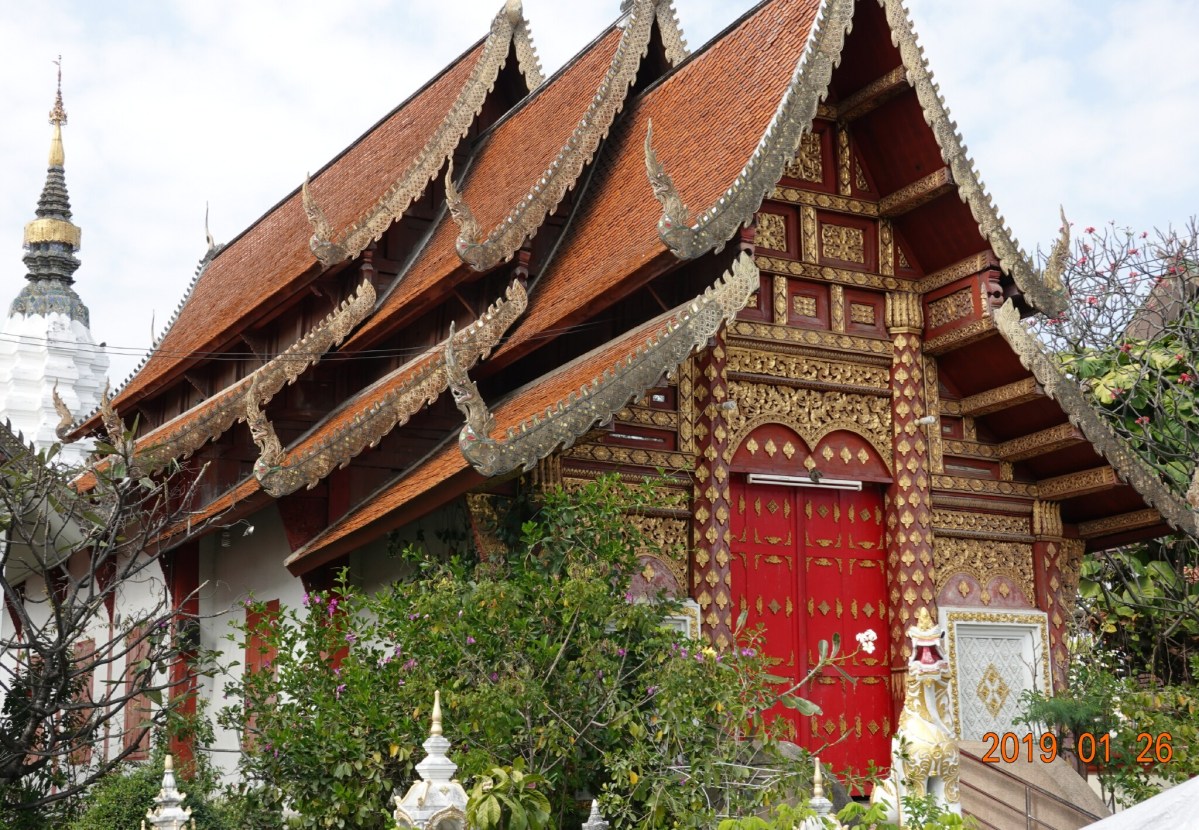
Main viharn (worship hall) at Wat Mueng Tum
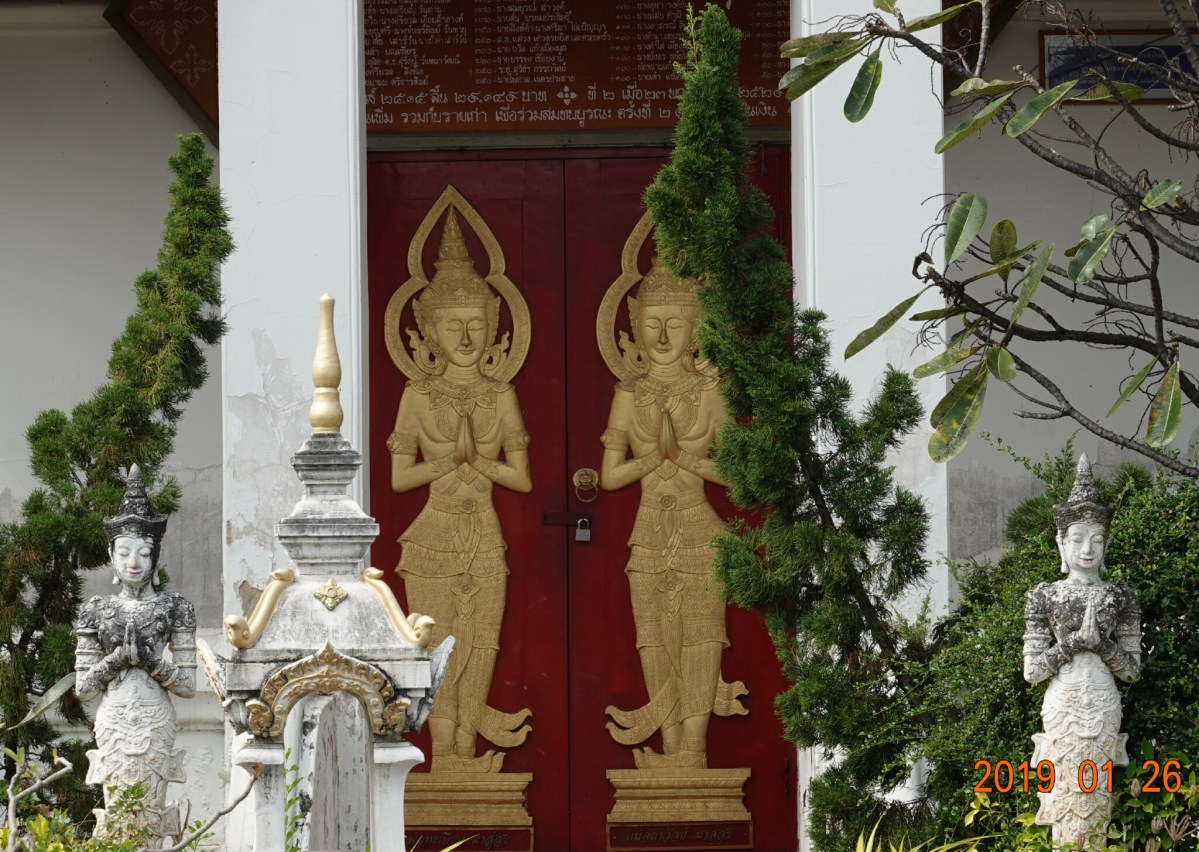
The walkway to and side entrance to the viharn is guarded by these thewada (angelic beings who live in the heavenly realms). Notice the lock on the door. I would love to see inside, but it was not to be today.
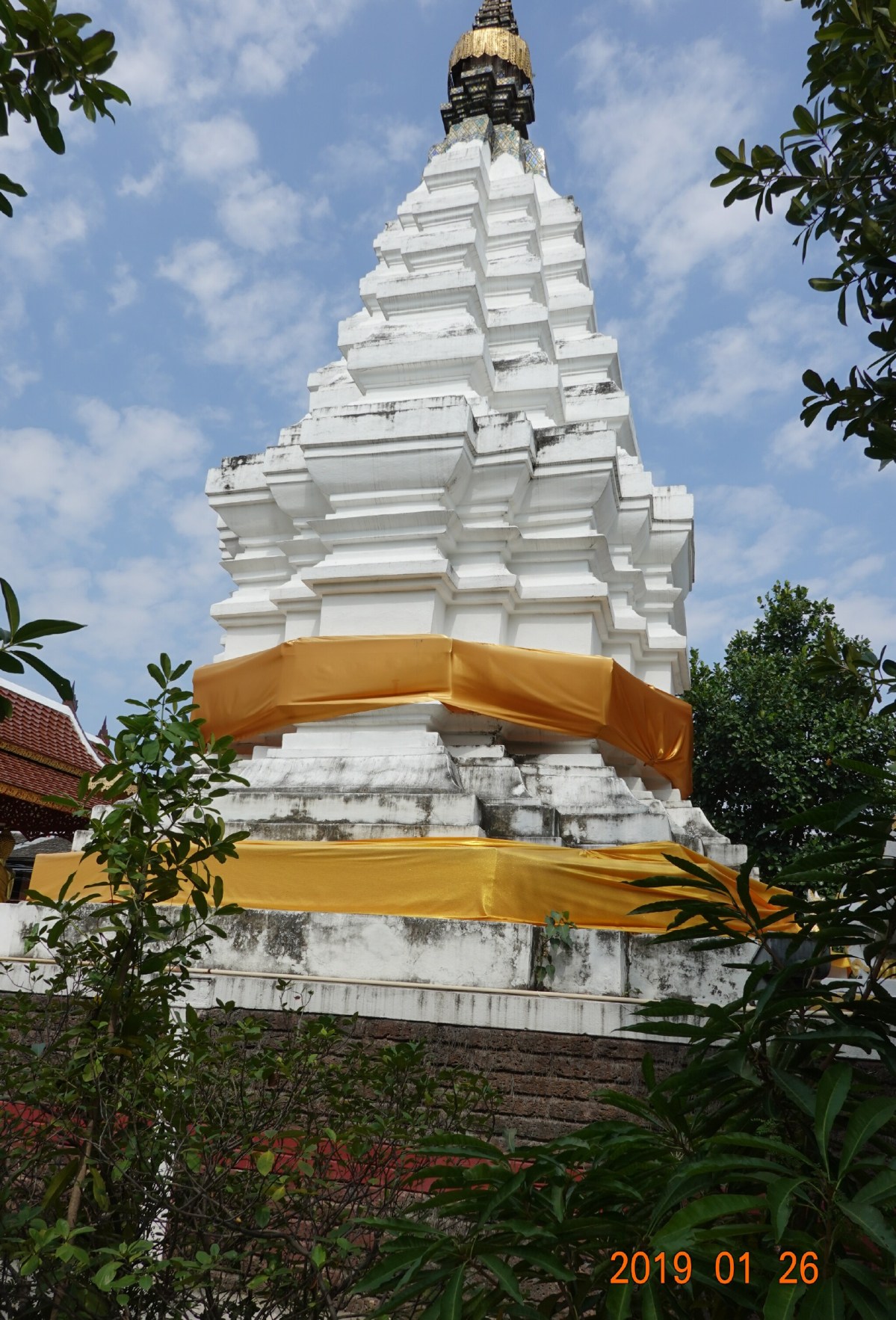
The upper part of the chedi has been cleaned somewhat from what I remember from previous years. It is still not pristine, a bit rustic-looking, but much better then I remember.
Behind (to the west) the chedi is what appears to be a worship area, almost a small, outdoor viharn:
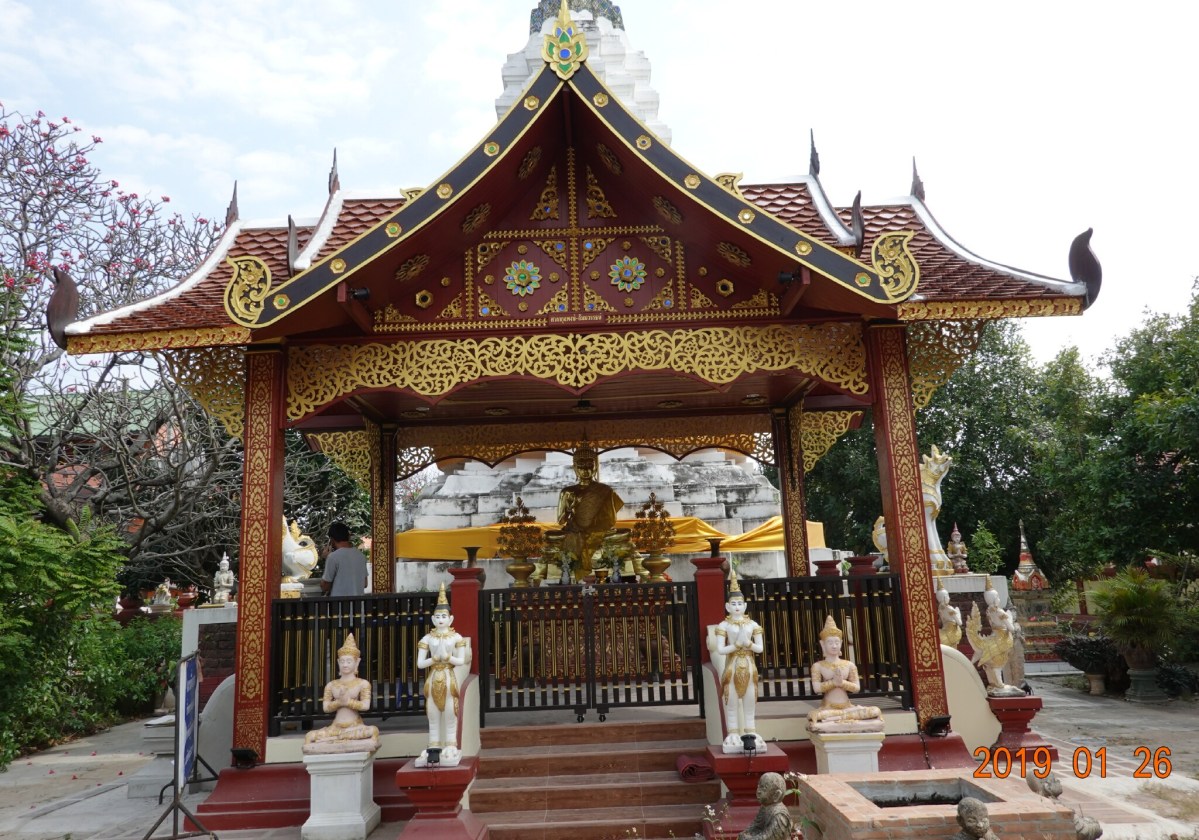
And this is the other side of the entrance under the renovation looking out across Prapokkloa Road to the Ford dealership:
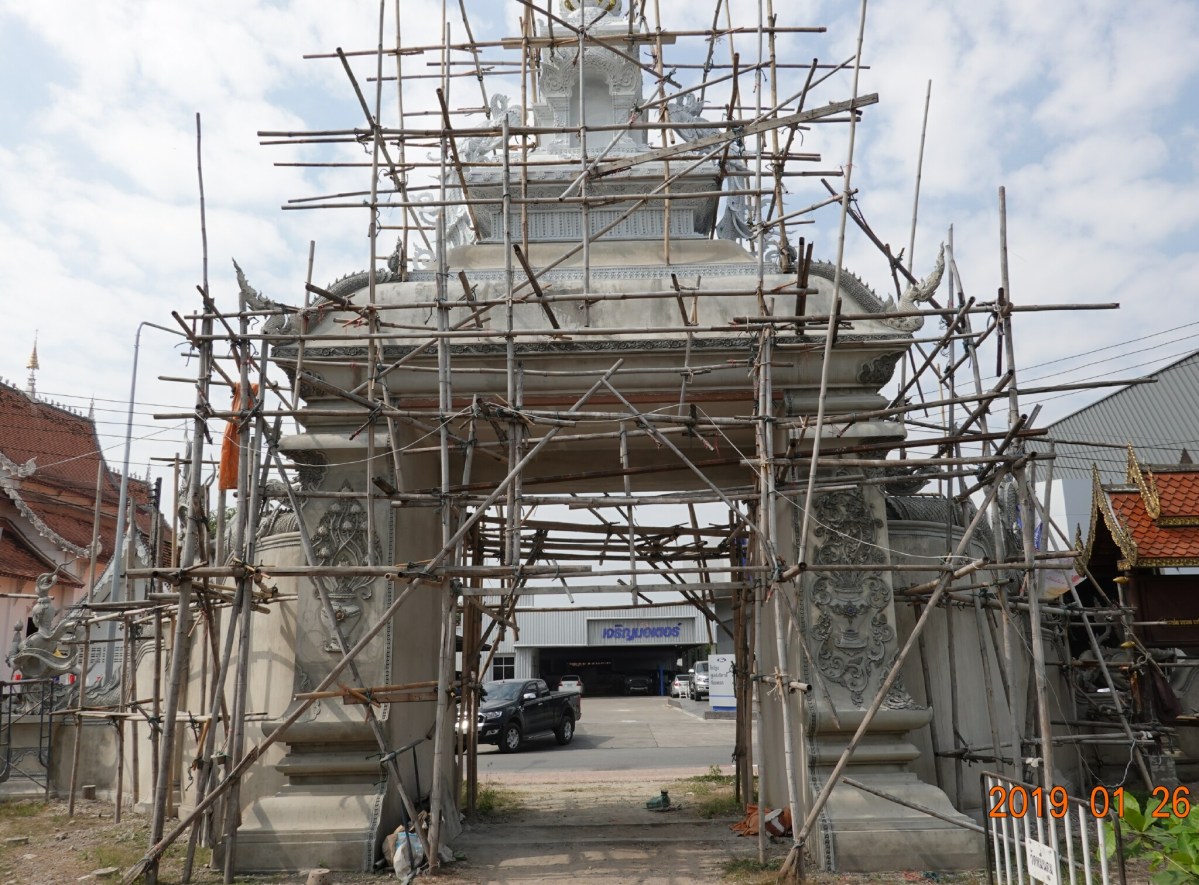
From Wat Mueng Tum I continued my walk south to Chiang Mai Gate, the major gate on the south side of the wall.


Then I walked west along the south side of the moat. Most of the wall, except at the corners and the gates, is gone from the south, west, and east sides, and part of the north side, also, but more remains on the north side near Hua Lin Corner. When the Japanese occupied Thailand in World War II, they used the bricks from much of the Chiang Mai city wall to pave the road to Pai for moving war supplies.
The southwest corner of the old wall is called Ku Huang Corner, as can be seen in this picture. The corners and gates were fortified much more so than the wall itself. .
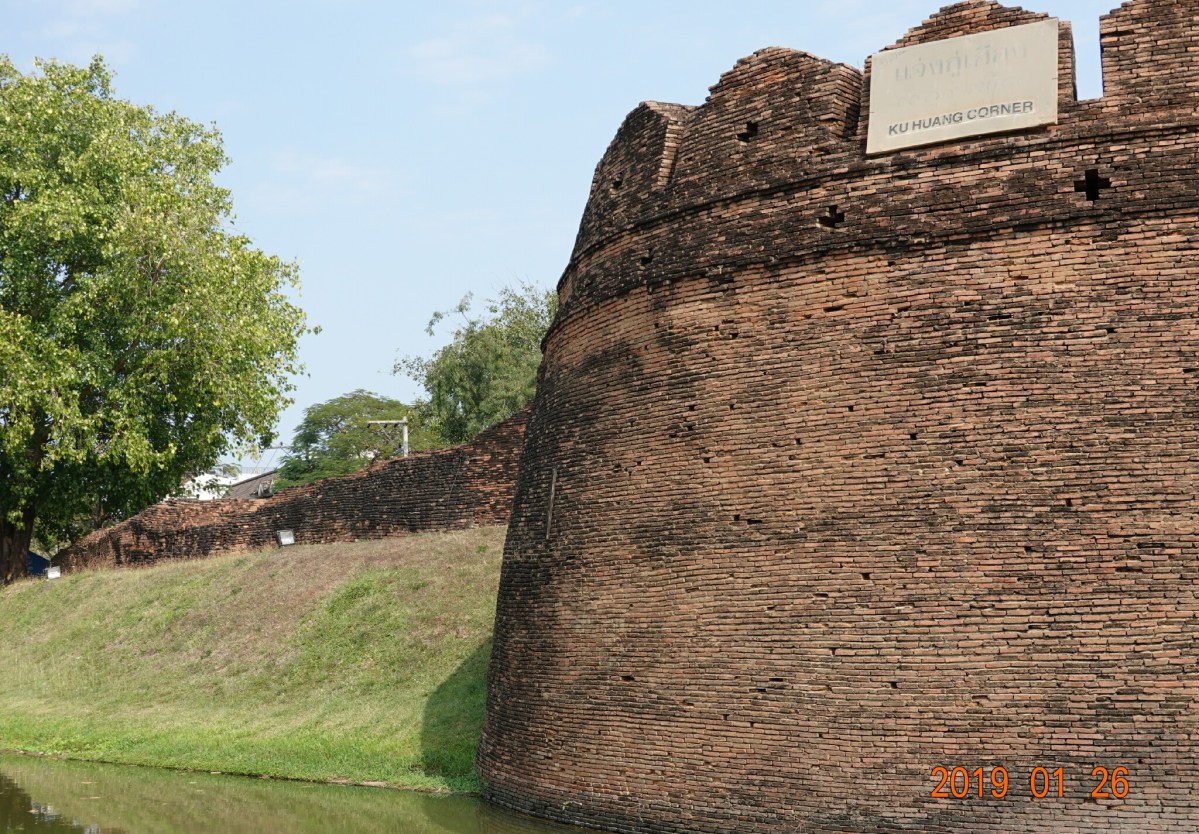
Ku Huang Corner, Southwest corner of the Chiang Mai City Wall
I found a picture on the internet taken in about 1900 of the Chiang Mai city wall and moat:
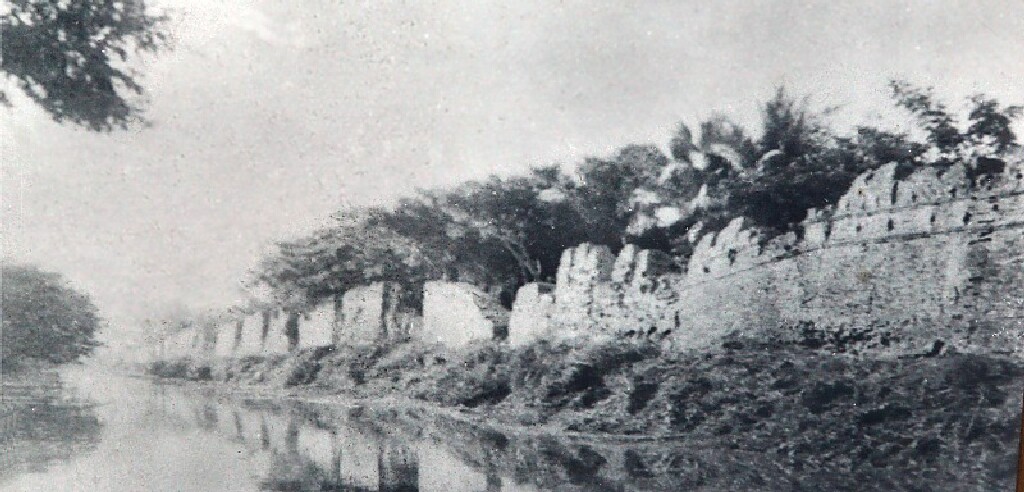
Chiang Mai city wall and moat circa 1900
Continuing my walk north from Ku Huang Corner, I was walking along the moat on the west side. Here is a shot from Ku Huang Corner looking north over the moat. Some remains of the wall are still evident on the right side of the picture:

Soon I arrived at Suan Dok Gate, the gate on the western side of the wall. Suan means garden, Dok means flower, so this is the Flower Garden Gate. At one time, the king’s flower gardens were outside Suan Dok Gate.


I entered the old city here at Suan Dok Gate. There are over 40,000 Buddhist temples in Thailand. A relatively short distance from Suan Dok Gate is Wat Phra Singh, one of only 25 temples in Thailand to be designated as a Royal Temple of the First Class.
Next: Walking Along the South and West Side of the Wall – Part 2, Wat Phra Singh

 James the Intrepid Pilgrim