Sunday, January 20, 2019
Four Local, Neighborhood Temples, Part 1
After breakfast, a long, vigorous yoga session, and a shower, I headed out to visit some temples in the neighborhood that are the non-tourist, local temples. The four I visited are very close to the major tourist temples, not hidden, but overlooked by most tourists. And thus, they are peaceful due to the very low tourist traffic. All are quite beautiful.
The old city, known as “inside the moat,” was built as a 1600 meter square fortress (about 1 mile square). And, inside the old city, in that 1600-meter square, are about 50 temples. Outside the old city, in all of Chiang Mai, are about 300 temples. So tourists select those to visit that have landed in the guidebooks for their importance, their significance in history, their exceptional beauty, or some other architectural reason. I am pretty certain that, even after having been to Chiang Mai for at least a month seven times, I have not seen all the temples in the old city.
Wat Duang Dee
The first on my list was Wat Duang Dee, sometimes spelled Wat Duang Di. This is known as the “Good Luck Monestary.” The word “di” (more often spelled “dii” because of the slightly elongated “ee” sound) means “good” in Thai. If something is good, you say “dii” and if it is very good, you say “dii mak”. If something tastes good, the word is “aloy” and if it tastes very good, you would say “aloy mak” or “aloy mak mak” for very, VERY good. This is just down the street from the 3-Sis Guest House, but down a soi (lane) just off the main road very near the Three Kings Monument.
This is a smaller temple, with only four structures: (1) a viharn (worship hall), (2) a ubosot (ordination hall), (3) a ho trai (library), and (4) a chedi (pagoda). The ho trai is known for its fine stucco decoration, and the viharn is remarkable for its highly decorated facade. Because of the small plot of land on which this temple sits, it was difficult to get pictures without cars because the parking was very close to the buildings.
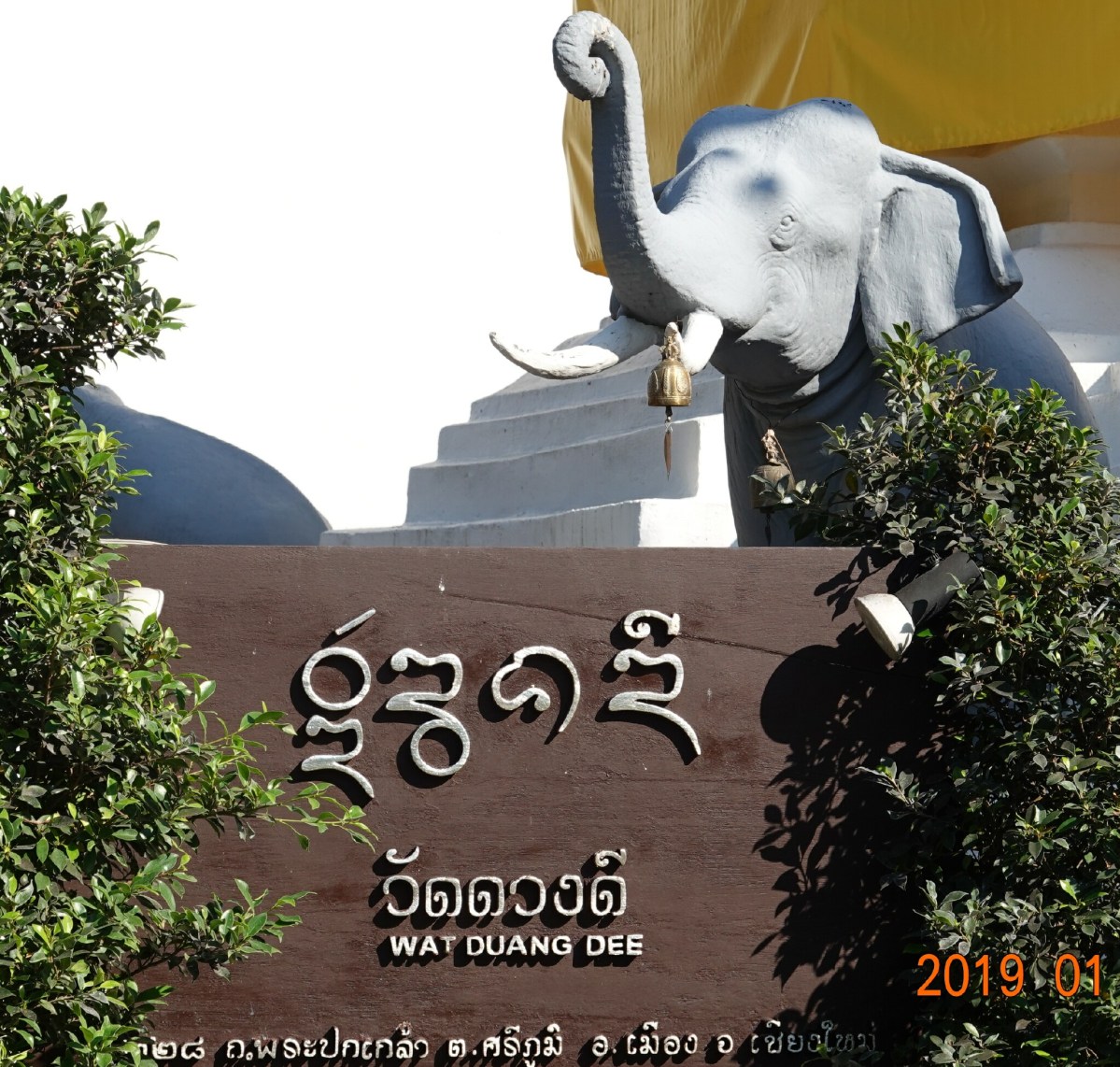
Entrance of Wat Duang Dee
The entrance is really at the back of the temple grounds, and the first building seen is an ordination hall with very nice natural-looking, tree-like pillars supporting the roof:
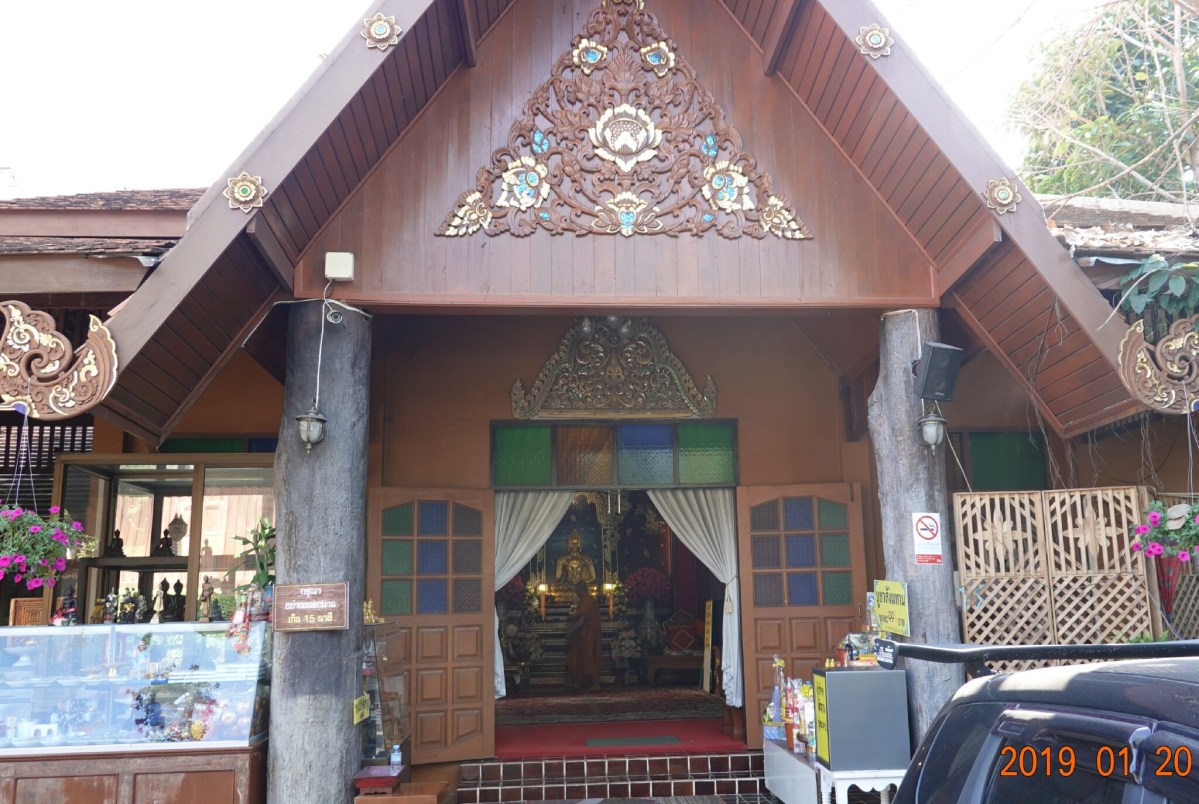
Ubosot (ordination hall) at Wat Duang Dee
Inside the ubosot, the general appearance is that of a viharn (worship hall). Difficult for me to tell the difference here.
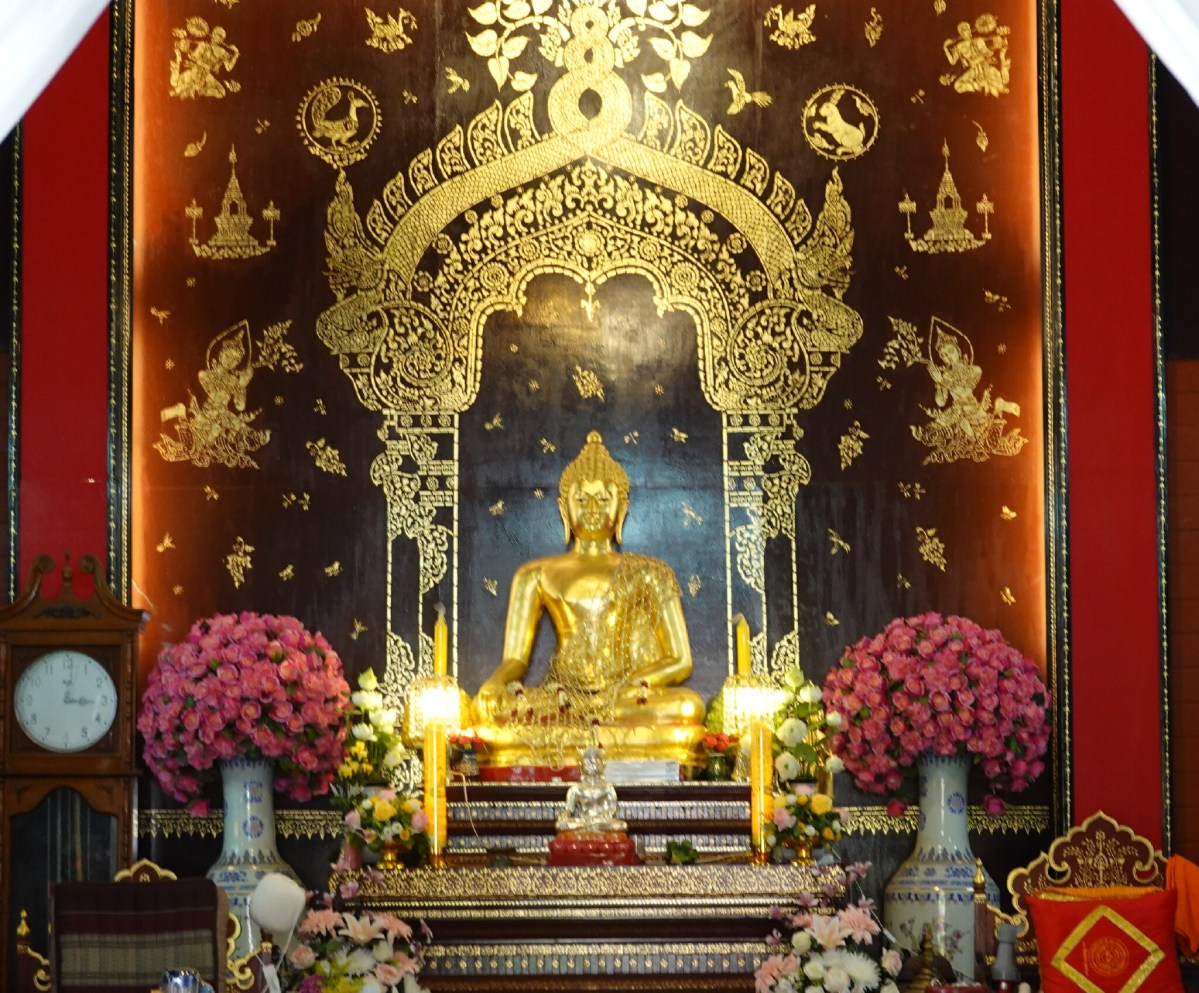
Inside the ubosot at Wat Duang Dee
A short distance away is the viharn, with the decorative front entrance:
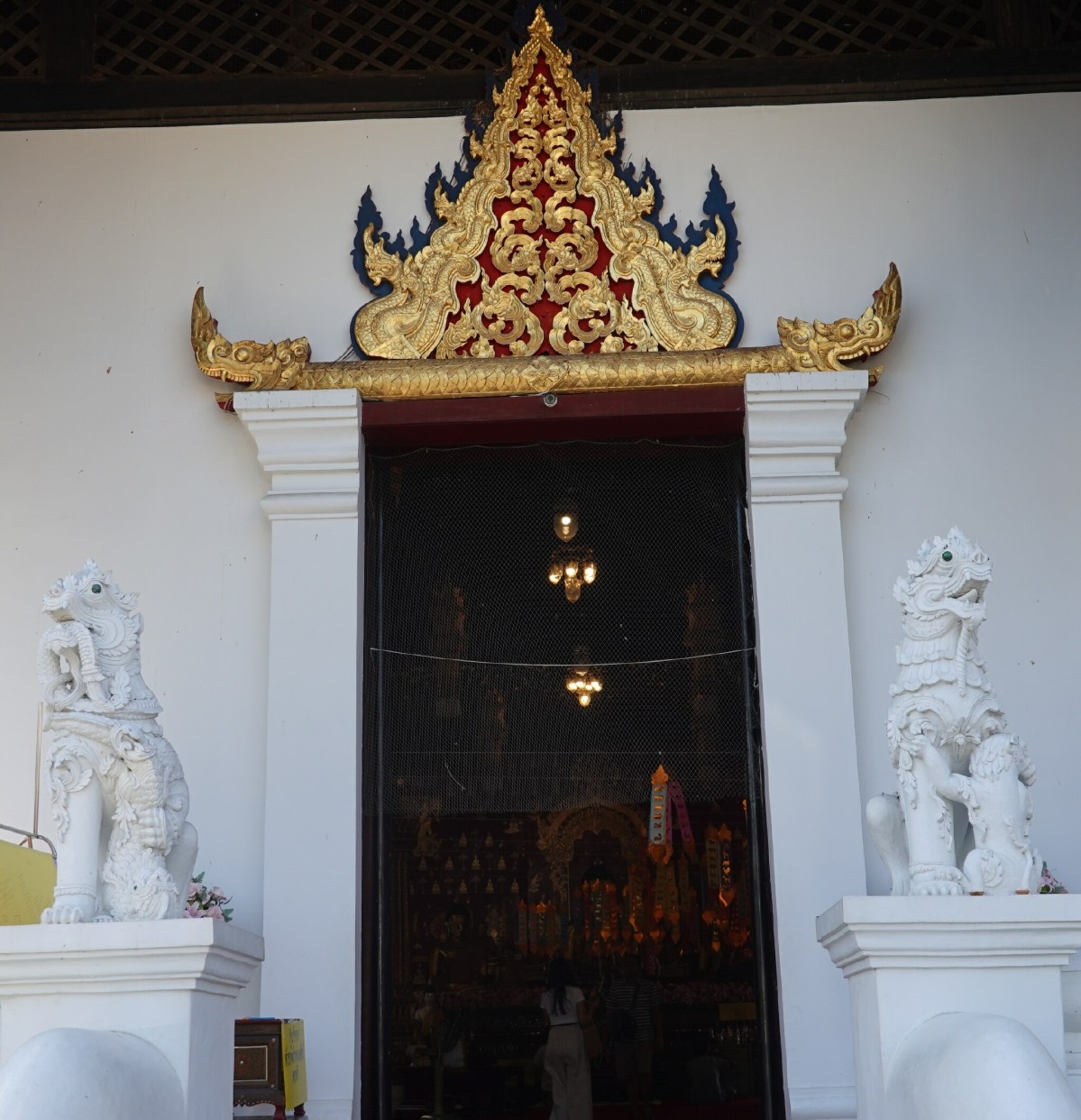
Viharn (worship hall) entrance at Wat Duang Dee
And inside the viharn is a very nice and fairly elaborate alter:
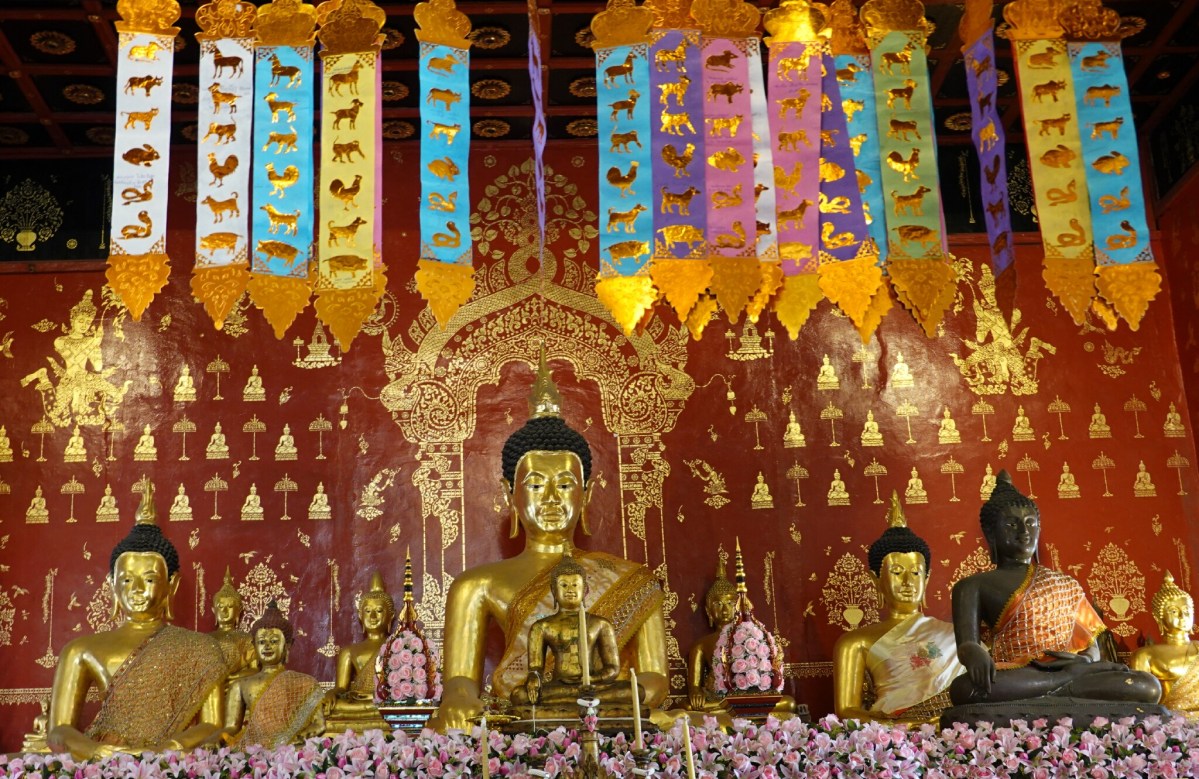
Inside the viharn at Wat Duang Dee
Then just outside the main viharn is the ho trai (library):
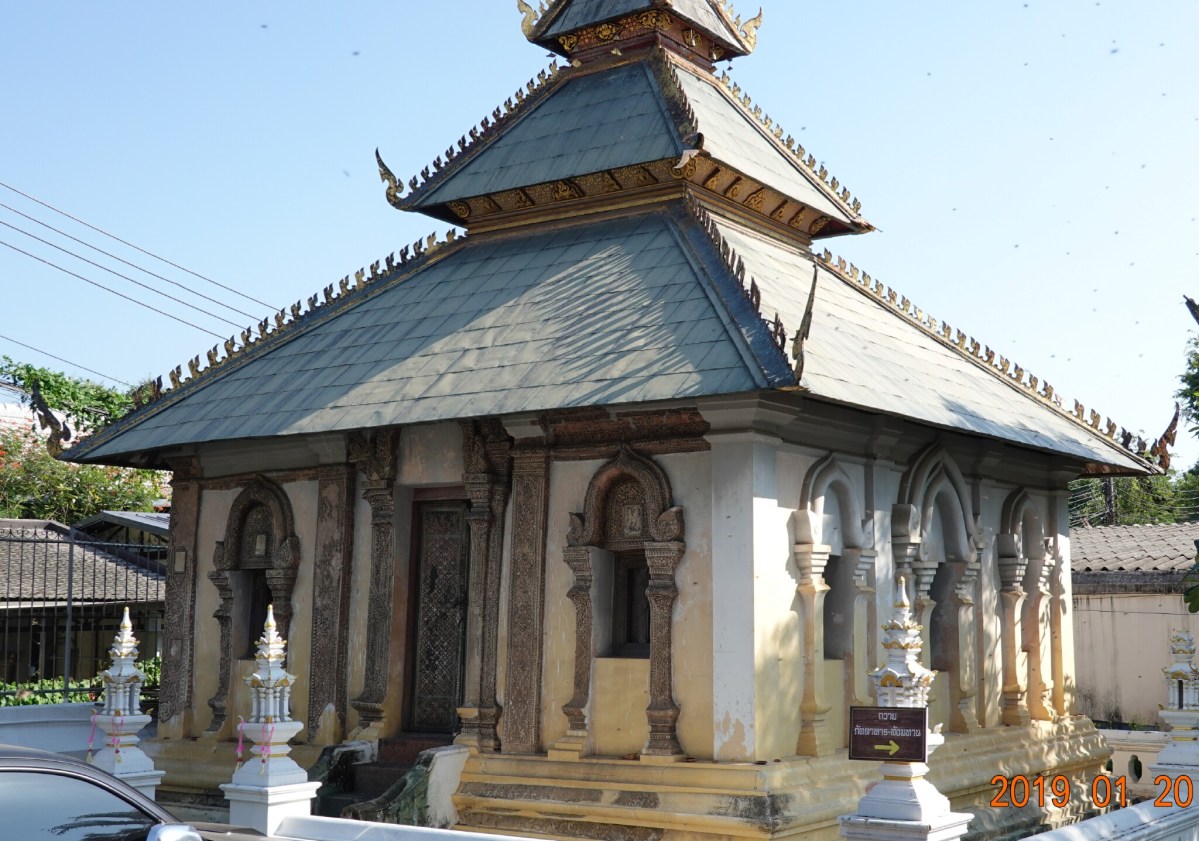
The ho trai (library) at Wat Duang Dee
And near the entrance (at the west of the main viharn) is the chedi. I could find no reference as to whose ashes are interred in the chedi at Wat Duang Dee.
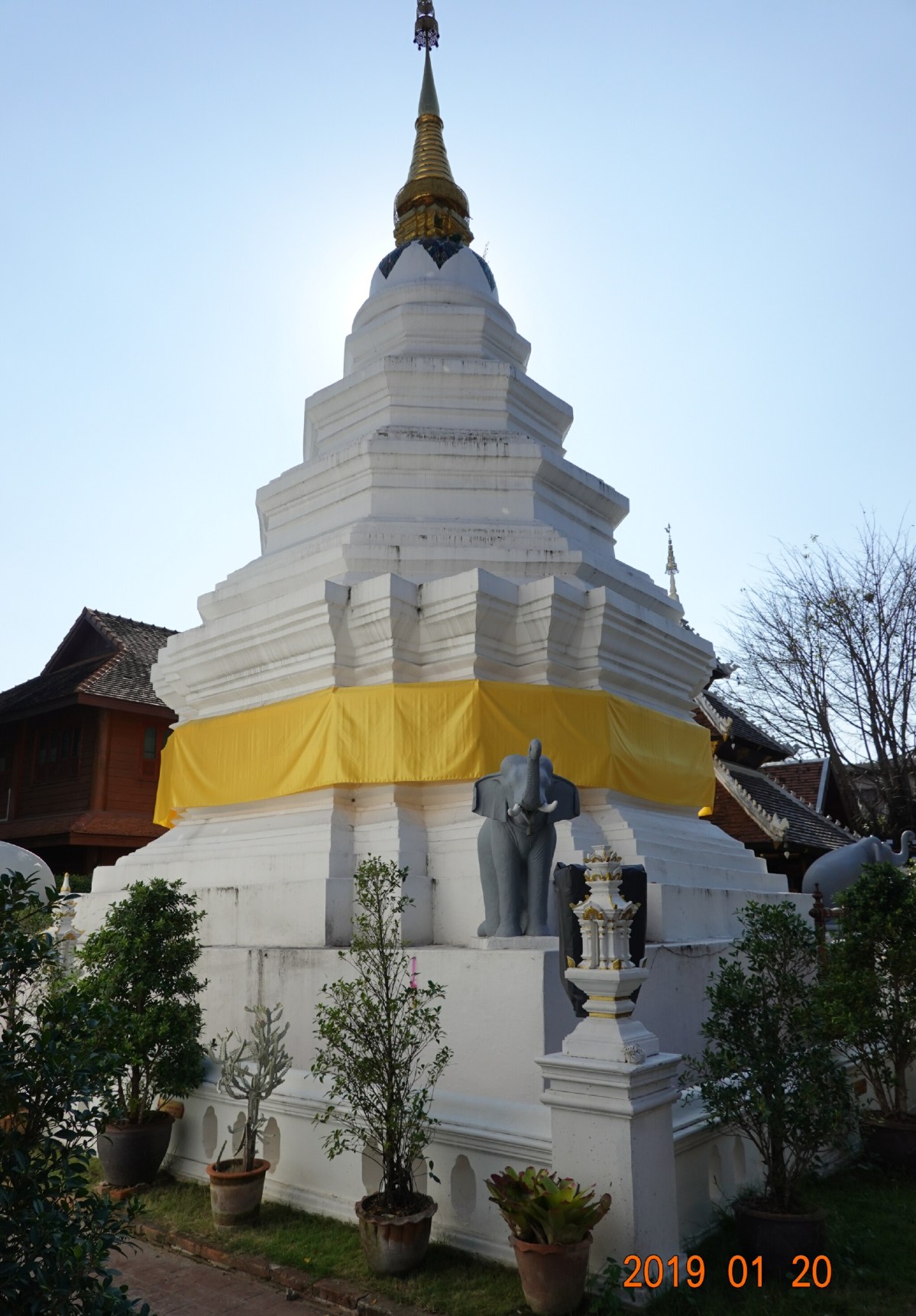
The chedi at Wat Duang Dee with four elephants at the corners
Next: Four Local Temples, Part 2

 James the Intrepid Pilgrim