Wednesday, January 16, 2019
Return visit to Wat Chedi Luang and Wat Phan Tao
Later in the afternoon, after getting my camera settings back to normal, I returned to Wat Chedi Luang and Wat Phan Tao, two significant temples right across the street from the 3-Sis guest house in which I am staying.
Wat Chedi Luang
I have already written a little of the history of Wat Chedi Luang in my post a few days ago. Wat Chedi Luang is a large and very important temple in Chiang Mai. Construction of Wat Chedi Luang started in the 14th century and was not finished until the mid-15th century. By then, the chedi was 82 meters high (270 feet) with a base diameter of 54 meters (178 feet), and was by far the largest structure in all of Lanna. The famous Emerald Buddha was housed in the eastern niche of the chedi, now at Wat Phra Kaew in Bangkok on the grounds of the Royal Palace.
Because of the increase in tourism, and the cost to maintain the grounds, foreigners now must pay a fee at many popular temples. This new entrance with the two green yak guards was added to Wat Chedi Luang just three years ago, and the fee for non-Thai adults is 40 THB, or about $1.30.
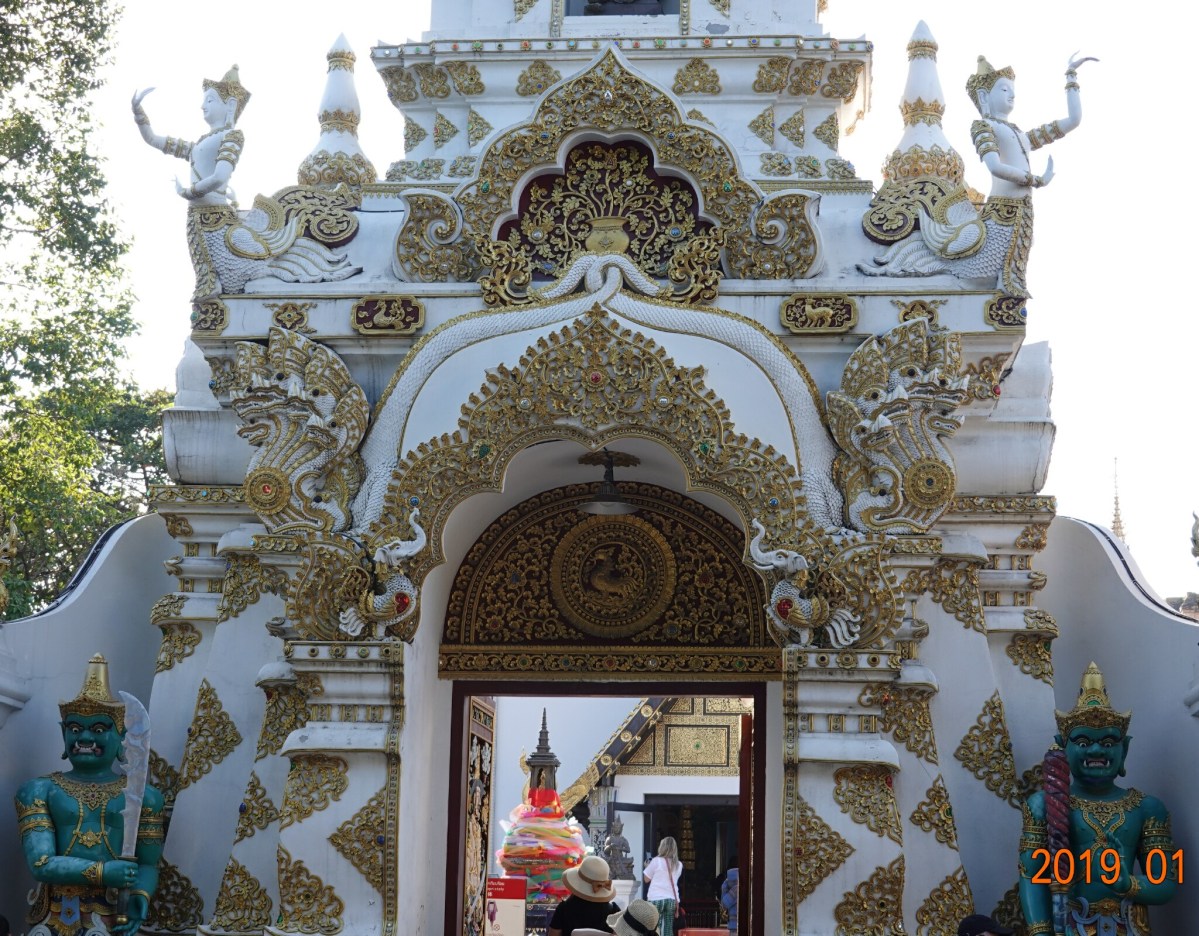
Wat Chedi Luang new entrance.
Just inside the new entrance is the new ubosot (ordination hall) housing the city pillar, known as Sao Inthakhin. The city pillar was moved to this location in 1800 by King Chao Kawila from Wat Sadeu Muang. This king also planted three dipterocarp trees here, which are supposed to assist the city pillar to protect the town. A festival in honor of the city pillar is held every year in May and lasts 6–8 days. [Note: April and May are the hottest two months in Thailand – I find it hot in the winter, and have a difficult time imagining it hotter.]
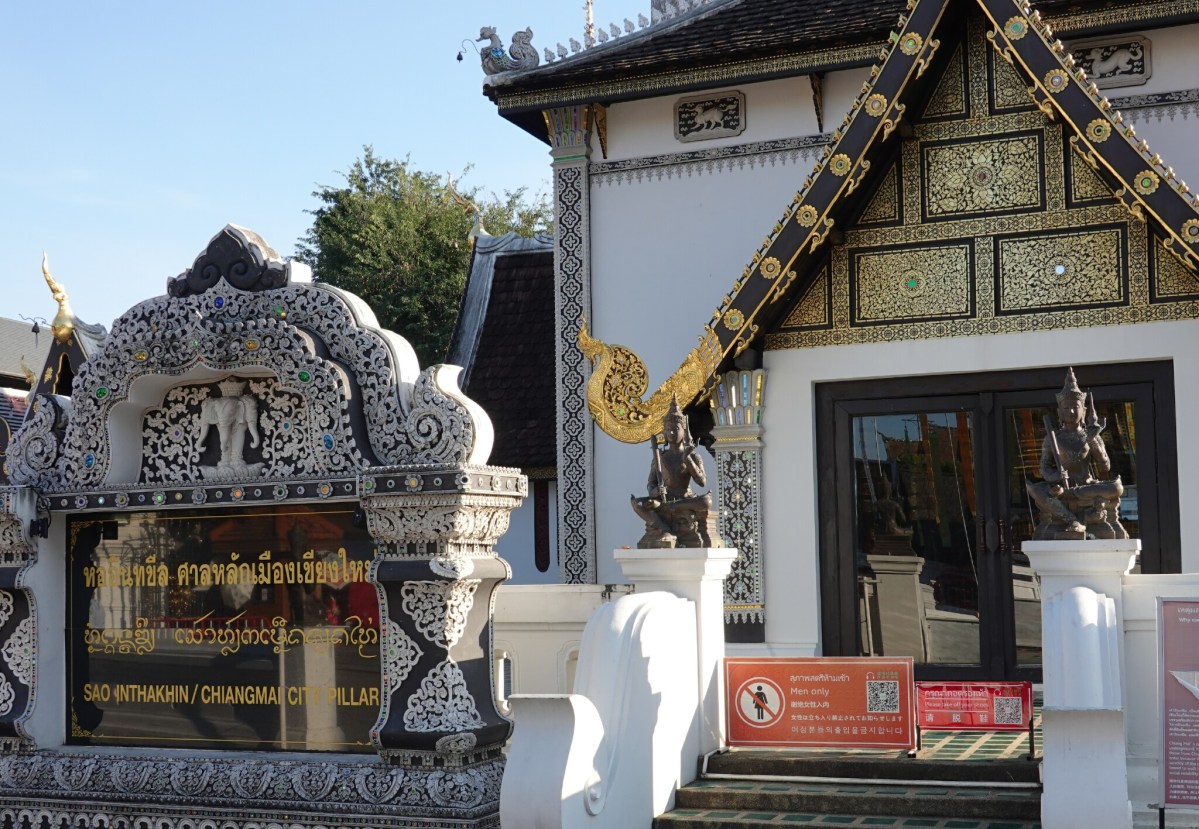
Ubosot Sao Inthakhin housing the city pillar at Wat Chedi Luang
Inside the ubosot is the city pillar, Sao Inthakhin. The city pillar is usually housed in a shrine which is also believed to house Chao Pho Lak Mueang, the city spirit deity. It is constructed as a continuation of ancient traditions and Brahman’s customs. The single city pillar is made of an Acacia wood Chaiyaphreuk before the construction of the city and believed to be the centre of soul for the citizens.
It was probably King Rama I who erected the first city pillar on 21 April 1782, when he moved his capital from Thonburi to Bangkok. The shrine was the first building in his new capital, the palace and other buildings being constructed later.
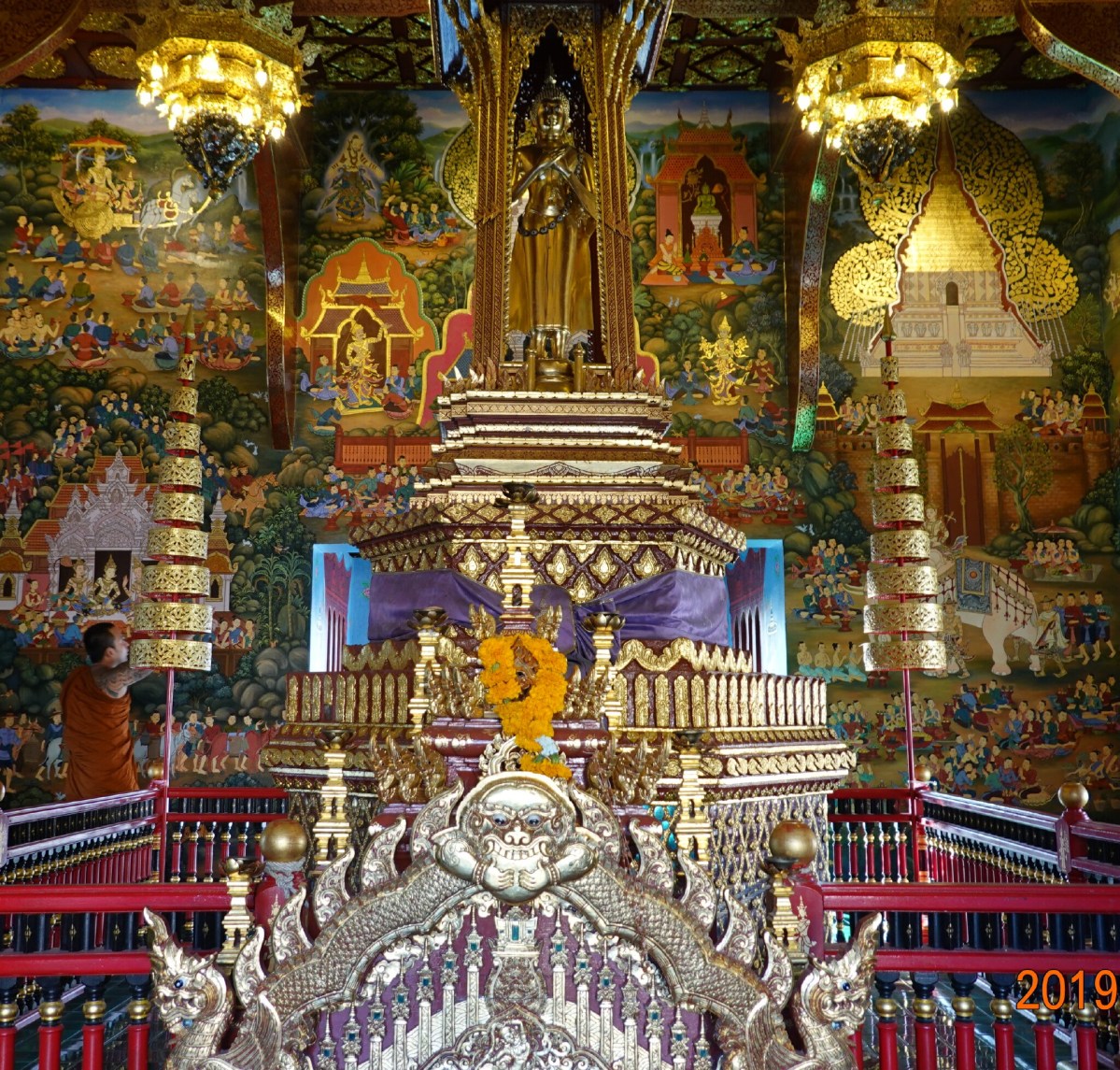
Inside the Chiang Mai city pillar shrine Sao Inthatkin
The entrance to the large viharn (worship hall) shows typical Lanna (northern Thailand) styling and artistry: the naga (dragon) staircase bannisters, the thewada (angelic beings who live in the heavenly realms) depictions flanking the doorway, the stylized connection of the naga over the doorway, and all the other detail. In central Thailand (e.g. Bangkok), the artistry is not so exuberant.
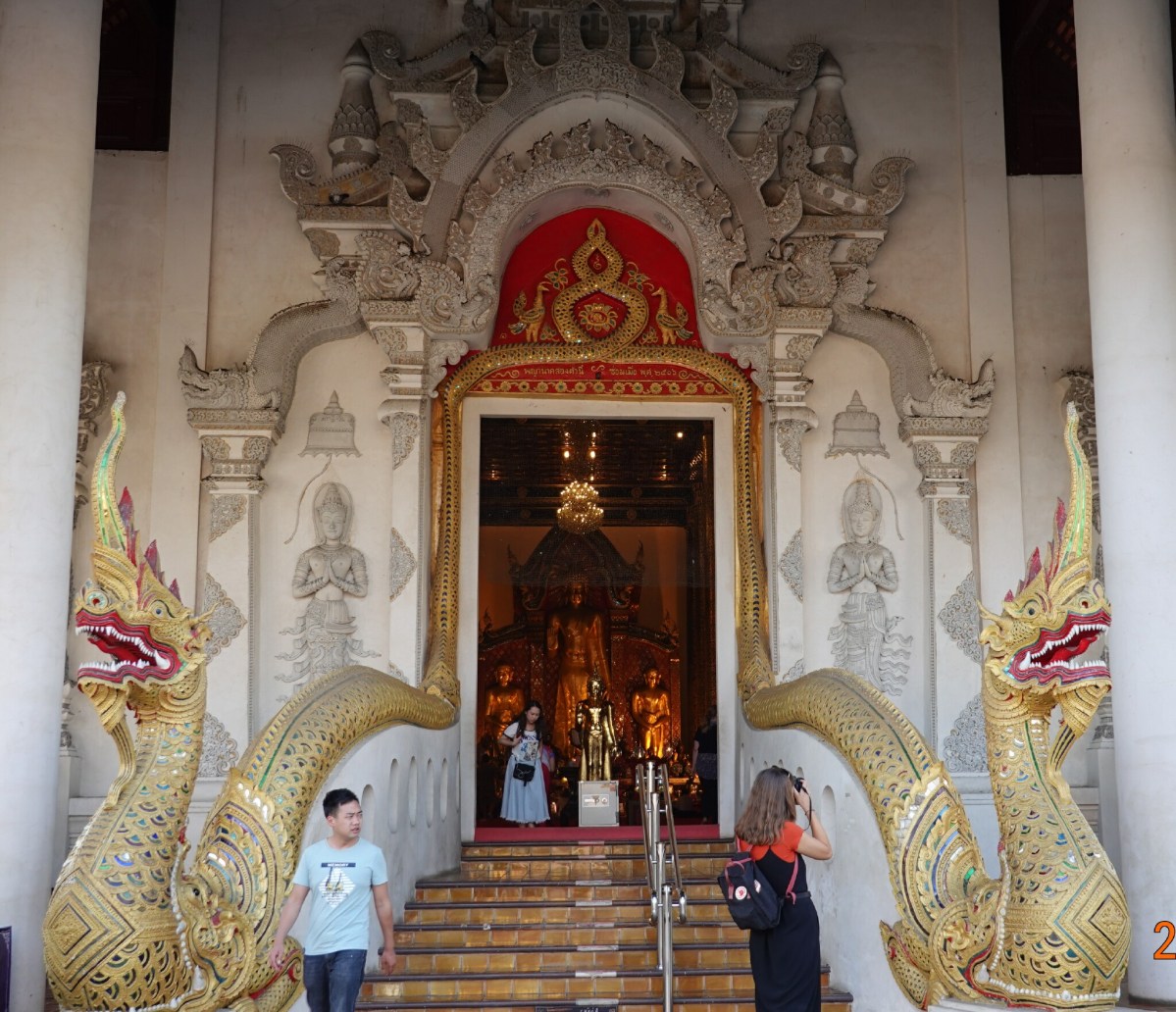
Entrance to main viharn (worship hall) at Wat Chedi Luang
Inside, is the large standing Buddha statue named Phra Chao Attarot (Eighteen-cubit Buddha), which was cast in the late 14th century, and is more than 8 meters (25 feet) tall.

Buddha statue Phra Chao Attarot in the viharn at Wat Chedi Luang
Behind the viharn is the large chedi, at one time (before the earthquake in 1545) 82 meters high and 54 meters square. Still a magnificent structure.
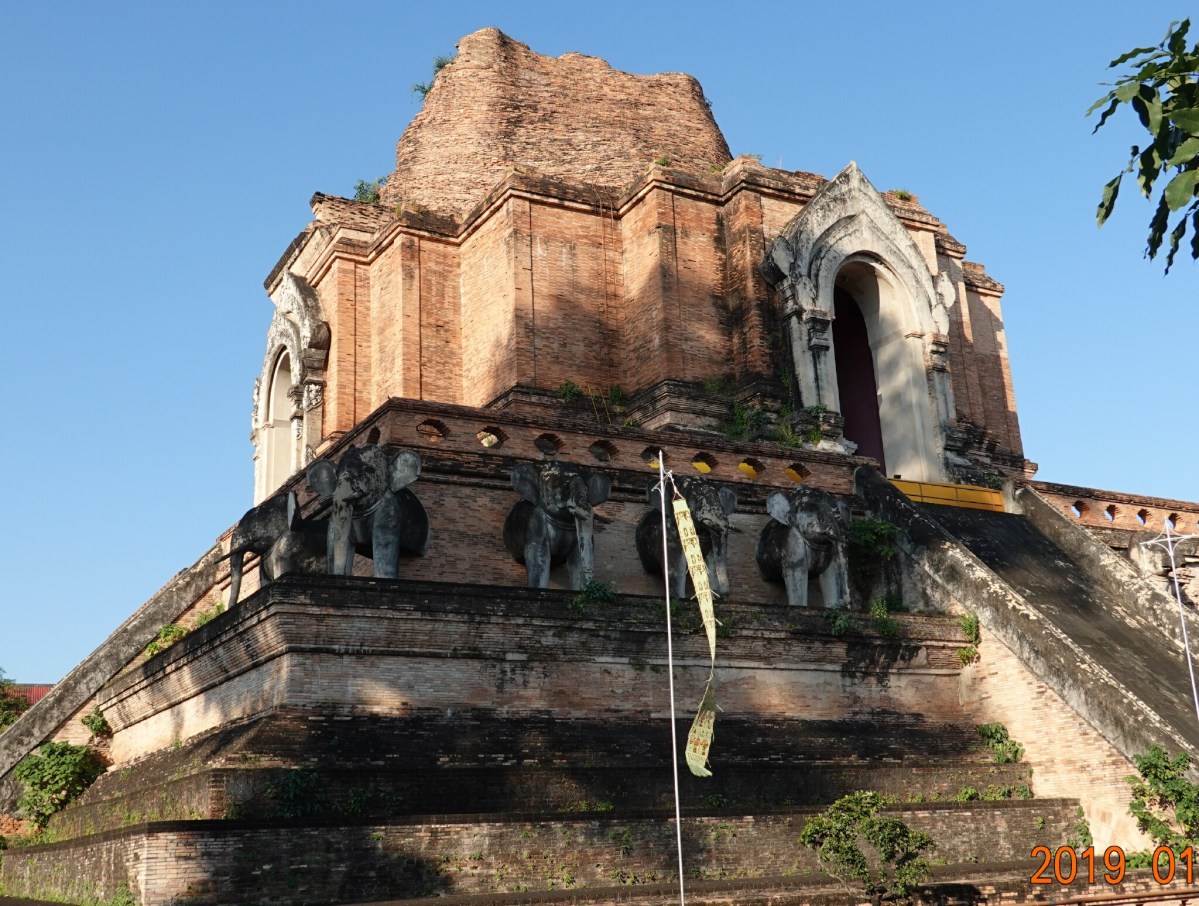
Large chedi (pagoda) at Wat Chedi Luang
Two the west of the large chedi are two new small buildings housing two relatively new Buddha statues. I saw these unloaded from trucks onto pedestals three years ago, and then over the next two years, the buildings were constructed around the statues. I was told that the stone was quarried near Chiang Rai north of Chiang Mai, and the stone carving done there over a period of two years.
The first is a large seated Buddha, very elegant in its meditative seat:

The second is a statue of the Buddha with a five-headed naga behind:
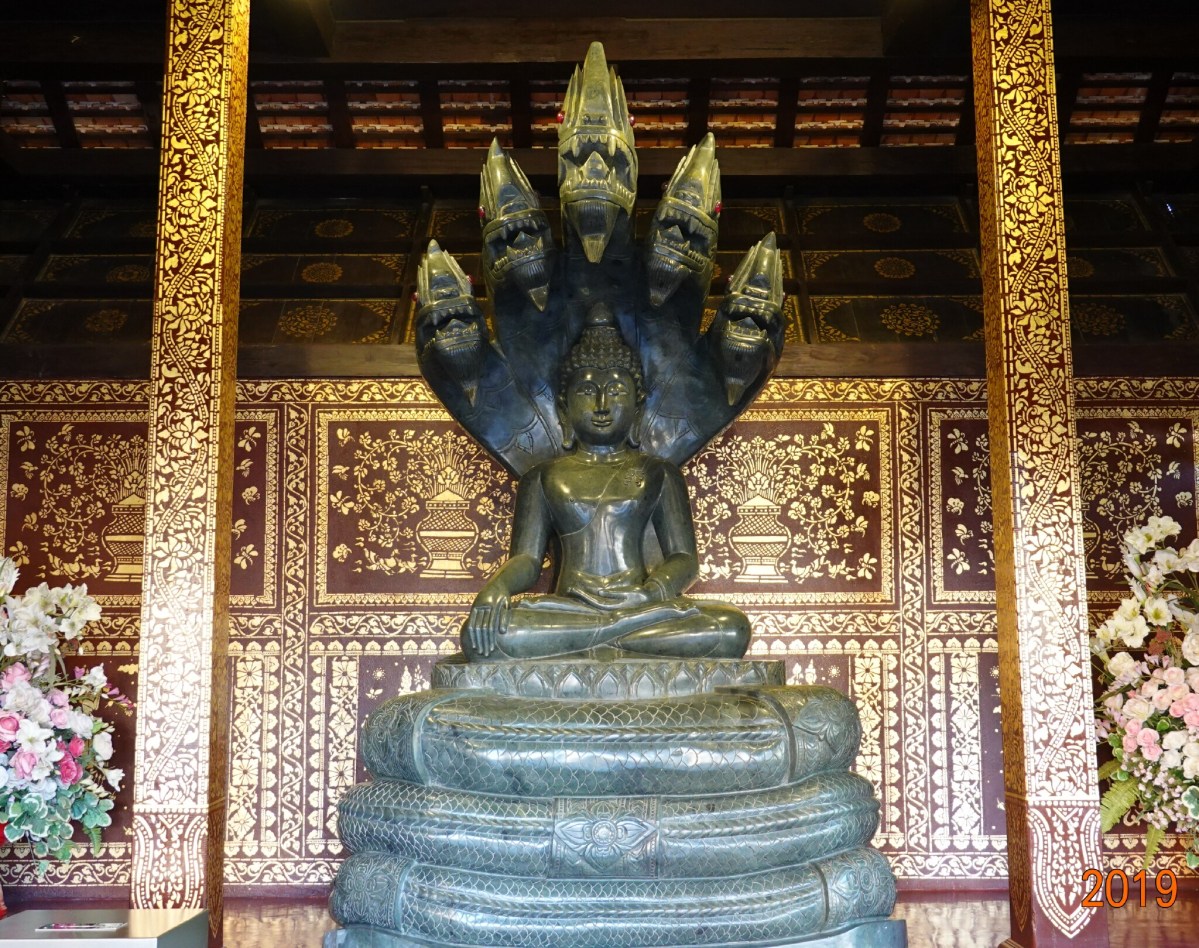
Both are quite striking and elegant in their beauty and artistry.
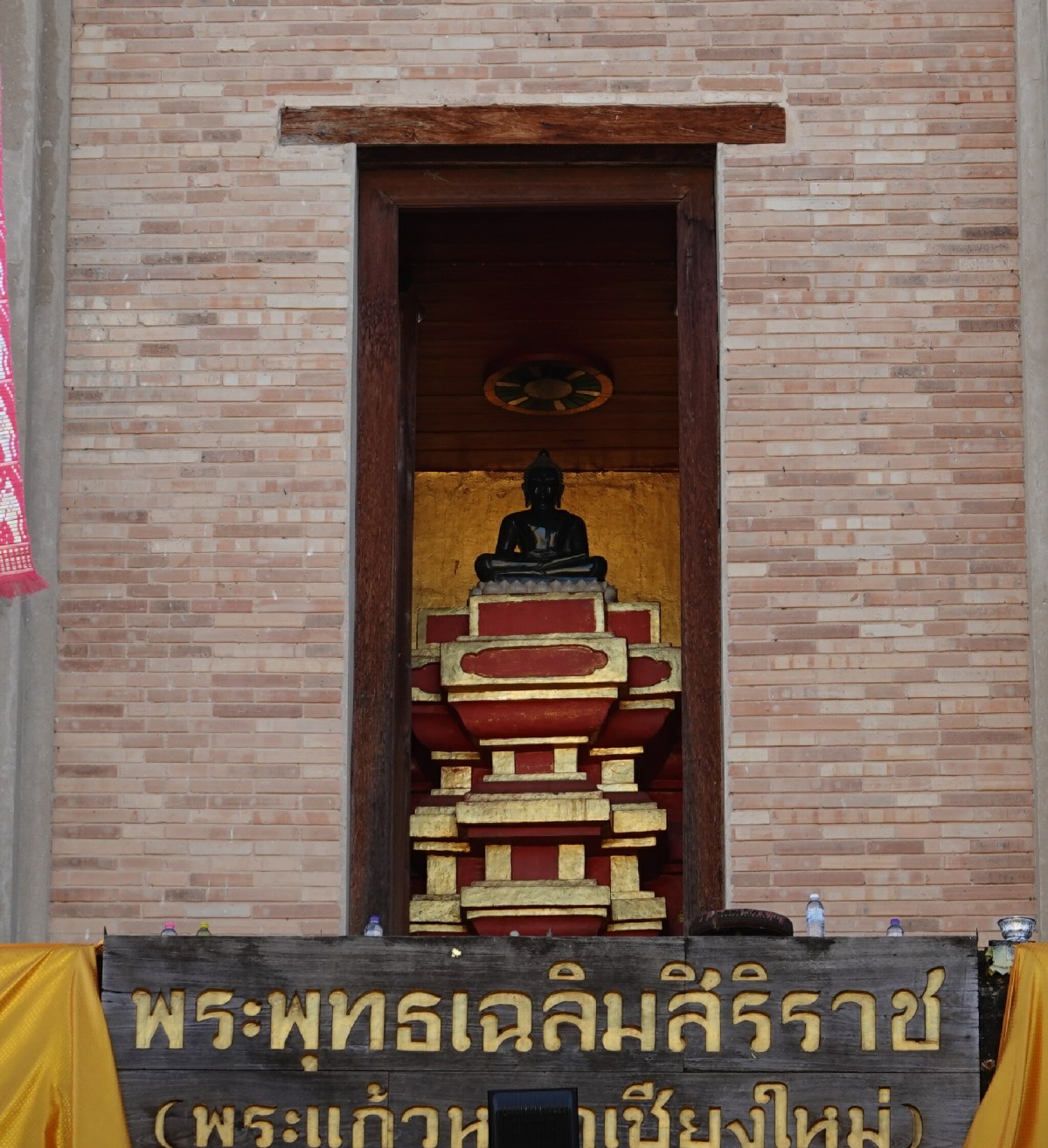
In 1995, King Bhumibol Adulyadej (King Rama IX, now deceased) gifted Wat Chedi Luang a replica of the Emerald Buddha made of jade, almost black, to celebrate Chiang Mai’s 700th anniversary as a city. This is now sited in the eastern niche of the chedi at Wat Chedi Luang where the Emerald Buddha once was placed.
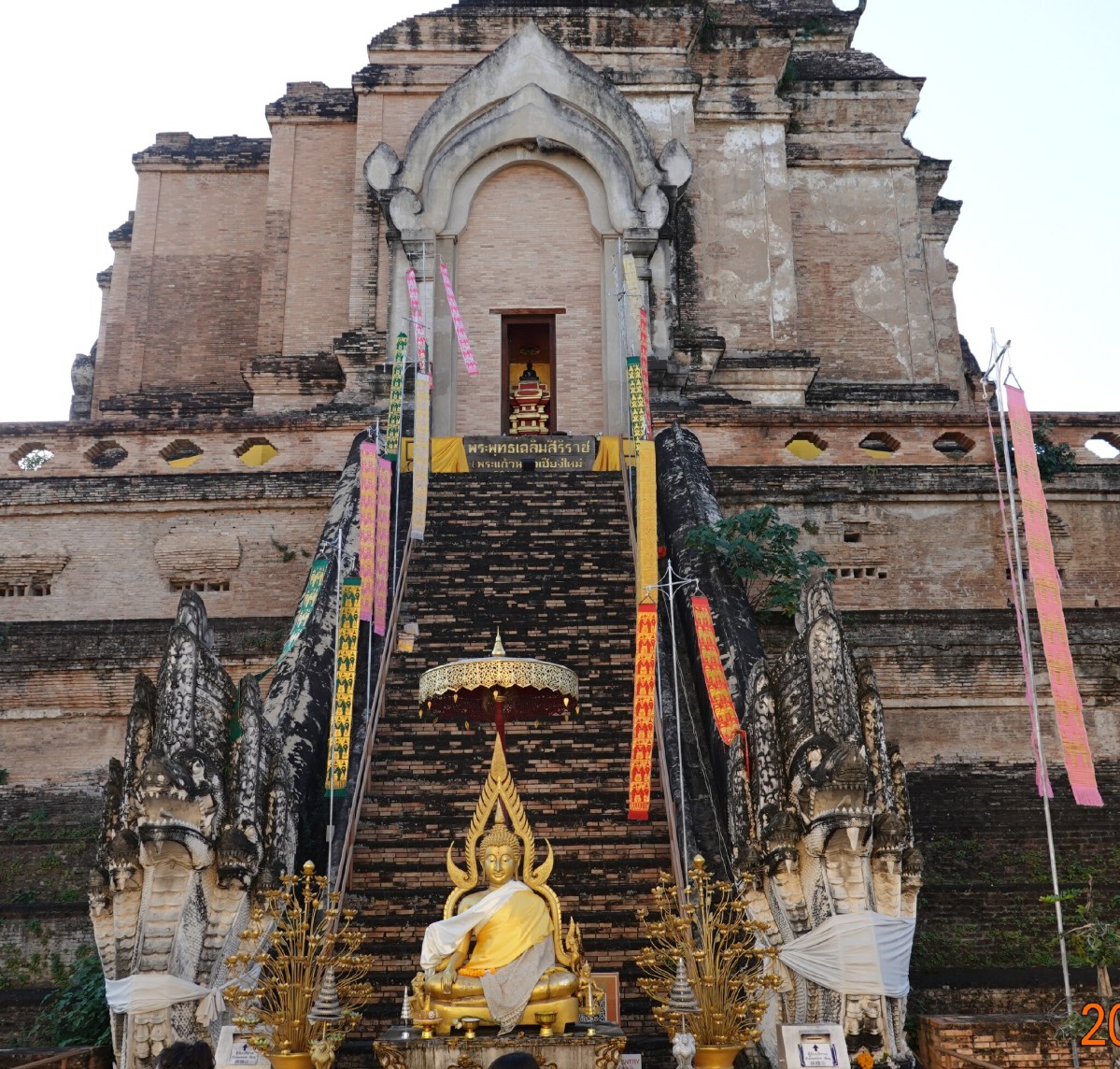
Eastern niche at Wat Chedi Luang housing the replica of the Emerald Buddha
A closer view of the Emerald Buddha replica:
Wat Phan Tao
Next door to Wat Chedi Luang is Wat Phan Tao, a favorite of mine. Beautifully carved from teak, the main building dates to the late 1870s, and its teak panels were formerly part of a royal palace. After the king died, the prince decided to dismantle the unused royal palace and recycle it as a temple at Wat Phan Tao.
I love the character of Wat Phan Tao, its teak building is rich and stands out from the mostly white buildings at most temples. While the building is relatively modern, records show that this temple has existed since the 14th century, shortly after construction of Wat Chedi Luang began. Over the years, Wat Phan Tao has undergone numerous rebuilds and renovations, as have most temples.
Inside the main viharn at Wat Phan Tao, the deep teak woodwork and columns contrast with the striking gold Buddha statue:
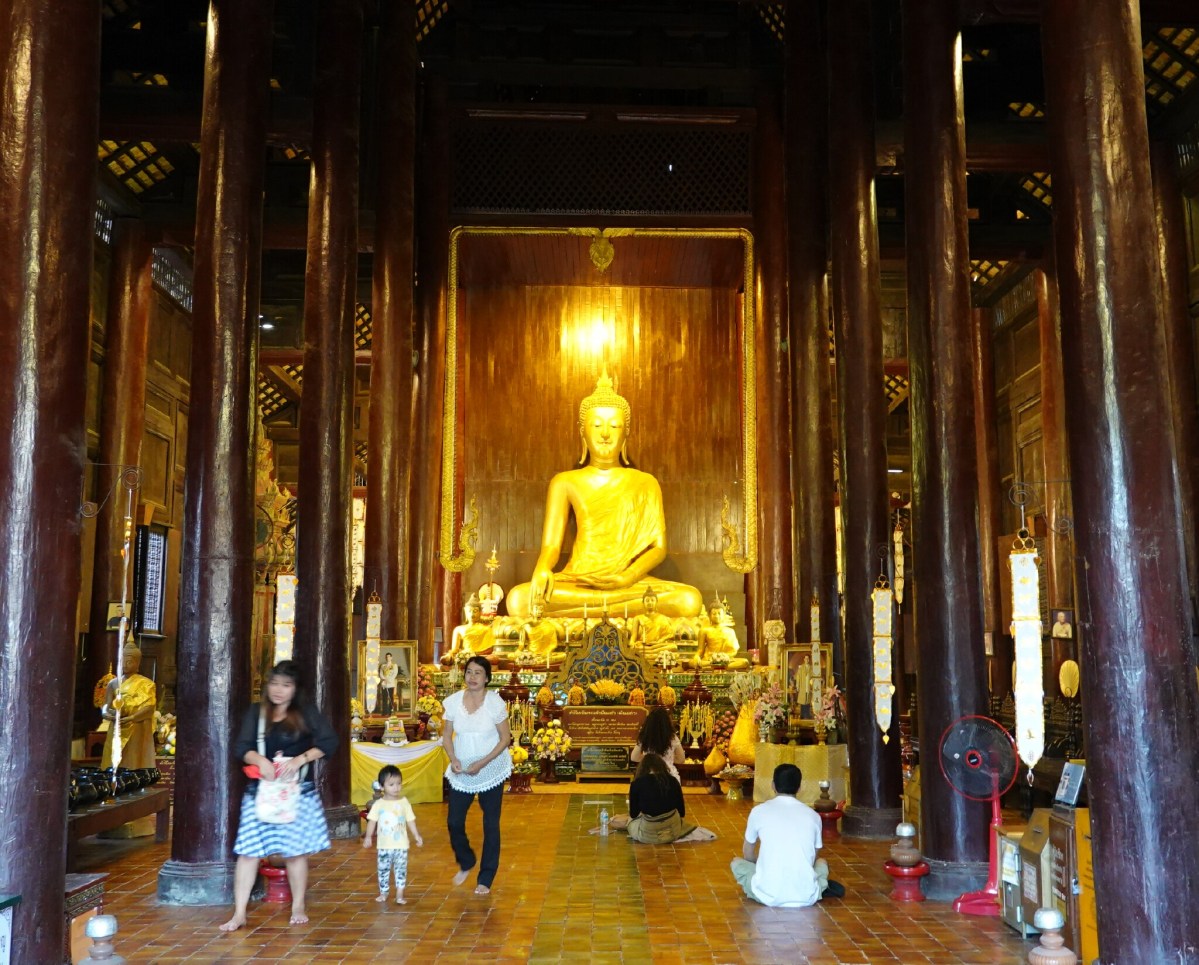
Inside the main viharn at Wat Phan Tao
And, at the back of the viharn is the now gold chedi. (I liked it better in its slightly polished pewter color a few years ago.)
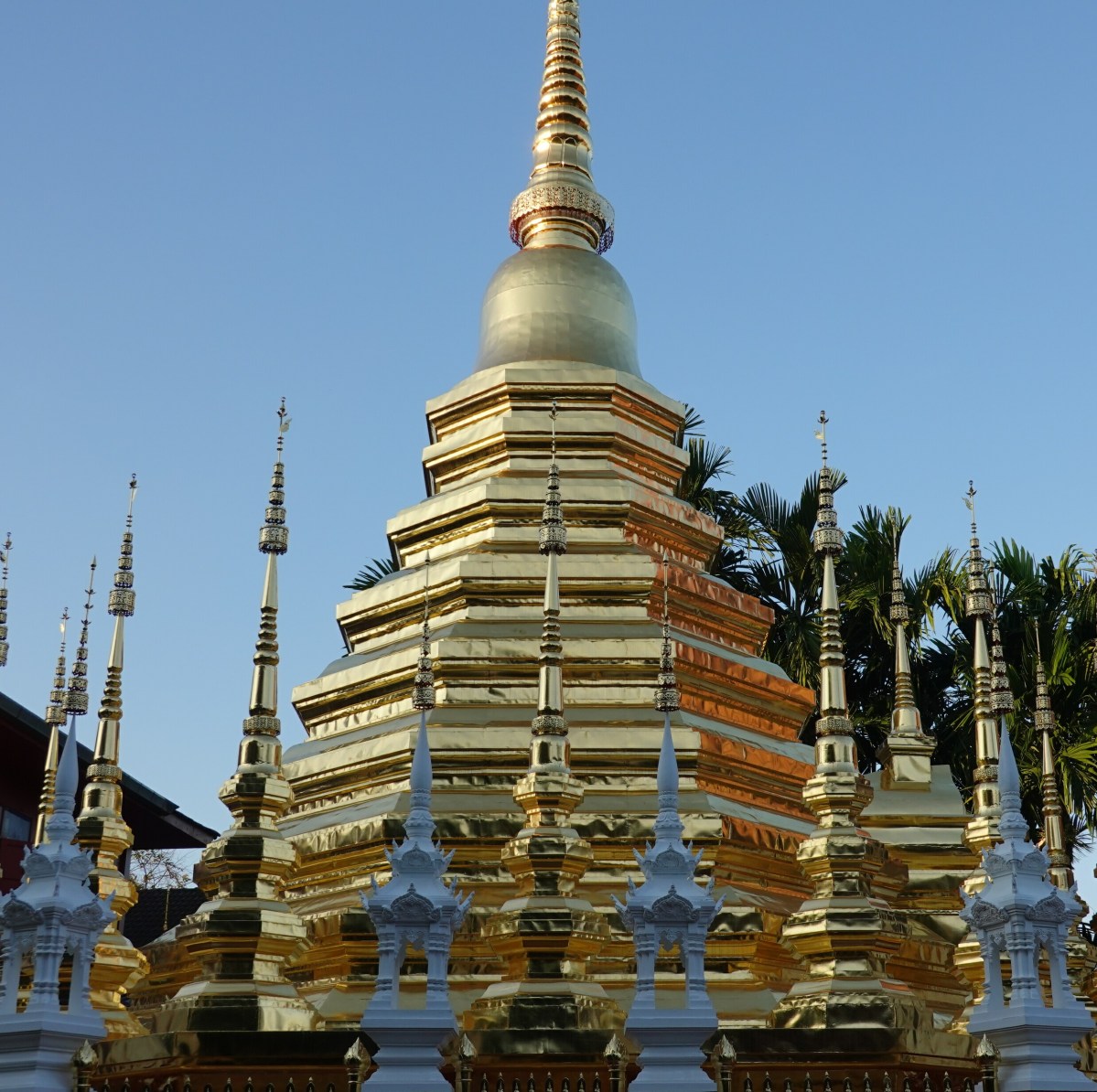
Gold chedi at Wat Phan Tao
and then this view of the outside of the main viharn at Wat Phan Tao:
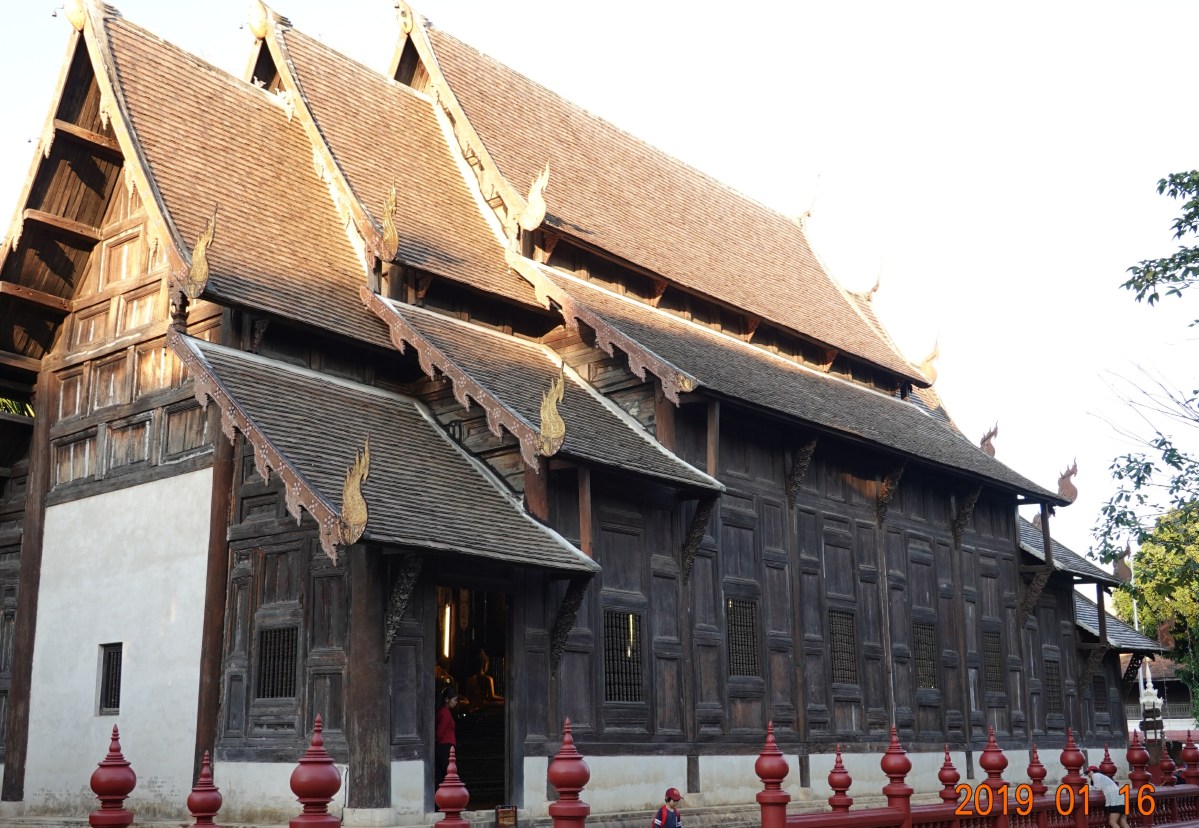
Teak viharn at Wat Phan Tao
As I have said many times, it was a very good day in Chiang Mai visiting old familiar temples.
Next: Northwest side and corner plus some restaurants and food.

 James the Intrepid Pilgrim