Tuesday, January 15, 2019
Searching for Kamphaeng Din
After yoga today, I went in search of more evidence of the second wall, called Kamphaeng Din, sometimes spelled as one word, Kampangdin.
Chiang Mai was originally laid out by King Mengrai at the end of the thirteenth century as an almost perfect square fortress, with an inner wall of brick and a moat around the inner wall. There was also an additional, outer, earthen and brick wall called Kamphaeng Din. Kamphaeng Din means earthen rampart in Thai, and it circled around the southeast area of Chiang Mai along the Mae Kha canal. It is mostly made of a quite strong clay substance and has surprisingly survived many monsoon rains.
Kamphaeng Din circles around the southeast area of Chiang Mai – the area outside the main inner wall. The square brick city wall around the old town was the “citadel” or main old town where the king and nobility lived along with the Buddhist monks in their monasteries; the clay and earthen wall went around the suburbs and poorer part of the town. Here is a map from 1904 showing the Kamphaeng Din wall as the purple arc around the east and south parts of the square inner citadel.

Although Kamphaeng Din is less impressive than an old brick city wall, it is completely authentic. And best of all: many sections of the clay wall are for a large part still there – the remains of Chiang Mai’s city brick walls have been reduced to nothing or perhaps a few feet of bricks in some places.
Last year, I walked from Wat Nantaram (the square with the triangle inside on the map) east along the Mae Kha canal searching for evidence of the Kamphaeng Din earthen wall. I found and photographed several intact sections mostly along Kampangdin Road to the east of the inner wall. This year, hearing that parts of the western part of the Kamphaeng Din were still intact, I headed out in search of more of Kamphaeng Din.
Ku Haeng Corner
The four corners of the wall as well as the gates were fortified and guarded. Ku Haeng Corner is the southwest corner of the wall, and from the map, it appears that the Kamphaeng Din came very close to the southwest corner of the inner wall. It was from there I started my search for more evidence of Kamphaeng Din. Here is a photo of Ku Hueng corner from my vantage point across the moat and outer moat road:
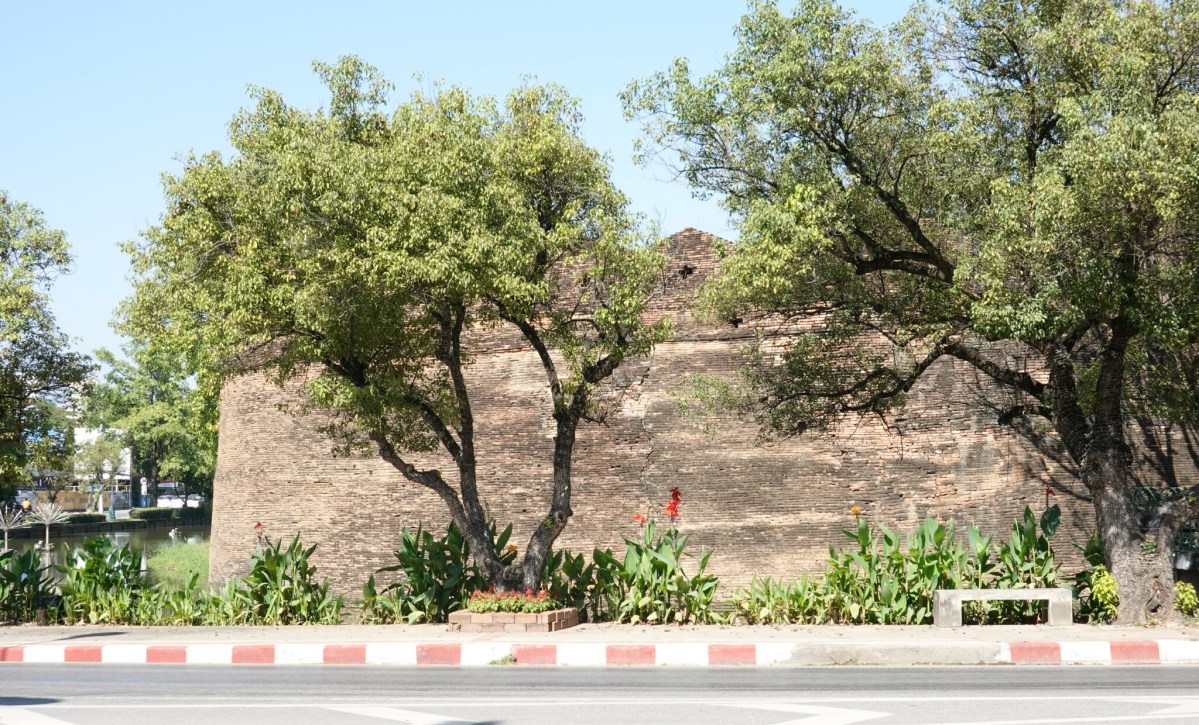
Ku Haeng Corner, southwest corner of the old wall
Kamphaeng Din
Very close to Ku Haeng Corner I walked down into a park. This is adjacent to the main road that goes out towards the airport, but is hardly visible from the road. Almost immediately, I saw the Kamphaeng Din earthen wall, a long section of it.
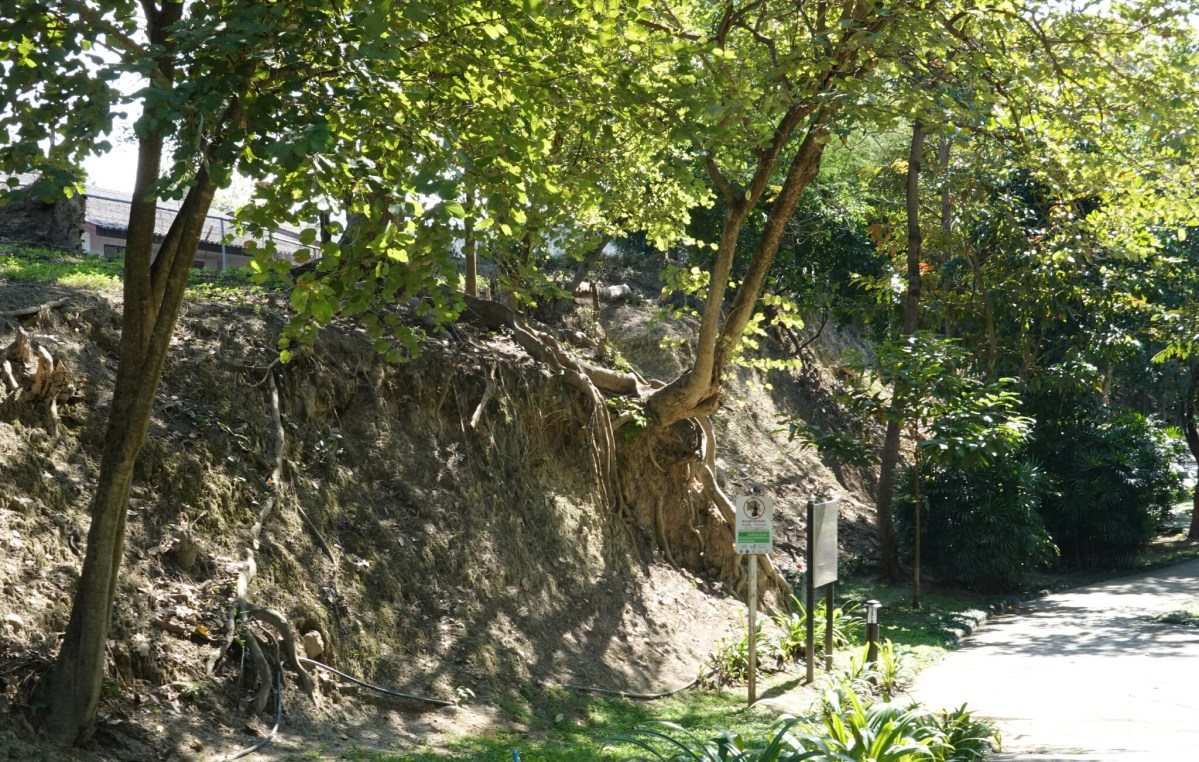
Kamphaeng Din earthen wall #1
Continuing along the walk in the park, there is a long section of the Kamphaeng Din.
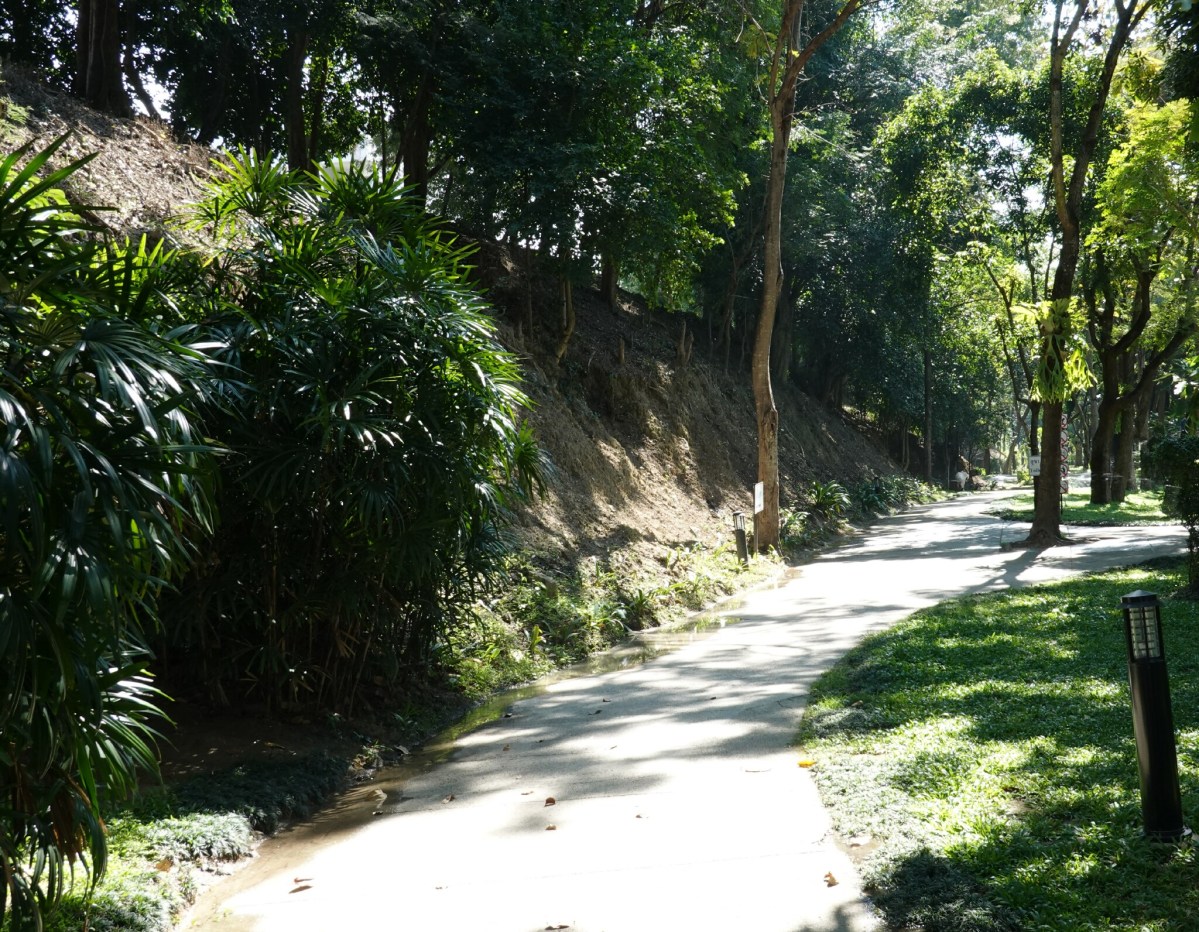
Kamphaeng Din earthen wall #2
And in some parts, the lower section is fortified with brick:
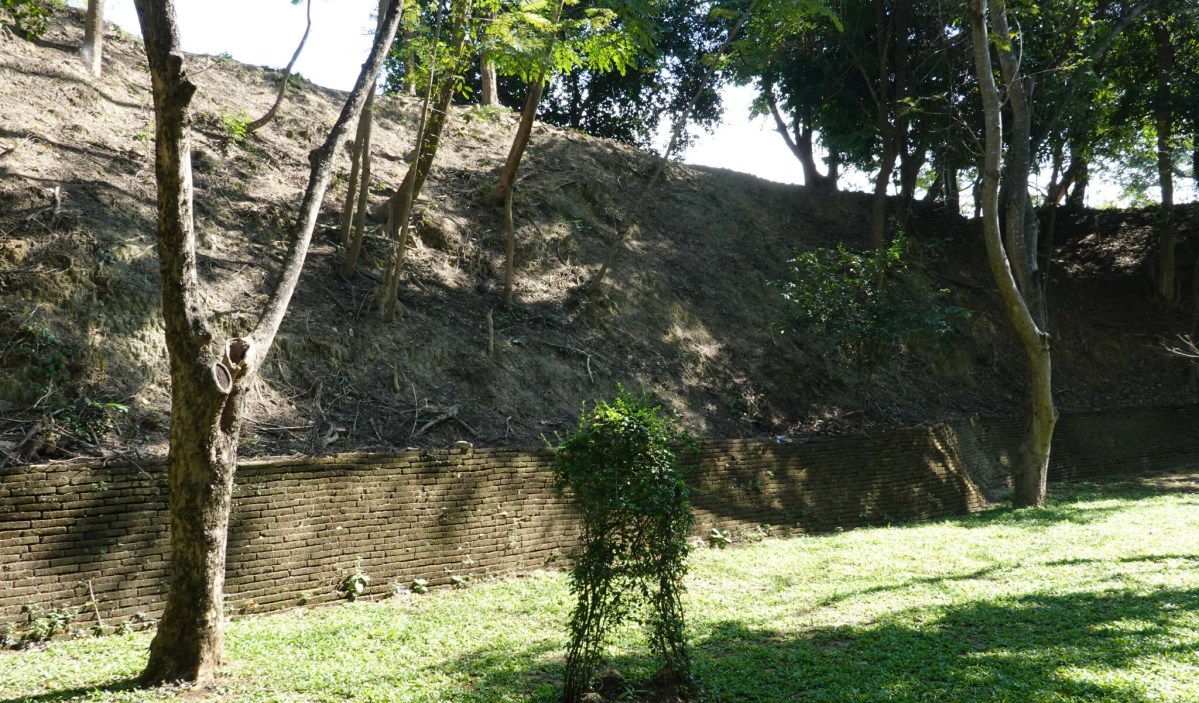
Kamphaeng Din earthen wall #3
And it just continued, more than 300 meters of this part of the Kamphaeng Din wall:
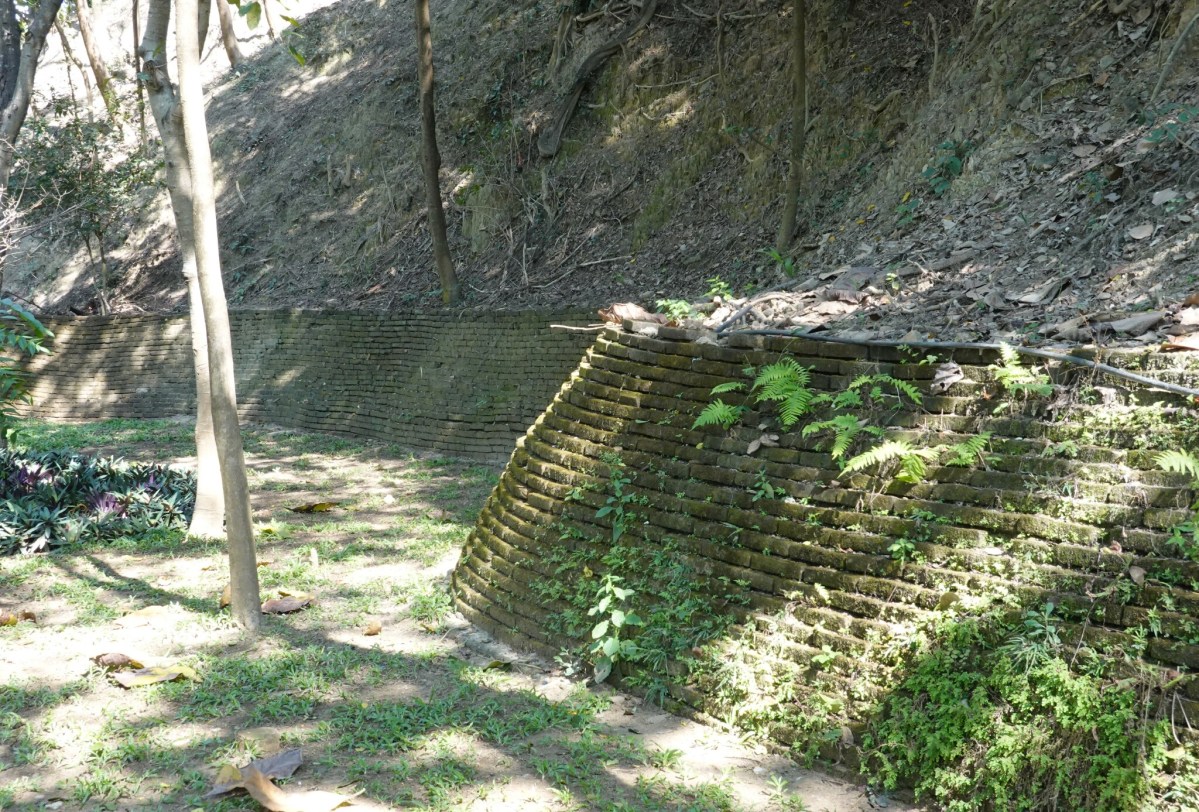
Kamphaeng Din earthen wall #4
Towards the end of the park, the path stops. Here is a last section of the Kamphaeng Din in this park area:
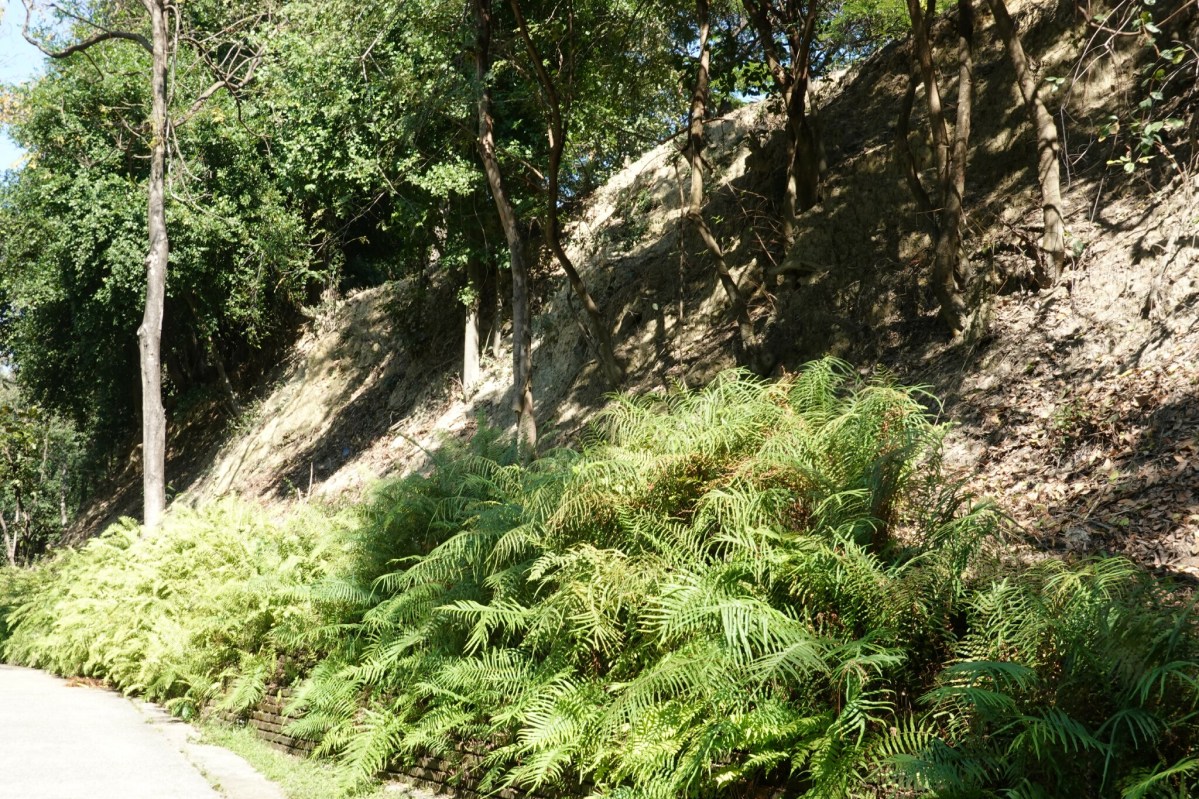
Kamphaeng Din earthen wall #5
From the map, there is a “bastion” where the wall turns from south to southeast, but I could not find a way to get to that part of the wall. So I tried to locate the Mae Kha canal to find more evidence of the Kamphaeng Din as it continues east towards Wat Nantaram.
Wat Si Ping Muang
I found a smaller, local temple named Wat Si Ping Muang. As are many local temples, this was an artistic and beautiful temple, out of tourist focus, and seldom seen by tourists.
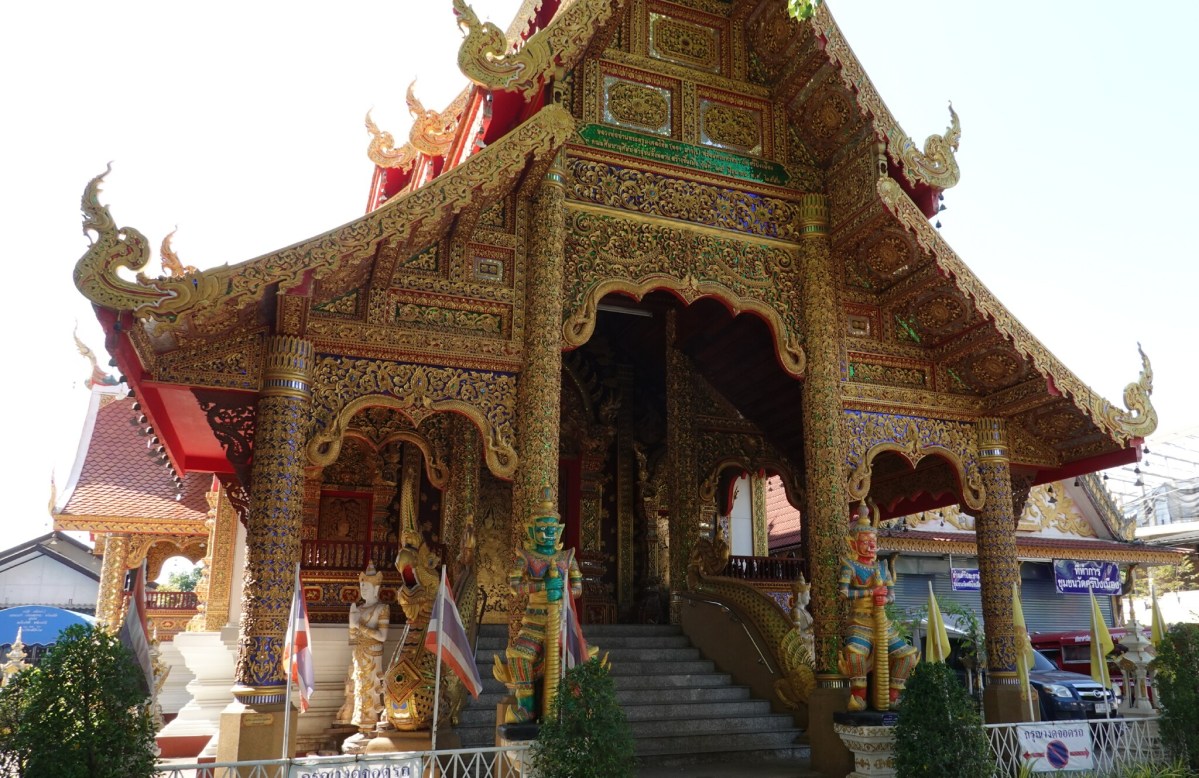
Wat Si Ping Muang main viharn
The detail of the viharn (worship hall) is elaborate; here is a bit of a closer look at the front of the viharn:
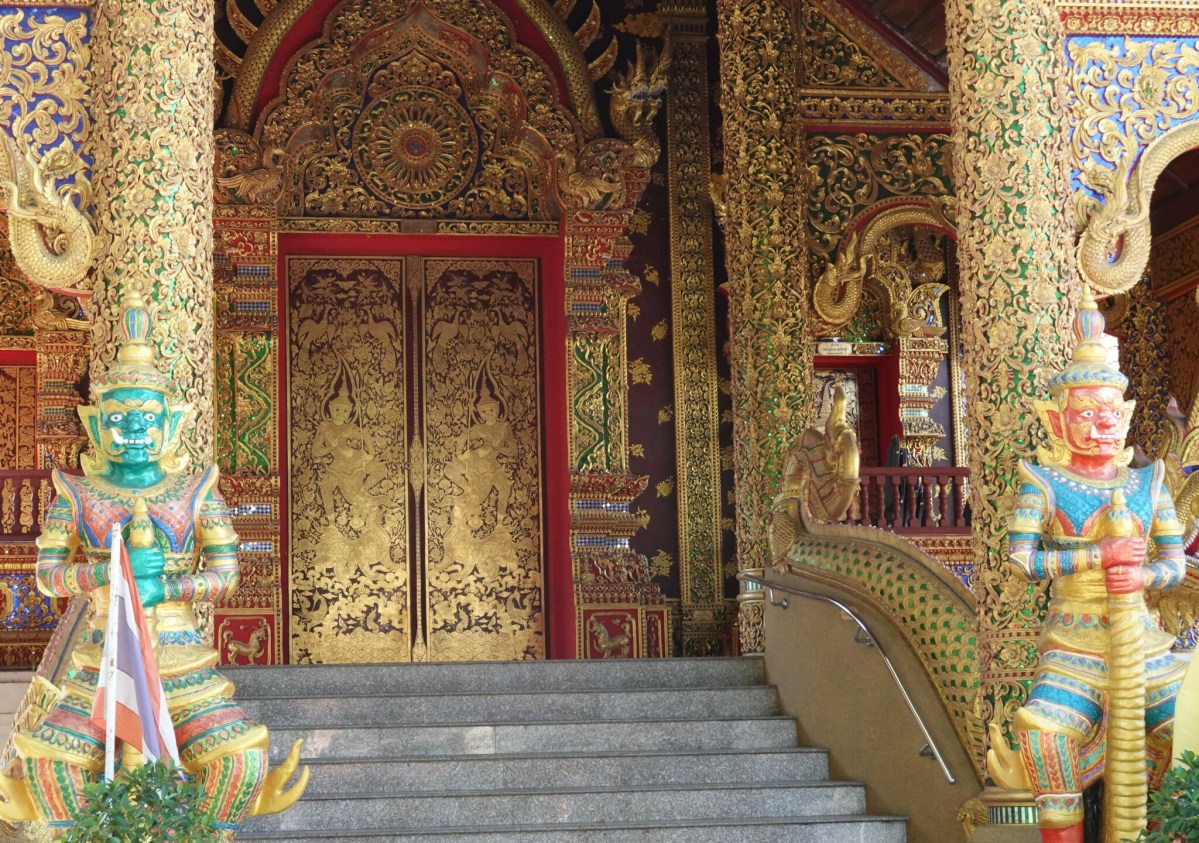
Wat Si Ping Muang main viharn detail
This is a beautiful temple. [I know, I say that a lot…but they are quite beautiful.]
I got a little lost following this soi (a lane) and that soi trying to follow the likely path of the Mae Kha canal, and soon found myself at the lower end of Wua Lai Road. Since I was not finding more evidence of the Kamphaeng Din, I decided to end my search today, walk up Wua Lai road and visit the Silver Temple, Wat Srisuphan.
Wat Sri Suphan
To the south of Chiang Mai Gate lies the traditional silver-making district of the Chiang Mai. Mostly on Wua Lai Road, this area is dotted with silver shops, and Wua Lai road is is probably best known as the location of the Saturday Walking Street Market, a smaller, but similar market to the Sunday Night Market inside the old city. A small lane off Wua Lai Road leads to one of the most unusual temples in northern Thailand. It is fairly well-marked, but many shoppers miss the signs.
The temple here was first founded in 1501 under King Mengrai and given the name Wat Sri Suphan Aram. Since then, temple has been renovated and redesigned a number of times. The most recent reincarnation of the temple began in 2004 under the direction of the abbot, Phra Kru Phithatsuthikhun. Instead of using standard temple renovation techniques, the abbot utilized the skill and knowledge of local silversmiths. This is most evident in the design of the ubosot (ordination hall). The result is a building covered in silver metal which shimmers in the sunlight and is full of intricate details. Most of the covering uses alloy and zinc with silver being reserved for the holy images.
Here is a view of the ubosot:
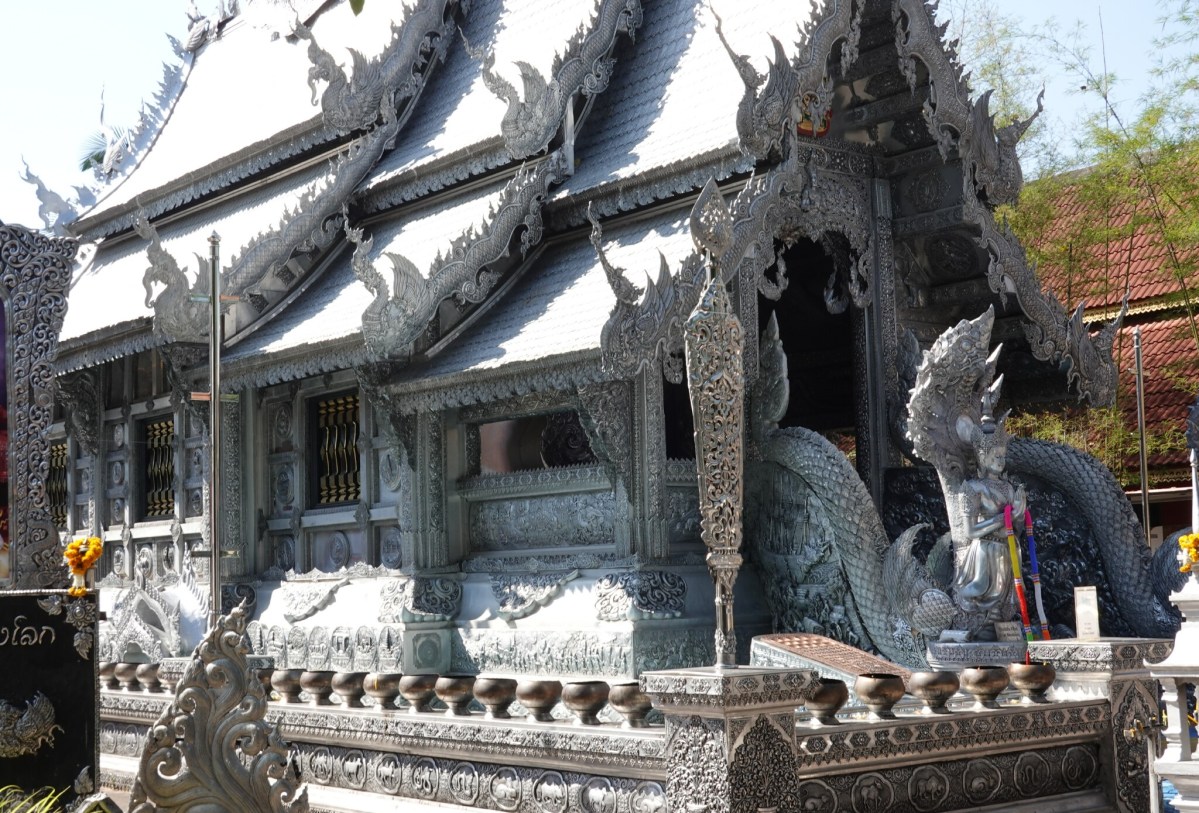
Wat Sri Suphan Ubosot #1
You can see the detailed metal covering the building, including the roof.
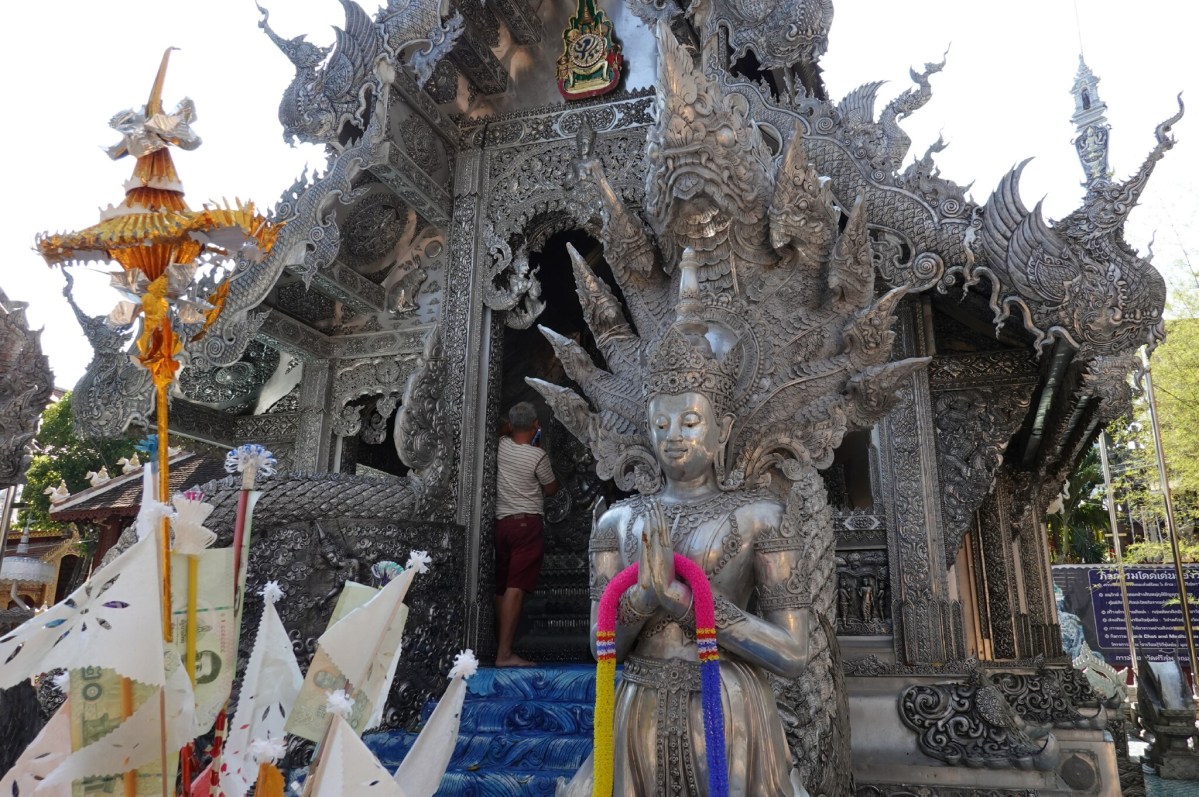
Wat Srisuphan Ubosot #2
More detail is evident in this picture. And I got one picture of the inside:
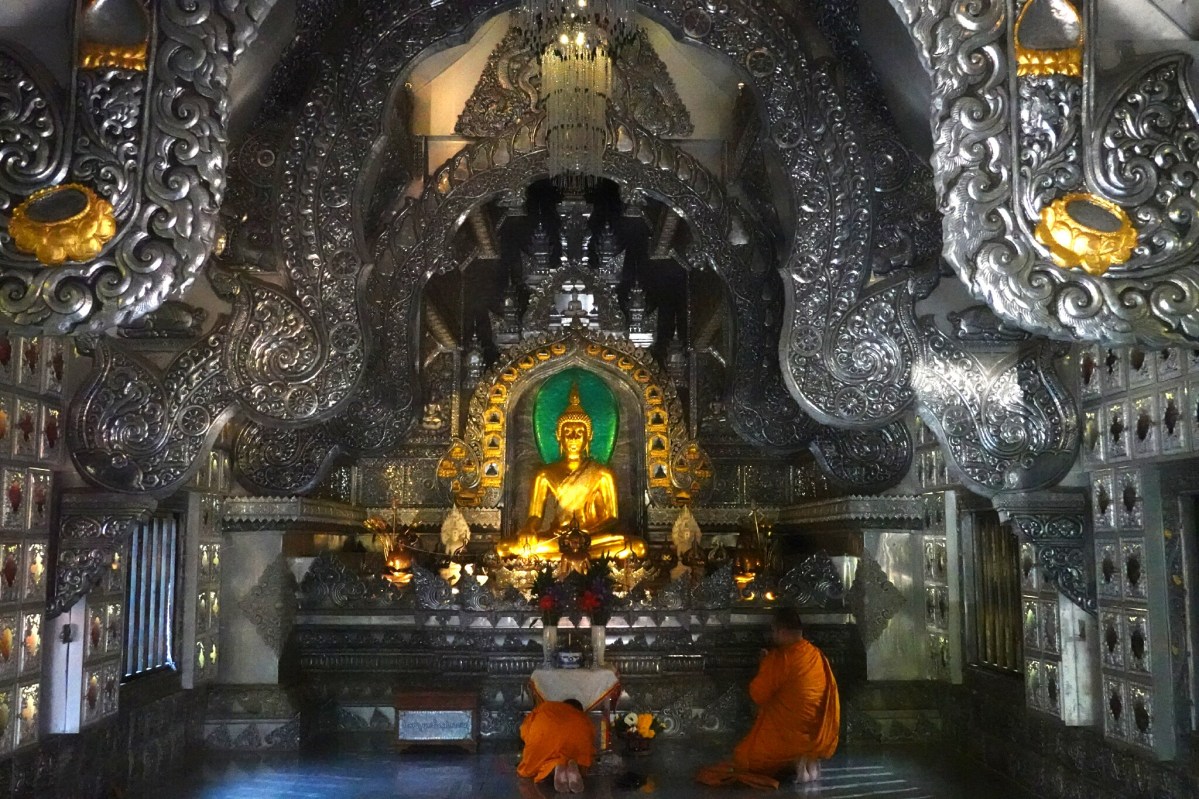
Wat Sri Suphan Ubosot #3
A number of monks came in, and there seemed to be a ritual of some kind taking place, so to avoid being a distraction, I exited quietly.
At some temples, there is a building called an ubosot, or an ordination hall. In all of these ubosots, women are forbidden. Here is a quote at Wat Sri Suphan explaining why:
Beneath the base of Ubosotha in the monastic boundary, many precious things, incantations, amulets and other holy objects were buried 500 years ago. Entering inside the place may deteriorated the place or otherwise the lady herself. According to this Lanna Belief, ladies are not allowed to enter the Ubosotha.
This is a not a good explanation, but it comes down to custom and the Thai beliefs, and while a guest in Thailand, I honor and follow their customs and beliefs.
Buddha Footprint
I have seen two other Buddha footprints, one at Wat Fai Hin (near the trail head for the hike to Wat Palaad and Wat Phra That Doi Suthep), and one in the Chiang Mai historical museum by Wat Jed Yod. I do not recall seeing this one at Wat Sri Suphan in my previous visits, but here it is, right by the Ubosot:
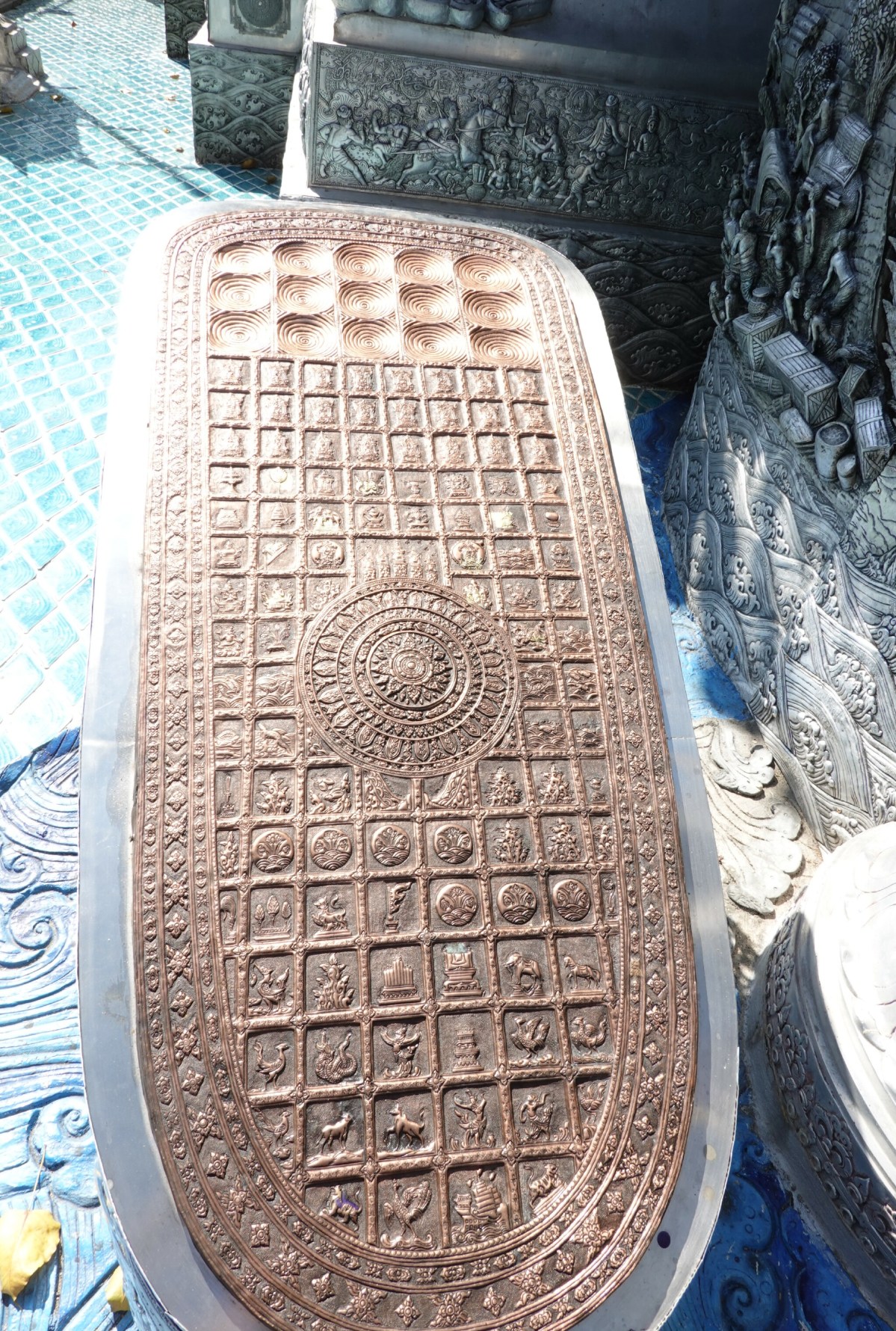
Buddha footprint at Wat Sri Suphan
It is about 1.25 meters long, or just over 4 feet. I searched for information but have not yet found more information about this Buddha footprint.
Part of the temple grounds are for craftsmen working on the silver reliefs used for the Ubosot coverings. I walked over to that area, and it is a little noisy with the craftsmen hammering away. Here are a couple of photos of some of their work:
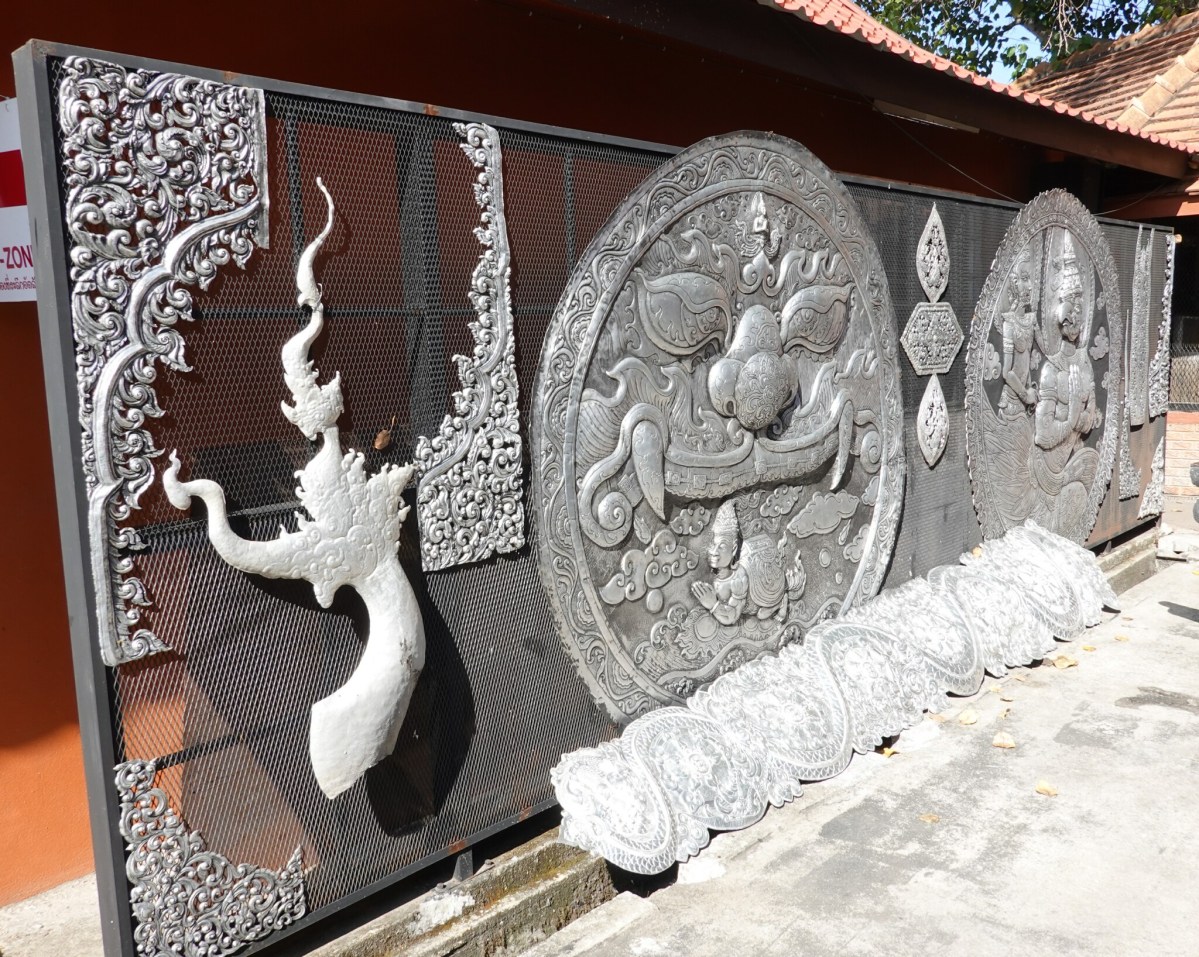
Silver craftsmen handiwork #1
And this striking relief of a reclining Buddha:
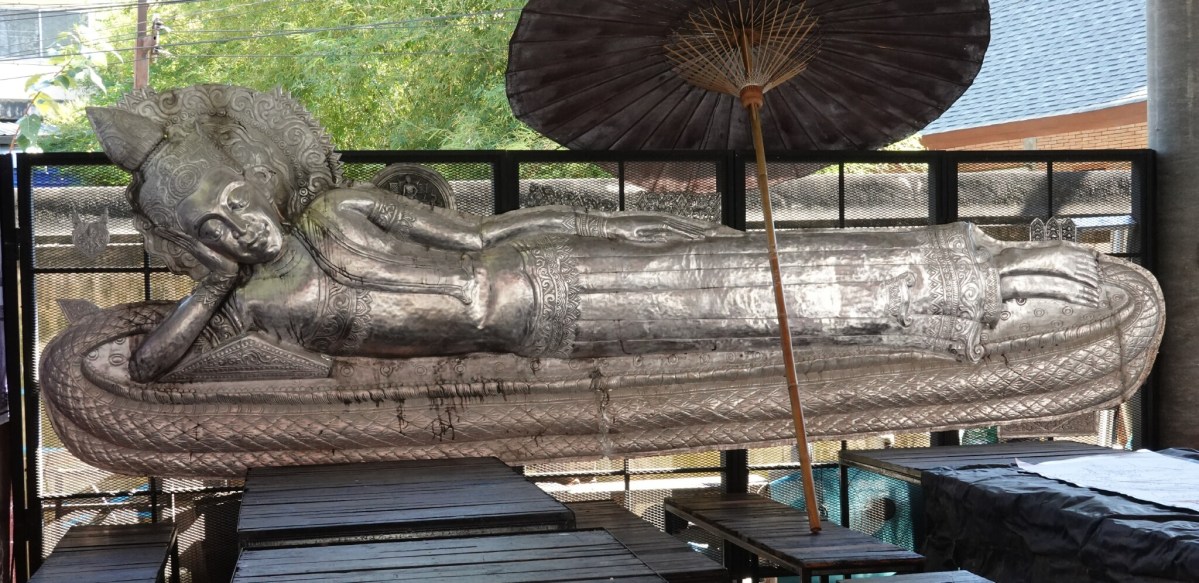
Silver craftsmen handiwork #1
Finally, I wandered to the main viharn (worship hall) at Wat Sri Suphan. As I have written previously, almost all Buddhist temple viharn are aligned east-west, so that the main doors greet the rising sun. I know of only two exceptions in Chiang Mai, Wat Lok Molee, and Wat Sri Suphan. The main viharn at Wat Lok Molee opens to the south, and the main viharn (as well as the ubosot) at Wat Sri Suphan opens to the north. To date, I have not been able to discover why these two temples are constructed differently from the overwhelming norm.
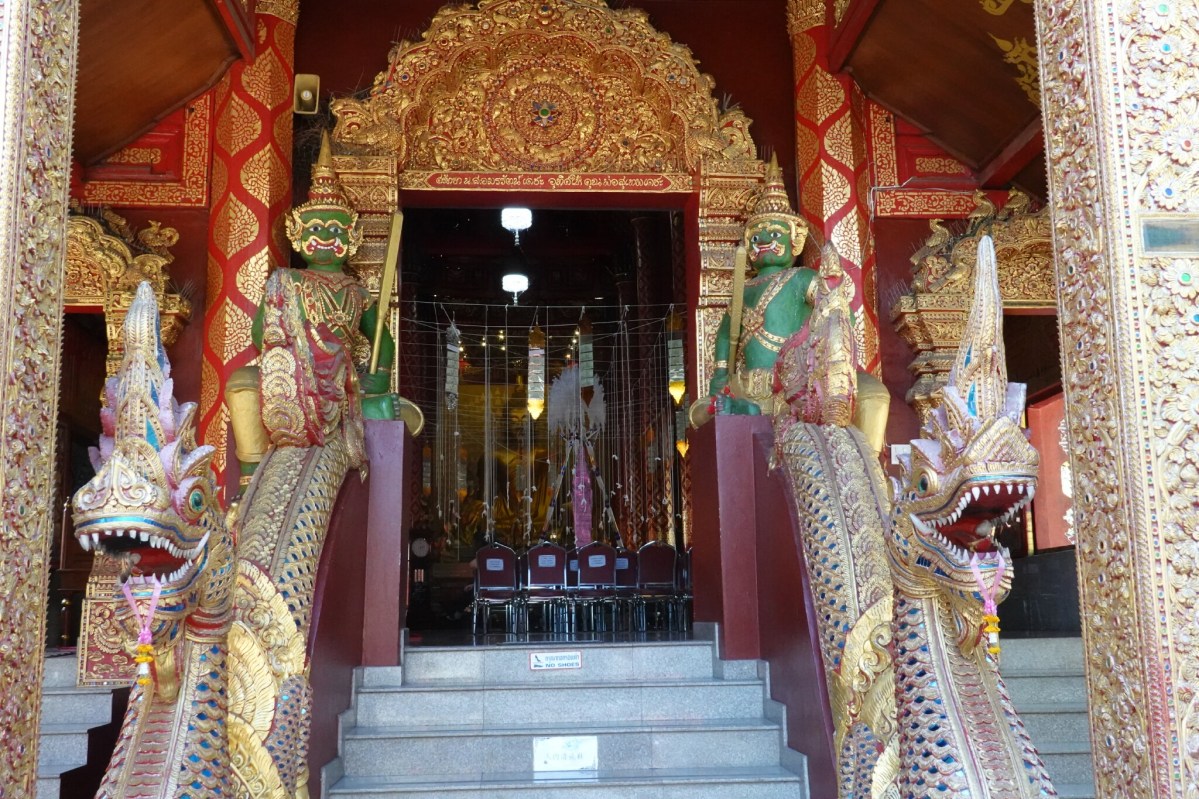
Main viharn (worship hall) entrance at Wat Sri Suphan opening to the north
A long day walking around the south part of Chiang Mai, searching for Kamphaeng Din and visiting Wat Sri Suphan. I headed back to 3-Sis, cleaned up, rested a bit, and headed out for dinner…time for a non-Thai dinner, pizza! I went to Street Pizza, and had a salad, a pepperoni pizza, and a watermelon smoothie. Street Pizza is a favorite of Rose & John, the owners of Wild Rose Yoga, and everything is made fresh on site, including the pizza sauce. It is very good!
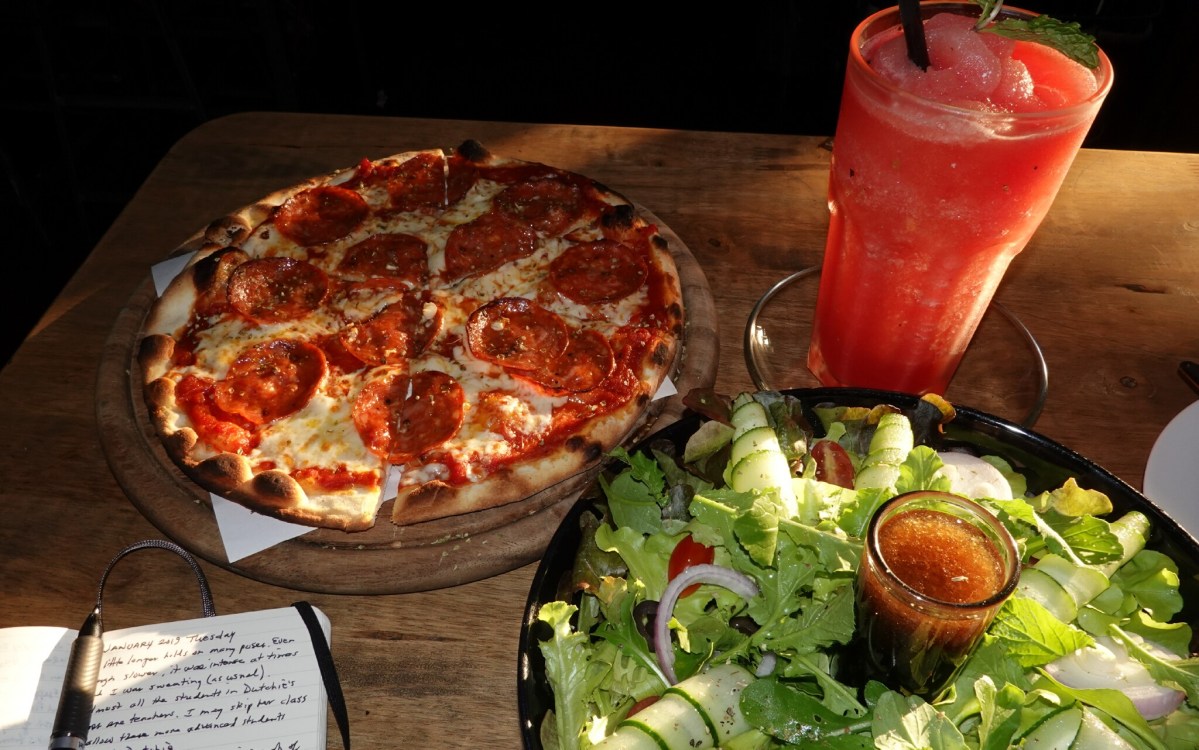
Another tiring, but very good day in Chiang Mai.
Next: Return to Wat Chedi Luang and Wat Pan Tao

 James the Intrepid Pilgrim