Monday, January 14, 2019
From Wat Chiang Man West Along the Wall
After yoga and lunch, I headed out for a walk from Wat Chiang Man along the north and west sides of the wall/moat.
Wat Chiang Man
Wat Chiang Man is the temple built by King Mengrai as a place to live and worship, and his base as he managed the building of the wall and moat. Work on the wall and moat commenced in April of 1296, and with 90,000 men working, and took only 4 months to complete.
Here is the main viharn (worship hall) of Wat Chiang Man, last renovated in the 1920s:
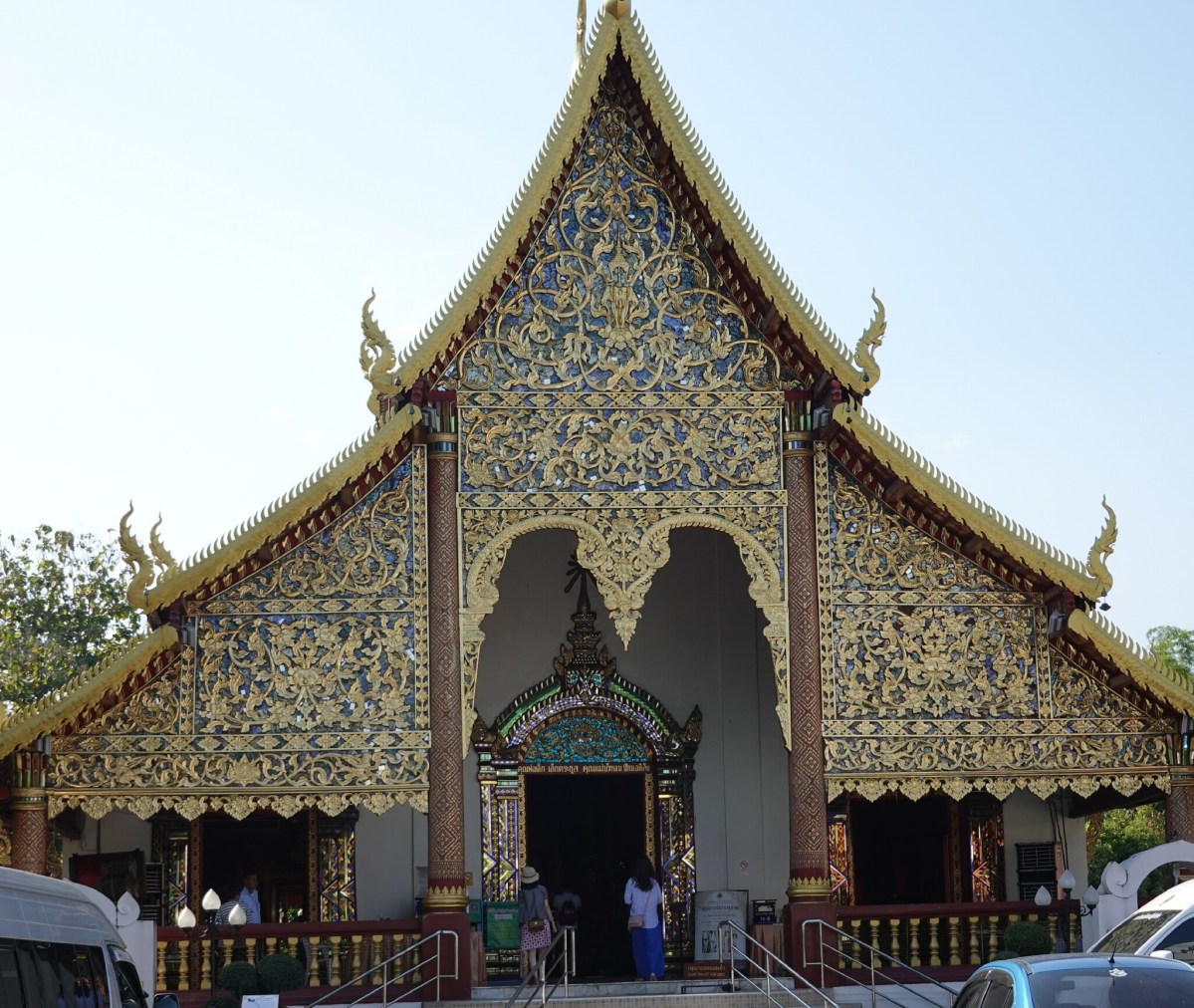
Wat Chiang Man main viharn (worship hall)
And inside the viharn is a beautiful alter and group of Buddha statues. One of them is said to be the oldest Buddha statue in all of Lanna (the country that was northern Thailand and Laos).
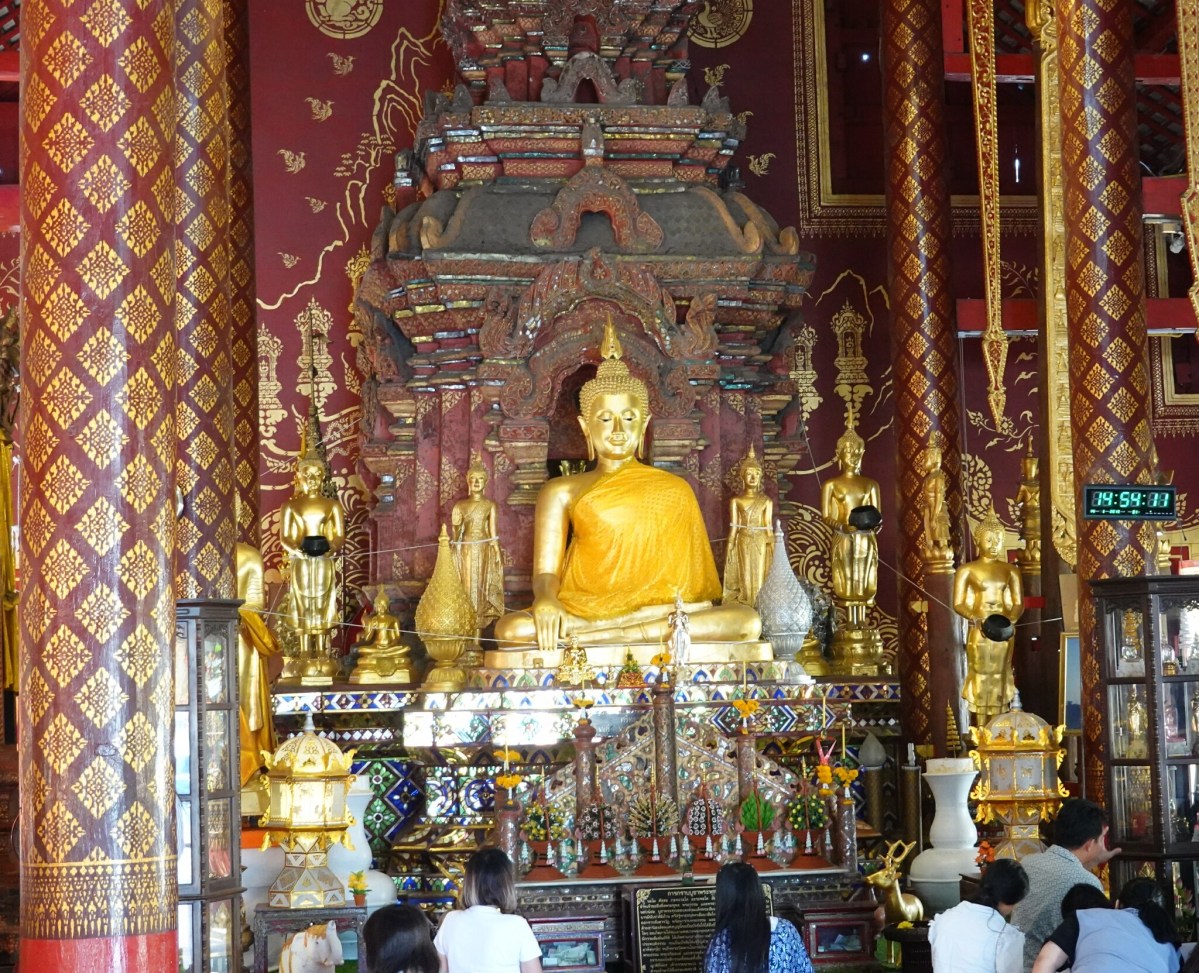
Wat Chiang Man main viharn inside view
There is a smaller viharn beside and just to the north of the main viharn. This is said to house the crystal Buddha, kept in a vault, and not easily seen.
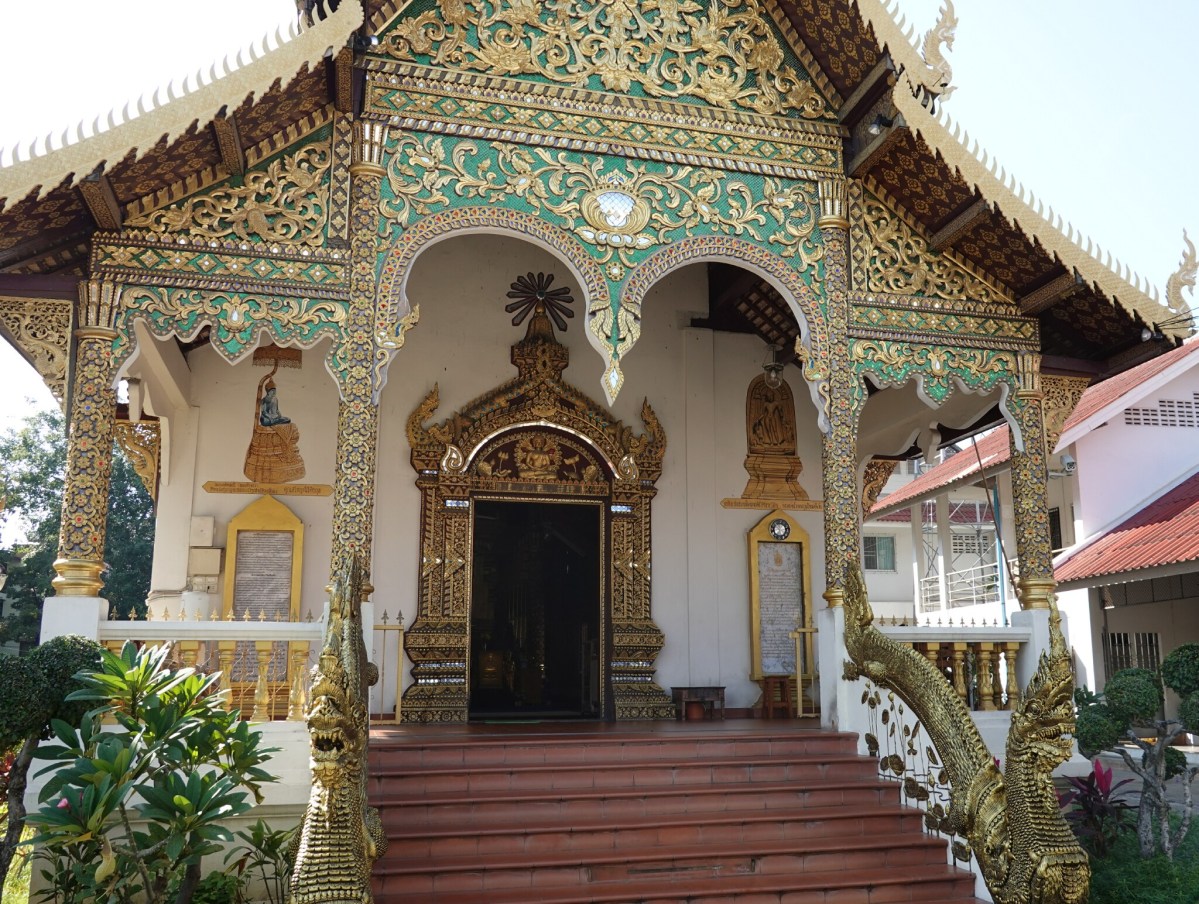
Wat Chiang Man secondary viharn housing the crystal Buddha
Inside the secondary viharn at Wat Chiang Man:
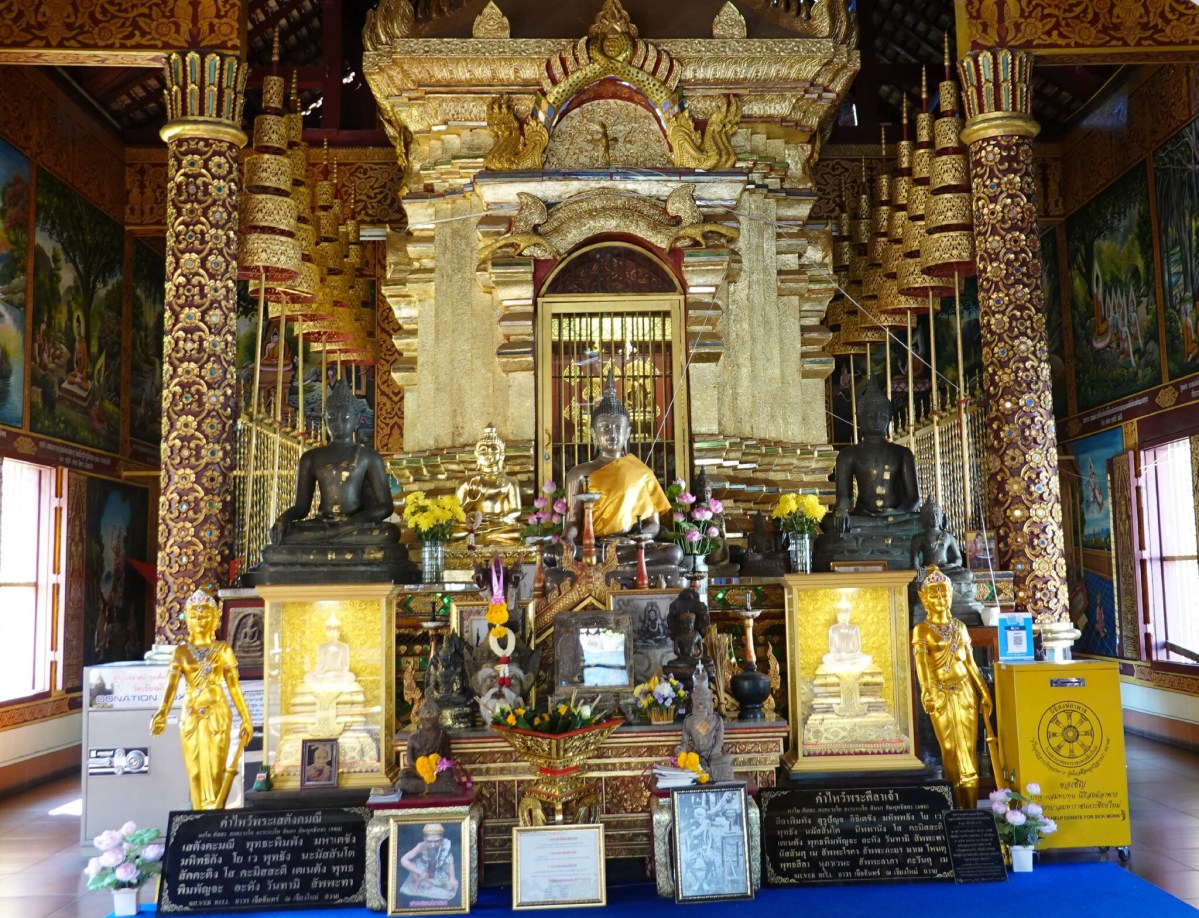
Wat Chiang Man secondary viharn inside. The Crystal Buddha is in a vault behind the bars behind the center Buddha statue.
In a vault behind the bars in the center of the main alter is the Phra Sae Tang Khamani also known as the ‘Phra Kaew Khao’ or ‘Crystal Buddha’. This is a 10 centimeter (4 inches) tall statue is carved out of a clear quartz crystal. According to history, the statue was crafted around 200 CE for King Ramraj of Lopburi later moved to present day Lamphun by Queen Jamadevi in 662 CE. It was transferred to Chiang Mai by King Mengrai in 1296 after he had conquered Lamphun. Because it survived the pillaging of that city, the statue is thought to protect against disasters.
The oldest structure at Wat Chiang Man (and at most temples) is the chedi. This one is known as the “Elephant Chedi” because the base is surrounded by elephant statues:
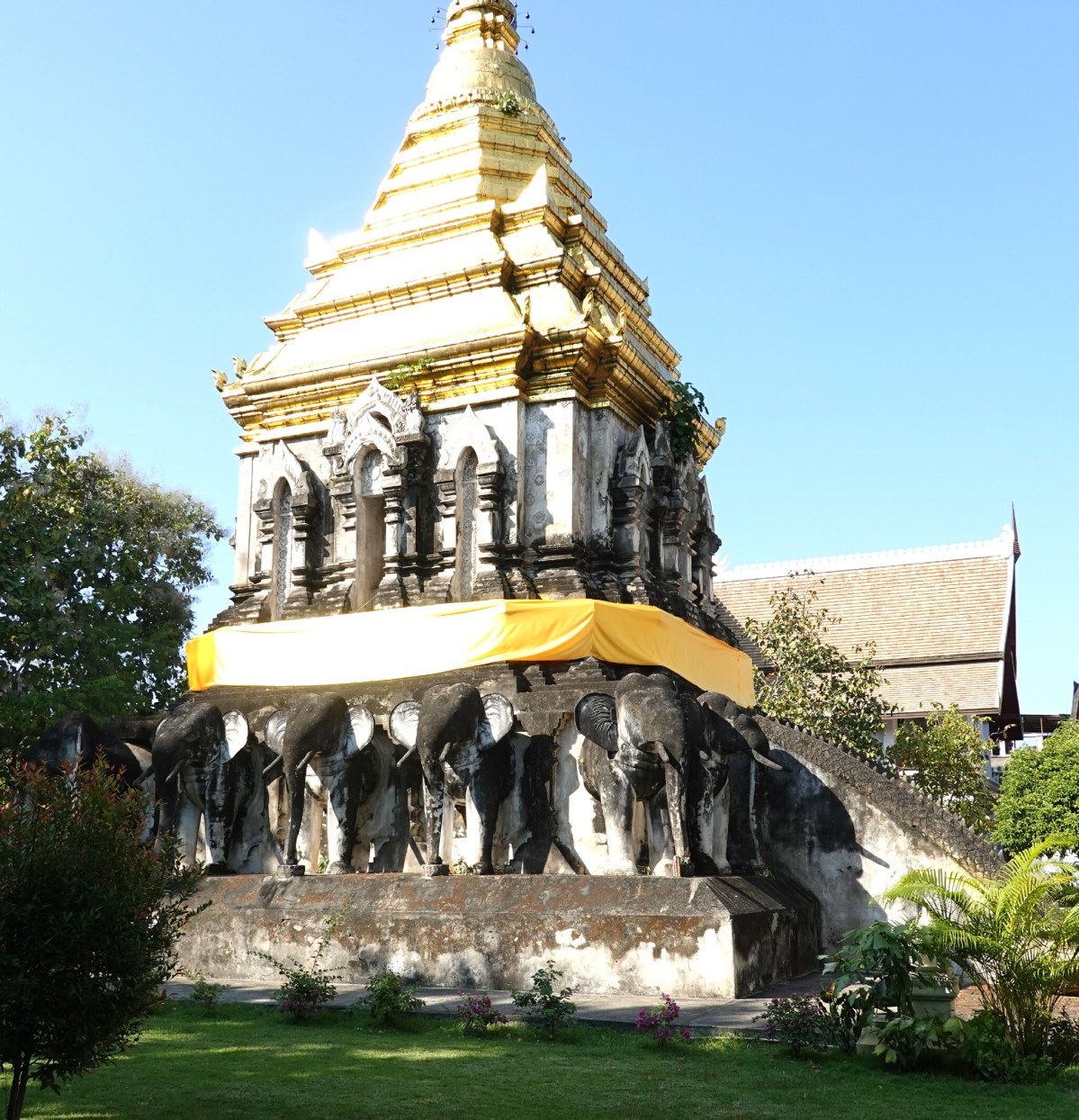
Wat Chiang Man “Elephant Chedi”
And behind the chedi from a high raised base is a statue of King Mengrai himself:
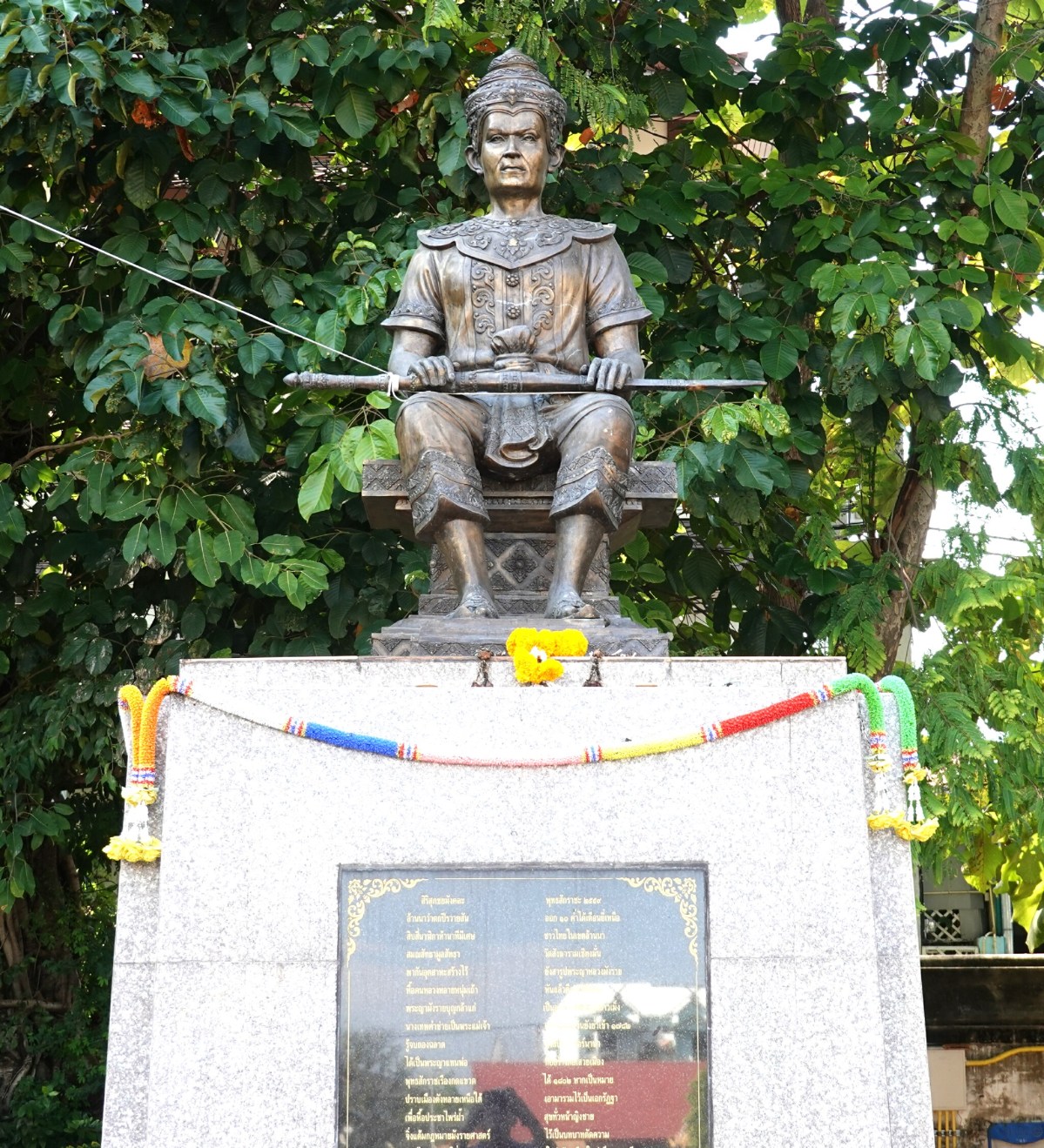
Wat Chiang Man statue of a stern-looking King Mengrai
He does look quite stern, but this might not be much of a surprise, as he was supervising 90,000 men building the wall and moat around his new city.
Chang Phuak Gate
From Wat Chiang Man, it is only about 50-70 meters to the north gate in the wall, Chang Phuak Gate, also spelled Chang Puak Gate. Chang is elephant, and “puak” directly translated means ivory or off-white, so it is often called the White Elephant Gate. But the royal elephants were not really white. In the context of an elephant or water buffalo, “puak” means “not the normal color.” The royal elephants, or Chang Puak, were really a reddish-brown-gray, not the normal gray color.
When it was first built, the North Gate was called “Hua Vieng Gate” which means the first gate to enter the city. In Thai language “Hua” means head and in northern Thai “Vieng” is a fortified place. This was changed in about 1400, after two events took place.
First, this is where, in the story of the temple on the mountain at Doi Suthep the royal elephant with the relic was set free. King Geu-Na, the eighth ruler of Chiang Mai was king, and decided where the elephant stopped would be the site of the temple and chedi to house the sacred relic. As we know, the elephant went up the mountain now known as Dio Suthep, and there is a beautiful temple at that site.
The second event came about 15 years later when King Saen Muang Ma, the son of King Geu-Na, led his army on an expedition from Chiang Mai to Sukhothai, with the intention of capturing the city kingdom. Unfortunately, they were counter-attacked and almost decimated. The king survived because his two loyal servants carried him 250 kilometers on their shoulders to safety. He rewarded them with money and materials, and nominated them to the royal ranking as Khun Chang Sai; the left elephant, and Khun Chang Kava; the right elephant. Two elephant statues (now gone) were placed at the north gate, and this lead to its being called Chang Puak Gate.
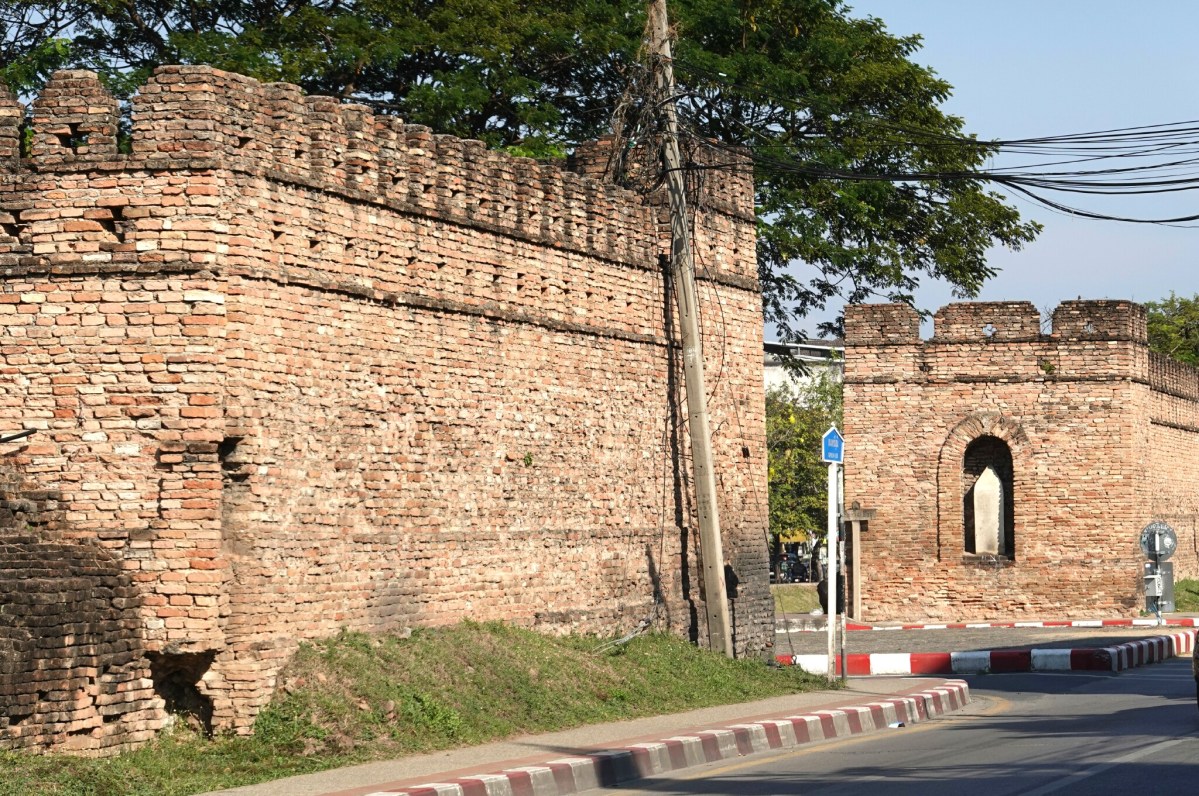
Chang Puak Gate, the north gate in the wall.
This is not a great picture, but the traffic was too great for me to get to the other side easily here.
Wat Lok Molee
From Chang Puak Gate, I headed west, towards one of my favorite temples, Wat Lok Molee (also spelled Wat Lok Moli). There are several buildings at Wat Lok Molee, but my attention always gravitates to the viharn (worship hall) with its rich and dark teak outside and inside. This viharn is said to have been rebuilt in the 1980s funded by a motion picture company who wanted to use the viharn as part of a film. I have heard this more than once, but have little substantiation. Nevertheless, the viharn is a beautiful example of Lanna-style.
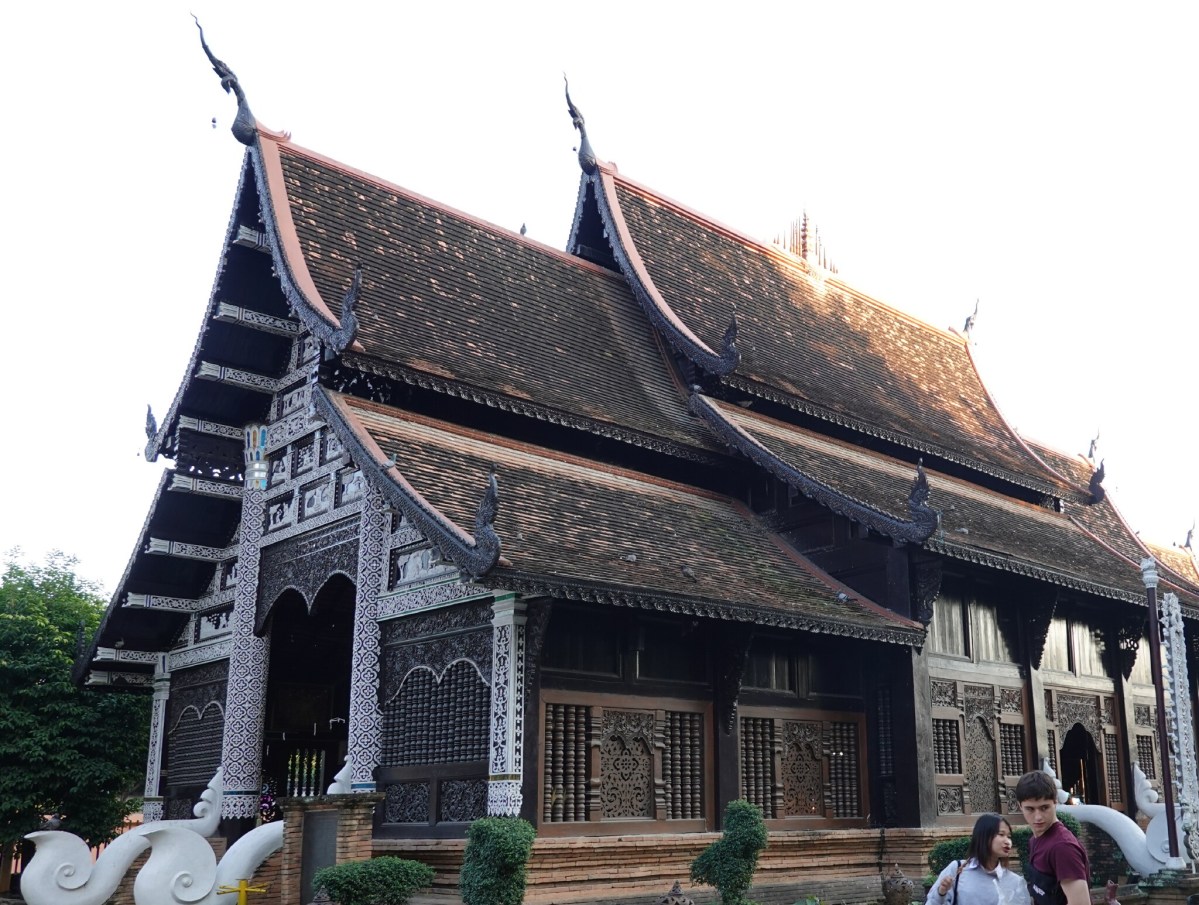
Main viharn at Wat Lok Molee
Inside the viharn, it is dark and rich with that large gold Buddha at the alter:
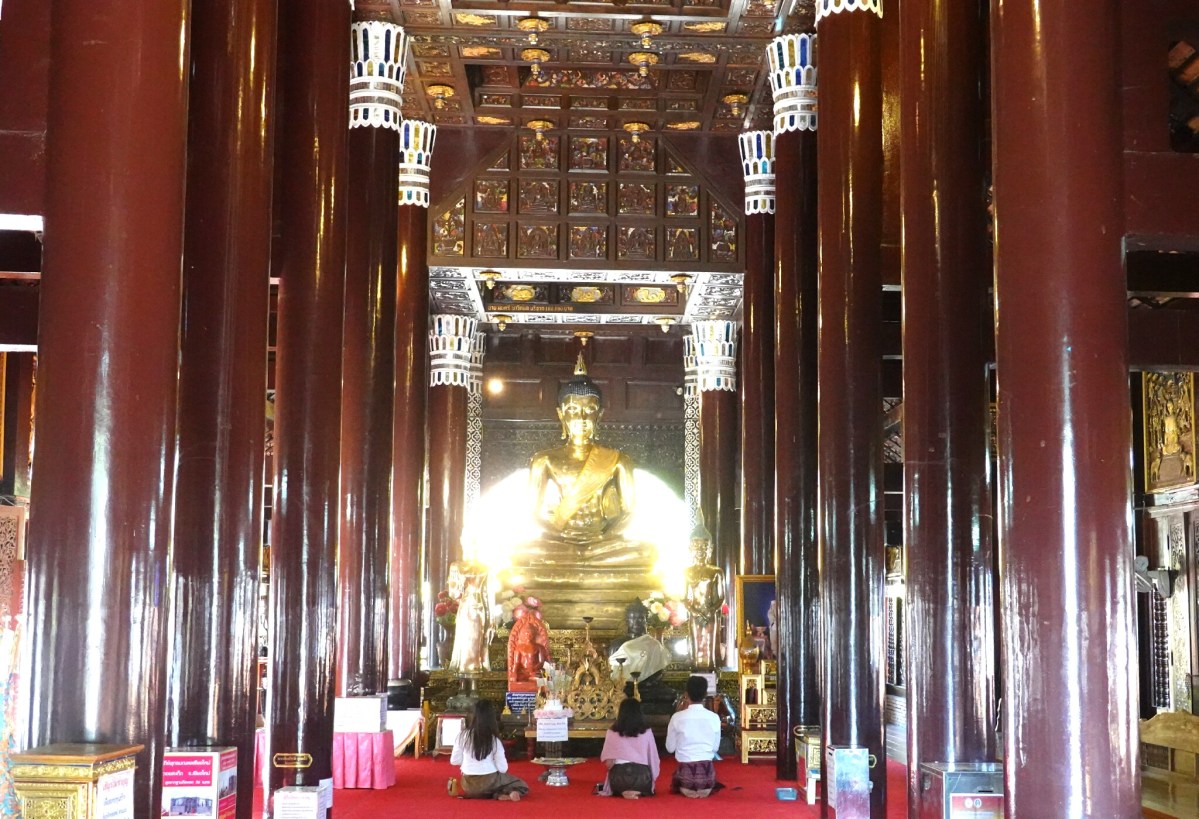
Inside Wat Lok Molee main viharn
And one must look up, for there are colorful paintings on the ceiling:
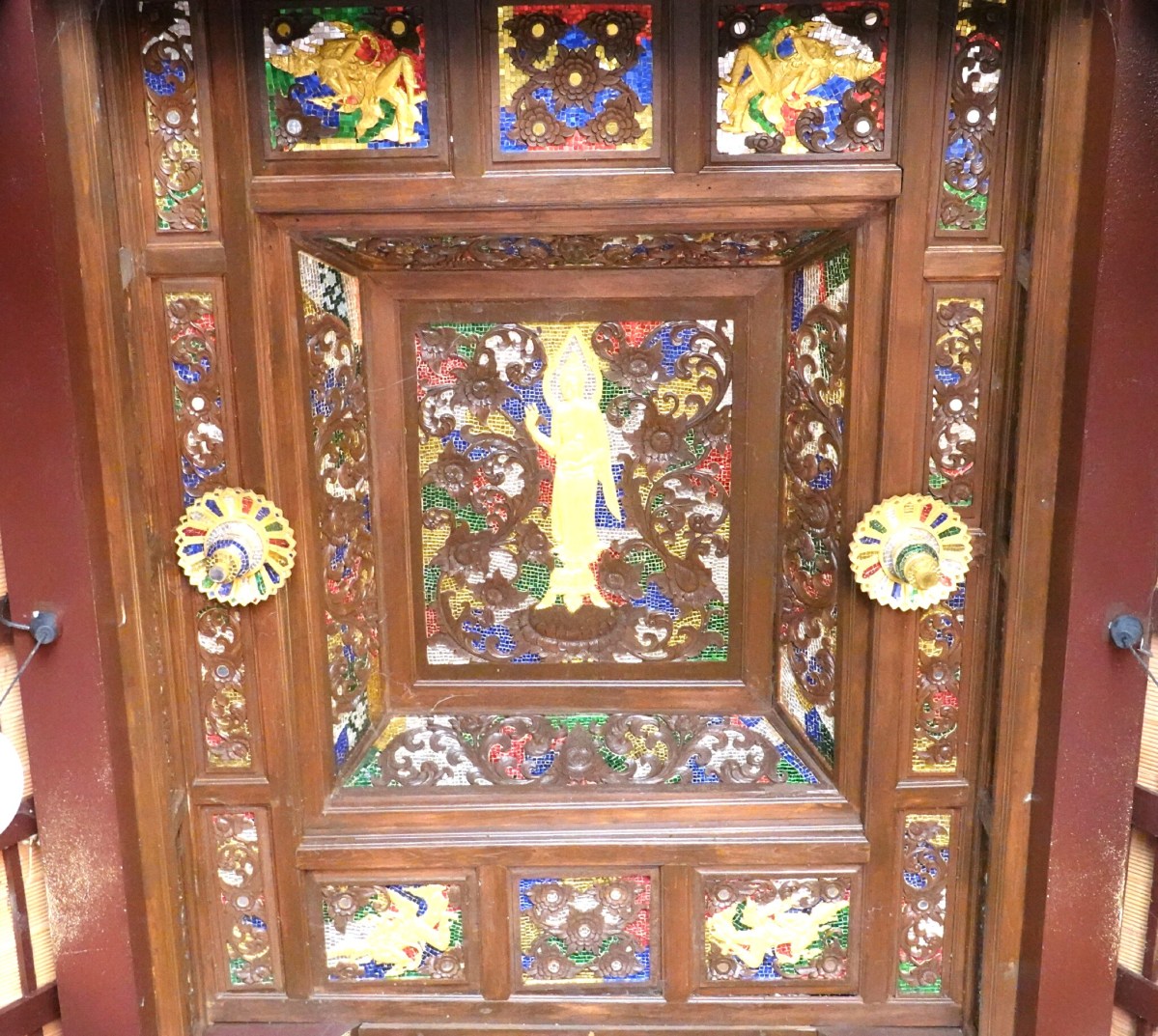
Wal Lok Molee viharn ceiling paintings
The real draw for me is the very tall brick chedi. It was built by King Mengrai in the early 1300s to inter the ashes of several members of the Mengrai dynasty. Until the demise of their dynasty, the Mengrai royal family took the responsibility for maintaining the temple. The chedi brickwork has been left, in contrast to later chedis in which the brickwork is covered with stucco.
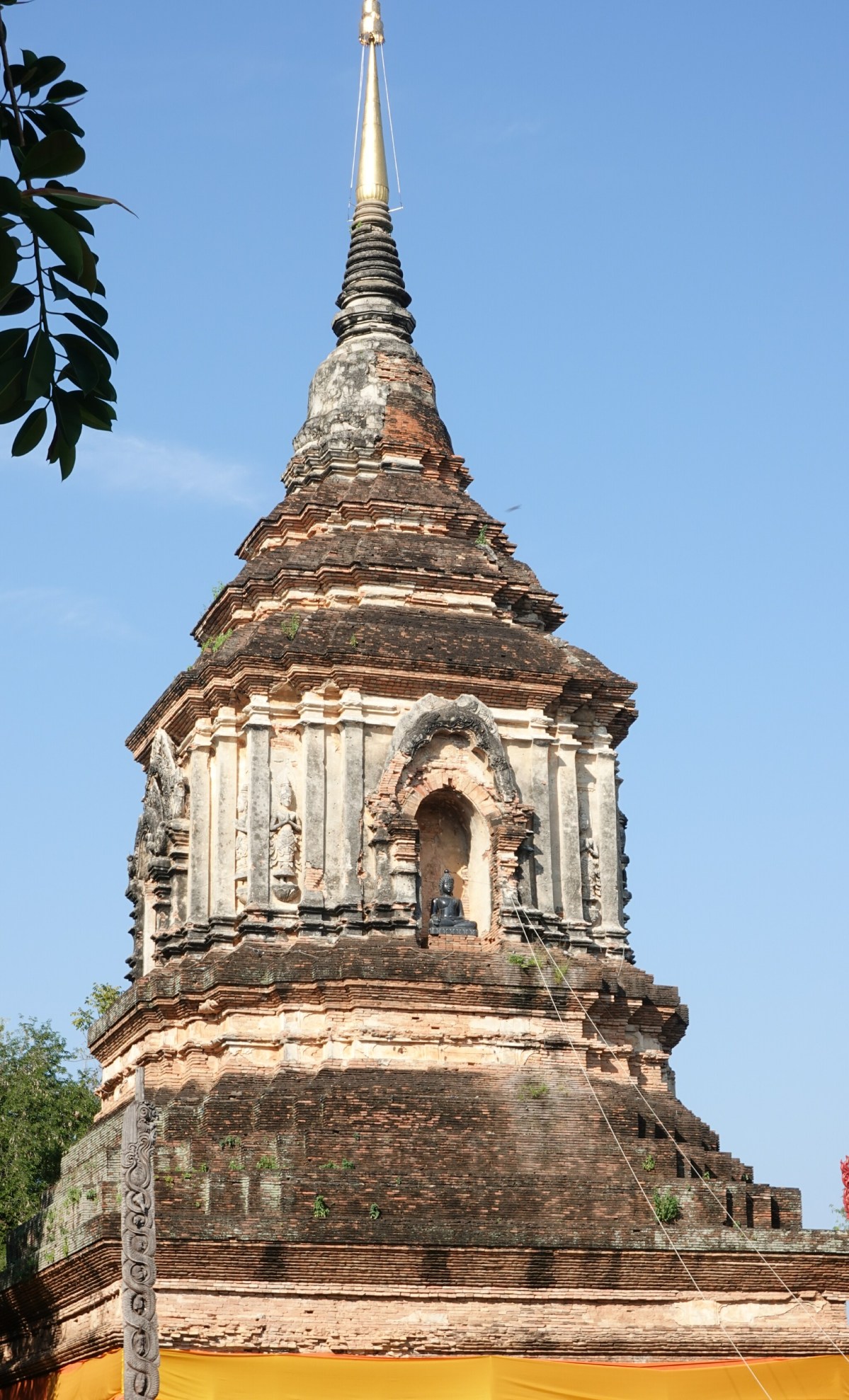
Wat Lok Molee large brick chedi
A closeup of the south-facing niche in the chedi reveals this very nice Buddha statue: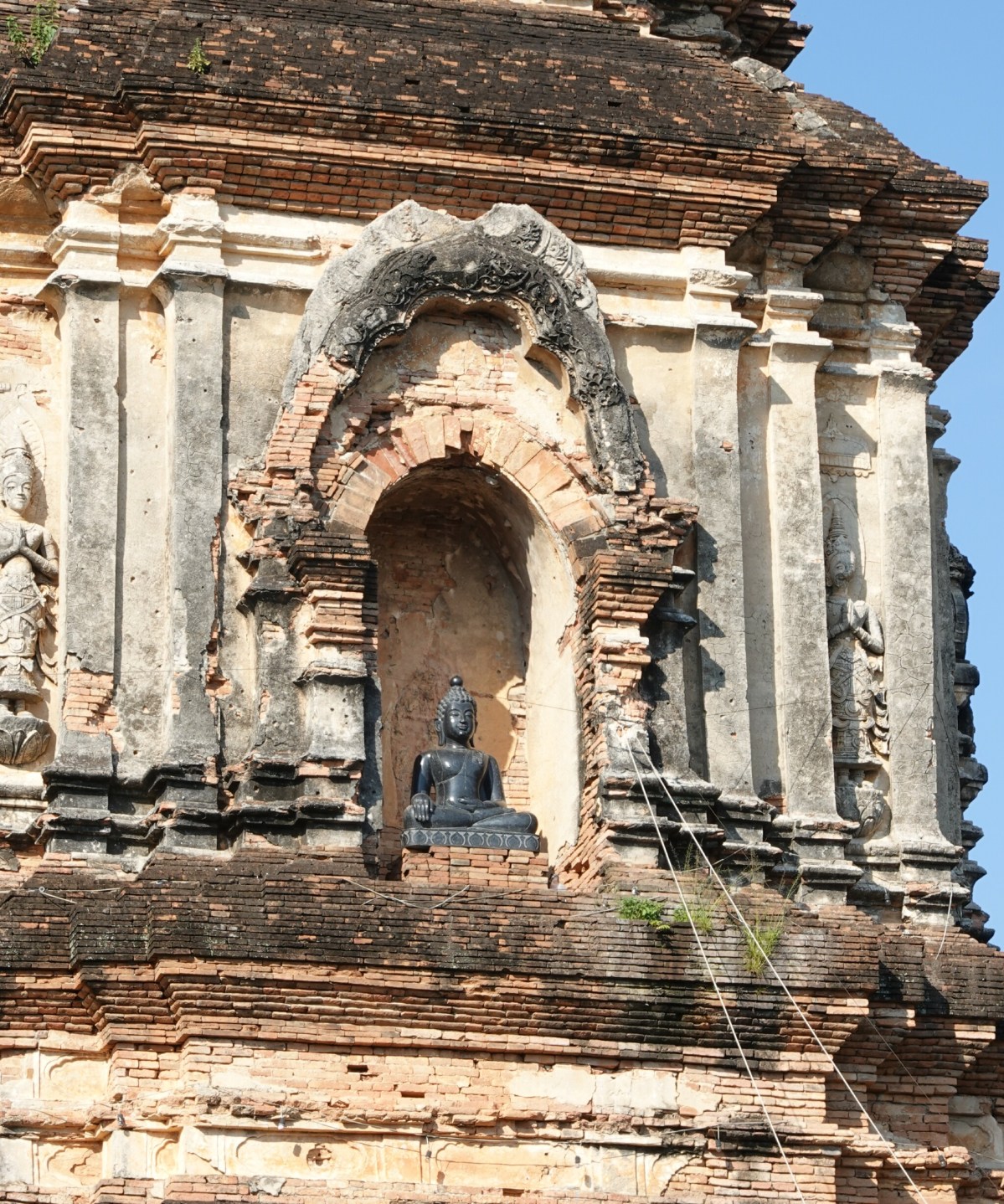
Hau Lin Corner
I continued westward to the northwest corner of the moat/wall, Hua Lin Corner.
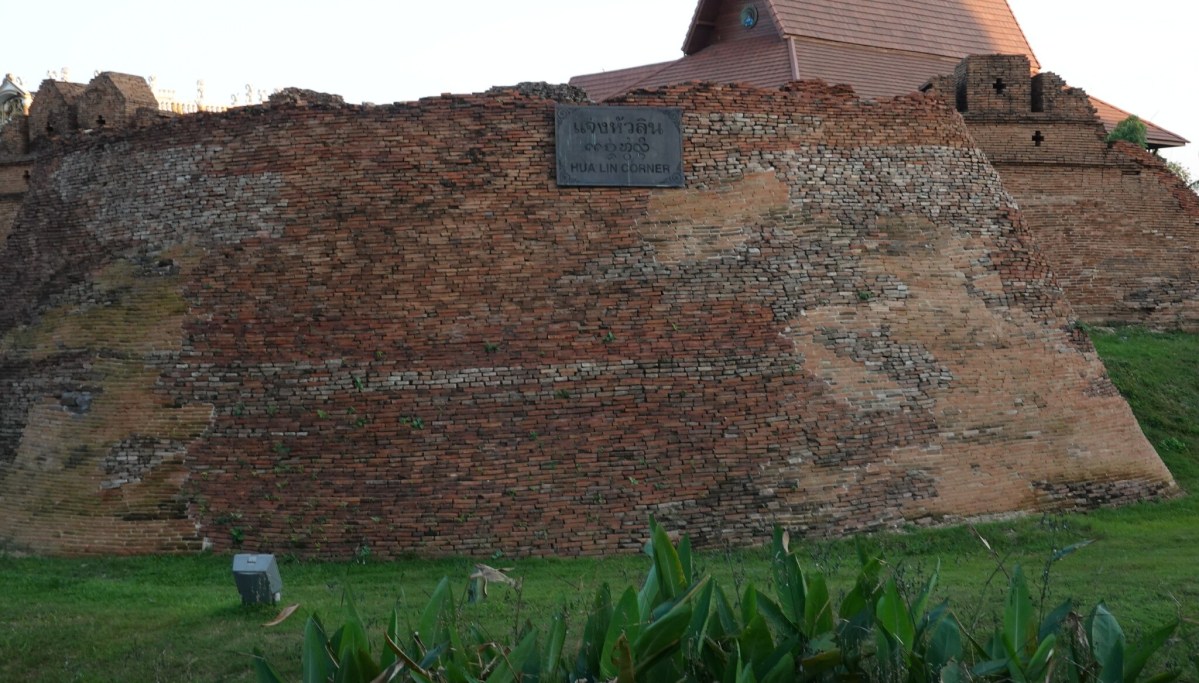
The bastions at the corners were like forts – they had interior rooms and were home to the soldiers guarding the city from the wall.
From Hua Lin Corner, I headed south along the moat. for a good stretch, the wall here is completely gone. During World War II, when the Japanese occupied most of Thailand, the bricks in much of the Chiang Mai city wall were used to pave the road to Pai.
Wat Pansao
I crossed the outer moat road and stopped at Wat Pansao. Not much history of this small temple is to be found. Tourists seldom go there, and while there, I think I was the only non-Thai. But as are many of the smaller, local temples, Wat Pansao is quite nice. It was getting dark, so my photos are dark, but the temple still shines. Here is the viharn at Wat Pansao:
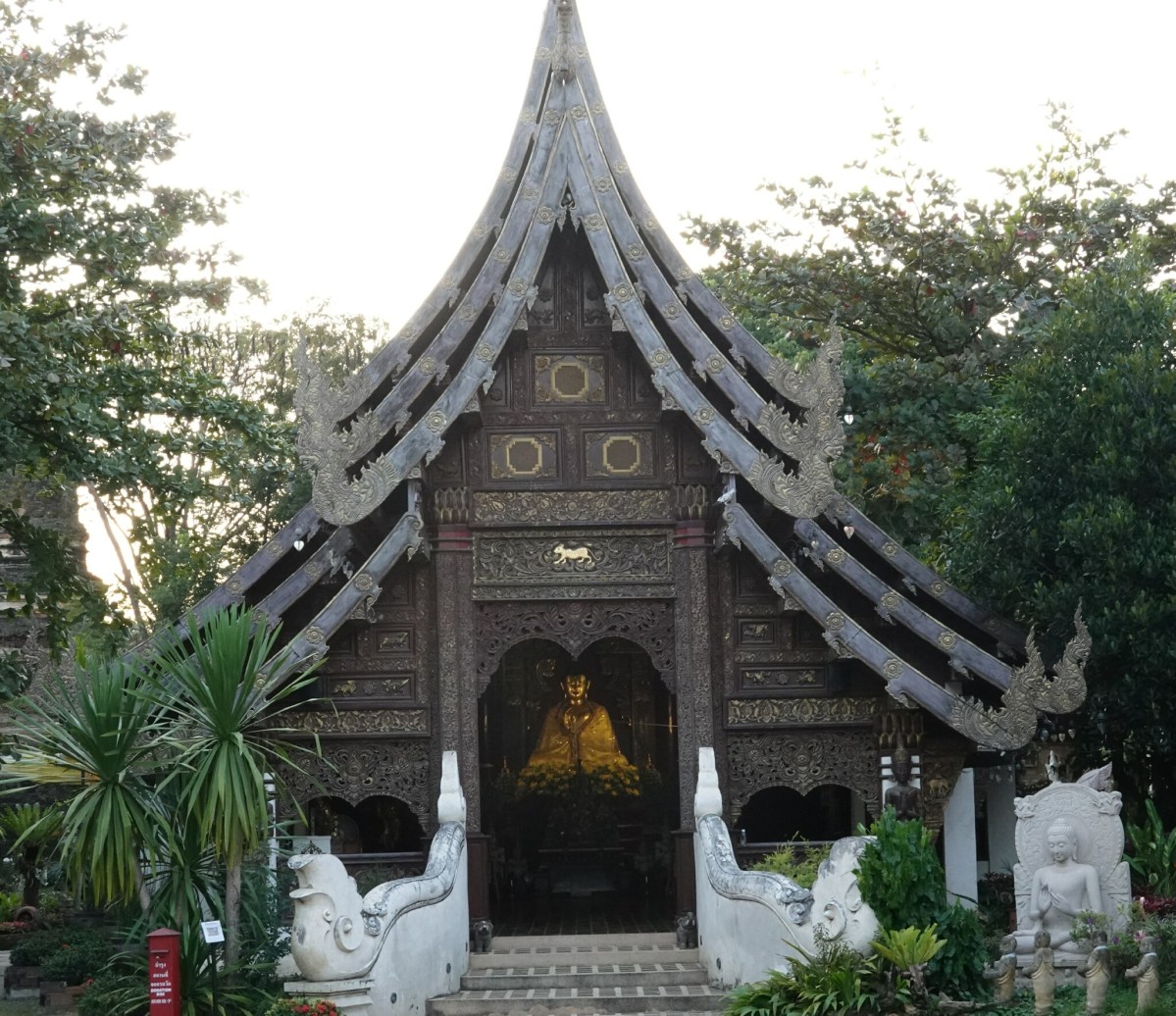
Viharn (worship hall) at Wat Pansao
And right by the viharn is this very beautiful Buddha statue in the garden:
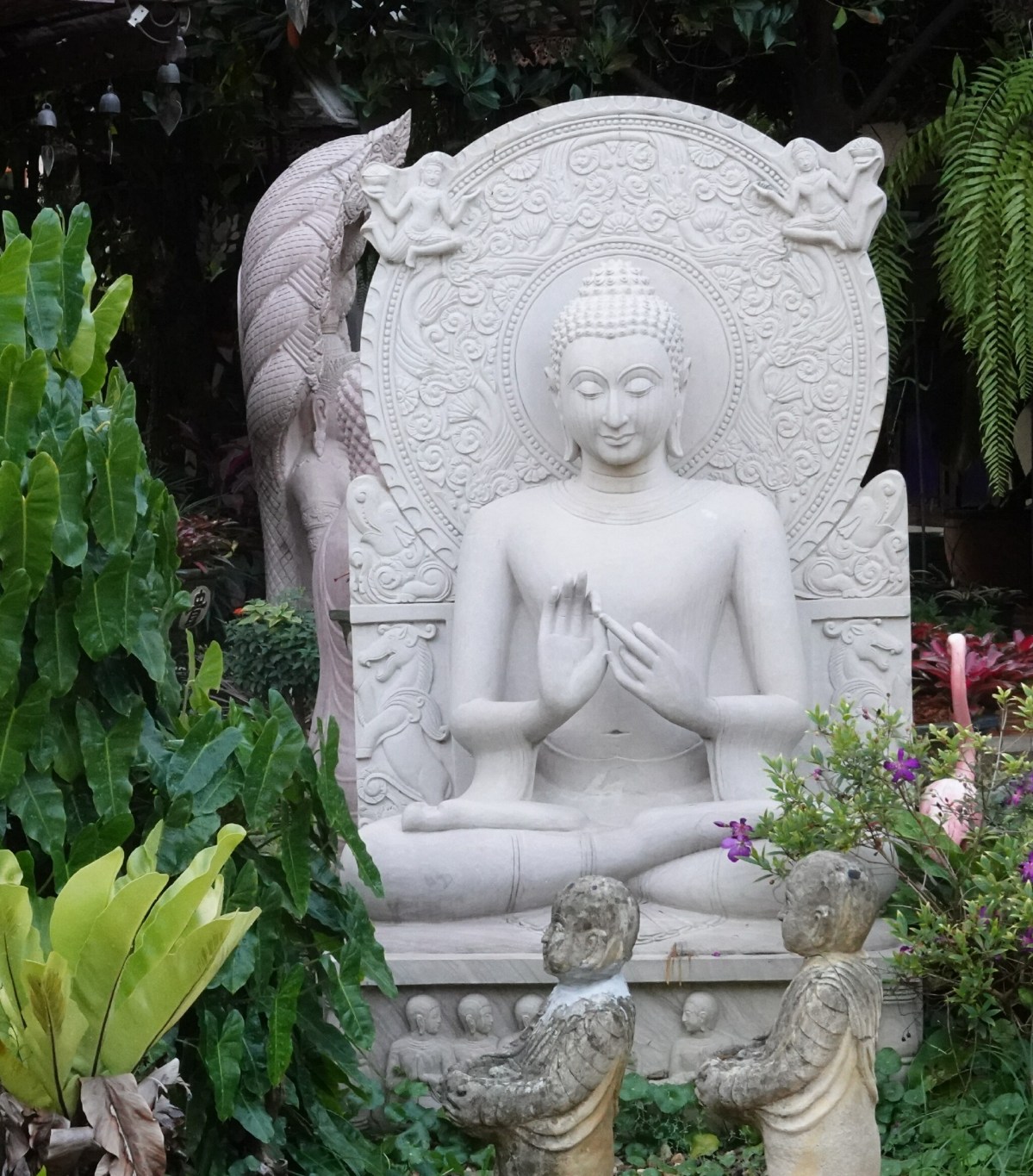
Buddha statue in the garden by the viharn at Wat Pansao
Another angle of the viharn, showing the Lanna-styled roofline:
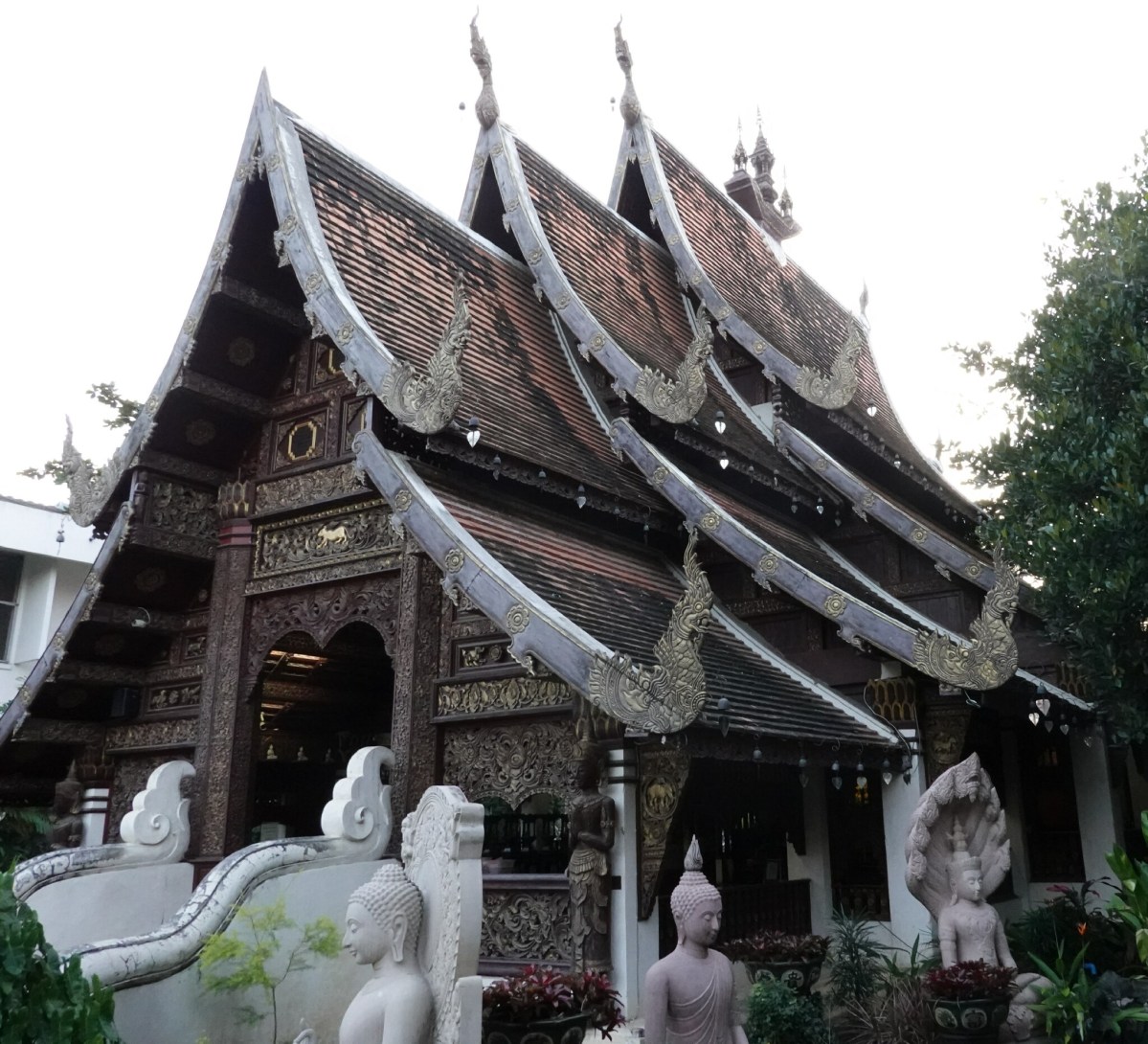
Viharn at Wat Pansao
And in the back of the viharn is this very old chedi, looking to be in need of a good cleaning and possibly restoration:
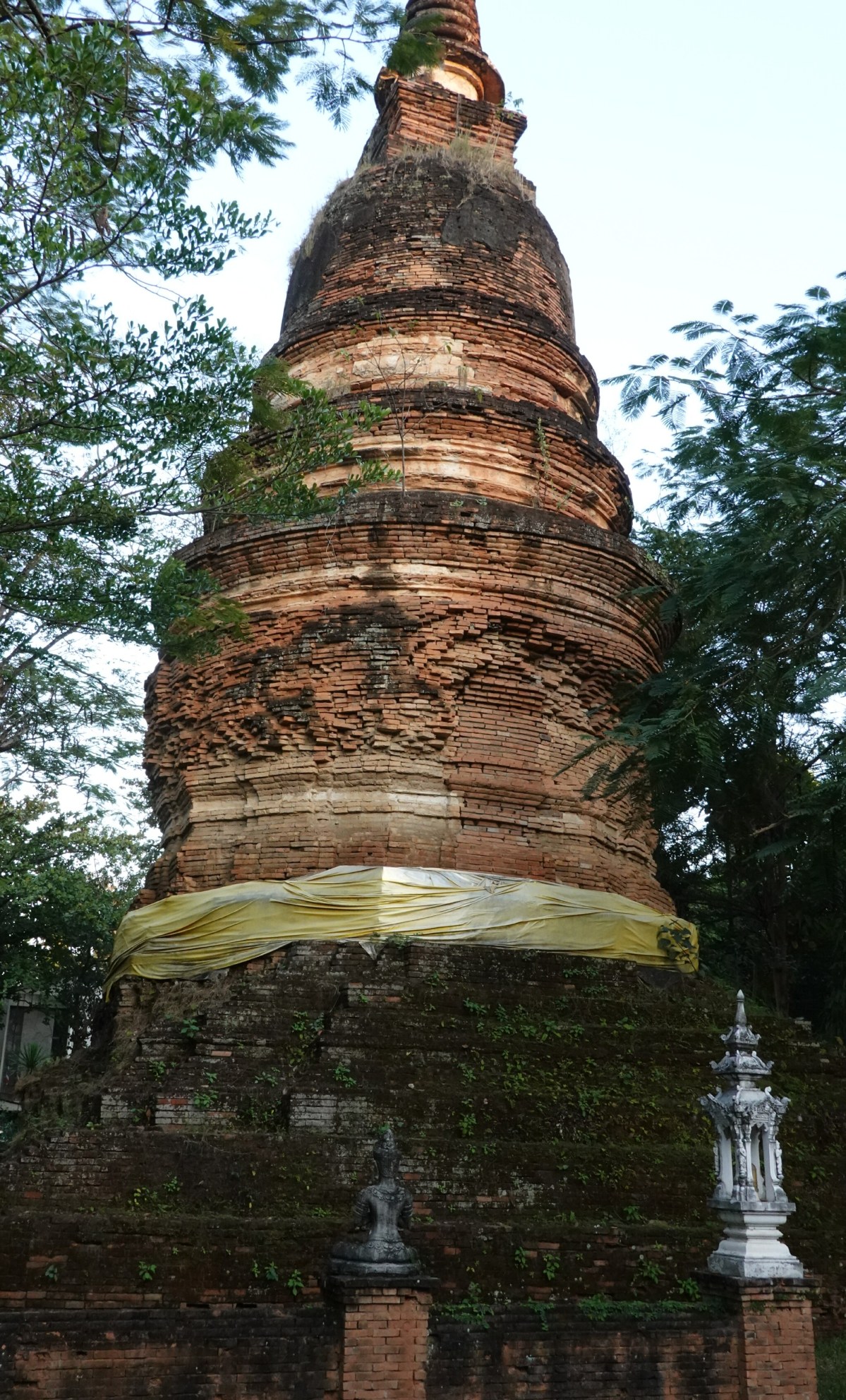
Wat Pansao chedi
And finally, the entrance structure with the Lanna-style naga (dragons) at Wat Pansao on the busy outer moat road:
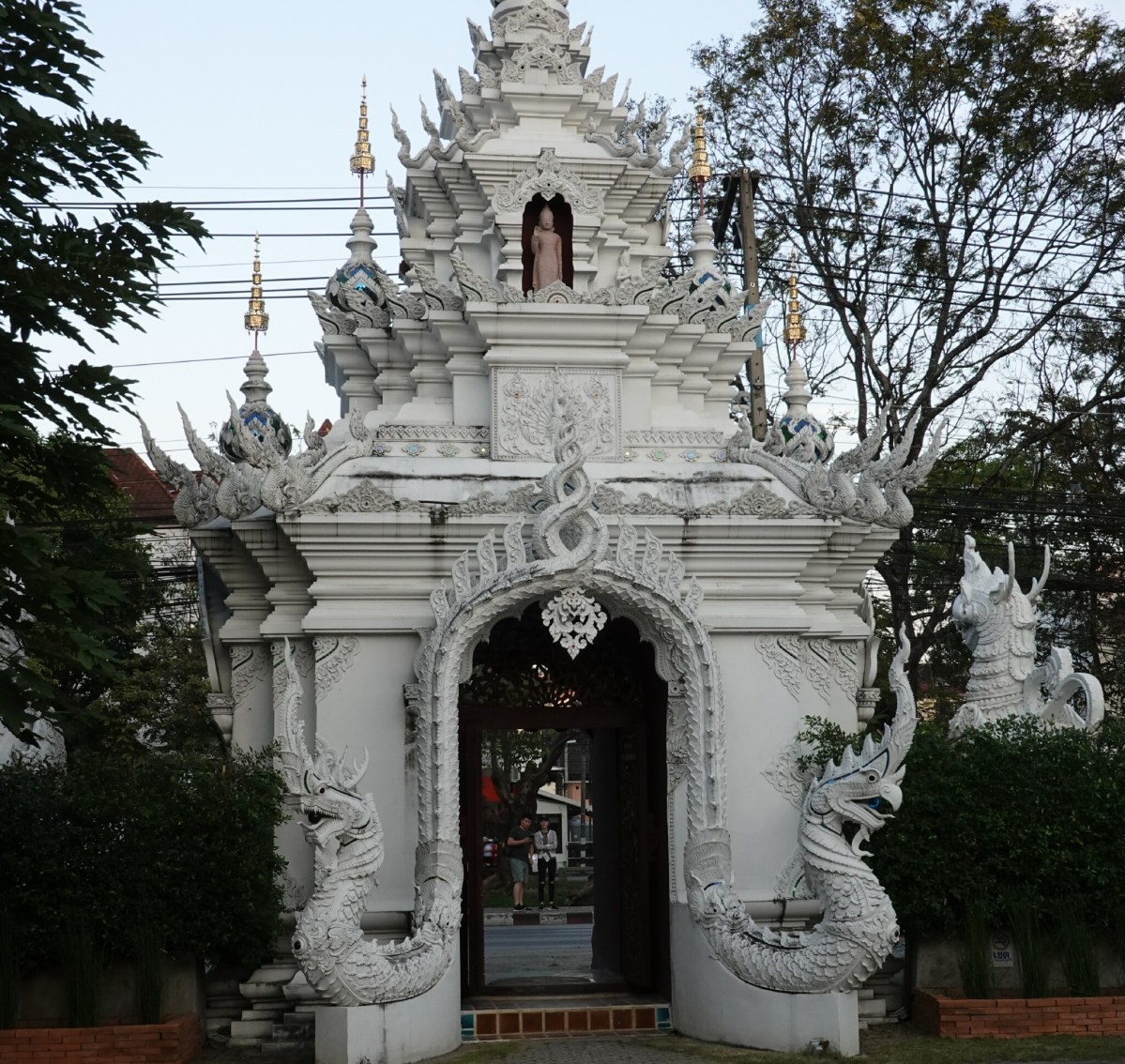
Wat Pansao entrance structure
Another beautiful day (albeit a bit hot) in Chiang Mai!
Next: Searching for more evidence of the second, outer, earthen wall

 James the Intrepid Pilgrim