Wednesday, January 9, 2019
The Famous Tha Phae Gate
Today was another fairly busy day, with yoga starting the day. The instructor was a young Thai lady, Thom (pronounced Tom), and she calls her session “slow flow.” That is right, but it is really more of a crescendo, starting slowly, focusing on the breath, and continuing slowly with the breath, but the intensity of the poses also increases. It was (as are most) a warm morning, and I was soon sweating freely. A challenging start to the day, but a very good feeling after.
Tom, Julie, and I went for a juice and then Tom wanted to go for an early lunch of khao soi to a place John & Rose (owners of Wild Rose Yoga) told him about very near the yoga studio. I think he is searching the the “authentic” khao soi. Khao soi is a northern Thai dish, also common in Laos and Myamar. The name translates directly to “cut rice” (“khao” is rice). Khao soi is a noodle dish and the name comes from how the rice noodles were traditionally prepared. The dough for the rice noodles was spread out on a cloth stretched over boiling water. After steaming the large sheet noodle was rolled and cut with scissors. Khao soi is a soup-like dish made with a mix of deep-fried crispy egg noodles and boiled noodles, pickled mustard greens, shallots, lime, ground chilies fried in oil, and meat (chicken, pork, and less frequently beef) in a curry-like sauce containing coconut milk. The curry is somewhat similar to that of yellow curry, but of a thinner consistency. This dish is very popular in northern Thailand, and eaten by many Thais as as a street dish (at many food carts…street food). I typically avoid “street food” but have no difficulty finding good khao soi at many restaurants here. A word of caution – khao soi as eaten by the Thais is very spicy. It is often toned down for foreigners, but one must be careful.
Most of the people in the little restaurant were Thais. I found the khao soi to be more than a little greasy, and while maybe popular with the Thais, I have liked the khao soi I have had at other restaurants better (less greasy).
After lunch, I headed back to 3-Sis to get a shower, while Tom and Julie went to Wat Pan Whean in the old city, a temple where tok sen is done. Tok sen is a northern Thai massage technique in which the practitioner taps the energy lines of the body with a small mallet and wooden dowel-like instrument. The “sen” refers to the energy lines, and the “tok” refers to the tok-tok-tok sound the mallet makes. Tok sen is often combined with Thai massage. I have had tok sen done at Wat Pan Whean, and it was an “all right” session, but did not really connect with me. Tom and Julie love it. After their tok sen session, I met them for a juice, and then they headed back to Doi Saket where Tom has a condo (about 20 kilometers east of town).
Tha Phae Gate
I decided to go to Street Pizza for dinner, a very good pizza parlor down Tha Phae Road close to the Mae Ping River. Everything is made fresh at Street Pizza. This is a favorite of many people in Chiang Mai. To get to Tha Phae Road, I walked over to the eastern gate in the city wall, Tha Phae Gate. Here is a picture of the “famous” Tha Phae Gate:
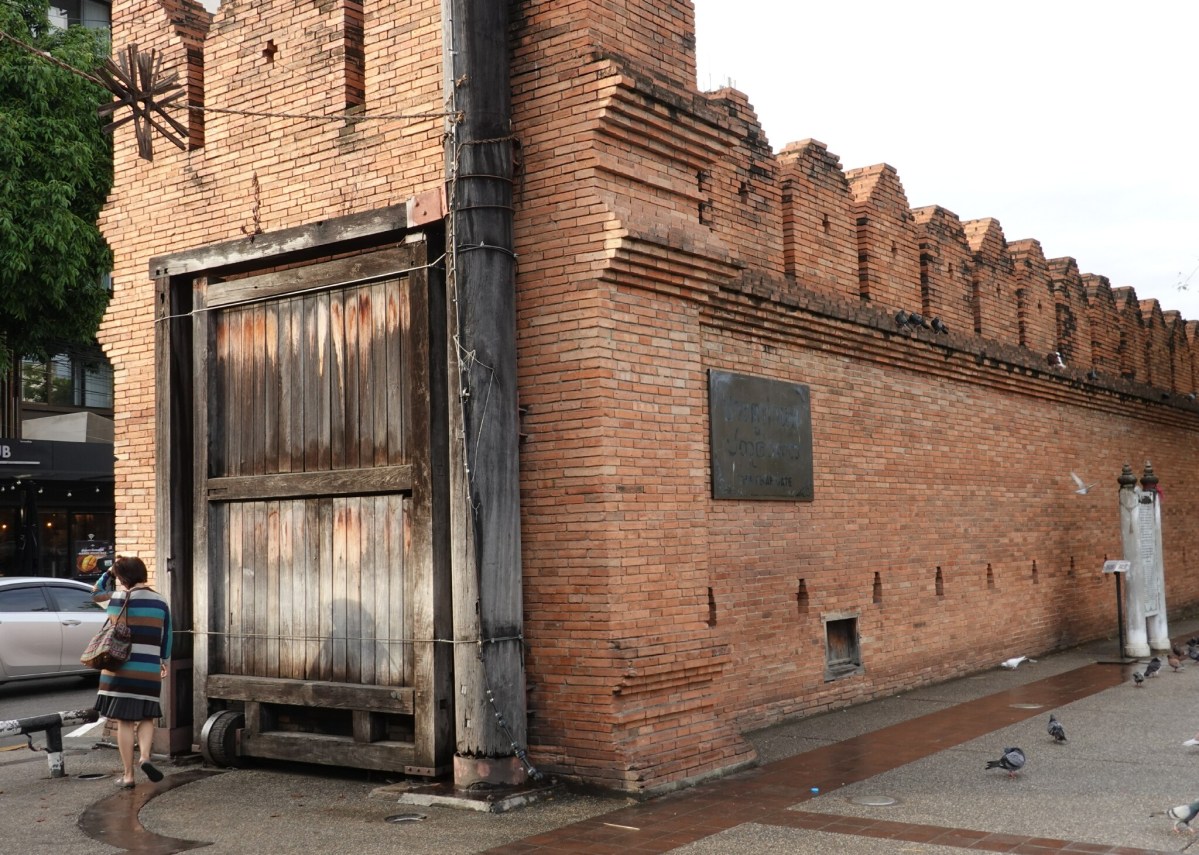
Tha Phae Gate
And the plaque announces the gate in modern Thai, ancient Thai script, and English:
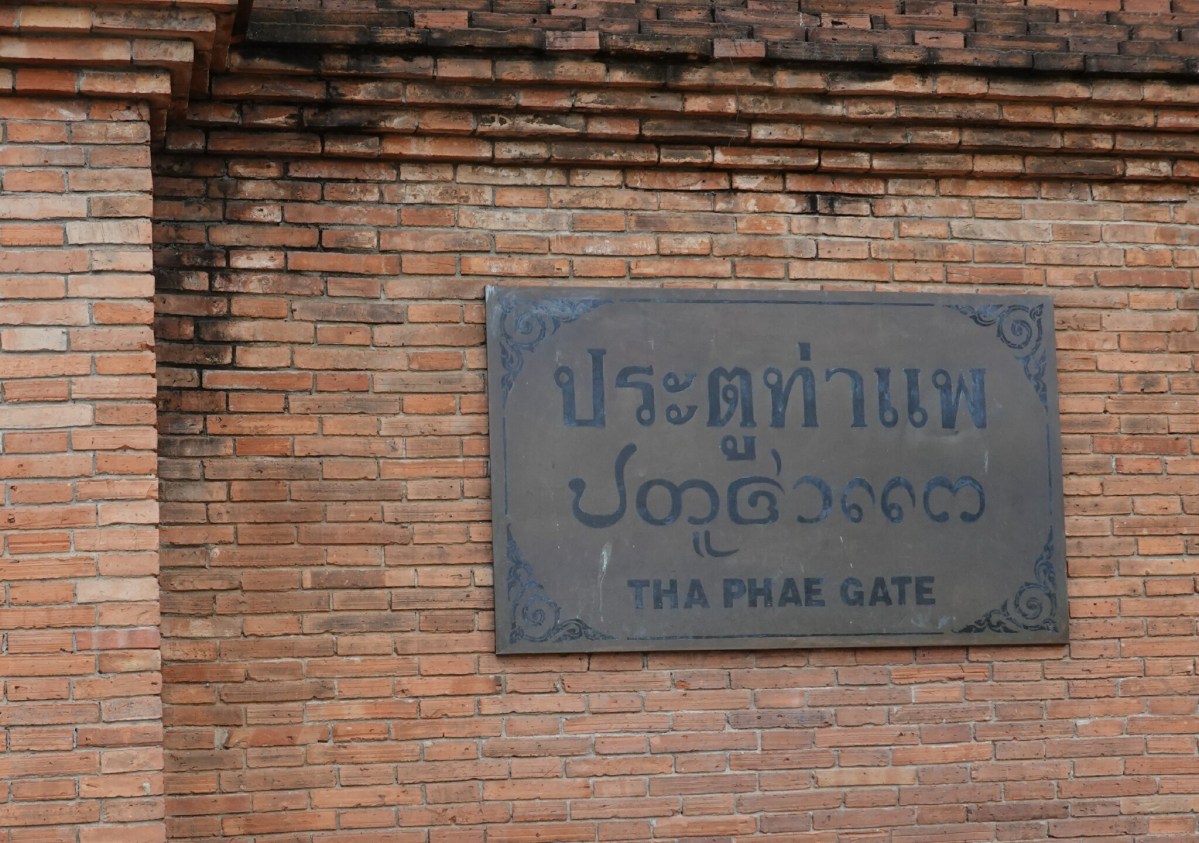
Tha Phae Gate Sign
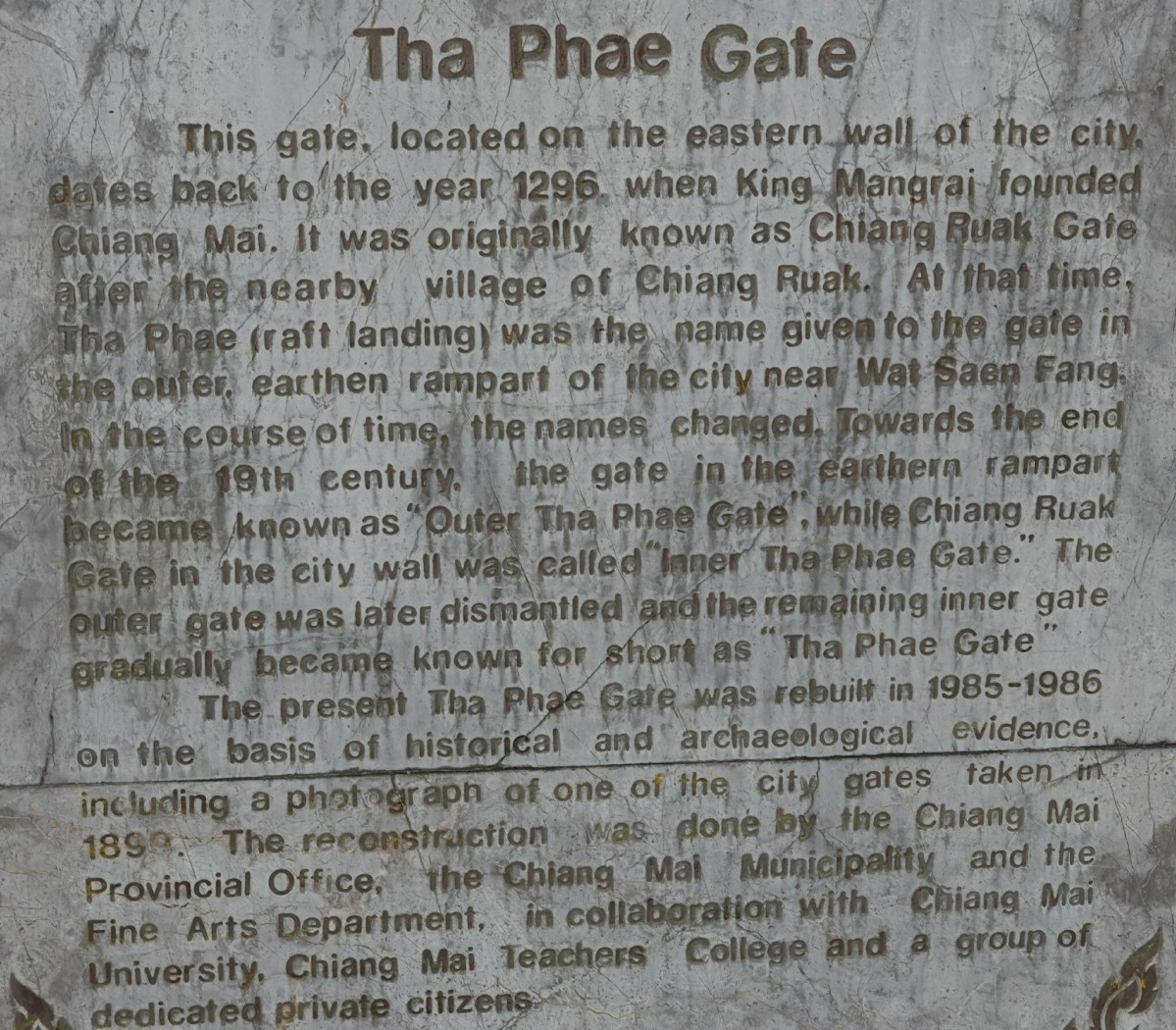
As I have written before, Tha Phae Gate was not originally named as such. Tha Phae translates to “raft landing” and there is no raft landing at Tha Phae Gate. Tha Phae Road runs essentially straight from Tha Phae Gate to the Mae Ping River. Originally there was a second, earth and clay wall, called Kampangdin in a semi-circle outside the east and south main walls. The gate in the Kampangdin on the road now known as Tha Phae Road was Tha Phae Gate, as it was close to a raft landing on the Mae Ping River. What is now called Tha Phae Gate was originally Chiang Ruak Gate. Over time, people called Tha Phae Gate “Outer Tha Phae Gate” and Chiang Ruak gate was called “Inner Tha Phae Gate.” when the gate on the Kampangdin was taken down, Inner Tha Phae Gate became simply Tha Phae Gate. This historical story is not known to most people, including Thais that live here. Interesting, because after I read about it on the internet, I found that the story is written on a monument in English and Thai just to the right of Tha Phae Gate when you are looking at the gate from the outside:
Turning around away from Tha Phae Gate and looking down Tha Phae Road, and a familiar sight appears, large and well-known:
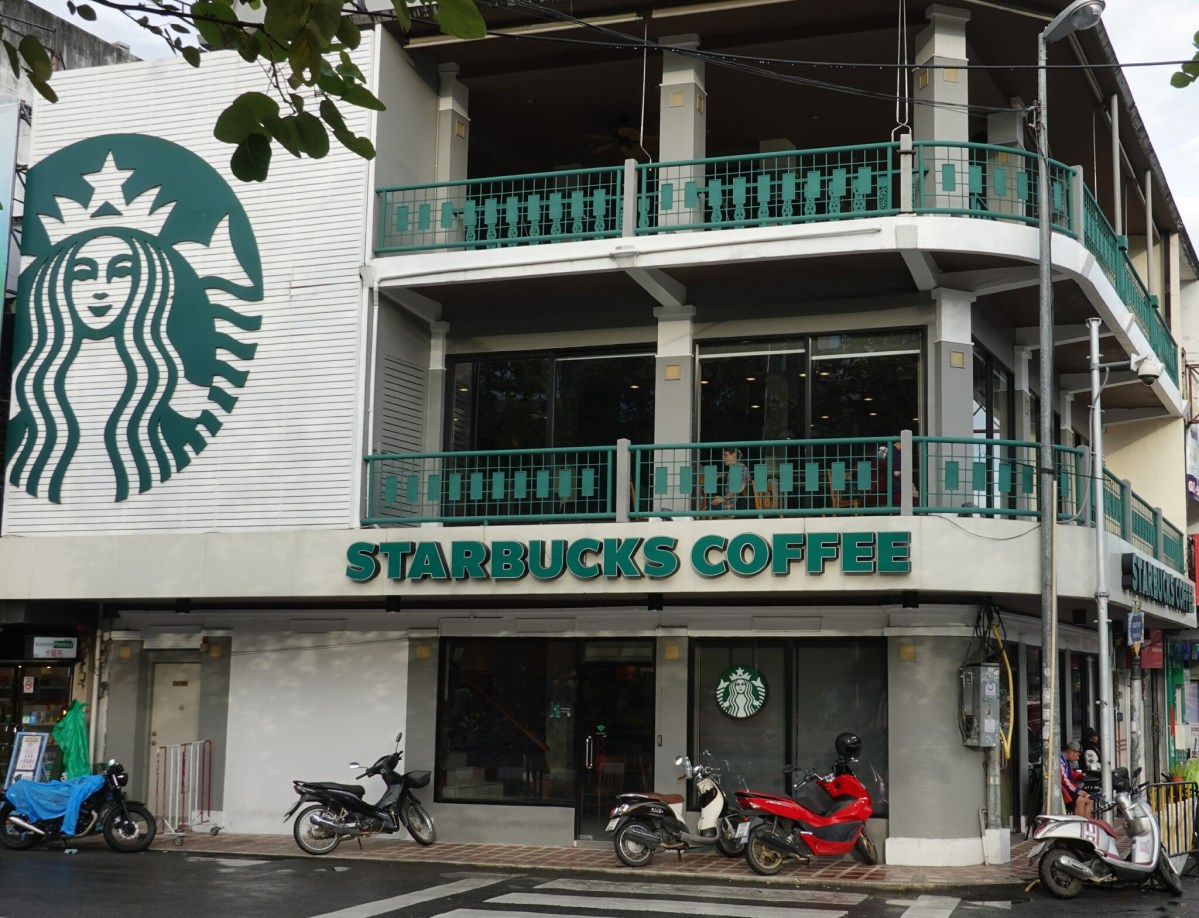
I love the Thai coffee – it is outstanding coffee. But I understand that the Thai people are interested in what is popular in other parts of the world. So while I drink Thai coffee while I am here, the Thai people enjoy having a choice. And this Starbucks is very busy all the time.
Temples along Tha Phae Road
There are many, many temples in and around Chiang Mai. There are 42,000 Buddhist temples in Thailand. while walking down Tha Phae Road, I stopped at two of the three or four temples along the road, Wat Mahawan and Wat Chetawan. These two temples are almost directly across the street from one another. Searching for an explanation, I could find none.
Wat Mahawan
Wat Mahawan is a very beautiful temple along busy Tha Phae Road. This temple has both Burmese and Lanna influences. I cannot find when the temple was first built. The main viharn (worship hall) was reconstructed in 1865. The viharn is Lanna-style:
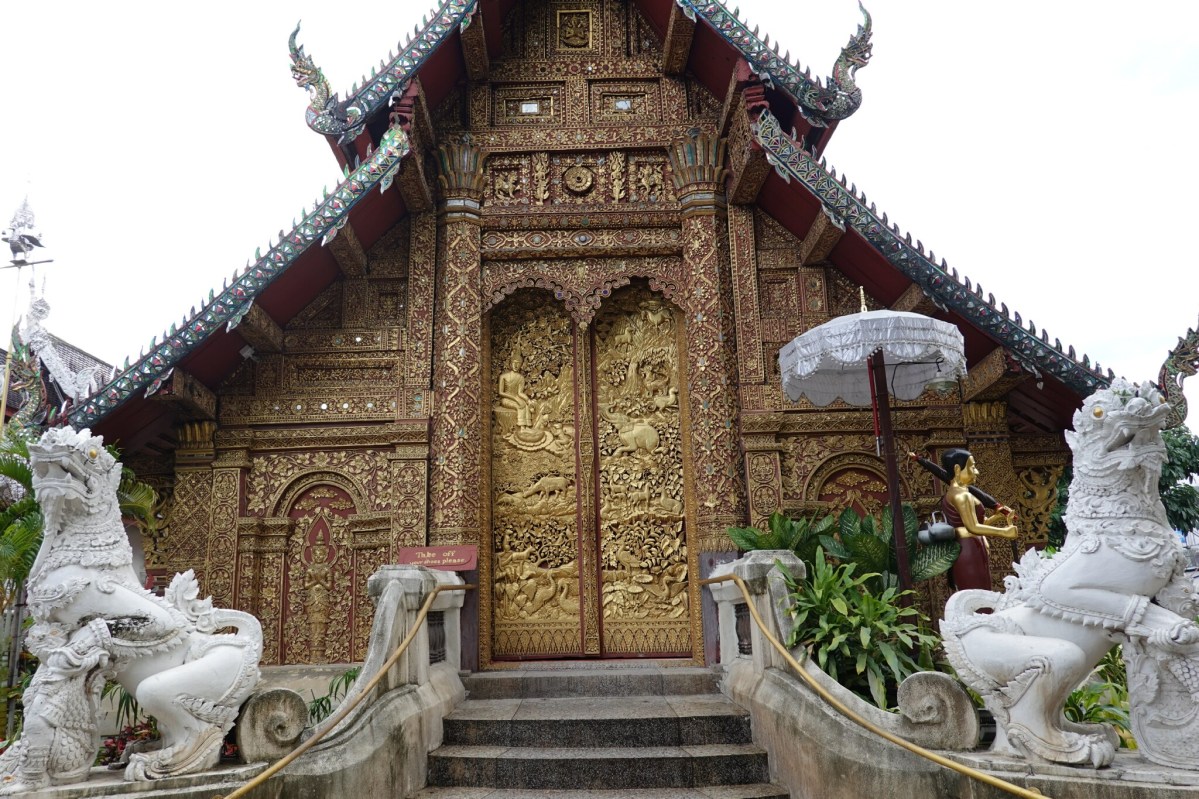
Wat Mahawan Main viharn – Lanna style
I was a little surprised to learn that this viharn is considered Lanna-style, because the guardians are large Chinthe, mythological lions often found in Burmese-styled temples. The ubosot (ordination hall) is also Lanna-style:
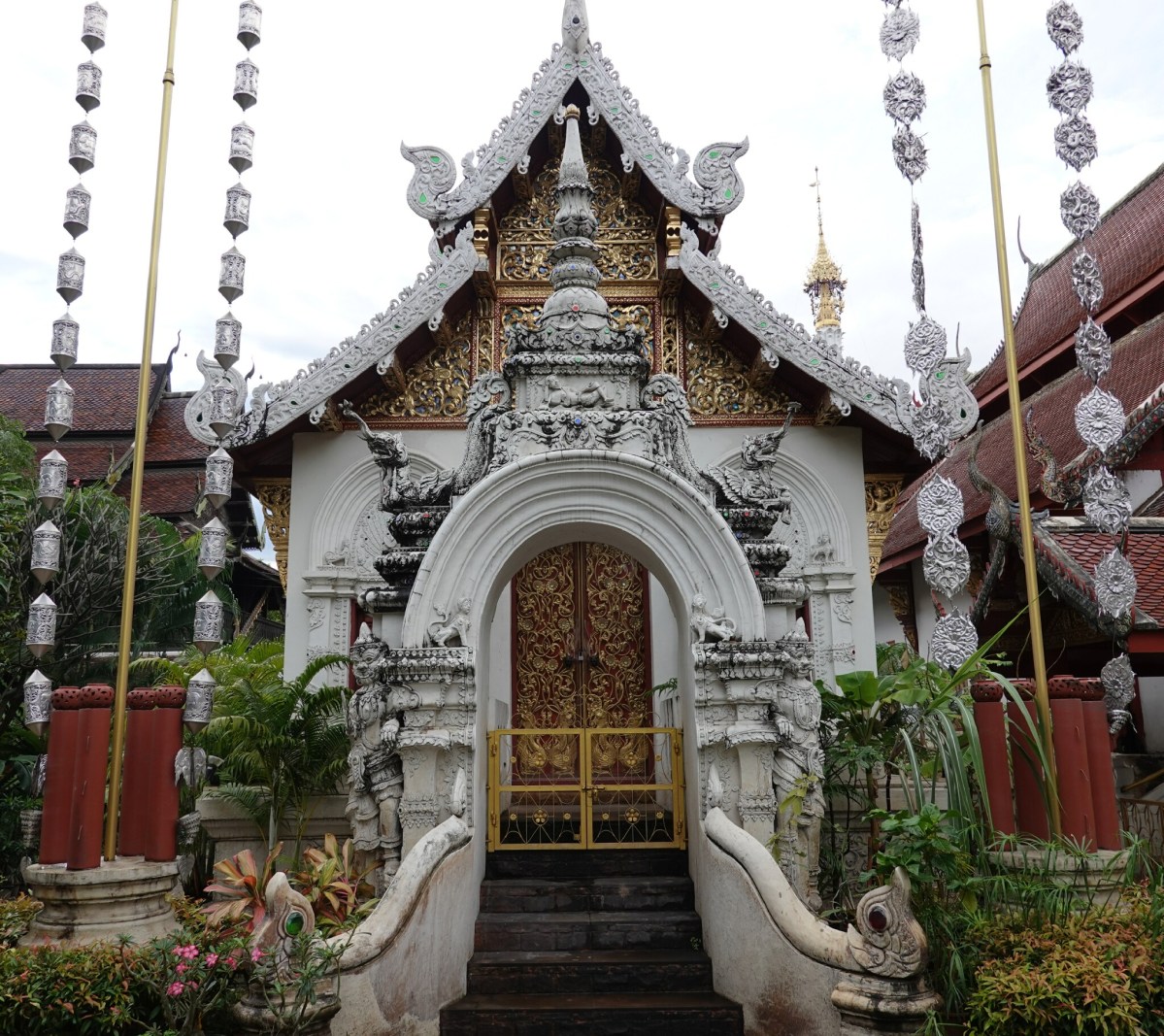
Wat Mahawan Ubosot, Lanna style
The chedi (pagoda) at the back of the viharn is considered Burmese-style.
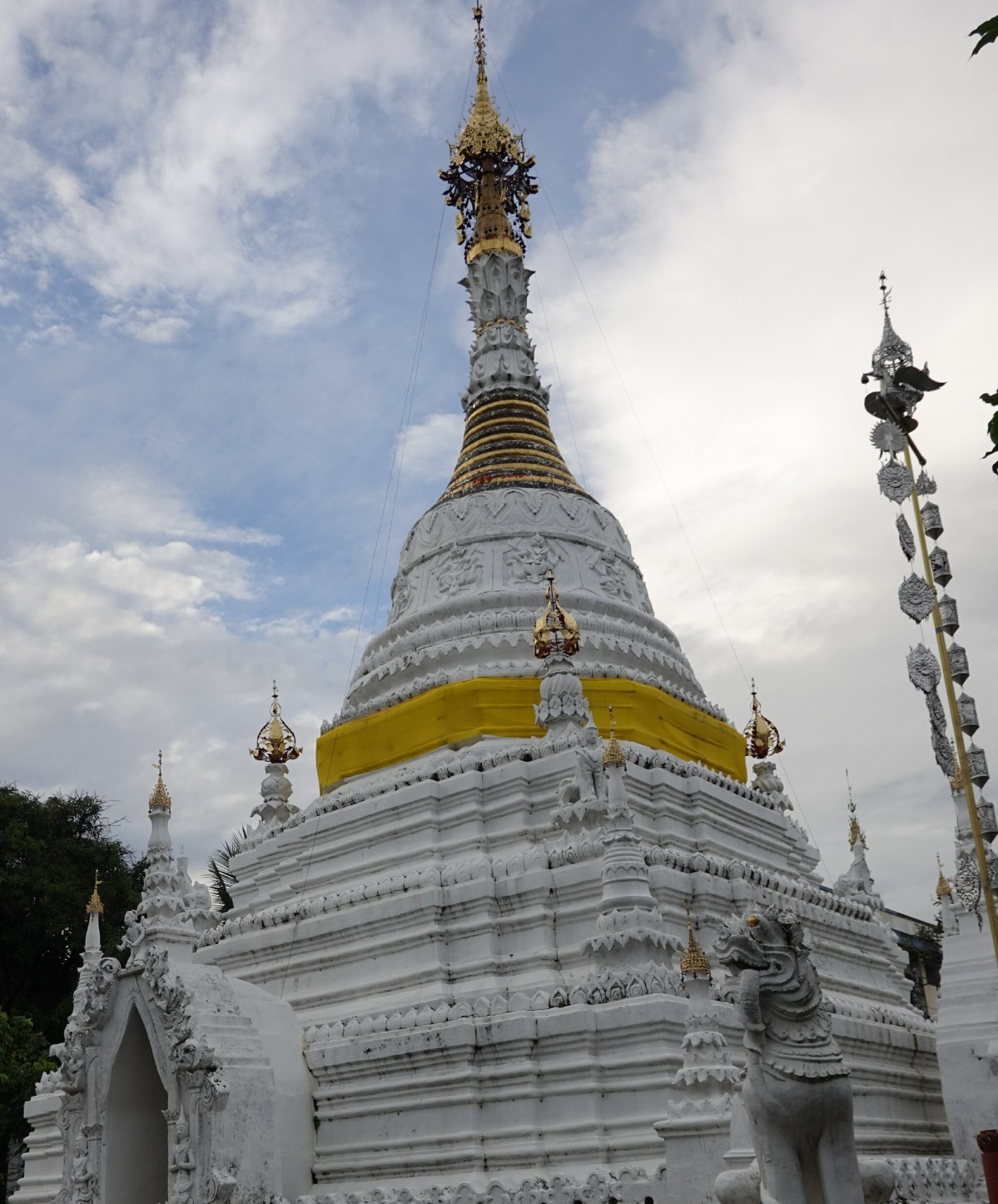
Wat Mahawab Chedi, Burmese style
I may have been told or may have read what makes a chedi Burmese versus Lanna in style, but I have forgotten. It is a very elaborate chedi, and is protected by four chinthes at the four corners.
Unfortunately, the viharn doors were closed – I would have liked to see inside. Perhaps another day. Wat Mahawan is a very beautiful and well-kept temple easy walking distance from the old city.
Wat Chetawan
Wat Chetawan is almost directly across busy Tha Phae Road from Wat Mahawan. I made my way across the street, and into the temple grounds, and was almost surprised to see that some very extensive renovations are taking place. This temple is also a mixture of Lanna and Burmese styles. This temple is very old (meaning that a temple has been in this location for many years, while the actual buildings may have been reconstructed or refurbished many times). Local legend has it that the temple was constructed in 657 during the reign of Queen Chamawethi. The Queen, according to the legend, transported one of the most beautiful images of Buddha from Lopburi to chiang Mai. arrival, the image was enshrined at the present location of Was Chetawan.
In the pictures, evidence of the renovations is seen:
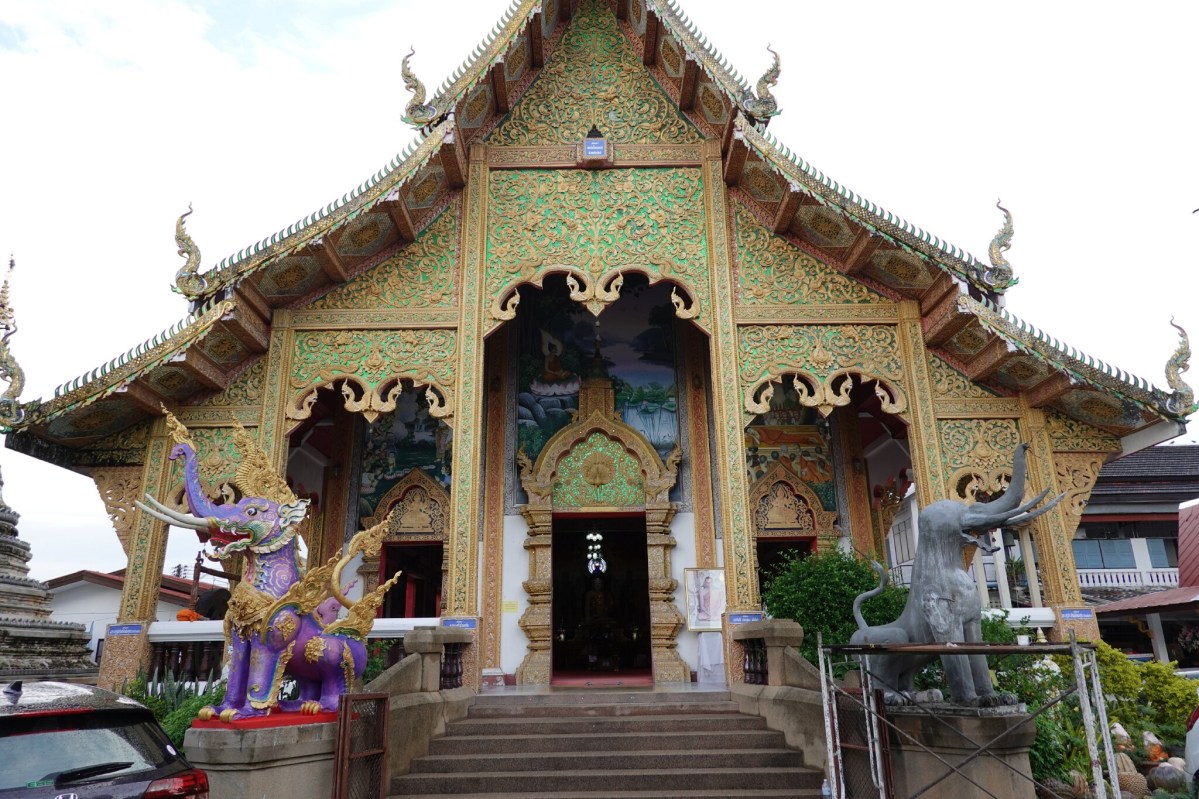
Wat Chetawan main viharn, Lanna style
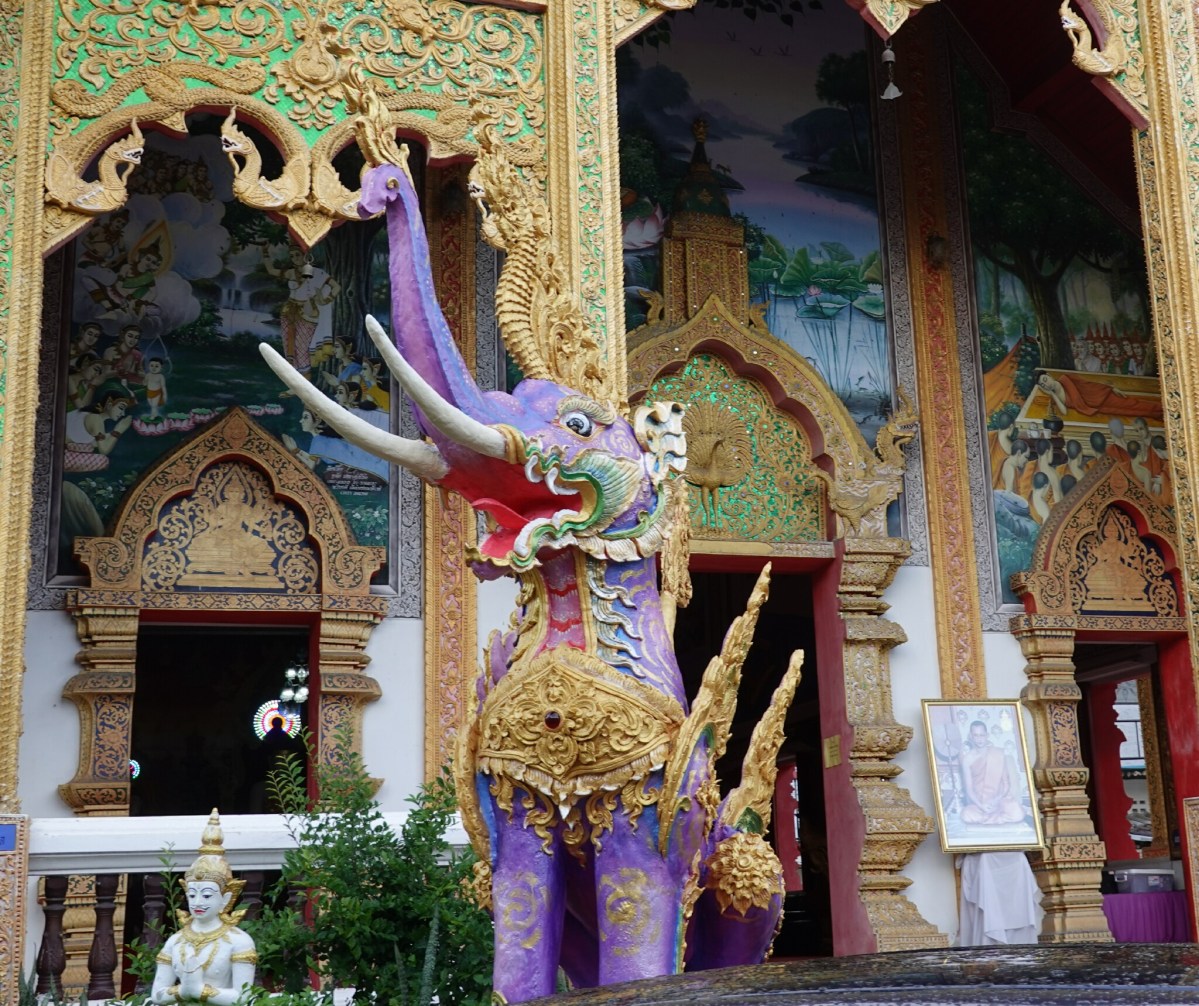
You can see the creature on the left has been restored, while the same creature on the right has not. I did not go into the viharn because it appeared that a ceremony of some kind was taking place, and I thought it best to not disturb them.
Here is a closer look at the elephant-like creature guarding the viharn entrance:
And above the door to the viharn is the now familiar Lanna royal peacock symbol, representing royalty and wisdom:
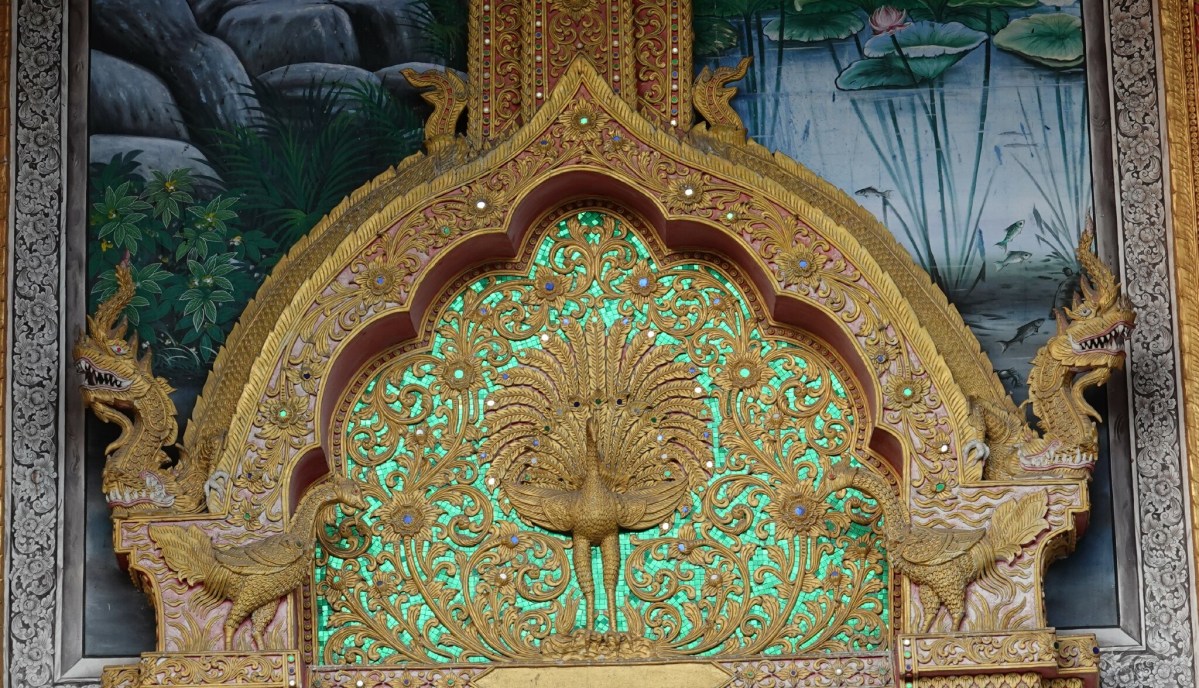
Detail above the door of the main viharn at Wat Chetawan
In back of the viharn, the large chedi is undergoing renovation.
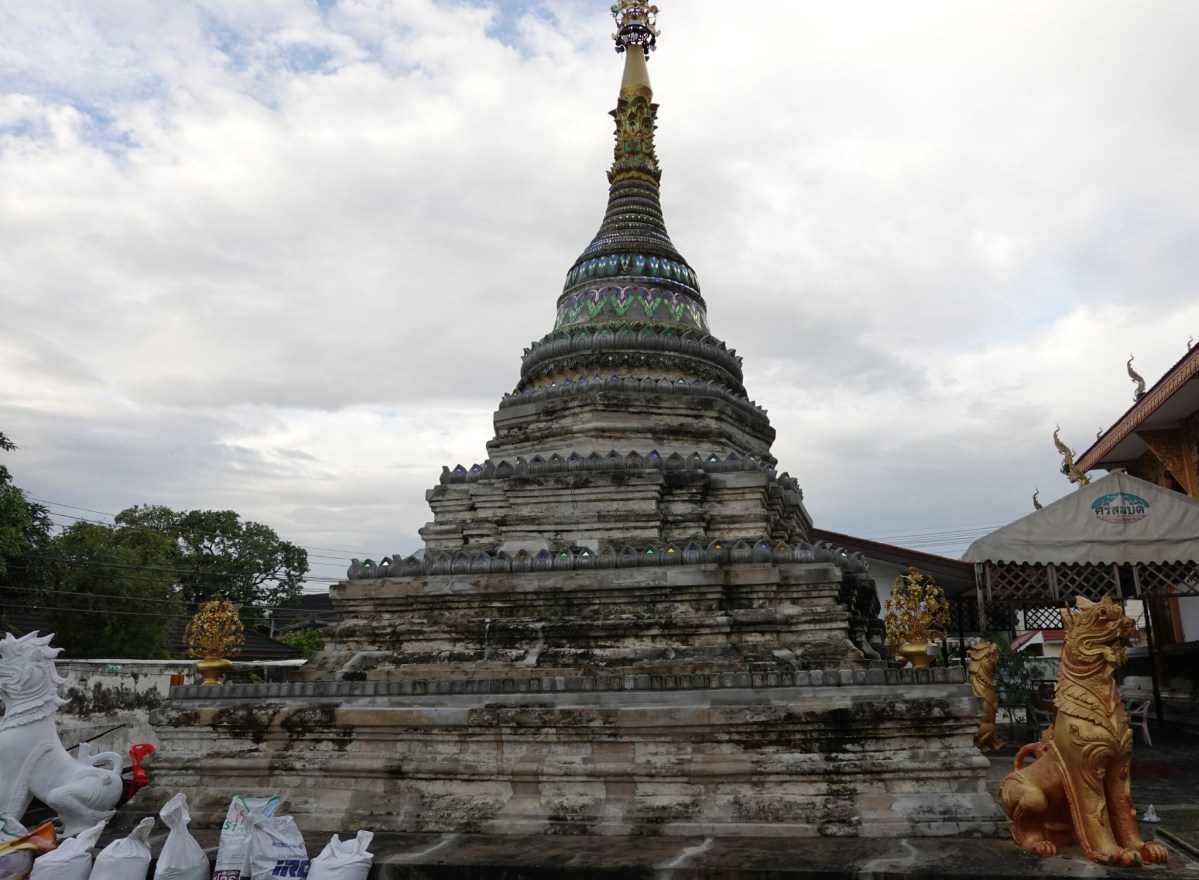
Wat Chetawan chedi under renovation
You can see the cinthe on the left is white, and the cinthe on the right appears to have been completed. The chedi itself looks to be in the early stages of a cleaning. When they are done, it will be impressive.
Wat Chetawan is another impressive temple very close to the old city.
Street Pizza Closed
I continued down Tha Phae Road to Street Pizza, and found the whole building closed, with a sign indicating they are closed until 10 January. Street Pizza is on the second floor, above several design and souvenir shops, and all of it was closed. I suspect some infrastructure problem. So no pizza tonight. I have eaten a LOT of Thai food, and am ready for a break.
The Dukes
So I walked over the main bridge over the Mae Ping River, and down the street to The Dukes, a restaurant that looks very much like an American Steak House from the 1970s or 1980s with dark wood tables and chairs, and the feel of one of those old-style steak houses. They serve steaks, pizza, burgers, and some pasta. I had a cheeseburger, fries, and a Coke:
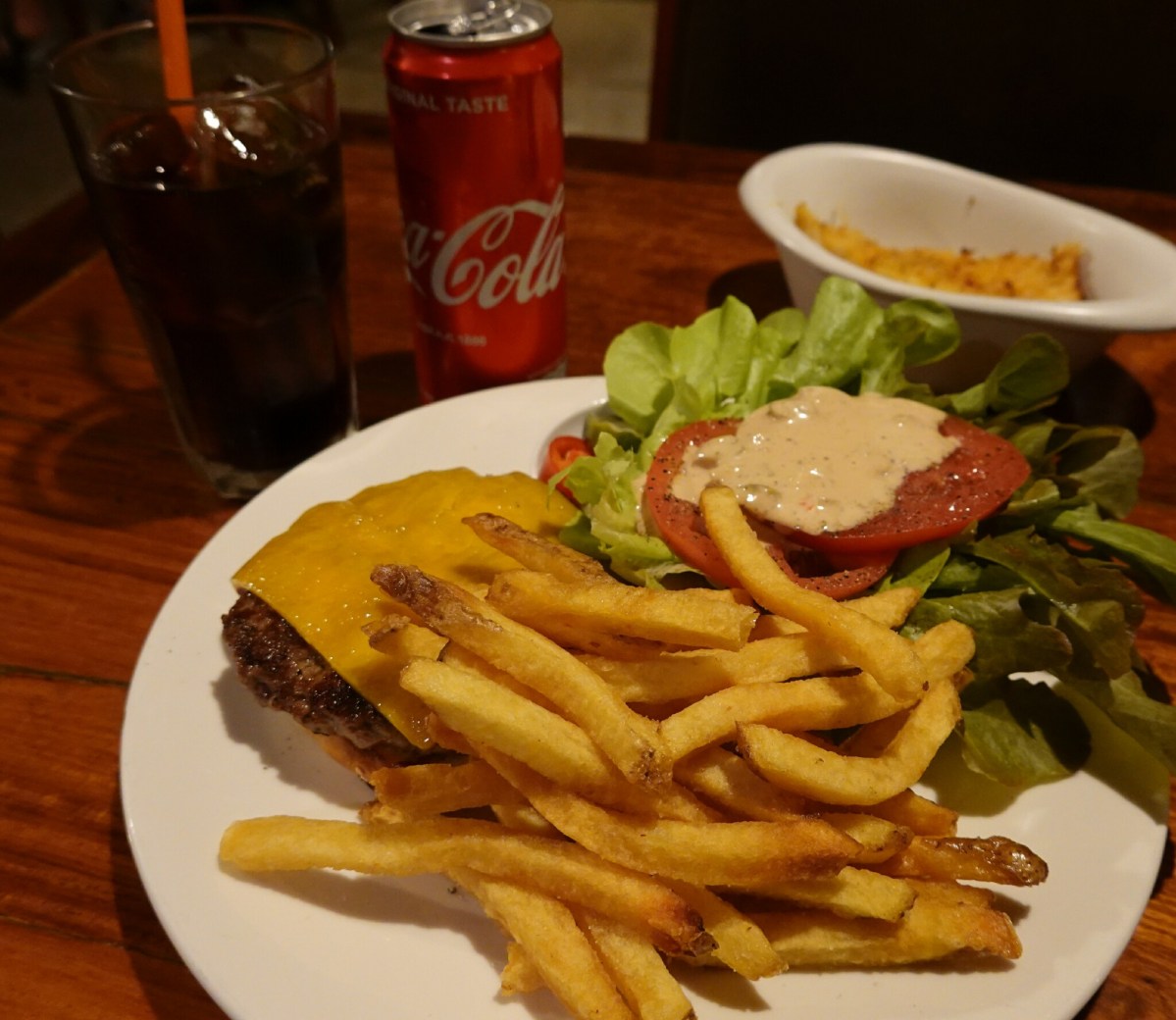
Cheeseburger, fries and a Coke at The Dukes
It was good! Thank-you, The Dukes!
Next: Wat Phra That Doi Kam

 James the Intrepid Pilgrim