December 29, 2019 Saturday
Sightseeing in Bangkok
I have been to Bangkok several times, and the negatives are “in your face” – it is very hot and humid all the time, it is crowded, and noisy. Getting around the city is challenging as there is always more traffic than the roads can handle, not unlike many other major cities. But if you are willing to pus aside the negatives, Bangkok is a wonderful city; the people are very nice, there are interesting sights to see, the food is very good; it is a city with a good heart.
Fortunately, to avoid the dense street traffic there is the BTS Sky-Train. My hotel in the past and this year is right near a Sky-Train stop, and the places I am interested in visiting are also accessible from the Sky-Train. This year, more than in the past, every Sky-Train ride was on very, very full trains, suggesting that more and more people are relying on the Sky-Train service.
First stop was breakfast. This hotel serves a very comprehensive, elaborate breakfast buffet, and I selected very familiar, very American, fare: coffee, orange juice, cereal, eggs, bacon, potatoes, pastry, fruit.
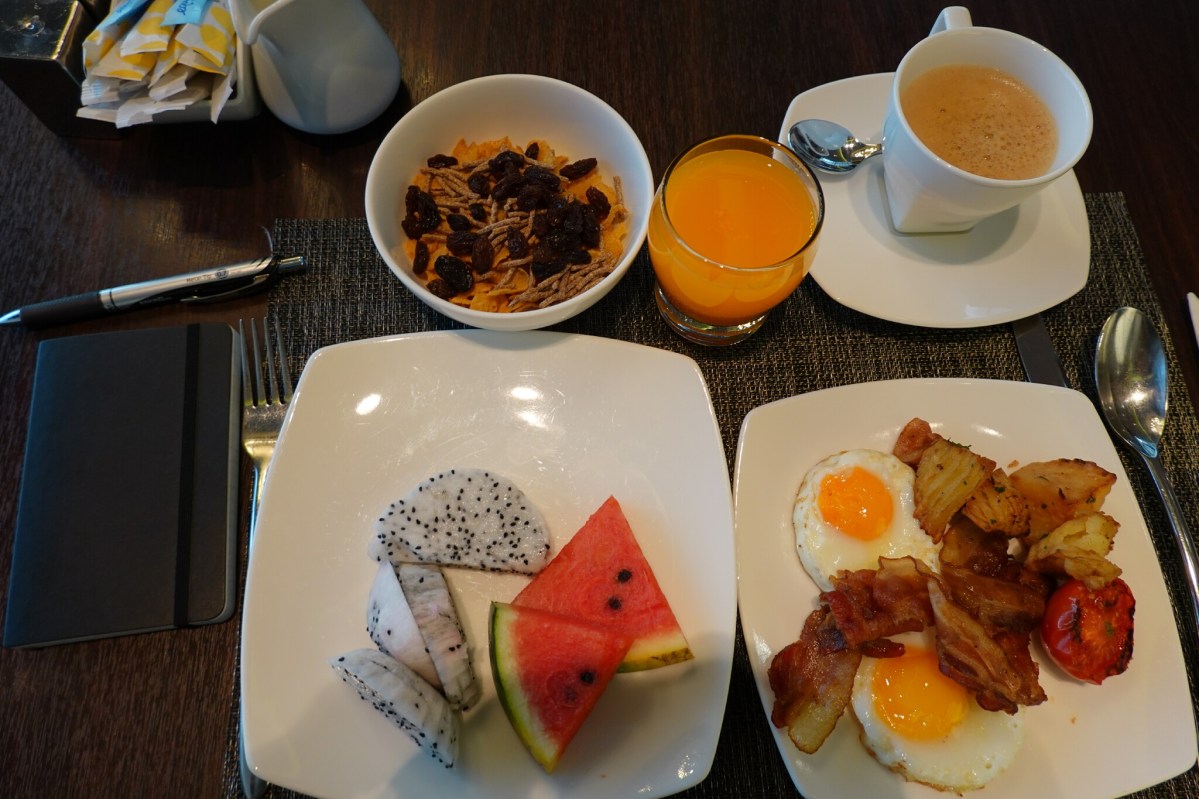
OK, it is familiar, but very comforting after a long journey to get here and feeling fatigued from the 15-hour time adjustment. Oh, and I did branch out a bit, the speckled fruit above is not very American, dragon fruit, an Asian fruit, so not all of my breakfast was “American.” [Actually, I eat dragon fruit every time I am in Thailand, so this is not a reach for me…]
Wat Arun – The Temple of the Dawn
My first stop was to be Wat Arun. I headed out on the Sky-Train to the Saphan-Taksin stop by the Chao Phraya River. There, I found the ticket vendor for the boats and bought a ticket to the Wat Arun dock, boarded – just me and about two hundred other tourists, a crowded boat. Wat Arun appeared fairly suddenly across the water as we rounded a curve in the river.
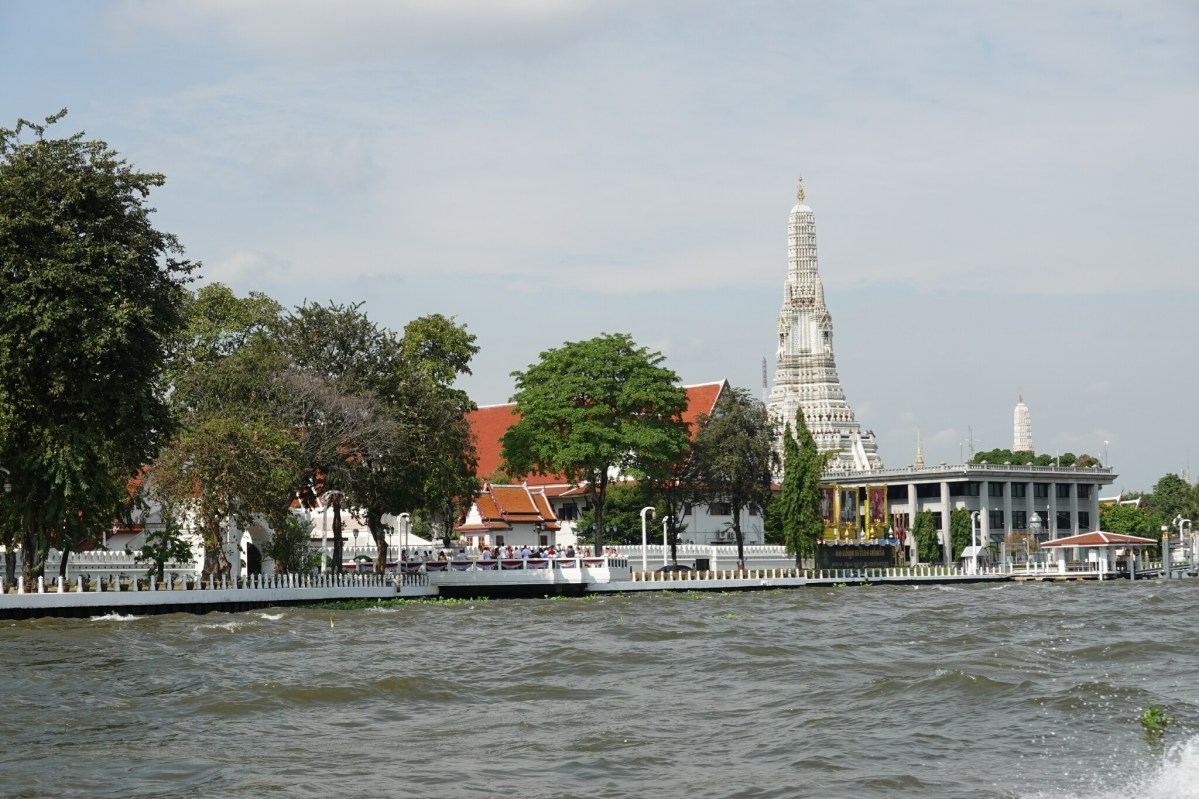
Wat Arun is one of Bangkok’s best known landmarks, and is depicted on one of the coins. It is classified as a Royal Temple of the First Class, a category of only six Thai temples. In the 1700s, Wat Arun was then known as Wat Makok, after the village of Bang Makok in which it was situated. It is likely that the current city name Bangkok evolved from the village name Bank Makok.
When the former capital Ayutthaya was overthrown in 1774, King Taksin and what was left of his army moved south along the Chao Phraya River, and it is believed that when Taksin saw the temple at dawn, he decided to make this his new seat of government. He vowed to restore the temple and rename it Wat Arun for the Aruna, the Hindu Goddess of the dawn. (Wat Arun’s formal name is Wat Arun Ratchawararam Ratchawaramahawihan.) The most recent renovation of Wat Arun took place from 2013 – 2017 during which time the towers were covered with scaffolding as workers carefully restored the surfaces.
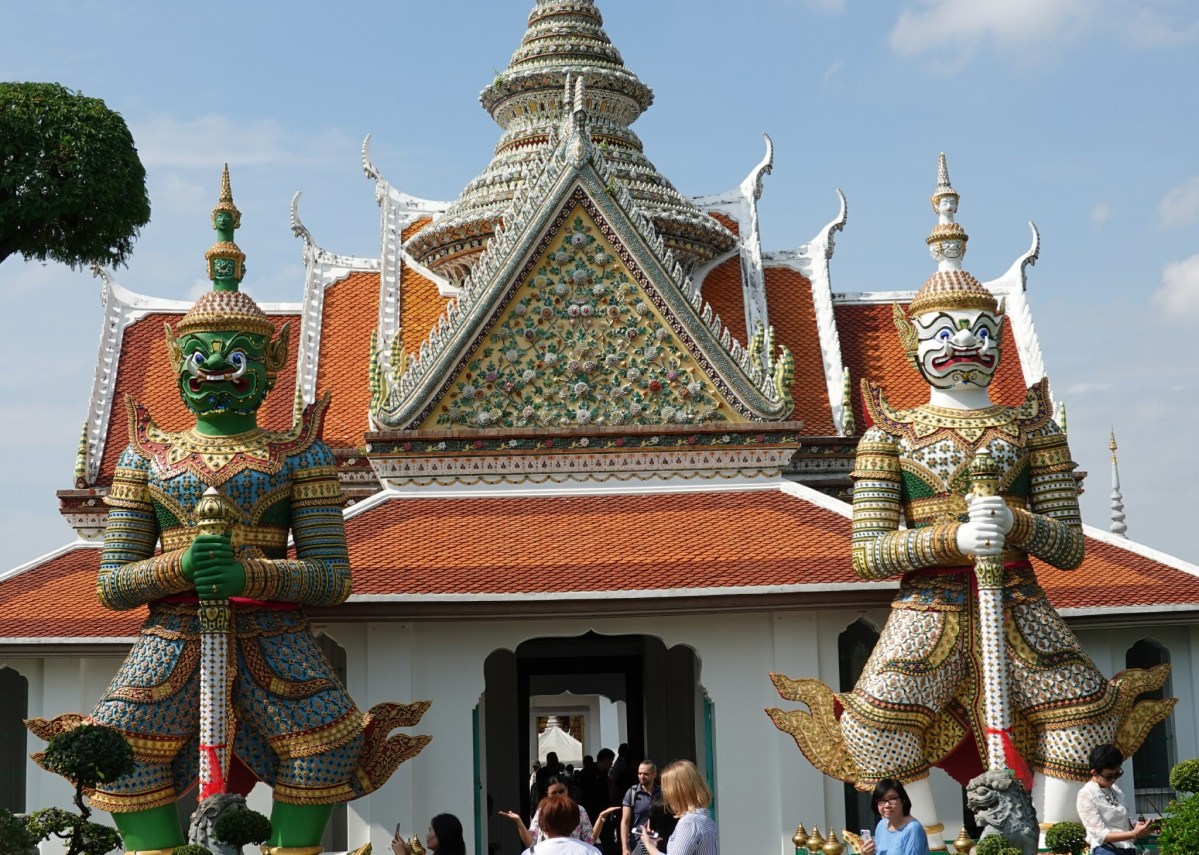
Wat Arun, like many Thai temples, is something of a small campus, with several buildings and structures. The entrances to the first viharn (worship hall) at Wat Arun is guarded be two large yak or yaksha figures. From Wikipedia, “yaksha are a broad class of nature-spirits, usually benevolent, but sometimes mischievous or capricious, connected with water, fertility, trees, the forest, treasure and wilderness.” (There are two very large (5-meters high) guarding each of the 7 ticketing/check-in areas at Bangkok’s Suvarnabhumi airport.)
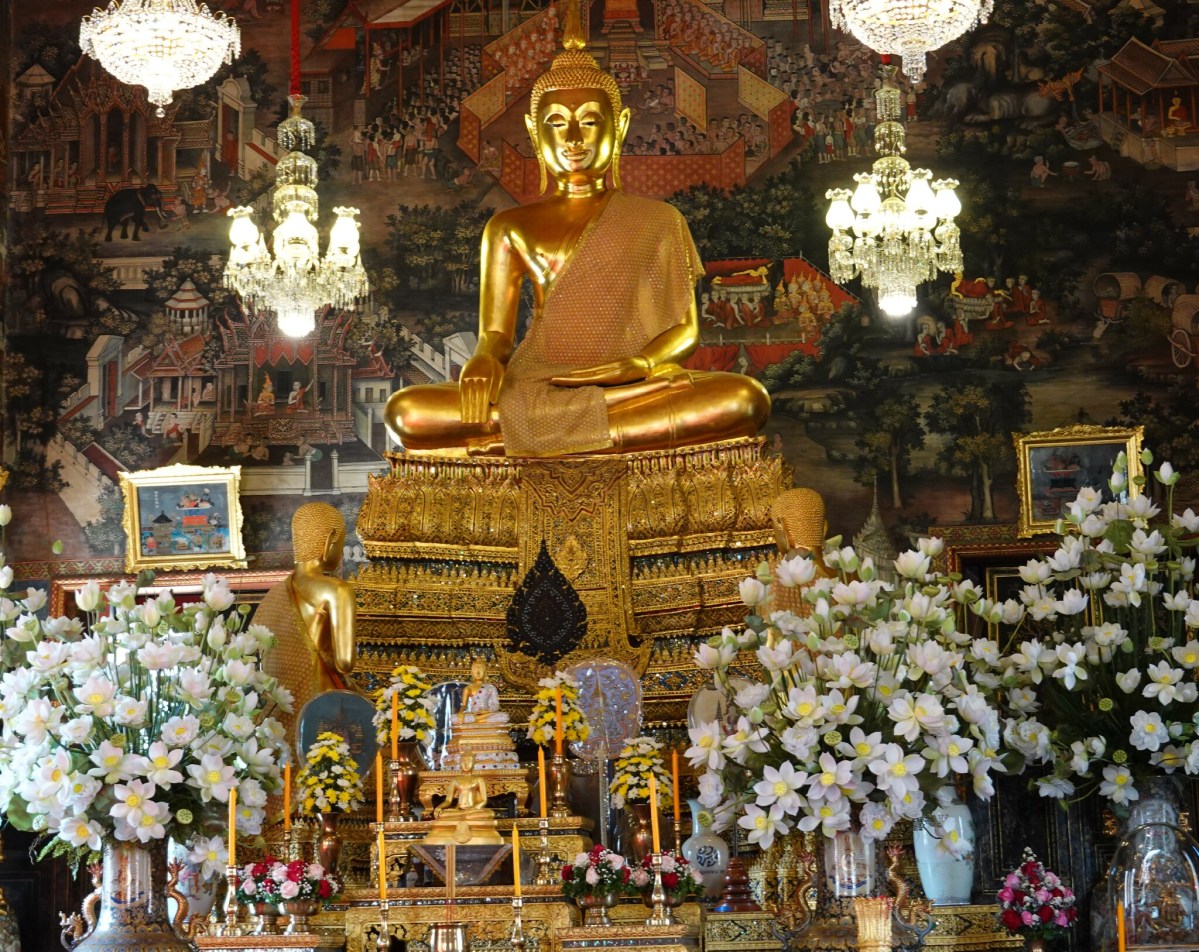
Inside this viharn, is this large seated Buddha, today surrounded by many, many flowers.
From this viharn, I enter the Wat Arun campus and am immediately drawn to the now fully restored main towers. They are very large, and the stairs very steep, with no handrails. Here are a few photos:
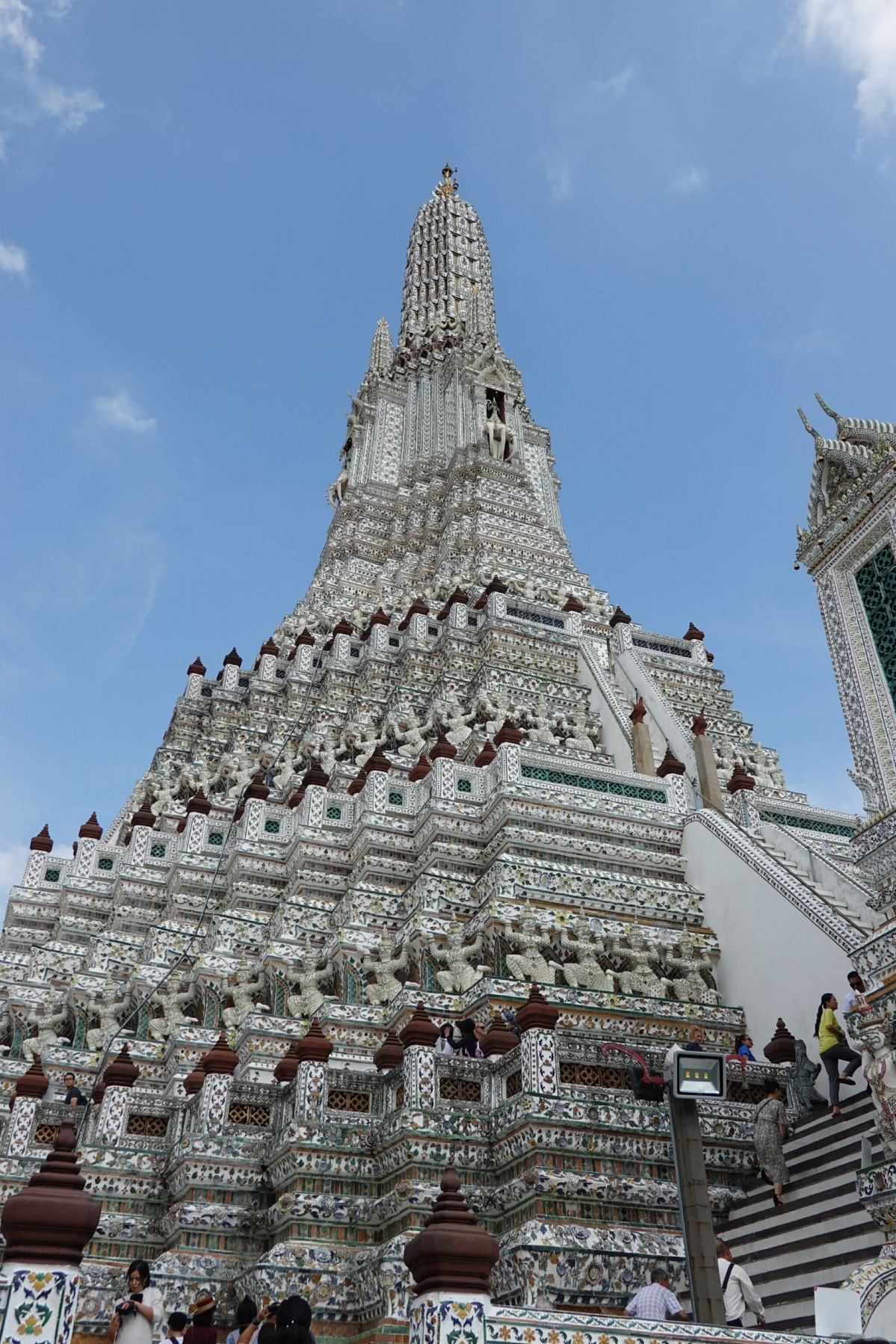
The main tower at Wat Arun
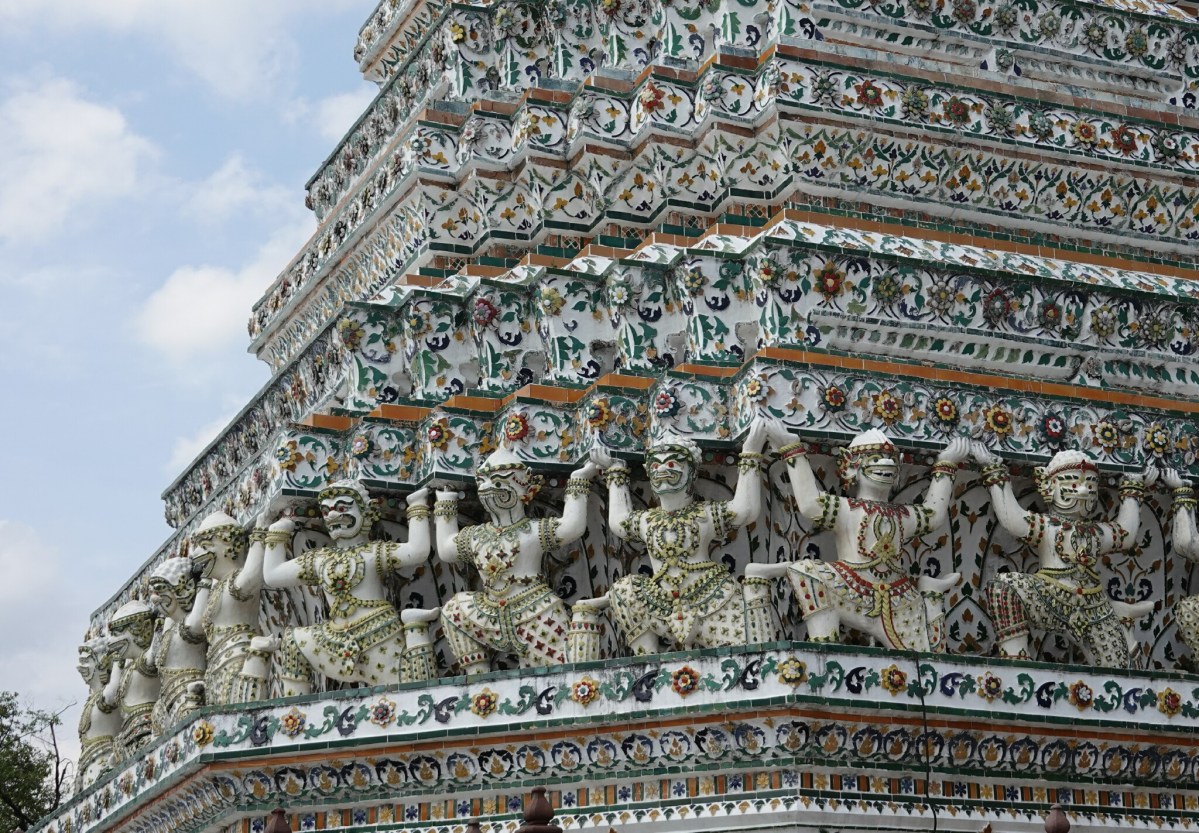
Detail of the main tower of Wat Arun
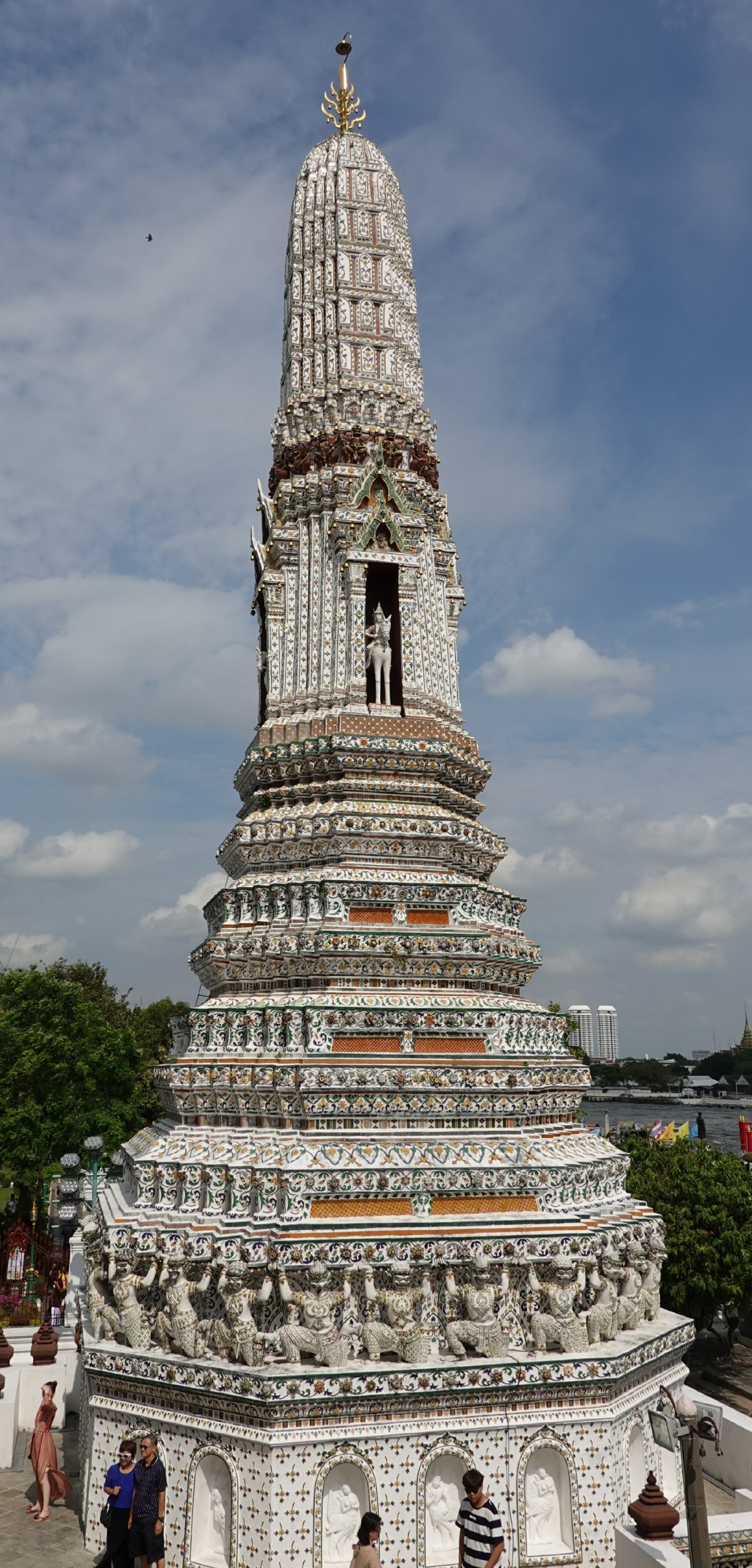
One of the four secondary towers at Wat Arun
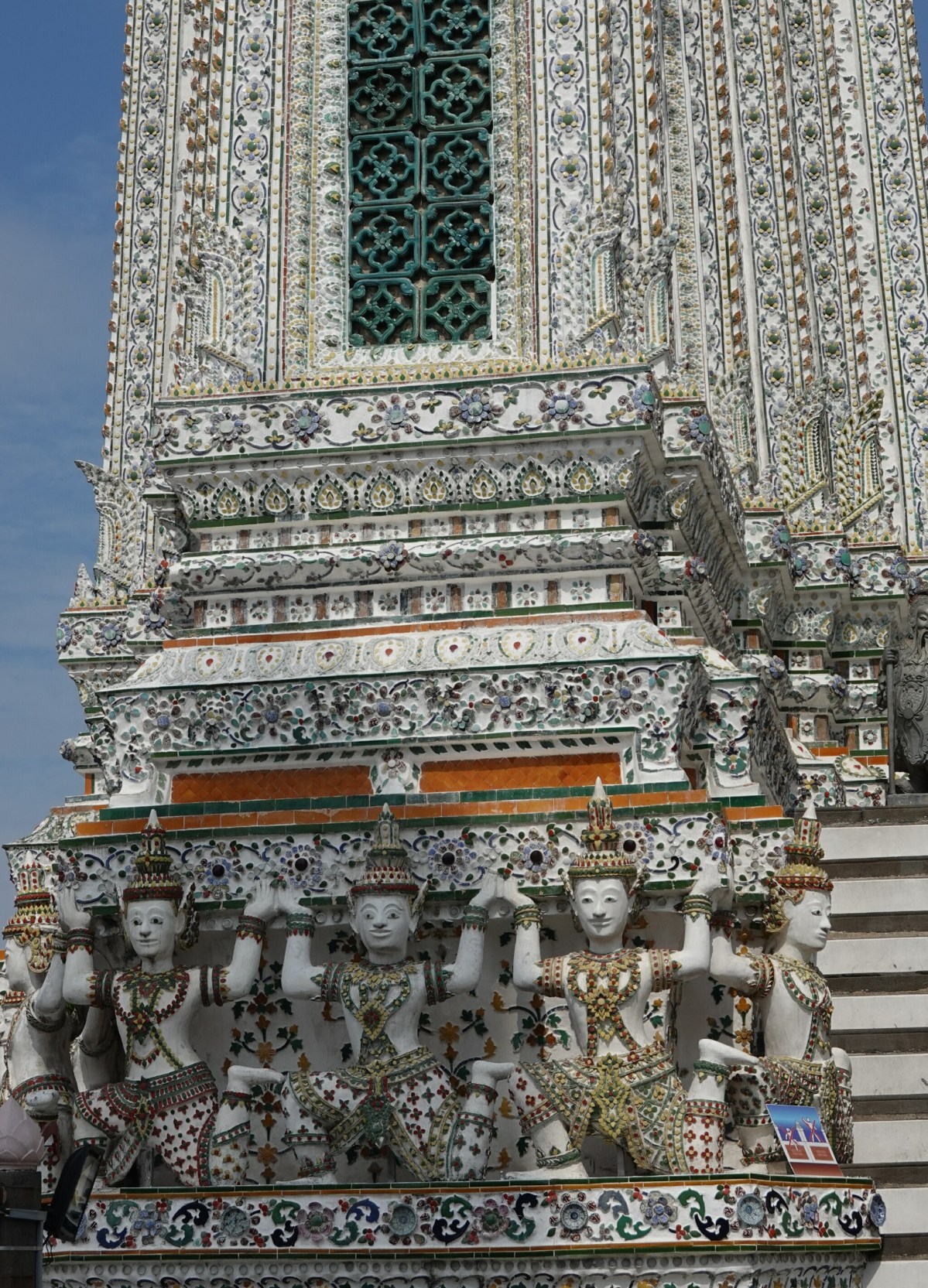
Detail of a secondary tower at Wat Arun
From Wat Arun, I boarded the ferry for 8 Baht (25 cents) for a trip across the river to the dock near Wat Pho.
Wat Pho and the Reclining Buddha
Almost all Thai Buddhist temples have a formal or official name, a short name, and sometimes a nickname. Wat Pho is known as the Temple of the Reclining Buddha, and its official name is Wat Phra Chetuphon Vimolmangklararm Rajwaramahaviharn. Wat Pho is first on the list of six temples in Thailand classed as the highest grade of the first-class royal temples. Wat Pho was built under the rein of King Rama I in the late 1800s. The most significant feature is the large Reclining Buddha, a 46 meter-long (155 feet) reclining Buddha statue. Every time I have been here, there are many, many tourists, but I still love standing near the large statue and taking in the history, the relevance, and the beauty of this relic. It is difficult to get a good picture, because of the structure’s support columns, but here are a few photos:
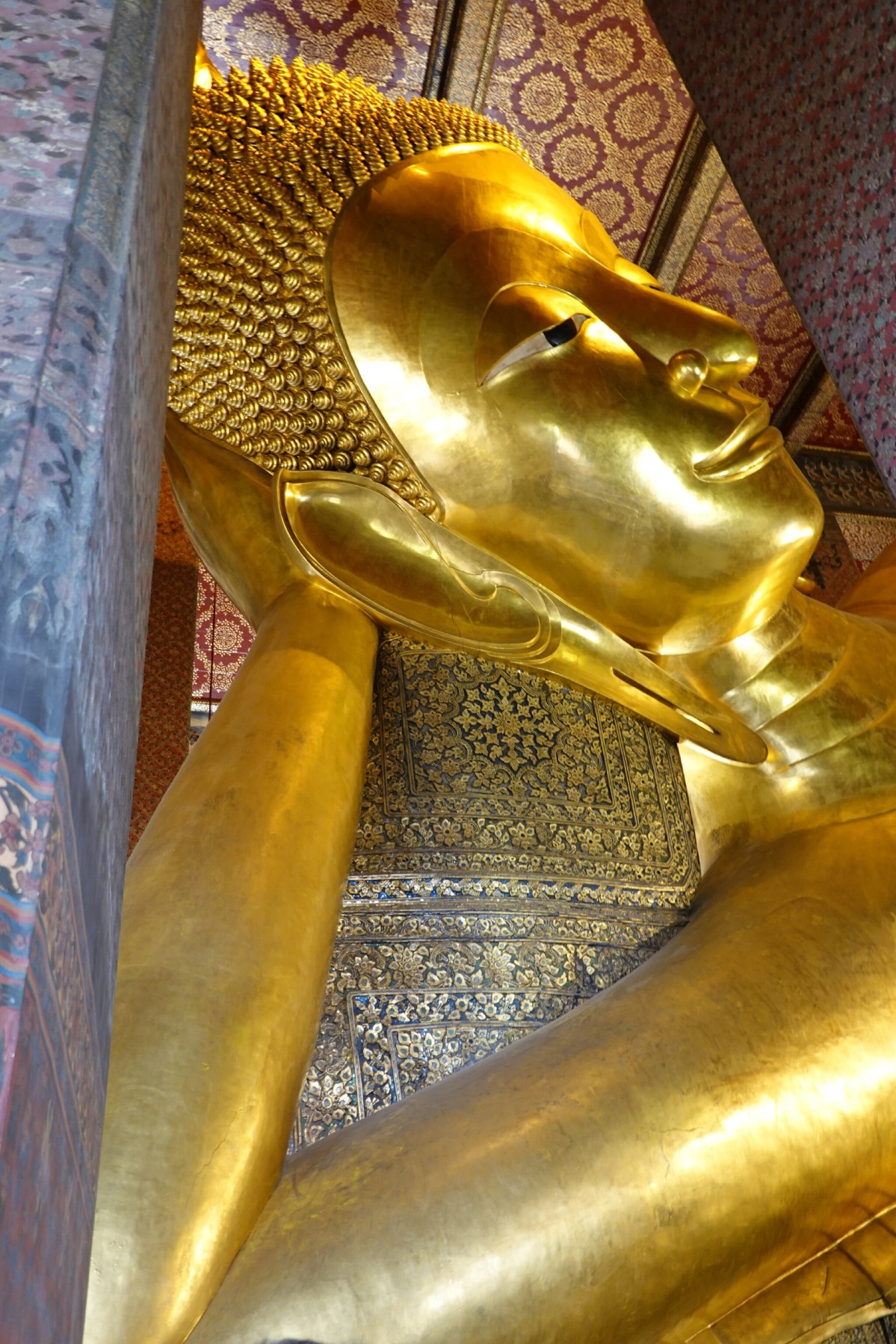
Wat Pho Reclining Buddha head
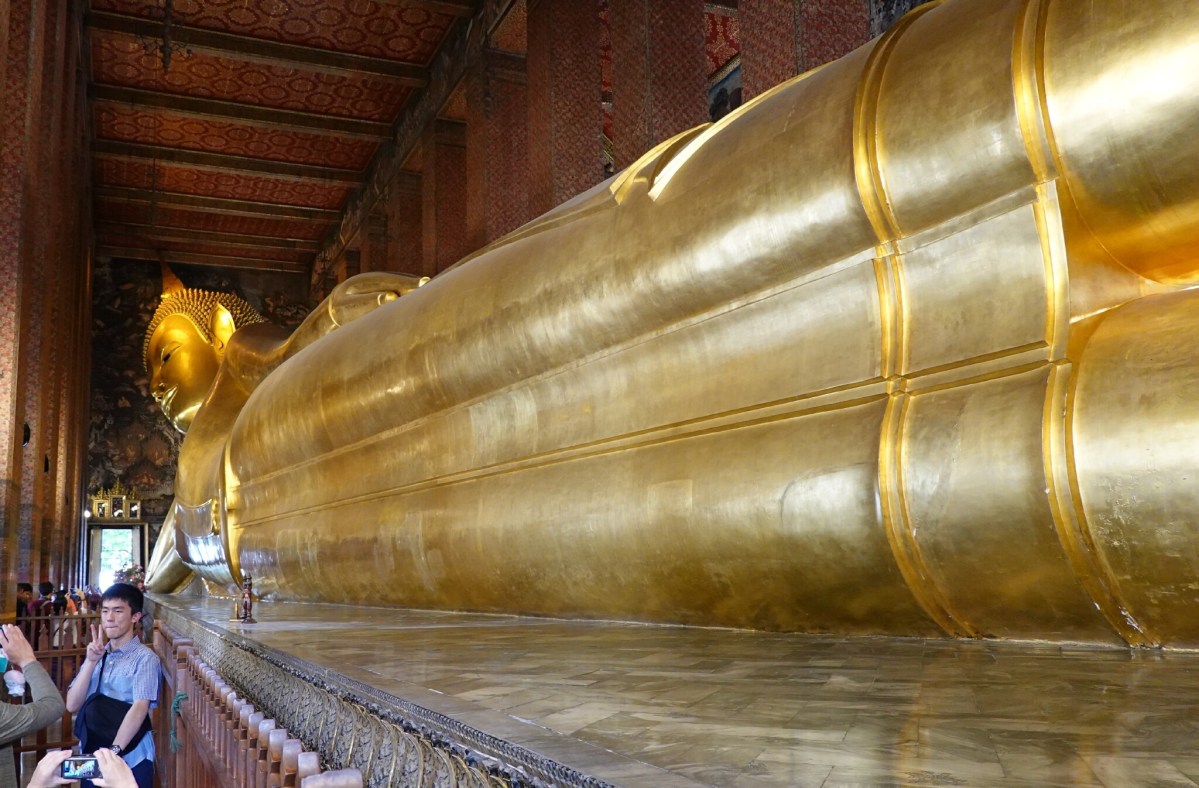
The 155-foot length of the Wat Pho Reclining Buddha
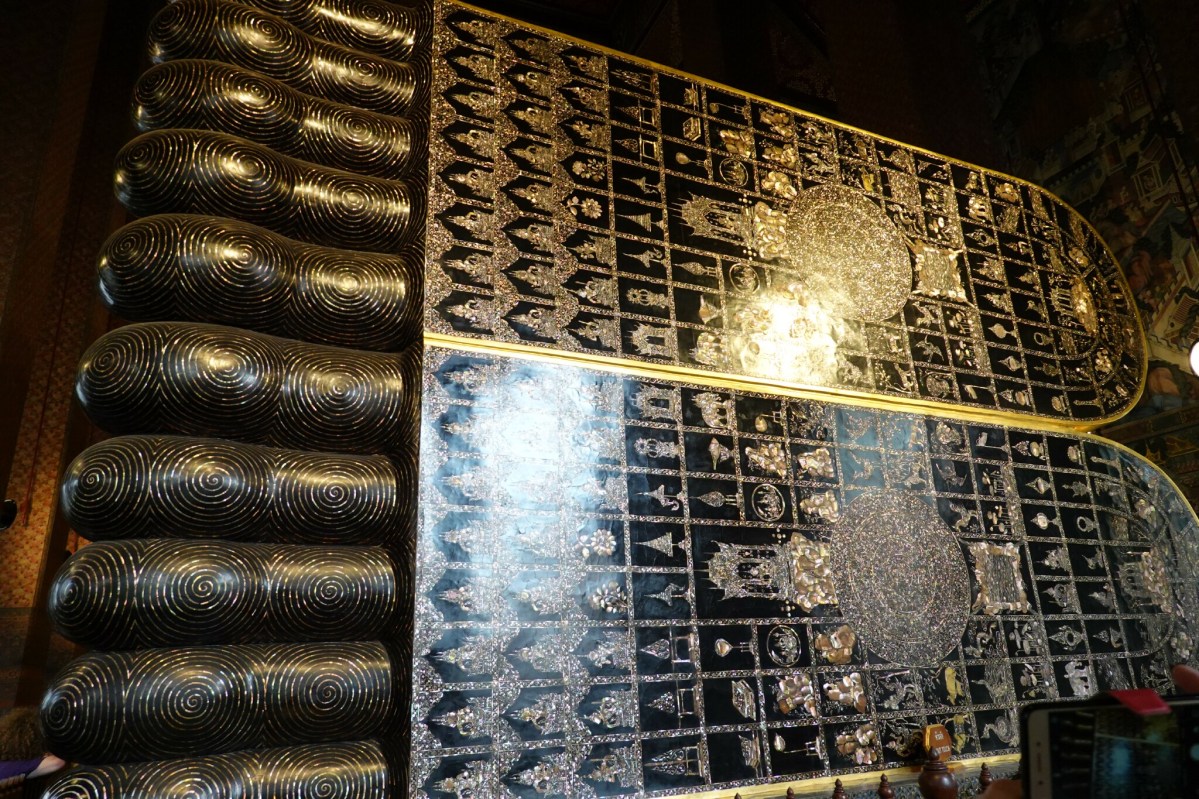
The Reclining Buddha feet at Wat Pho
After Wat Pho and the crowds of tourists, I headed down to the Bangkok Flower Market. I learned that part of the flower market had moved about a kilometer south, but I was too tired to walk that distance. I did get a few pictures, including one of a lady sorting chilies. It seems that in every market I see, there are many, many chilies, suggesting that the Thai people like the spiciness of the chilies in their food. And, their food is indeed spicy – fortunately toned down for us foreigners.
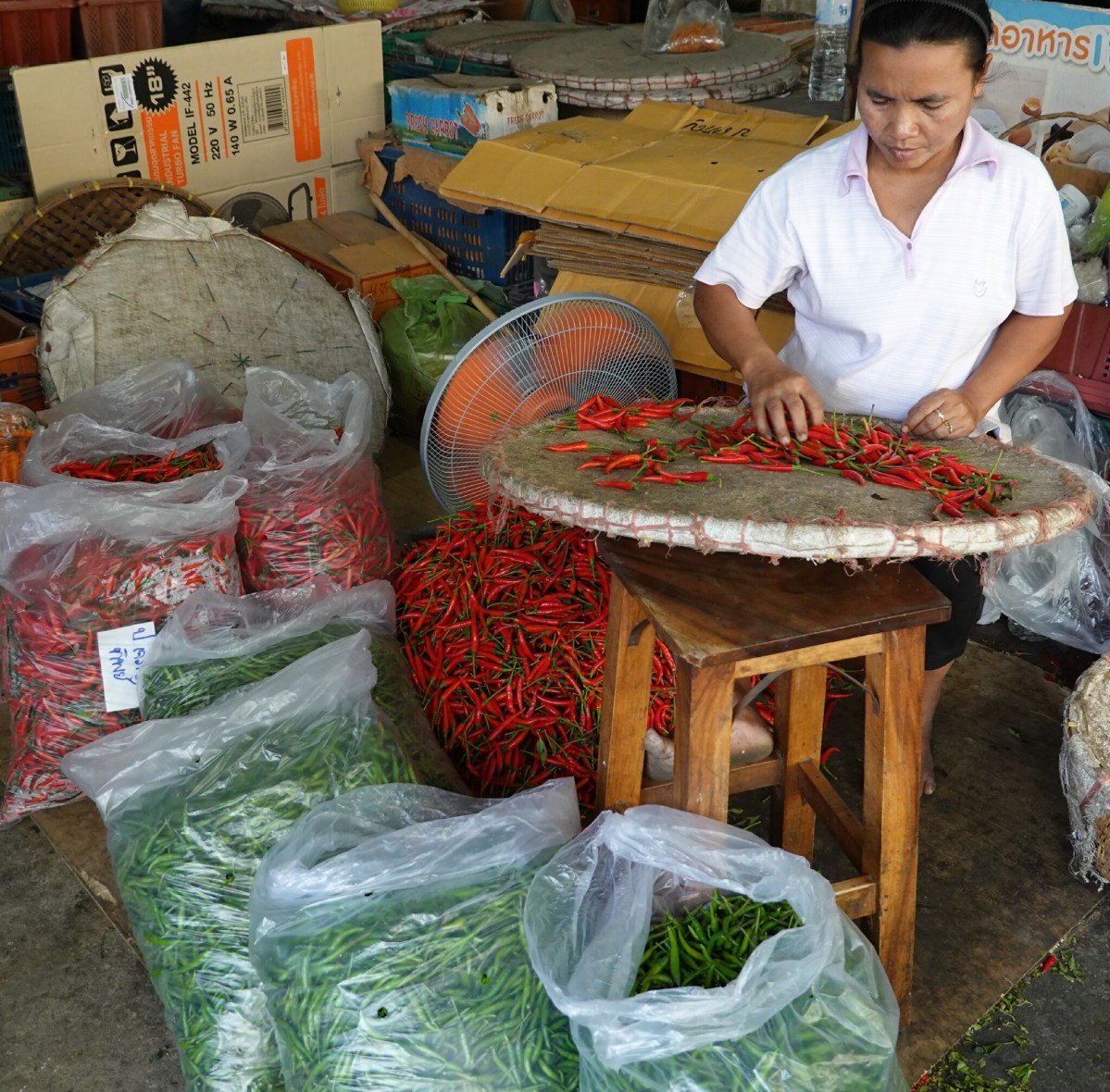
Sorting chilies in the flower market. Bags and bags of chilies.
Jim Thompson House Museum
Jim Thompson was an architect who was stationed in Thailand for the U.S. Army Intelligence in World War II. He returned to Bangkok after the war and is credited with revitalizing the almost abandoned silk industry in Thailand. He had a home made up of several traditional two-story Thai houses placed together with interconnecting walkways in a compound of sorts. He also collected much historical oriental art and artifacts. Today, the Jim Thompson Silk Company is thriving, and his home compound is a museum. I have visited many times, and always love going there. The houses he put together surround a garden of sorts (more an organized jungle). In the past, I took many pictures there, but this year, they would not let me wander around unless I bought a ticket for the tour. I have taken the tour in the past, and did not want to spend the time today, so to see pictures of the Jim Thompson gardens and home, review older posts from last year in this blog.
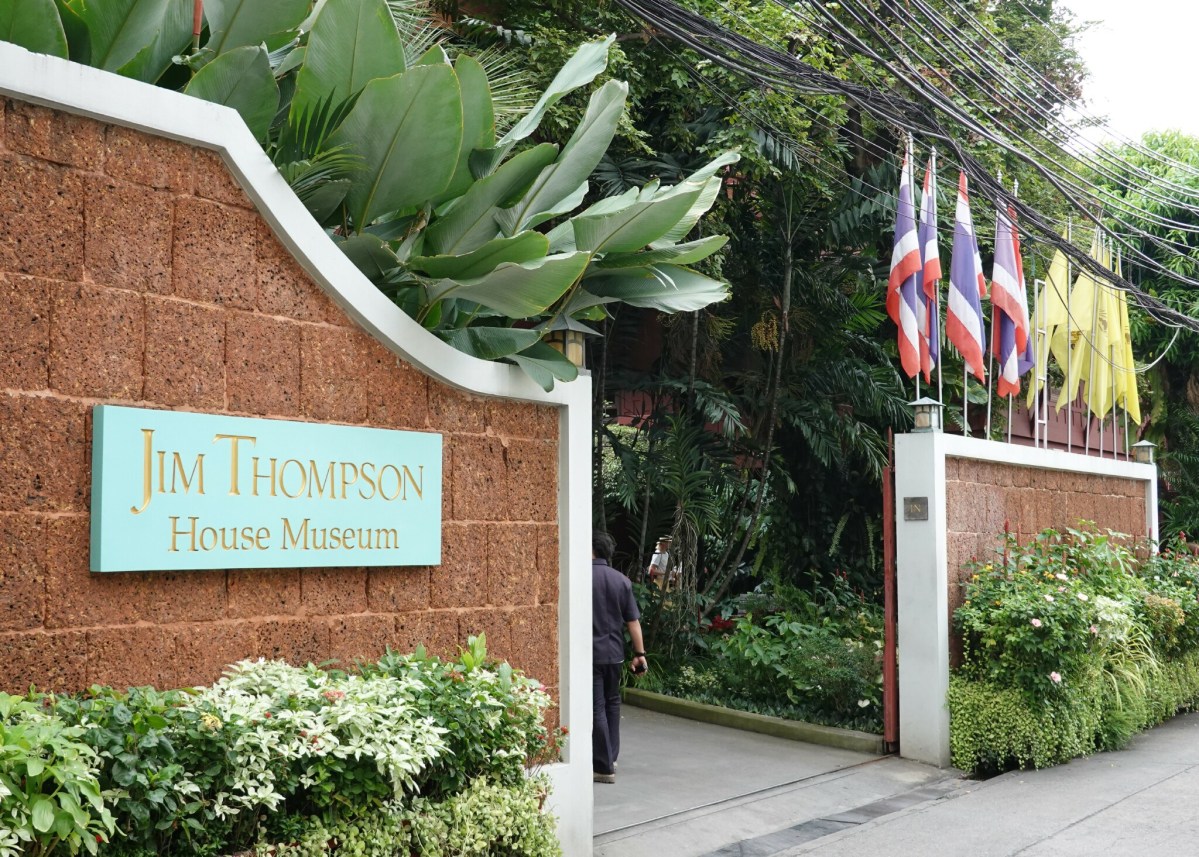
Entrance to Jim Thompson House Museum
I was out and about in the Bangkok heat for almost six hours, and I am tired. It was a very good day in Thailand.
Next: Back in Chiang Mai

 James the Intrepid Pilgrim
Glad you are enjoying Bangkok. Cold and rainy in San Diego.
LikeLike