07 October 2017
Walking Day 24:
32 kilometers
Note: No step count today. I believe my FitBit has died. It is no longer charging, and this will leave me unable to document the number of steps every day. I was hoping to see just how many steps I took on the Camino de Santiago, and was on track to record over a million steps on this walk. But, my FitBit is older and not up to the task any longer. I’ll leave it plugged in all night tonight and perhaps it will wake up. I am skeptical, though. I have had this FitBit a long, long time, and it has counted many, many steps for me.
I knew that today would be a long, long day walking on the Camino de Santiago. And it was. I started at Rabanal del Camino at 7:45 AM, before sunrise, and was walking out of the small Camino town by the light of a full moon. It is a 7 kilometer walk uphill to Cruz de Ferro, the Iron Cross, This is where traditionally pilgrims leave a stone on the pile around the pole with the iron cross at the top, representing leaving there or unburdening yourself from a sadness, a loss, or some other emotion. Walking in the moonlight, I was not surprised to see a number of other pilgrims also on the way up the long hill. For many, this will be a very long day as many are walking 32 kilometers to Ponferrada. For others stopping in Molinaseca, this is still fairly long at 26 kilometers. For everyone, there is a long, long, steep at times, very rocky descent for at least 10 kilometers (6 miles). The rocky downhill is as unrelenting and unforgiving as the long uphill the first day walking from Saint Jean Pied de Port to Roncesvalles.
My camera did not capture the moon well, and as I walked and occasionally looked back, I was treated to a very beautiful and colorful sunrise (also not captured by my camera). Soon I was walking along in the first rays of early morning light into a very beautiful ascent up to Cruz de Ferro.


Two vastly different colors in the fields at different sections of the walk up the hill in the dawn. In the picture to the right, you can see the moon shining through the trees in the upper right.
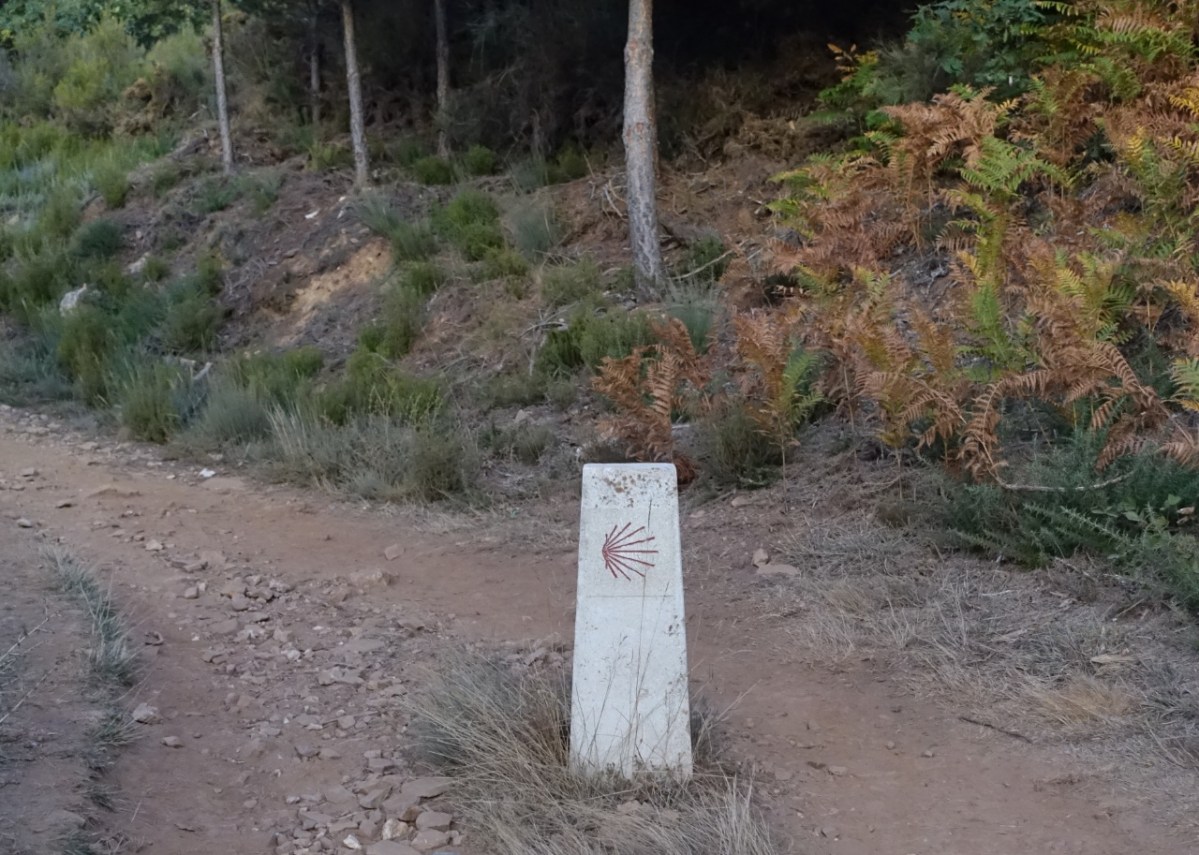
I do remember that in this section of the Camino over the Cruz de Ferro mountain, the Camino way markers are these white monuments with a red Camino shell graphic. These are very consistent until we finish the descent and cross the river into Molinaseca.
Following this area, the views of the surrounding hills are spectacular. For a little while I am walking up (it is really steeply uphill) through a forest:
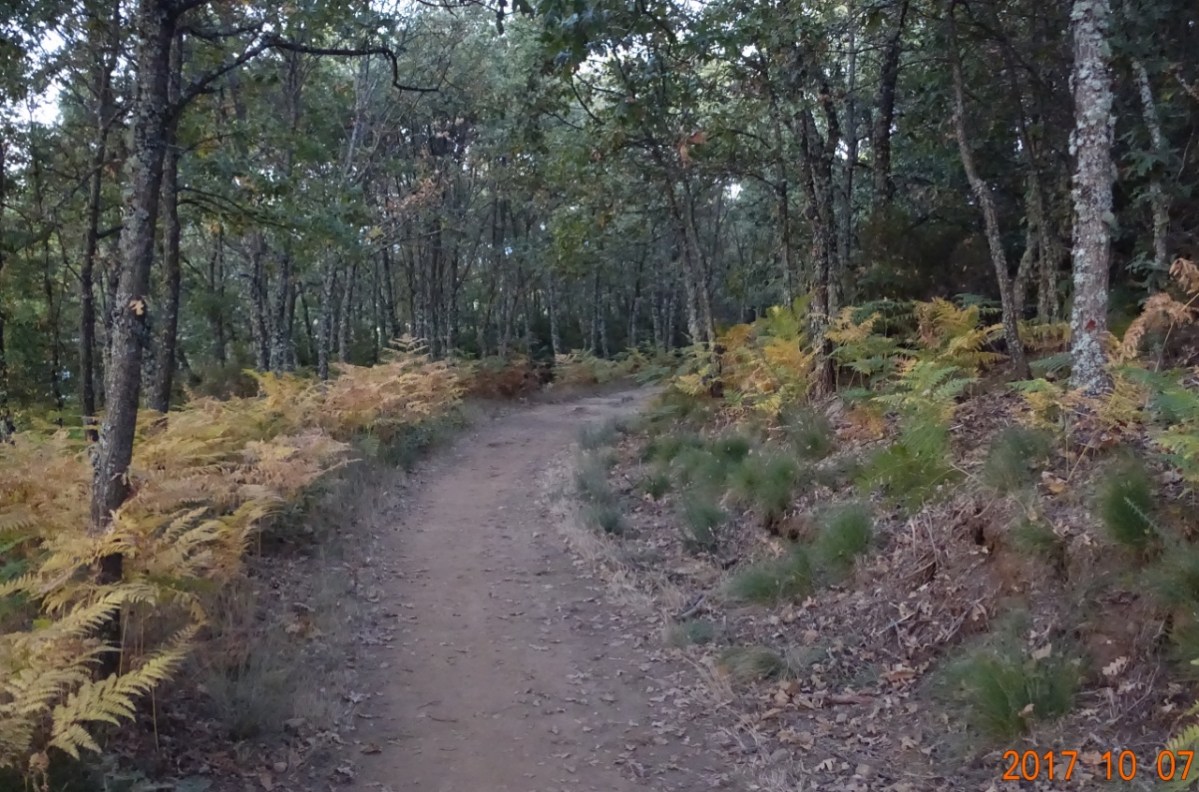
And emerging from the forest section, the views come alive. Here are two views, one of the hills to my left, and the other to the Camino path in front of me:


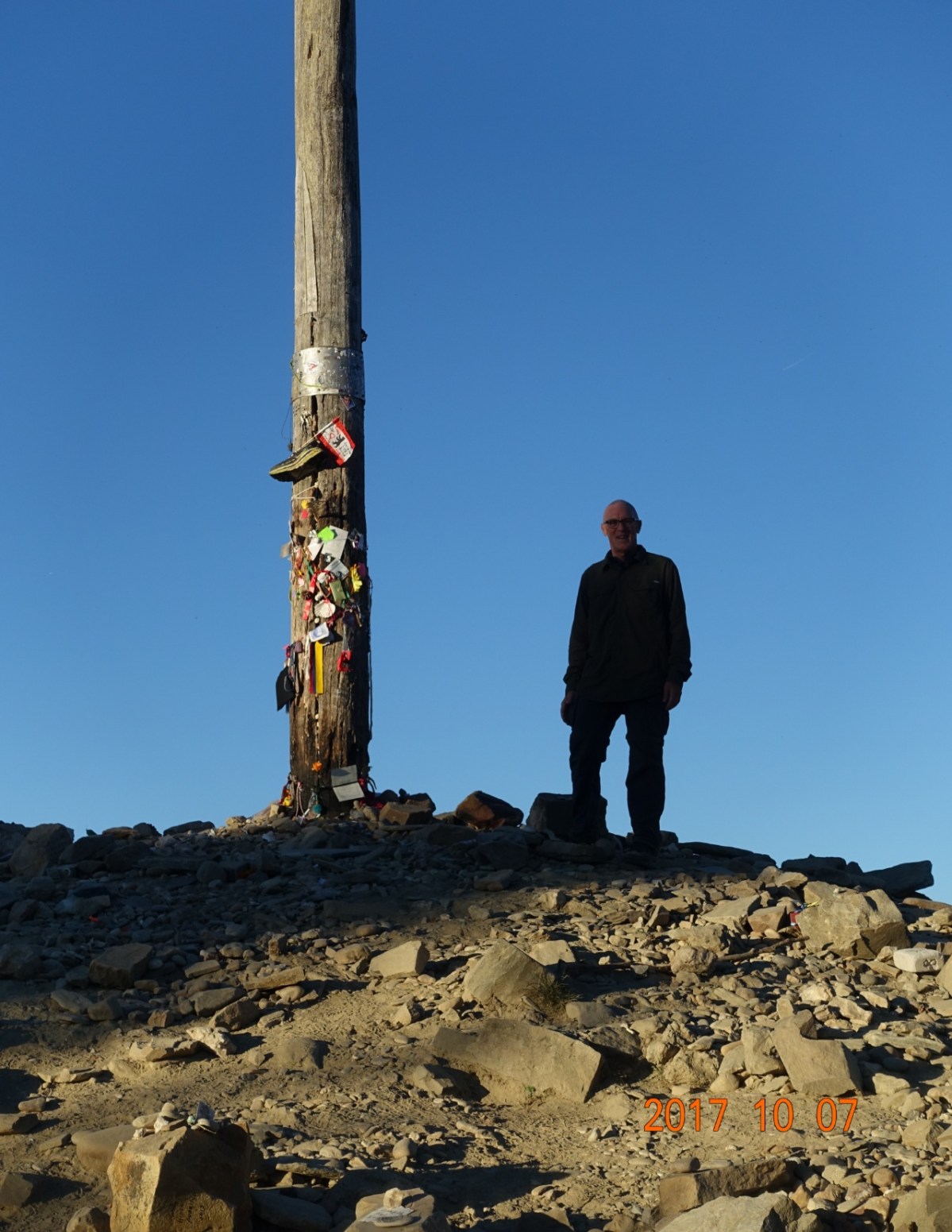
After about an hour and a half of uphill walking at a pretty good clip, powered by the cool morning and a fairly decent breakfast, I got to Cruz de Ferro. Here I am at the top of the pile of stones (it was difficult to get a good picture in the early morning light):
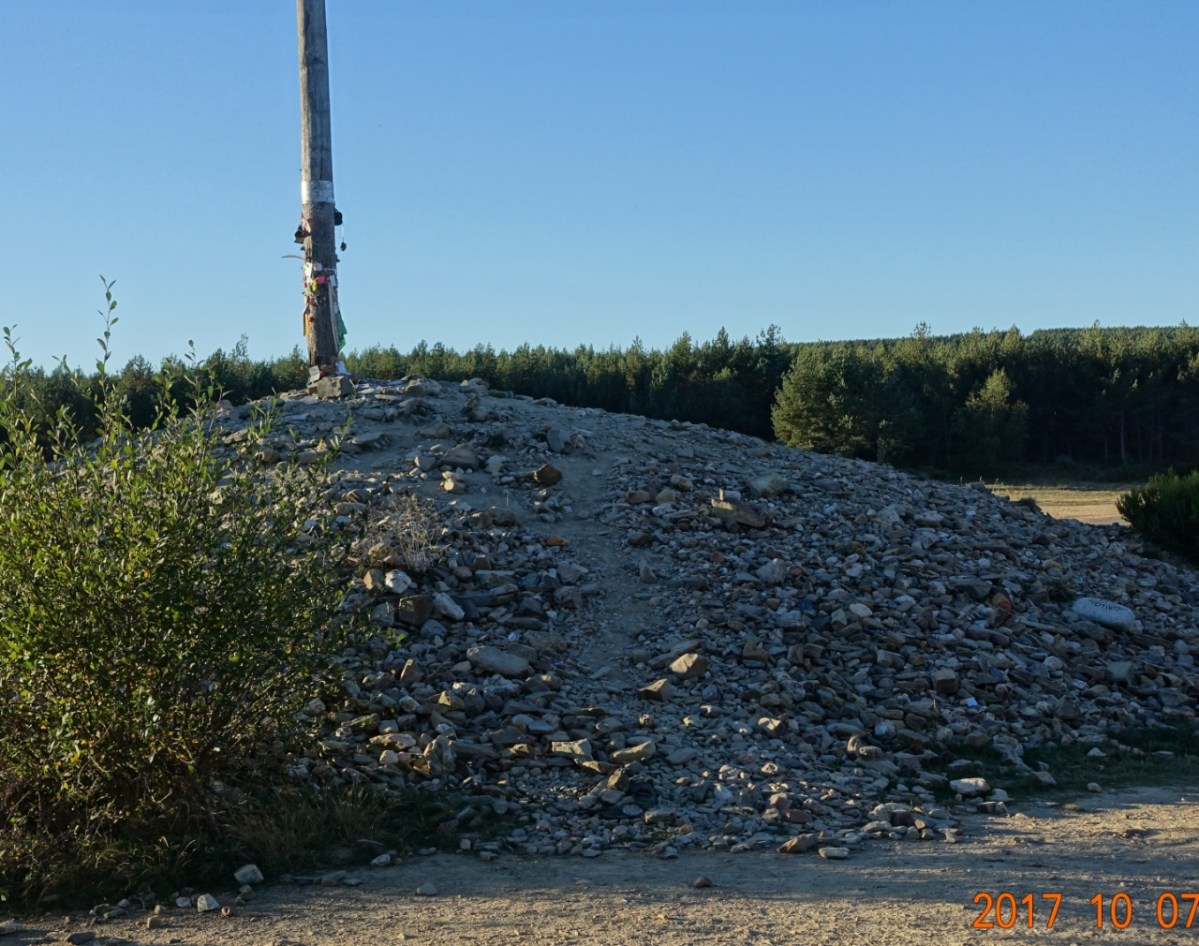
And here is another view of the pile of stones left by pilgrims over the years:
The walk continued, a little bit down, and a lot up. Cruz de Ferro is at 1505 meters elevation, and the highest point on the Camino is about 2-3 kilometers ahead at 1515 meters elevation. So we still have about 10 meters (34 feet) to climb. And the stunning views continue:

Soon, we get to Manjarin, and Albergue Tomas – Tomas believes he is the last of the Knights Templar, and has this very rustic, very small albergue up on the mountain:
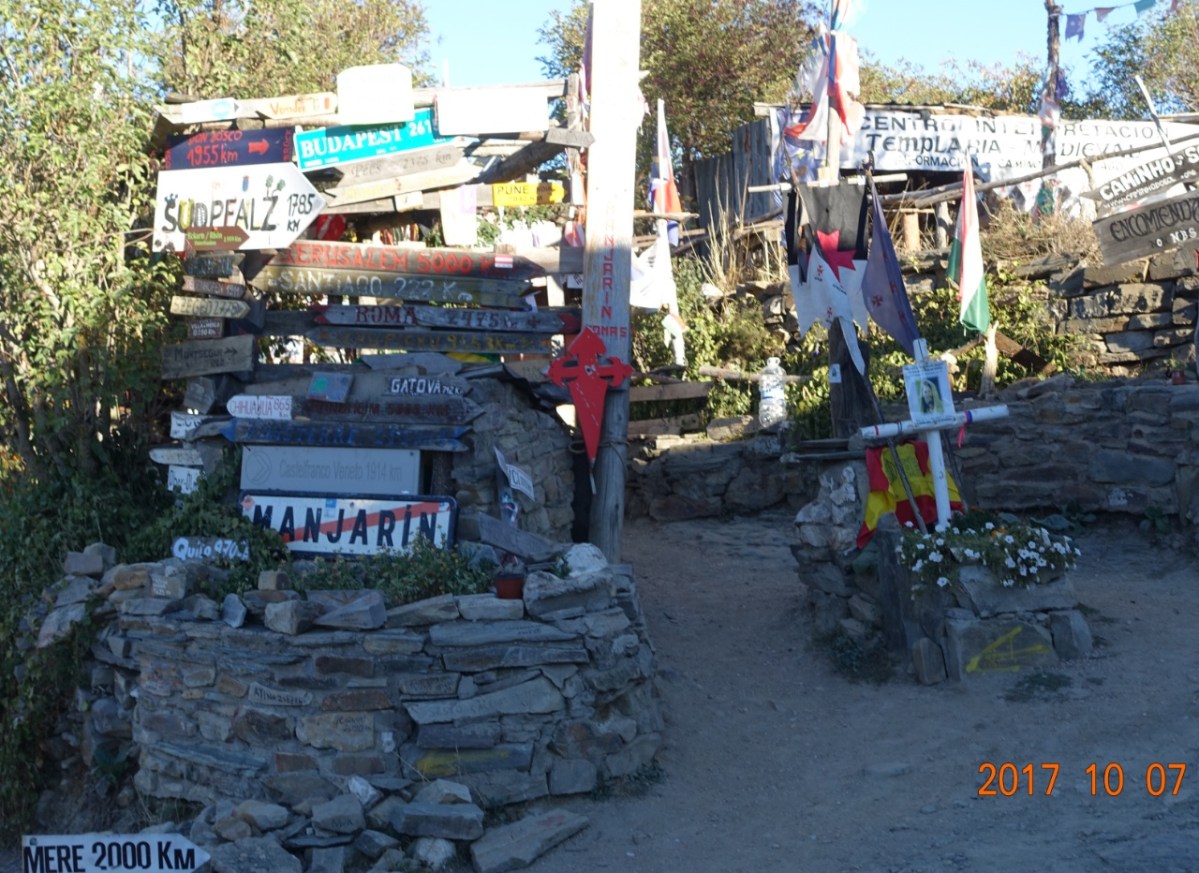
I’m not sure he has power or running water, but he is popular in the Camino folklore and I stopped to get my pilgrim’s credential stamped.
Now, the downhill 7 or 8 kilometers starts. It is steeply downhill, very rocky, and very slow going. Even with good boots, it is very hard on the feet. I am still walking in my North Face hiking shoes I got in Burgos – my left heel is not healing as I had hoped, and I cannot yet wear my hiking boots without some pain at the sore spot.
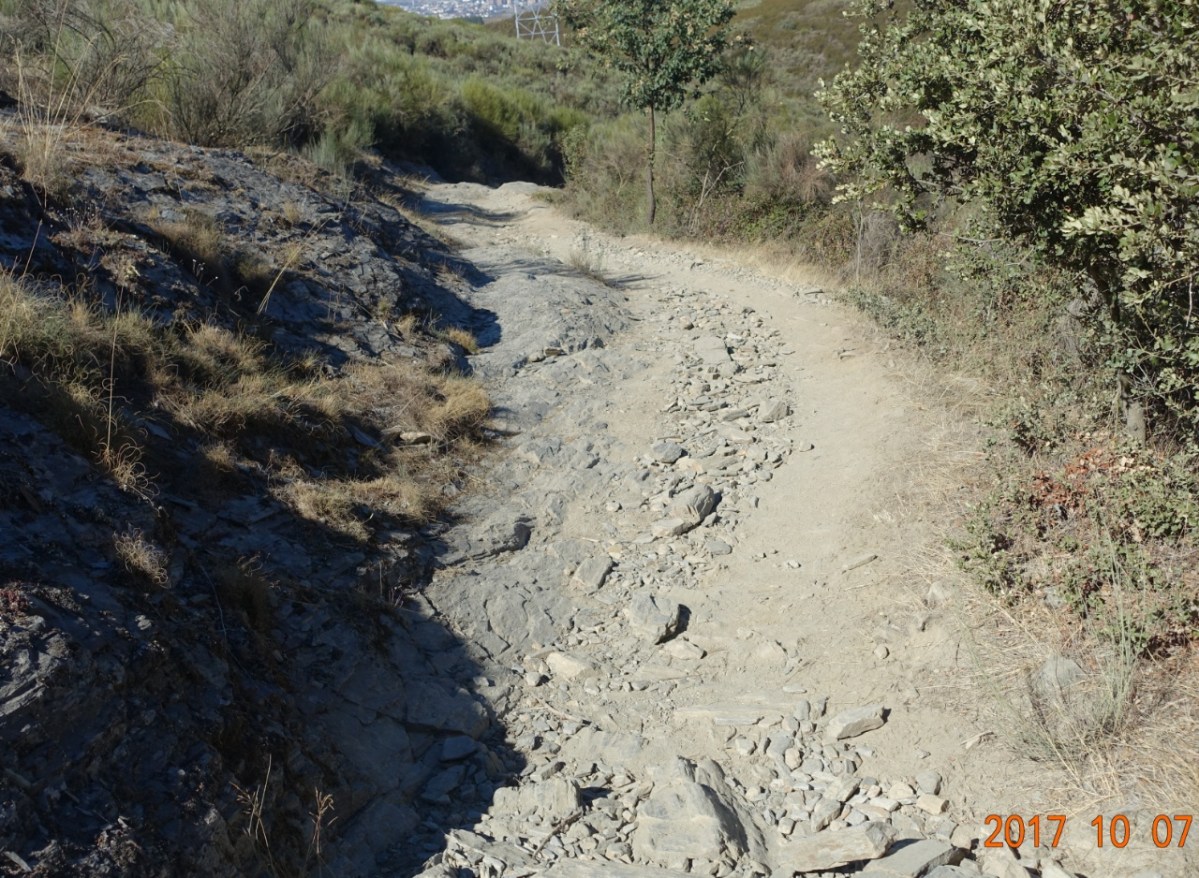
After almost 3 hours of slow, relentlessly rocky, and at times very steep downhill hiking, I finally got to the town of Moninaseca.
 This is a town of 800, existing primarily for some farming, and for support of pilgrims walking the Camino de Santiago. There are many albergues here, a few small hotels, and many pilgrims stop here after the long and arduous hike down the mountain.
Here is a view back over the bridge I crossed to get into the actual town. The Spanish seem to love those stone walkways, but they are difficult on which to walk. Pretty maybe, and rustic, but difficult on which to walk.

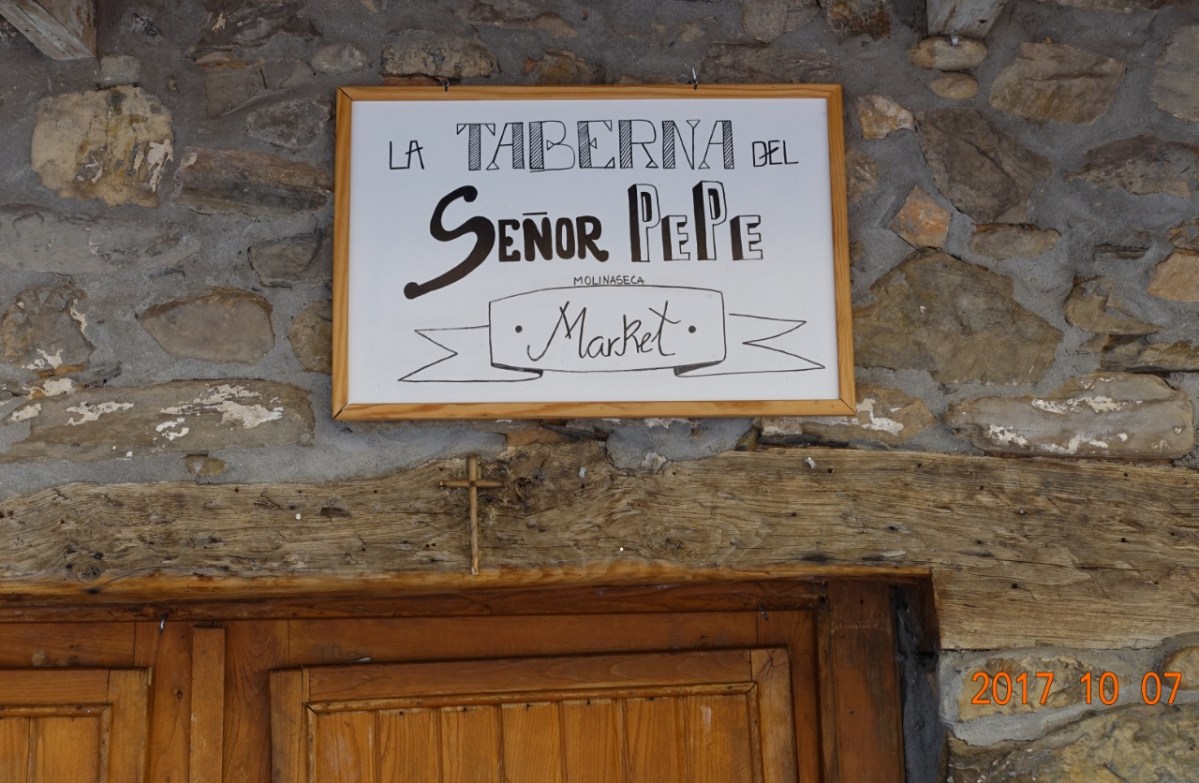
At the left of the bridge is Señor Pepe’s market. I was here a year and a half ago, and loved the market and the lady running it, Señor Pepe’s granddaughter. The sign is there, but Señor Pepe’s Market is now closed, so no stamp and no snacks from what I found to be one of the nicest little markets on the Camino.
It is now 6 kilometers to Ponferrada. Most of this 6 kilometers is on a long, gradually uphill on a fairly busy city street. It is a hot day, and the walk is grueling. We finally get to the outskirts of Ponferrada, and the way marker directs us on a route that takes us off the busy street around Ponferrada.
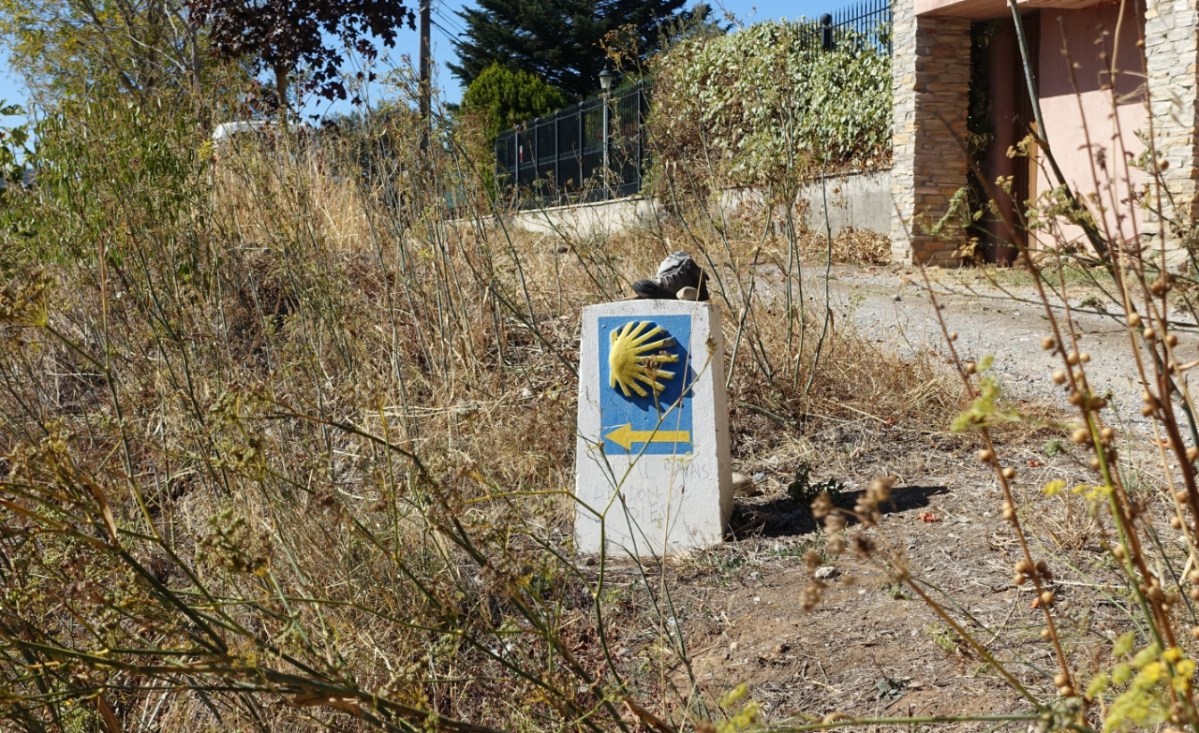
Someone left their boot on the way marker monument.
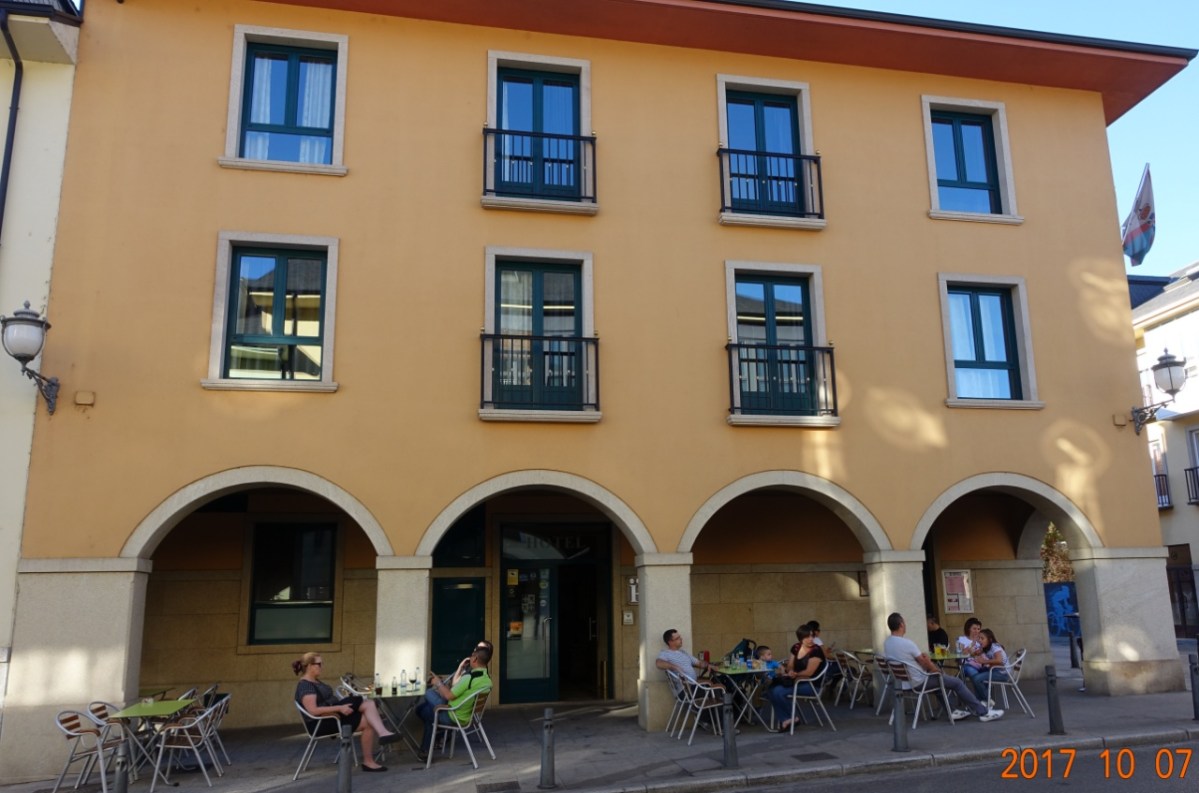
And I finally got to my hotel, as seen above. A very nice hotel, right by the Knights Templar Castle. I checked in, showered, changed to my clean clothes, and headed out to do a little sightseeing and make my way to the laundromat to wash clothes. (This is the normal Camino pattern: wake, breakfast, walk, stop/eat, walk, walk, check in, shower, clean clothes, eat, sleep, repeat the next day.) The lavaronderia (laundromat) was not far, and easy to find. There I met a young German lady I had seen on the Camino, then in came an Italian couple I had seen earlier today, and later in came two ladies from San Jose I had also met several days ago. The laundry was a bit of a Camino reunion.

This is the Knights Templar church. The Knights Templar were commissioned in the early 12th century to protect pilgrims. They were quite active in southern France and northern Spain for several hundred years, even continuing well after the Church suppressed them in the 14th century as they were becoming too powerful. One of their important centers and castles was here in Ponferrada.
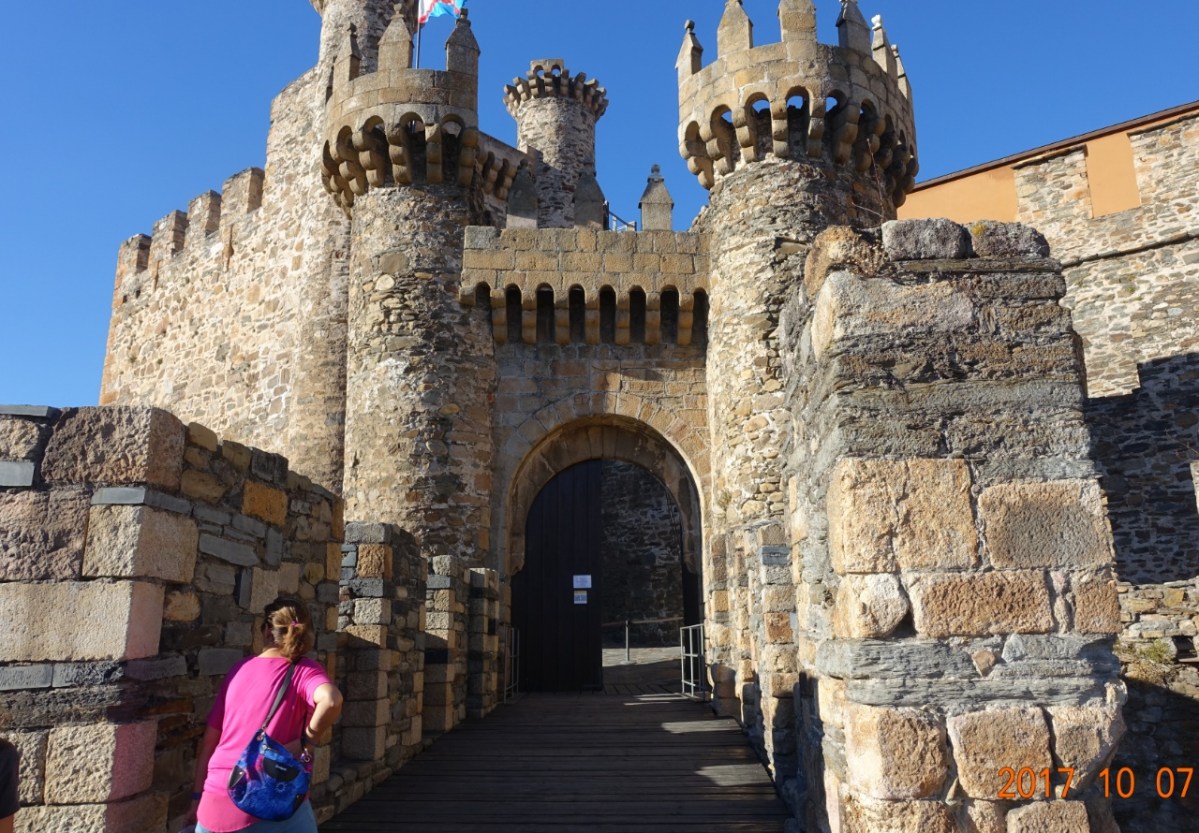
I visited the Knights Templar Castle. It is pretty interesting how well-built it is for something that is close to a thousand years old.
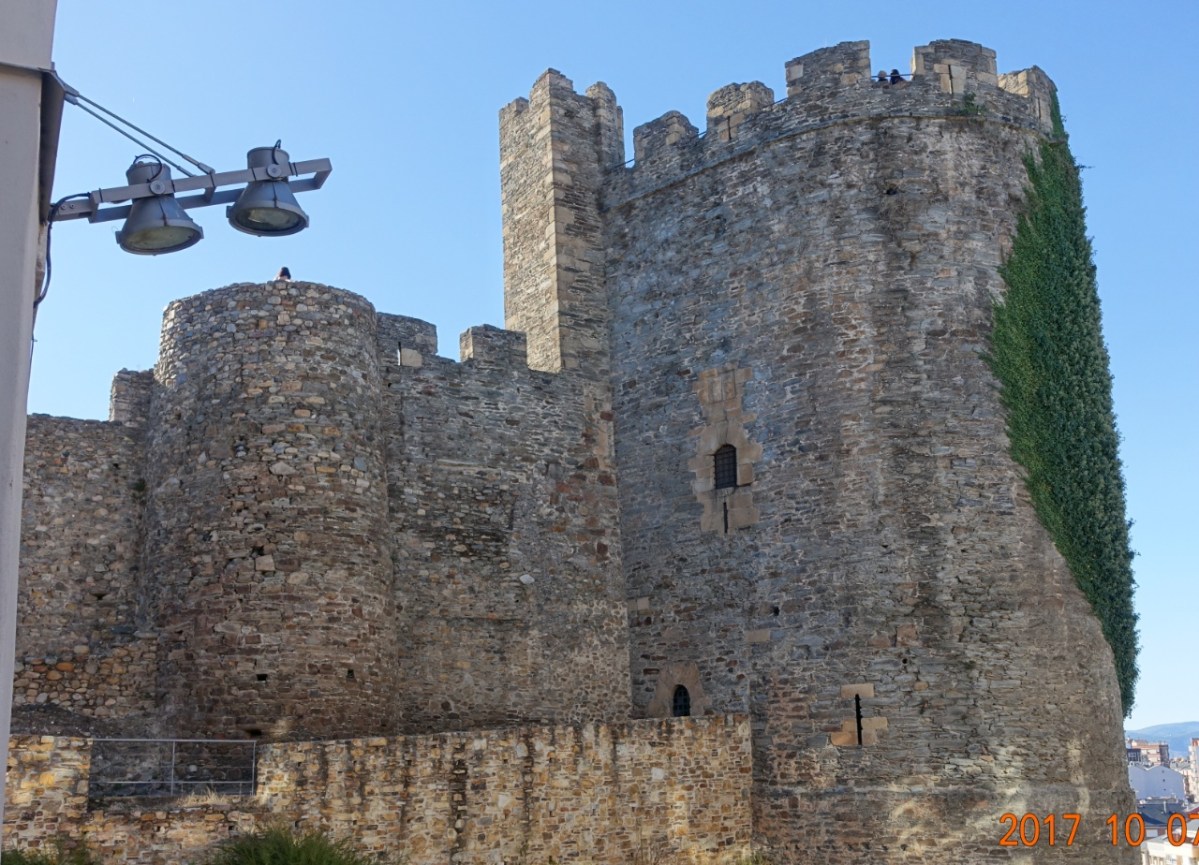
From one of the walkways along the eastern wall, the view is of their church.

Next: Through the Bierzo valley, vineyards, to Villafranca del Bierzo

 James the Intrepid Pilgrim
Alas, poor Fitbit, we knew him well.
LikeLike