05 October 2017
Walking day 22:
20.5 kilometers
29,727 steps
I left Mercedes and Massimo, the caretakers of the charming little B&B Molino Galoches outside of Villavante at 8:00 this morning, just as Tom and Julie were walking by on the Camino path along the rail line.
We walked to Astorga, a very historic city of 15,000 population with deep roots in Roman and Spanish history. During the Roman empire, Astorga was the capital of all of what is now northwestern Spain and northern Portugal.
We opted to take the non-highway route, as we do not see the point of walking along a highway when an alternative, marked route exists. After arriving in Astorga, we had lunch, cleaned up, washed clothes, and visited the Roman Museum, the Chocolate Museum, and the Gaudi building/museum. A full day, and I am very tired. I shall upload the pictures and add text another day, maybe even tomorrow.
Leaving Villavante, the terrain and landscape is definitely changing from the rolling wheat fields of the meseta to more varied farming and undeveloped area. Here we are walking along a field of corn.

And we get through a small town and back into flat farmland with more bushes and small trees than we saw on the meseta.
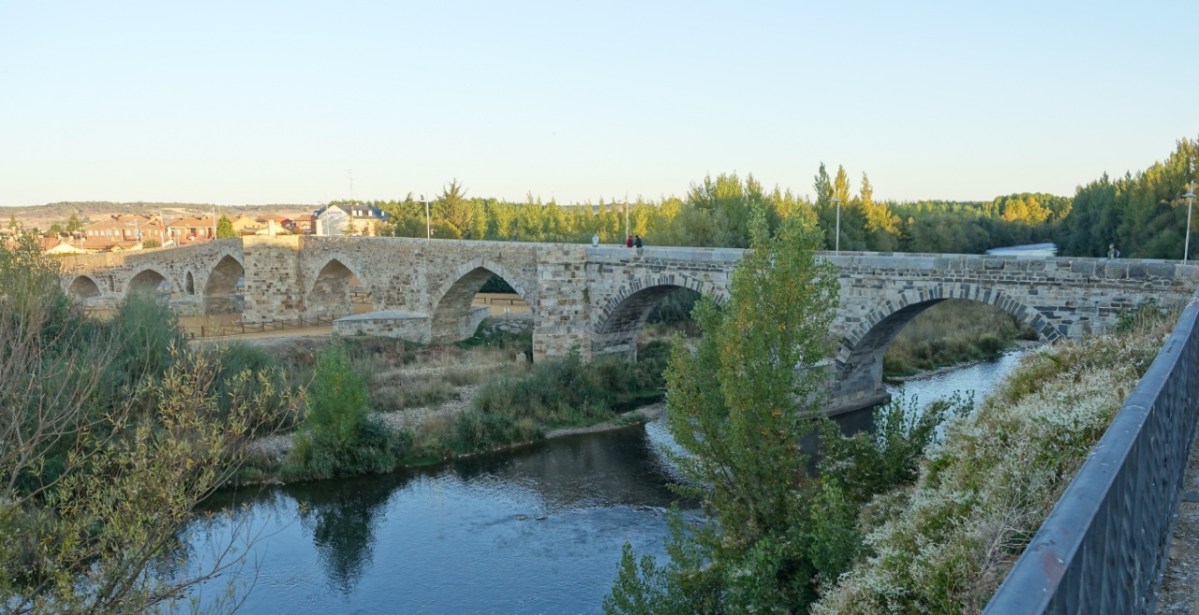
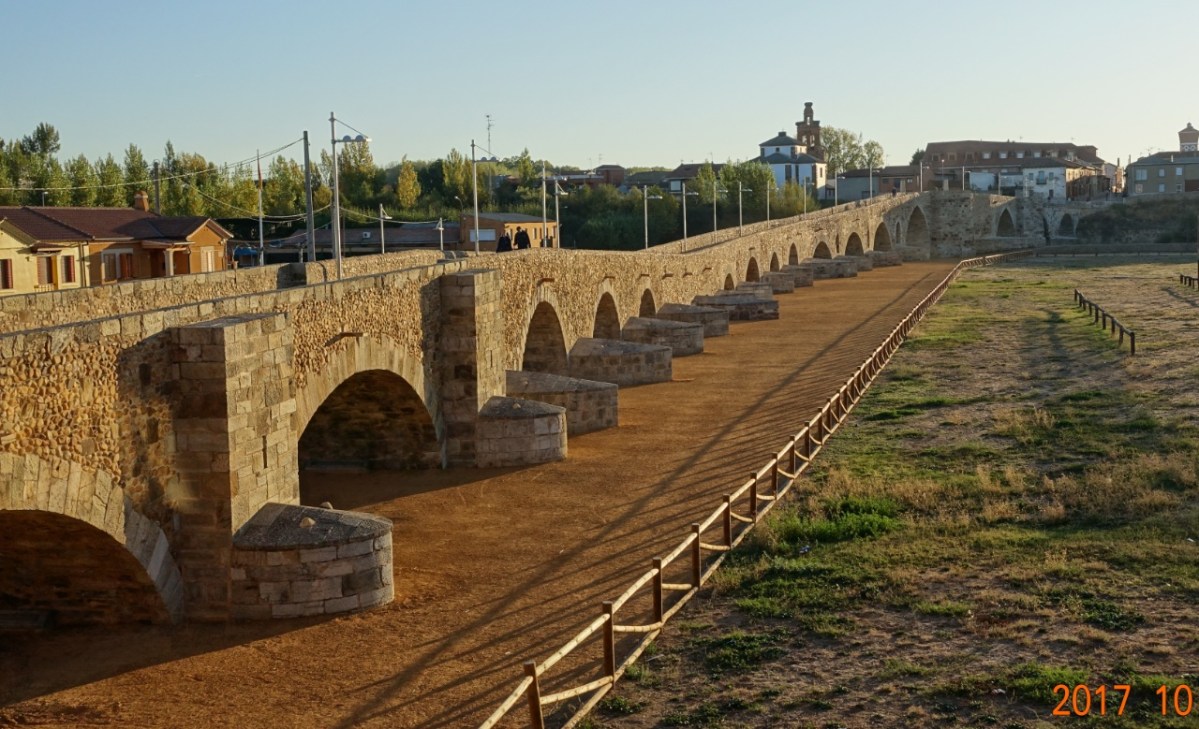
We get to Hospital de Orbigo, known as Knight Commandery of the ancient order of Saint John. The bridge is a long, long stone bridge, and alongside is a historic jousting field where exhibitions are held to this day during festivals.
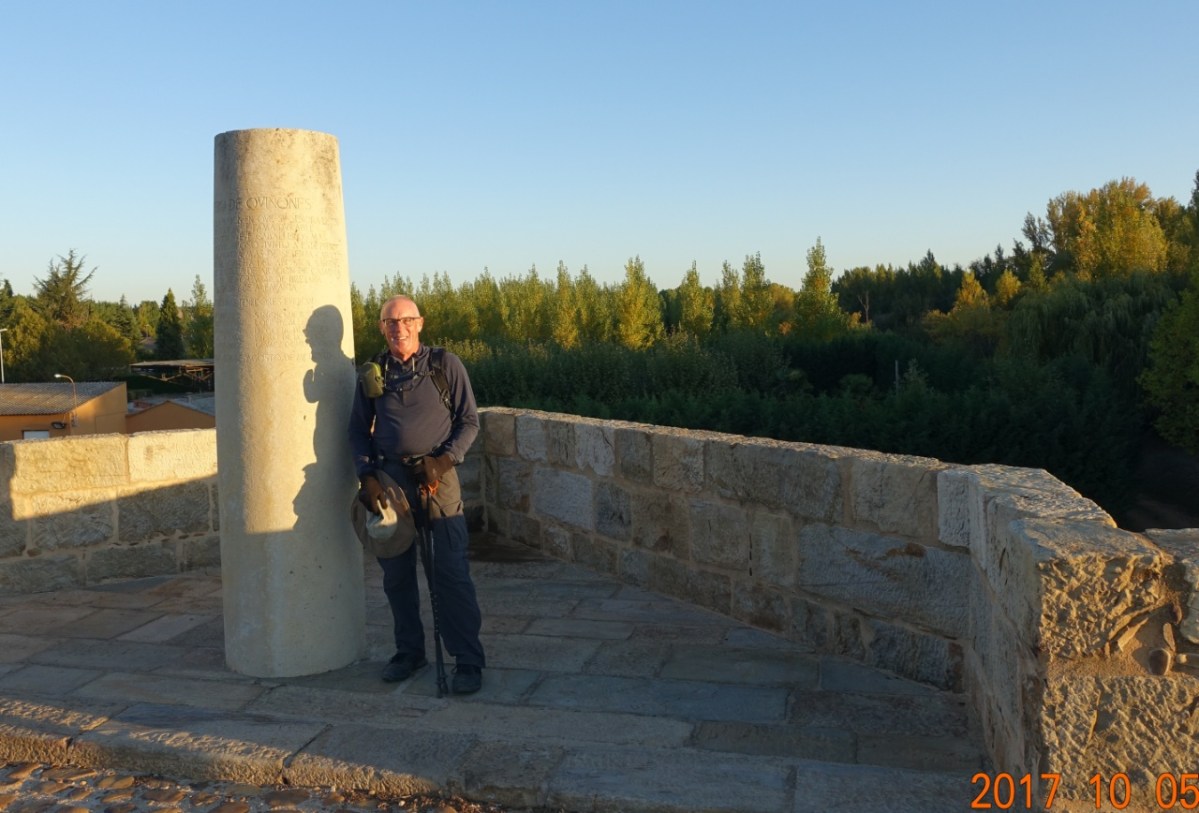
Here I am on the bridge at about the center point.
And here is a view of the bridge from the other side. AS I said, it is a long bridge.
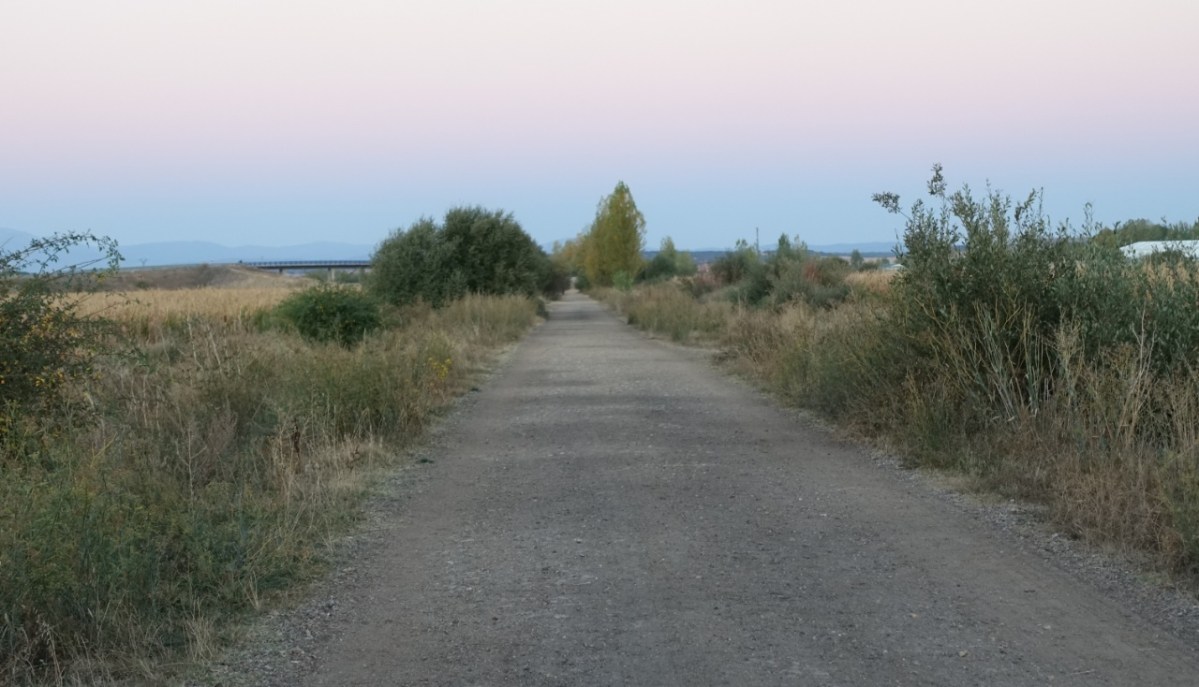
We pass through the small town and are back in the fields, opting to take the less direct, but more natural route. When I walked this route last year, it was after several days of rain, and we encountered deep mud for the 4 or 5 kilometers on this part of the path – it was a long, slow walk, but mud does wash off. Today there was no mud. It was a warm day, and a pleasant walking day. Below we are approaching the last town before Astorga, Santibanez de Valdeigesia, just through the gap in the trees ahead in the picture.
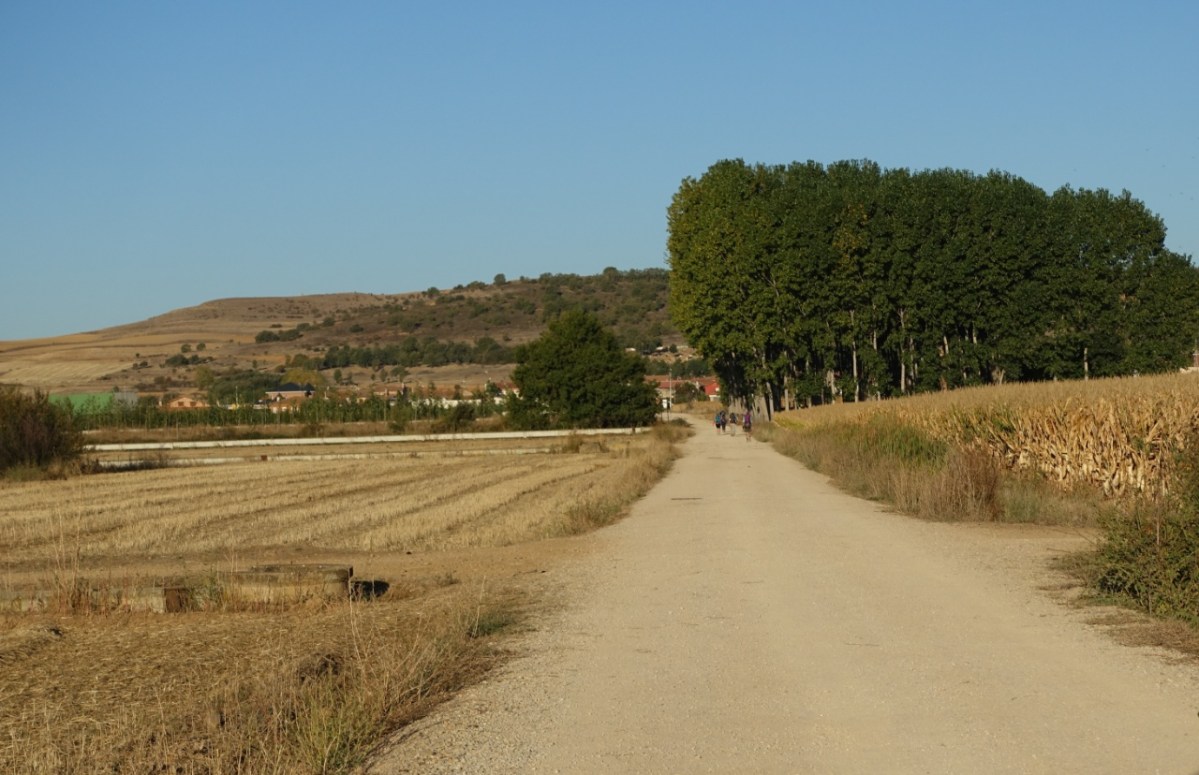
After the last small town Santibanez de Valdeiglesia we are up on what appears to be a mostly clay roadway.
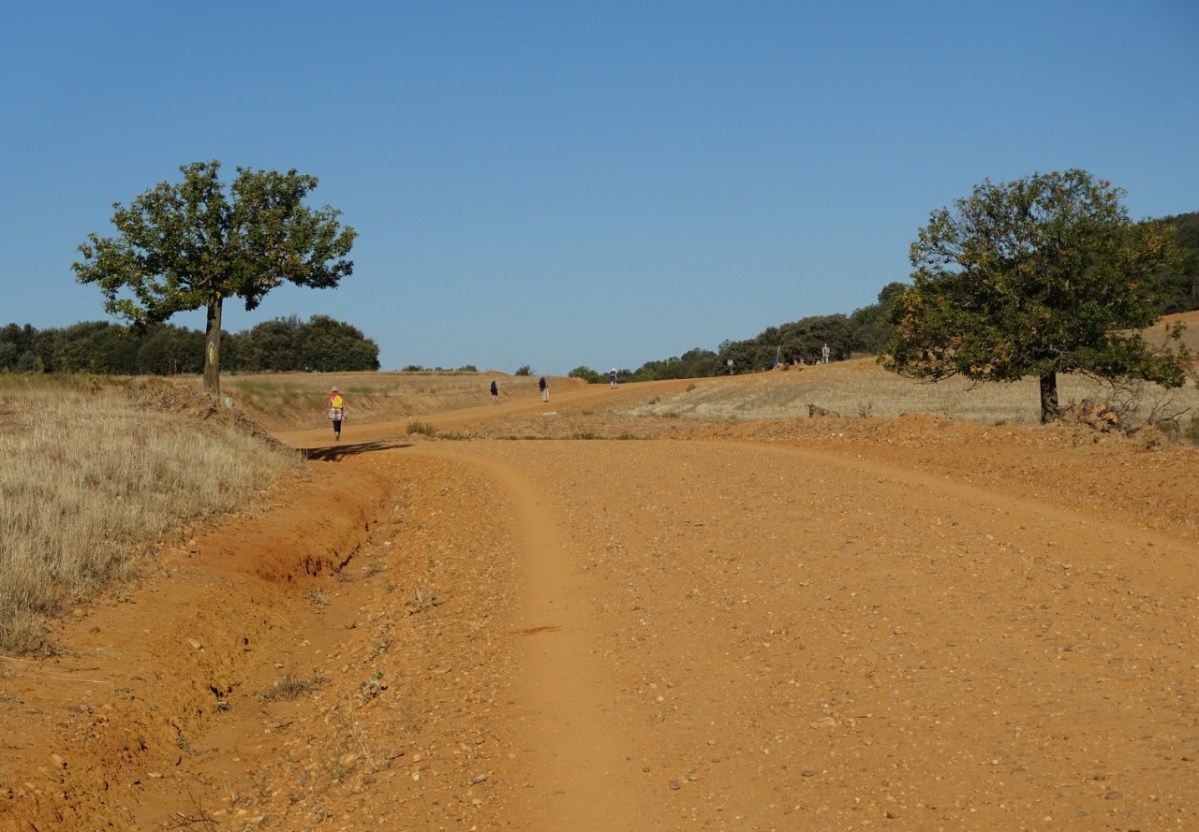
After rolling along over hills and valleys in the forest, we come to the last hill before coming over the ridge to see Astorga in the distance.
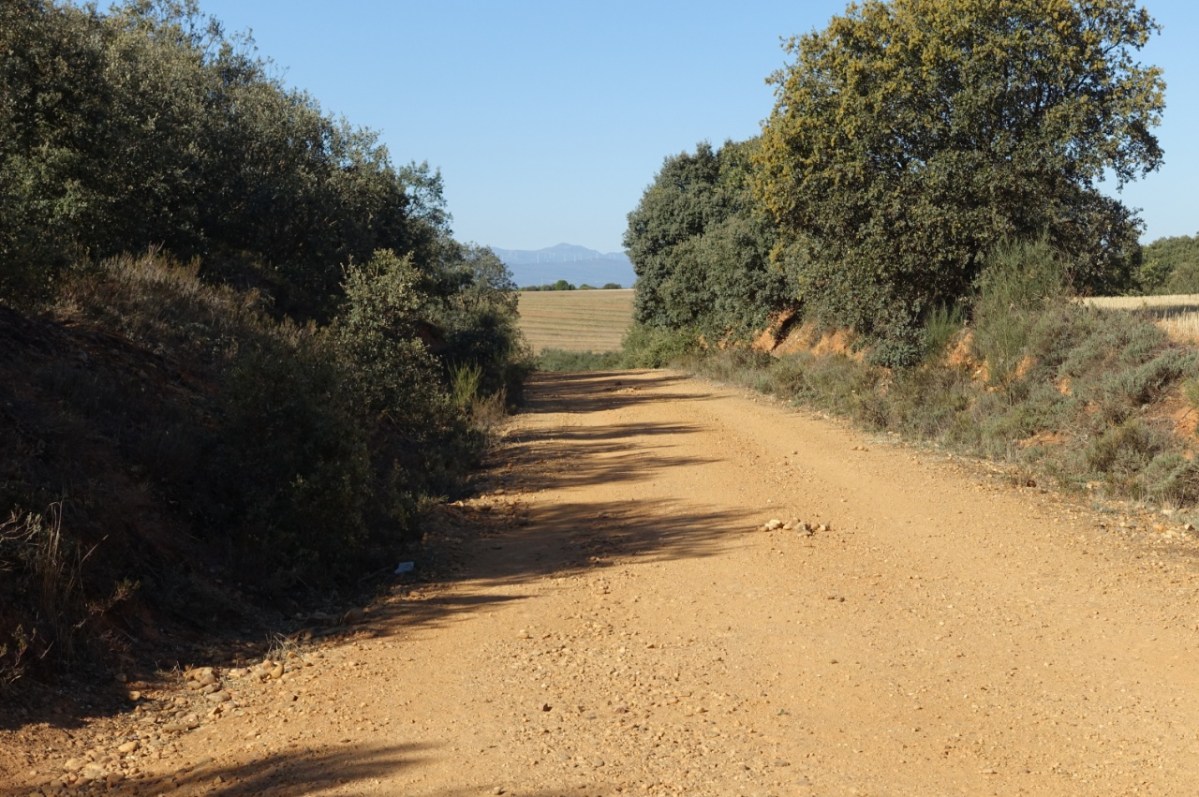
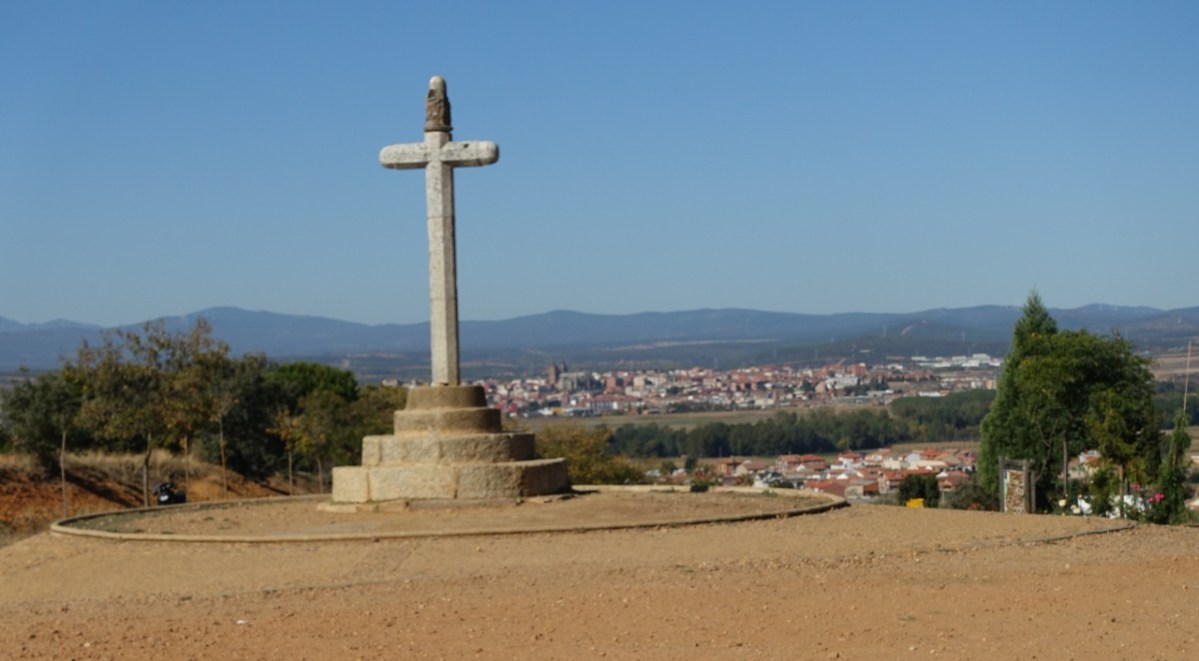
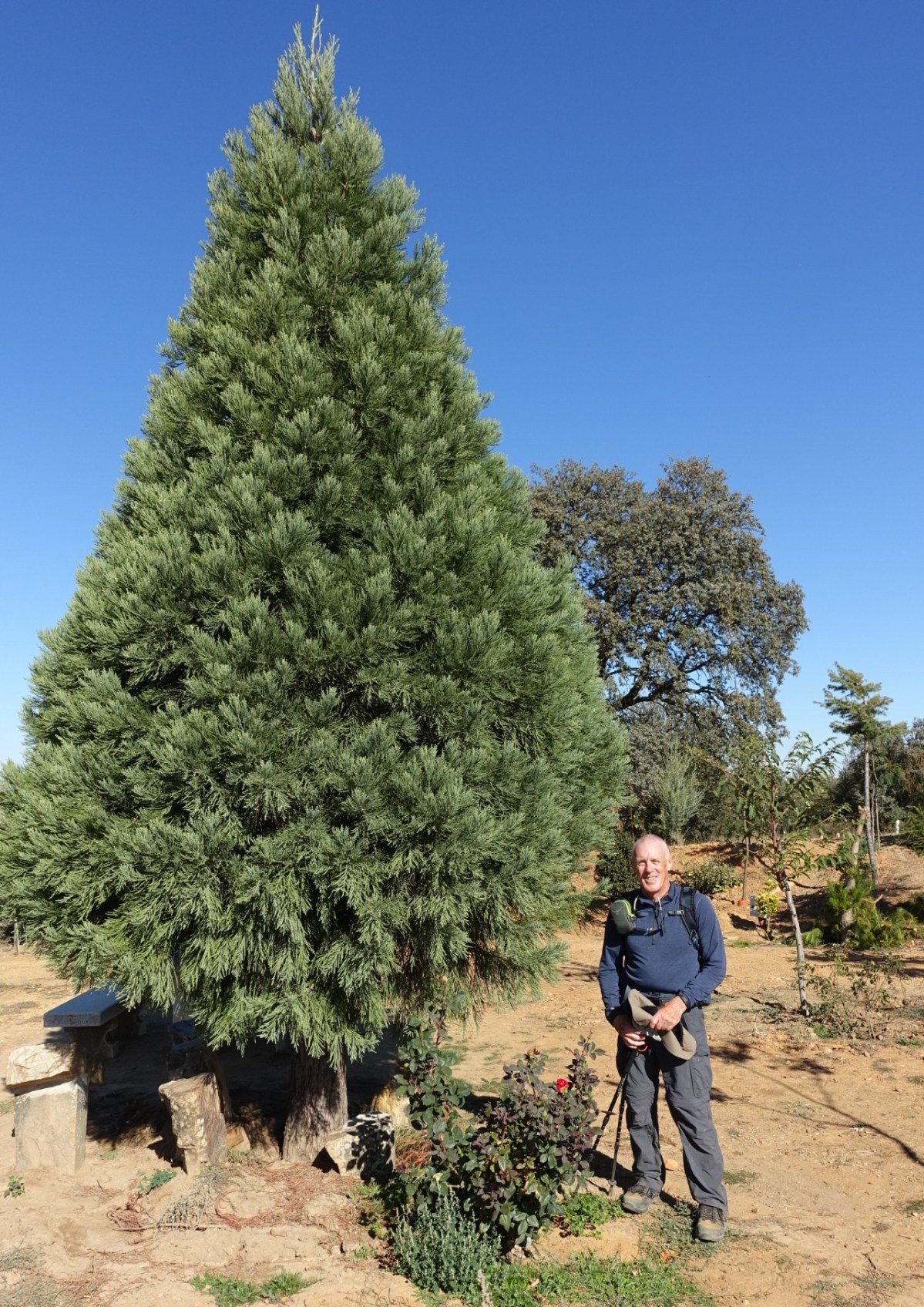
This is a monument where the two paths come back together, and from which Astorga can be seen in the distance. An older gentleman seems to be here often. He planted trees here, many of which are from other countries. He asked where I was from, and when I said California, he showed me his sequoia that he planted to give shade to the resting area. Here is the monument:
And here is the sequoia (also seen a bit in the picture above).
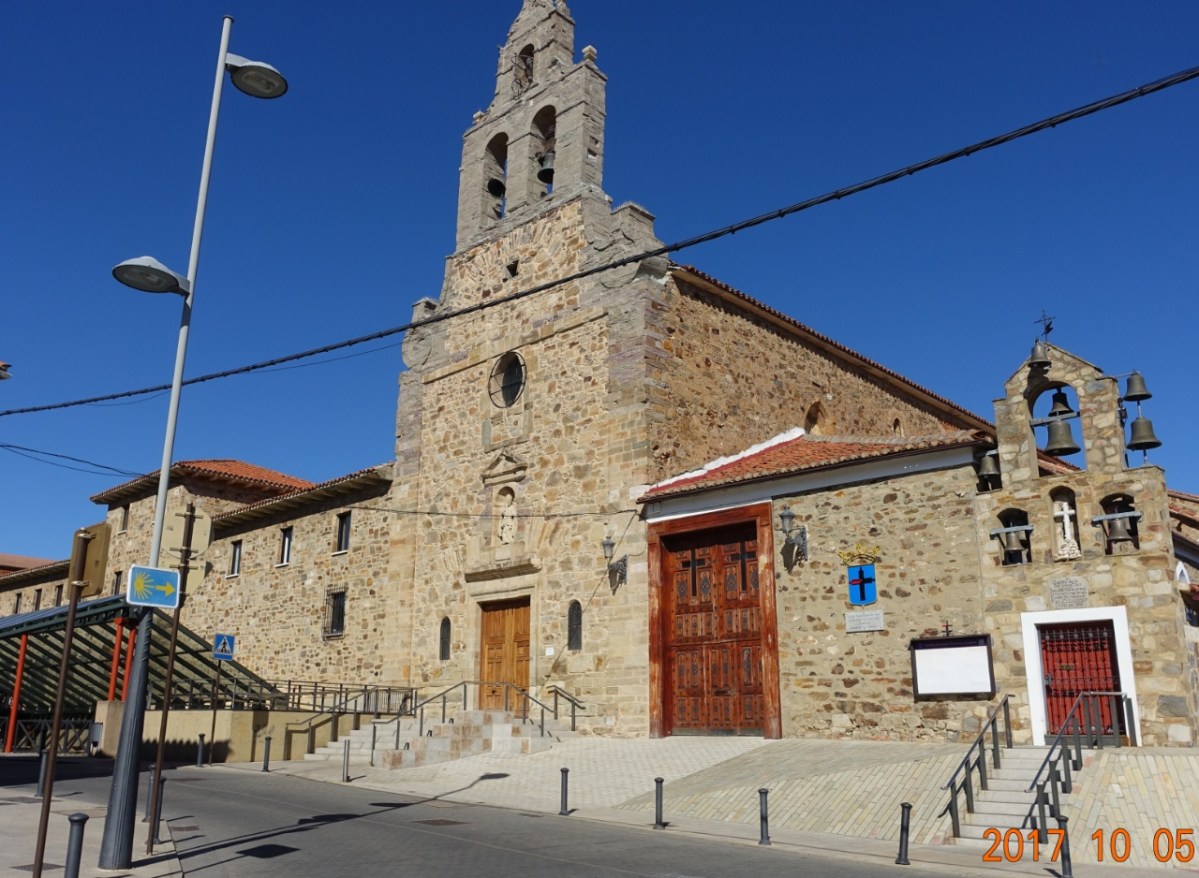
Finally after going down the hill and through the suburbs, we get into Astorga and this monastery. There were a number of monasteries in Astorga at its height, and several smaller churches and one large cathedral.
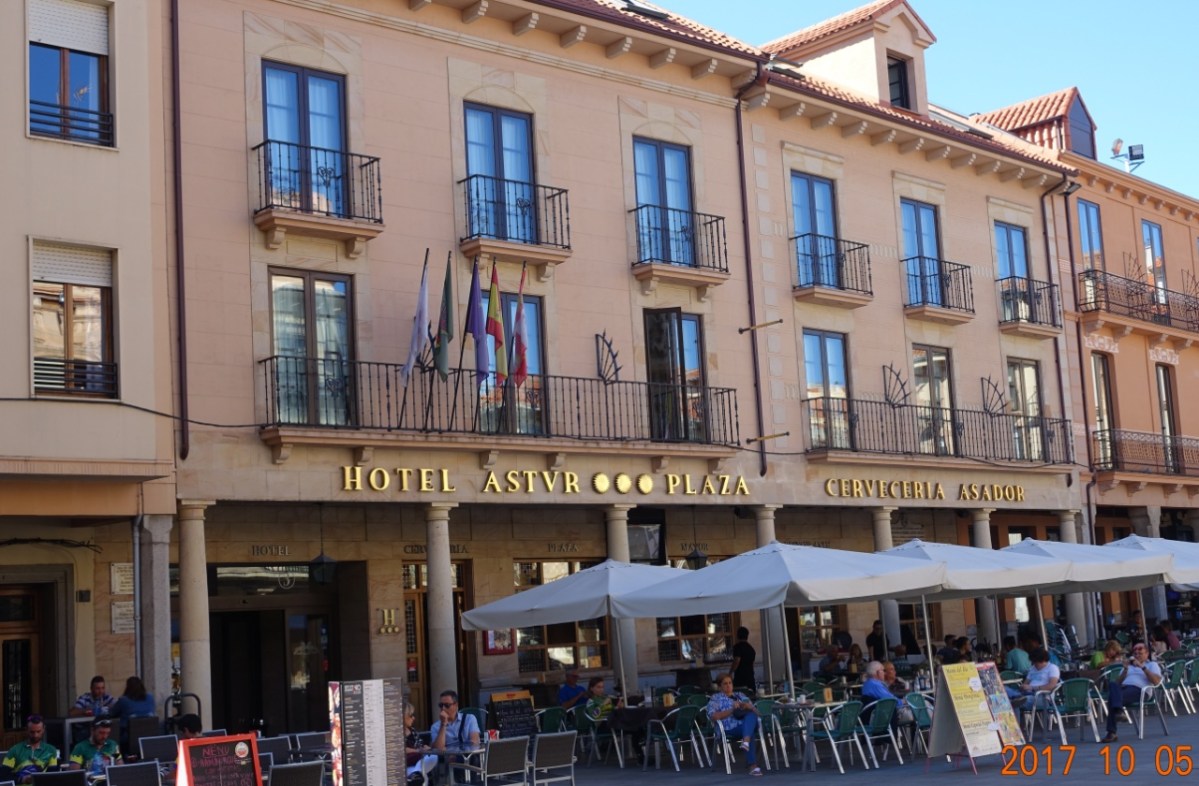
Shortly after the monastery and Tom/Julie’s albergue, we found my hotel in the main square.
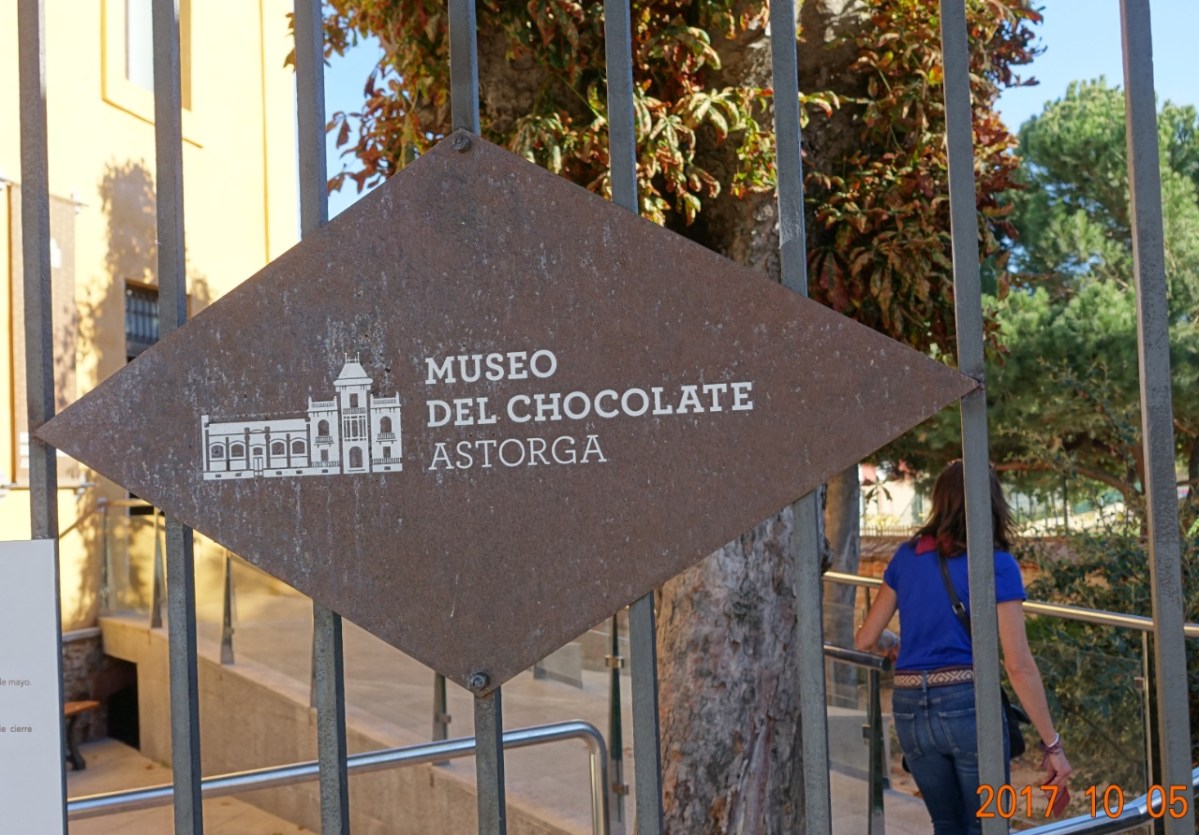
We had lunch, checked in, cleaned up, got laundry started, and then went to the Roman Museum, then to the Chocolate Museum. At one time, Astorga was a center for chocolate after cocoa beans were being transported back from Central America, and it was said that there were 50 or more chocolate factories in Astorga.
After the Chocolate Museum, we were headed to the Gaudi building/museum, and got a good view of part of the wall that the Romans built to protect their regional capital.
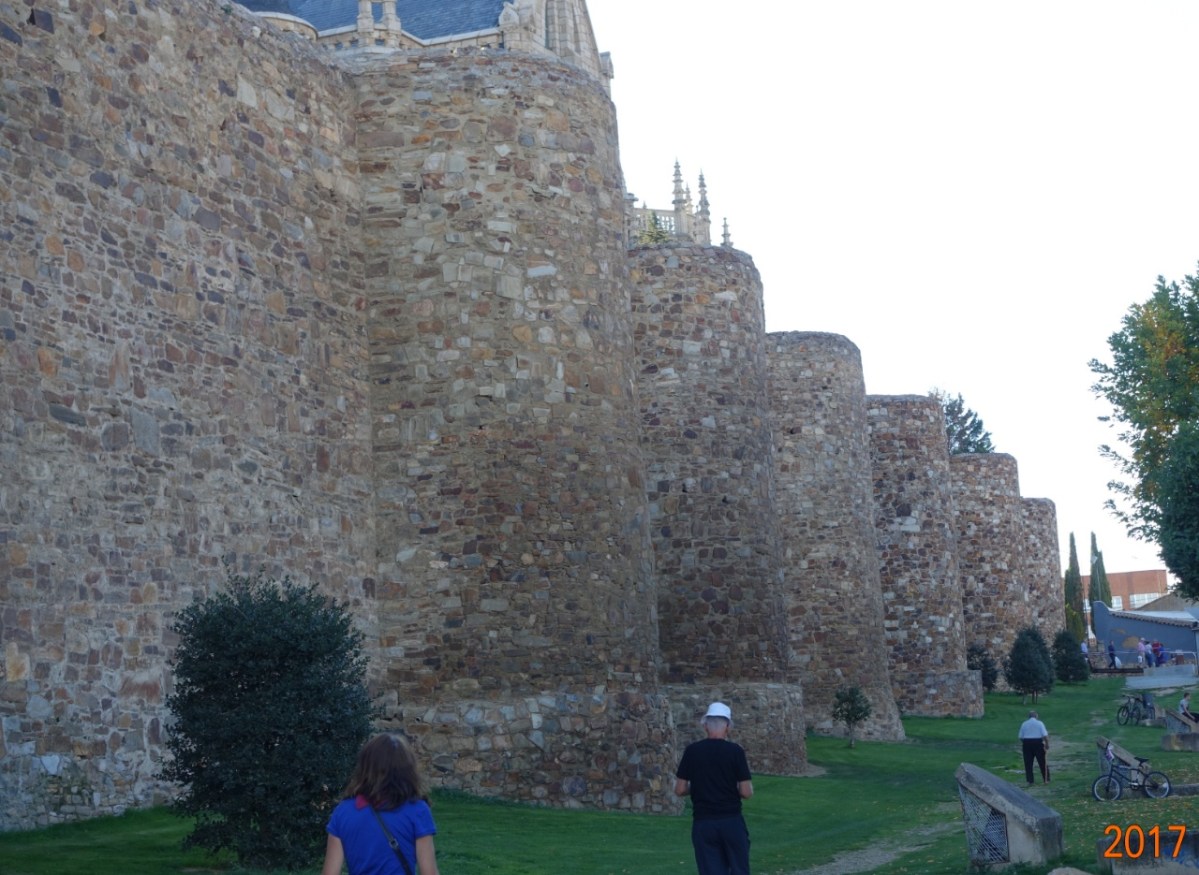
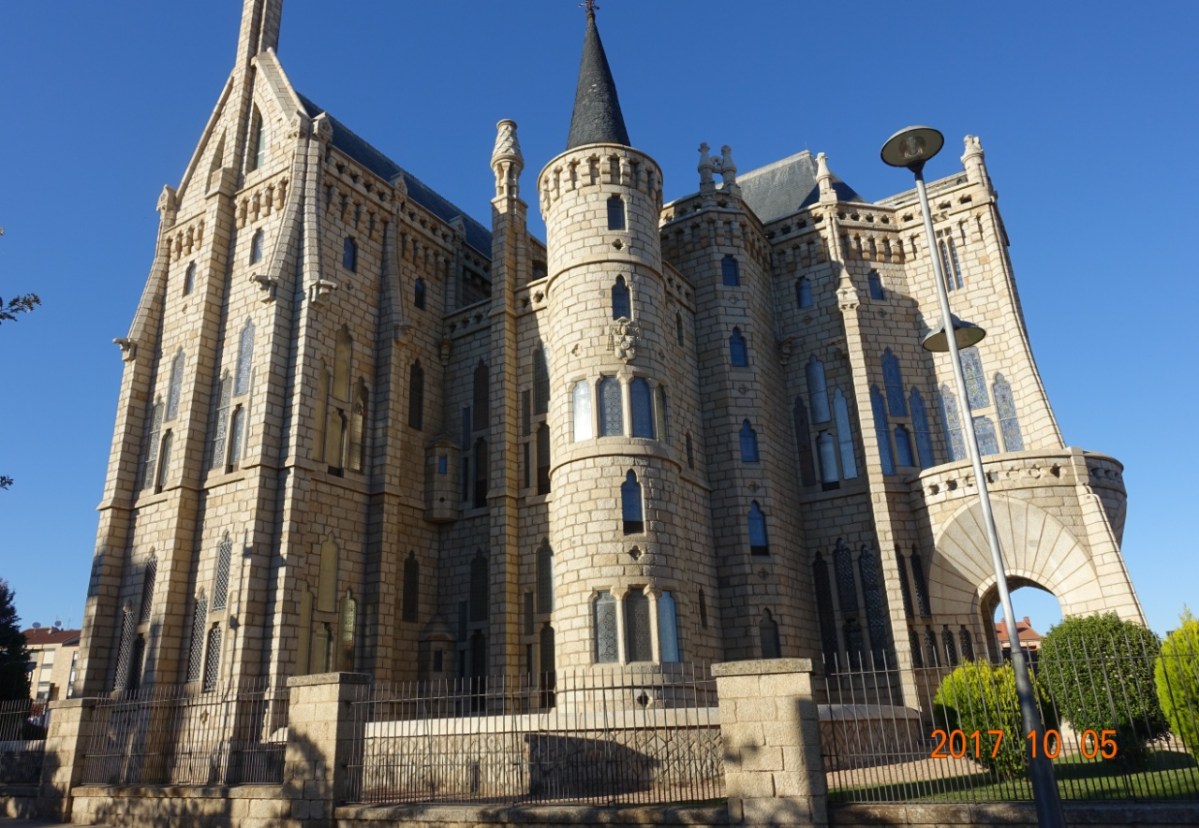
Here is the Gaudi building/museum:
And two stone sculptures of Pilgrims, one from the 11th century and the other from the 12th:


The stained glass is quite amazing in this building, here are three views:


Next: Starting the ascent to Cruz de Fero via Rabanal del Camino

 James the Intrepid Pilgrim