28 September 2017
Walking Day 16:
18.2 kilometers
23,620 steps
Today, Thursday, was a light day in that we did not have a great distance to walk. And the walk was almost entirely flat. I started out walking with Jeff and Tracy from Minnesota. First, we left Carrión de los Condes on the main road out of town. Here are two friends from British Columbia (different cities, neither from Vancouver) at the “end-of-Carrión” sign as we left the small town:
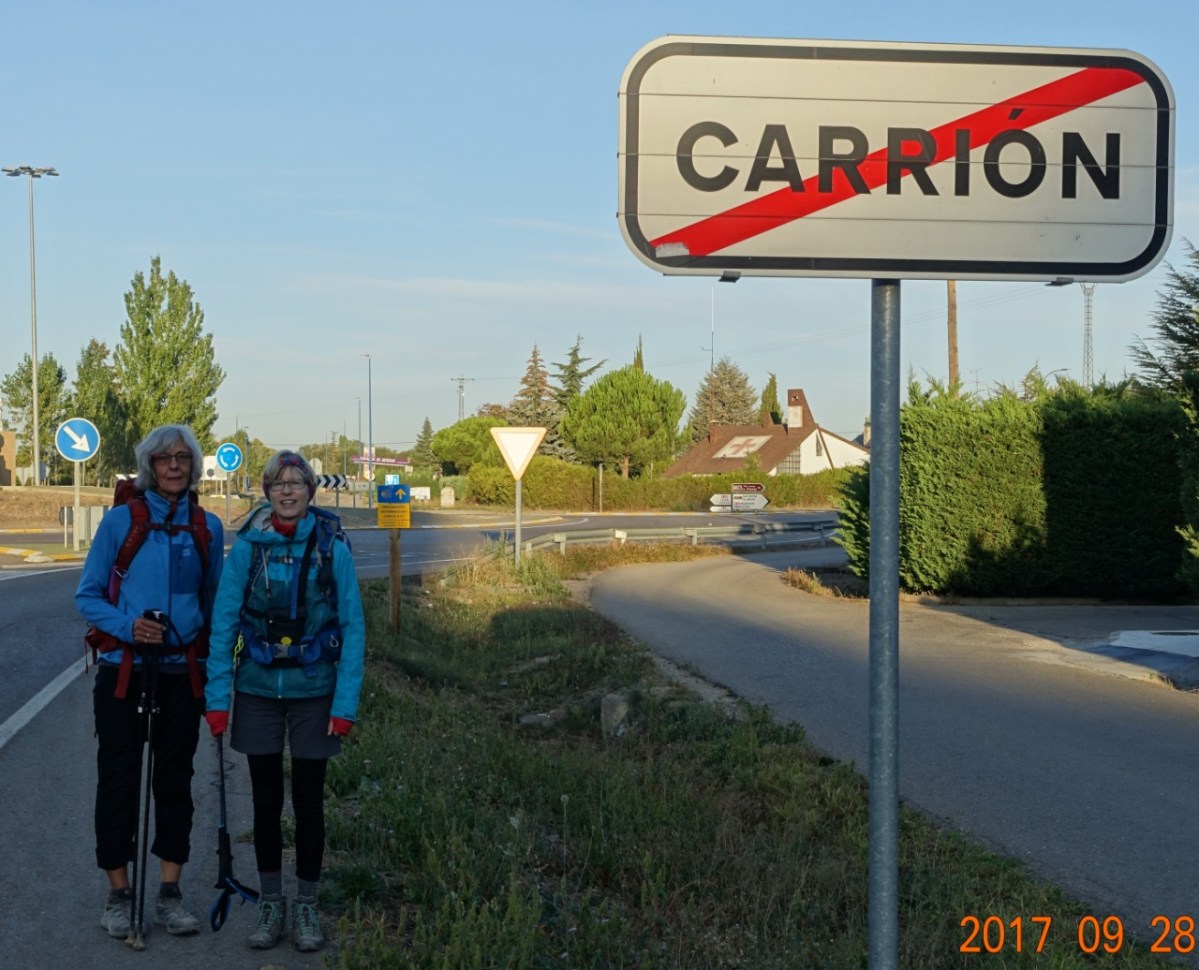
Walking out of Carrión de los Condes was a bit of a moral victory for me. When I walked the Camino Frances route of the Camino de Santiago (the same route I am walking now) in the spring of 2016, I left Carrión de los Condes in an ambulance being transported to a hospital in Palencia. Walking out of Carrión de los Condes felt very good. It was cool, the sun was out, with all the makings in place for a very good walking day on the meseta.

The British Columbian ladies were walking a bit faster than I wanted to walk, so they continued on as I stopped to take this picture of the first part of the path today through a fairly nice wooded area. Jeff and Tracy caught me and we walked together for a good distance. We will be in the same hotel again tonight, so we will likely share the after-walk, after-shower drink (beer for them, Coca-Cola for me), and likely have dinner as a group with other friends.
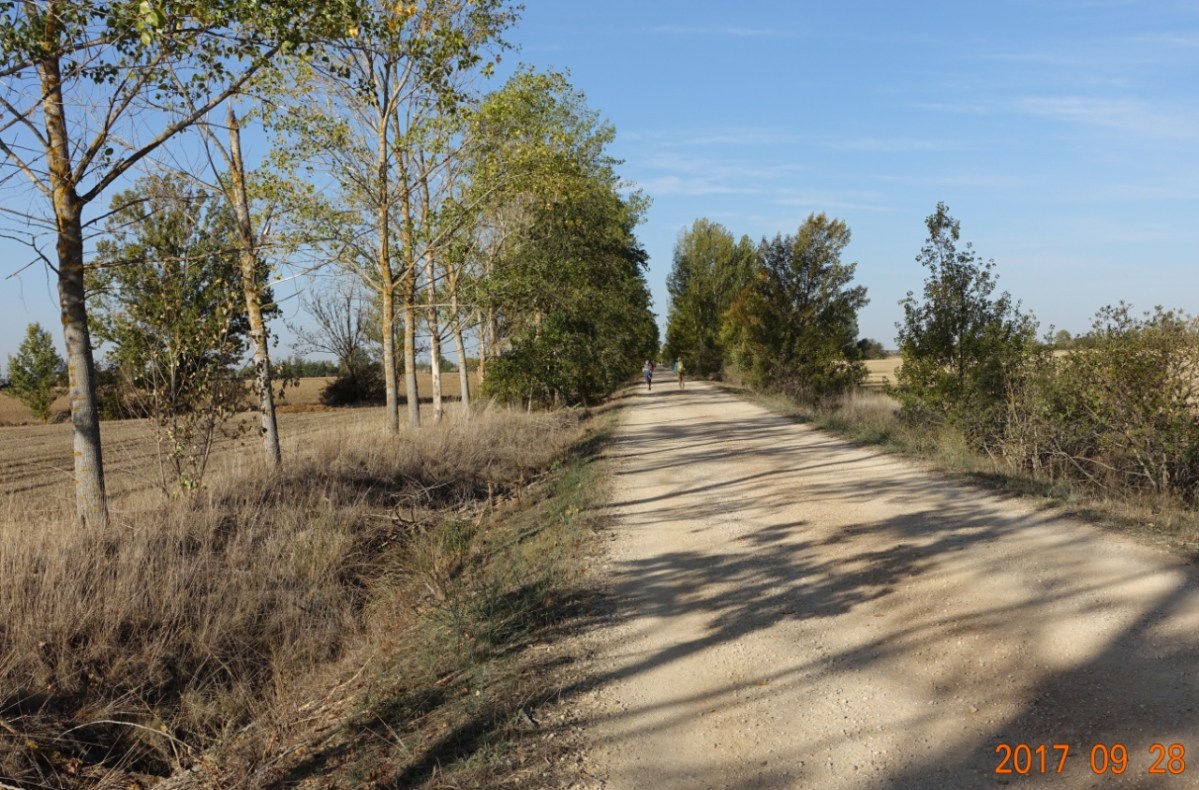
Here, the woods are thinning and the land on both sides is farmland, most likely wheat fields, already harvested for the fall, and relatively barren.
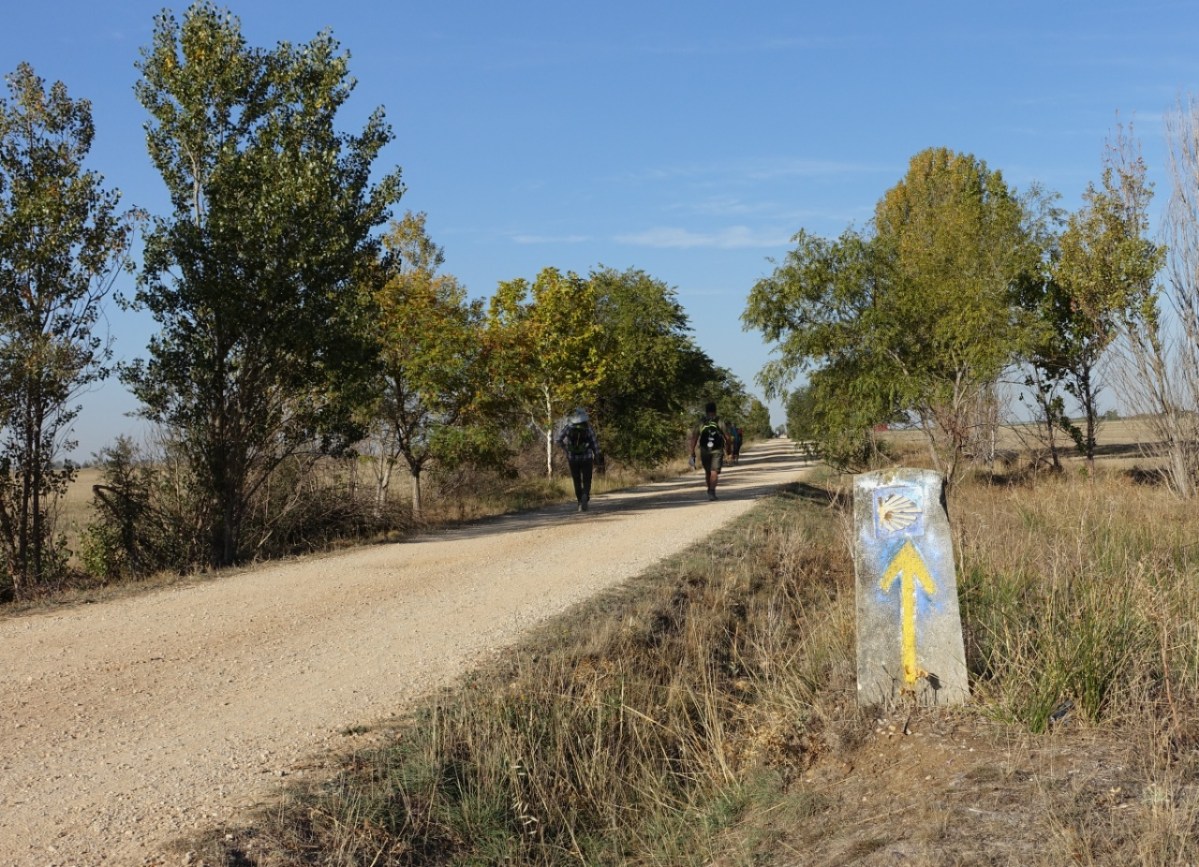
I got a photo of this very old way marker, the tile Camino shell graphic at the top of the monument is very faded and quite old; the yellow arrow a more recent addition.
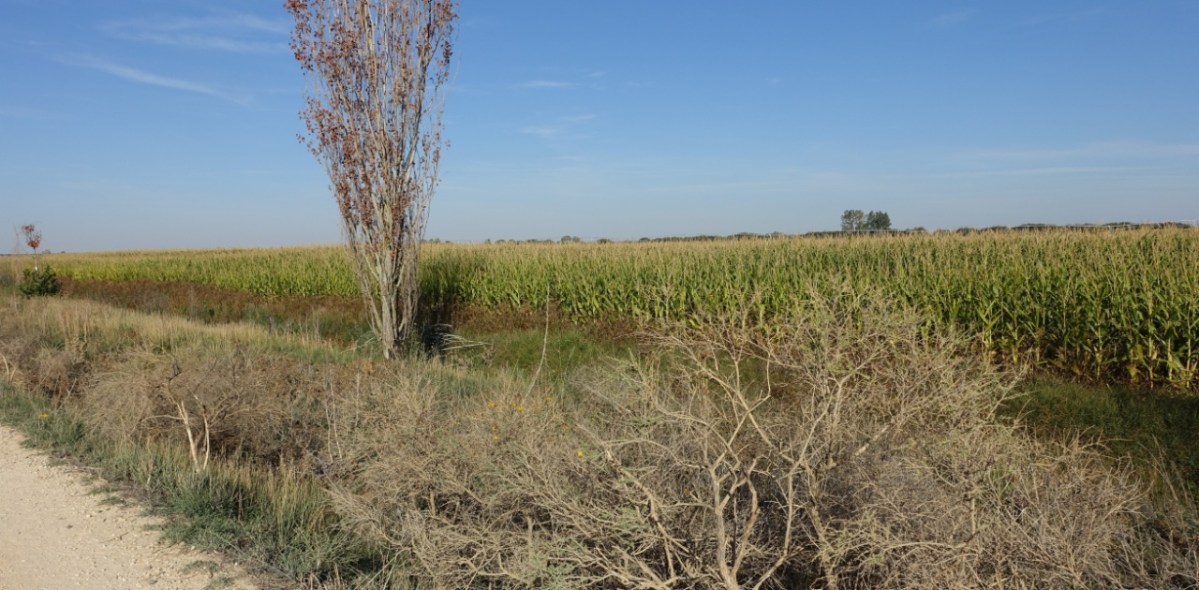
In the midst of long stretches of harvested wheat fields, there appeared this rather large and very green field of corn, looking quite green and almost ready for harvest. A bit of a surprise to see this today. The path today for more than 11 kilometers is almost straight, flat, and overlays the Roman road Via Aquitana that connected with Astorga (about a week away). This is the meseta at its best, relatively repetitive scenery, relatively flat or rolling terrain, and much time to think, contemplate, and time for introspection.
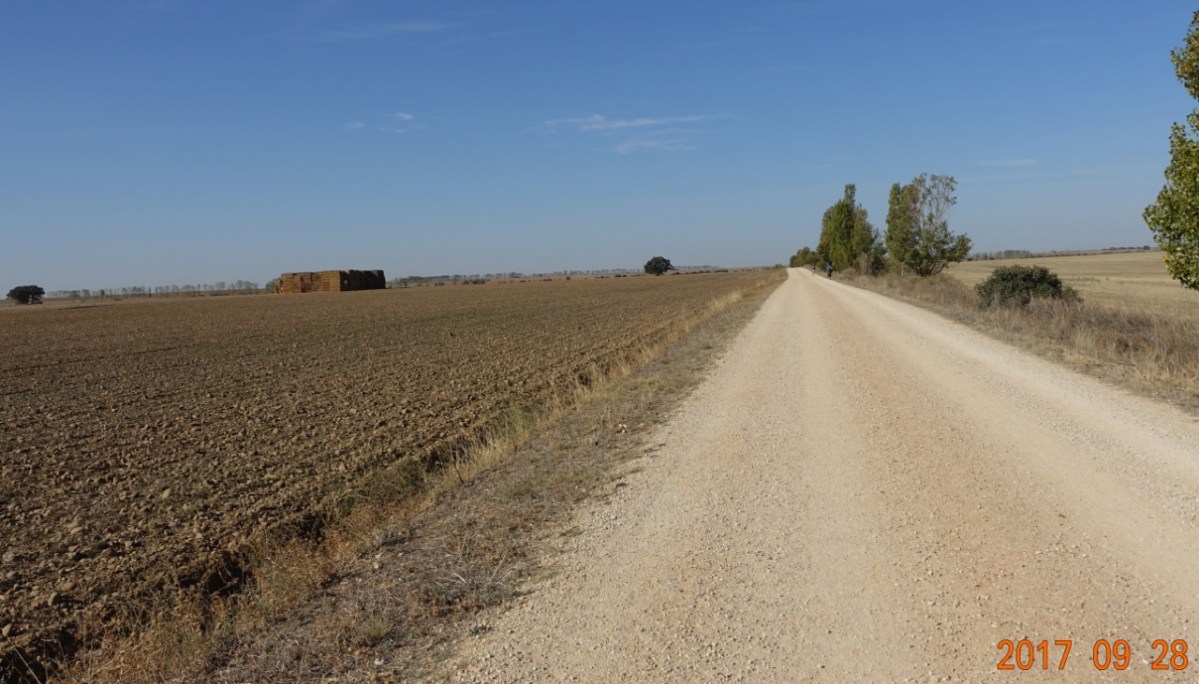
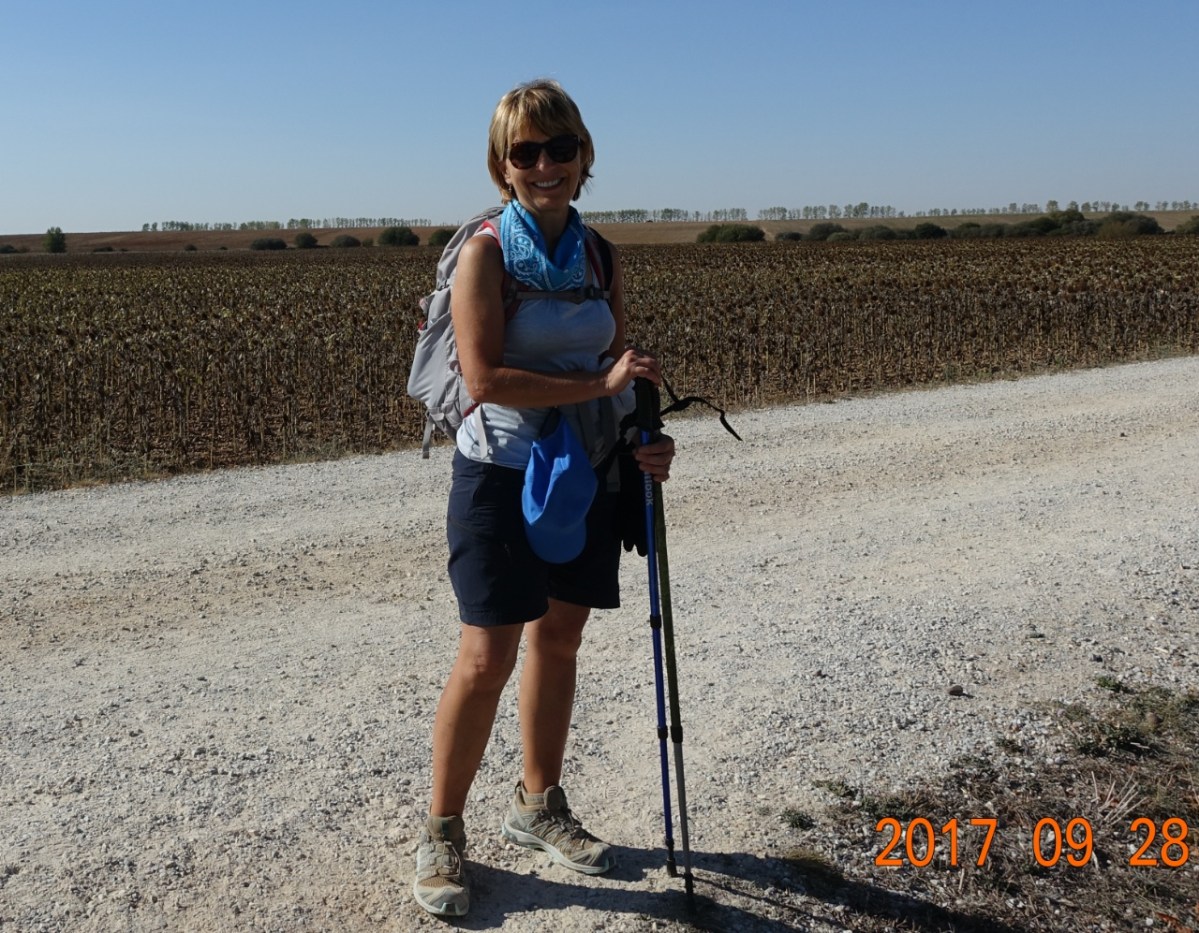
And the meseta continues. A long straight, relatively flat road, and ample time to think. I caught up to and walked for the rest of the way into Calzadilla de la Cueza with Debbie from Ontario, Canada, near but not in Toronto.
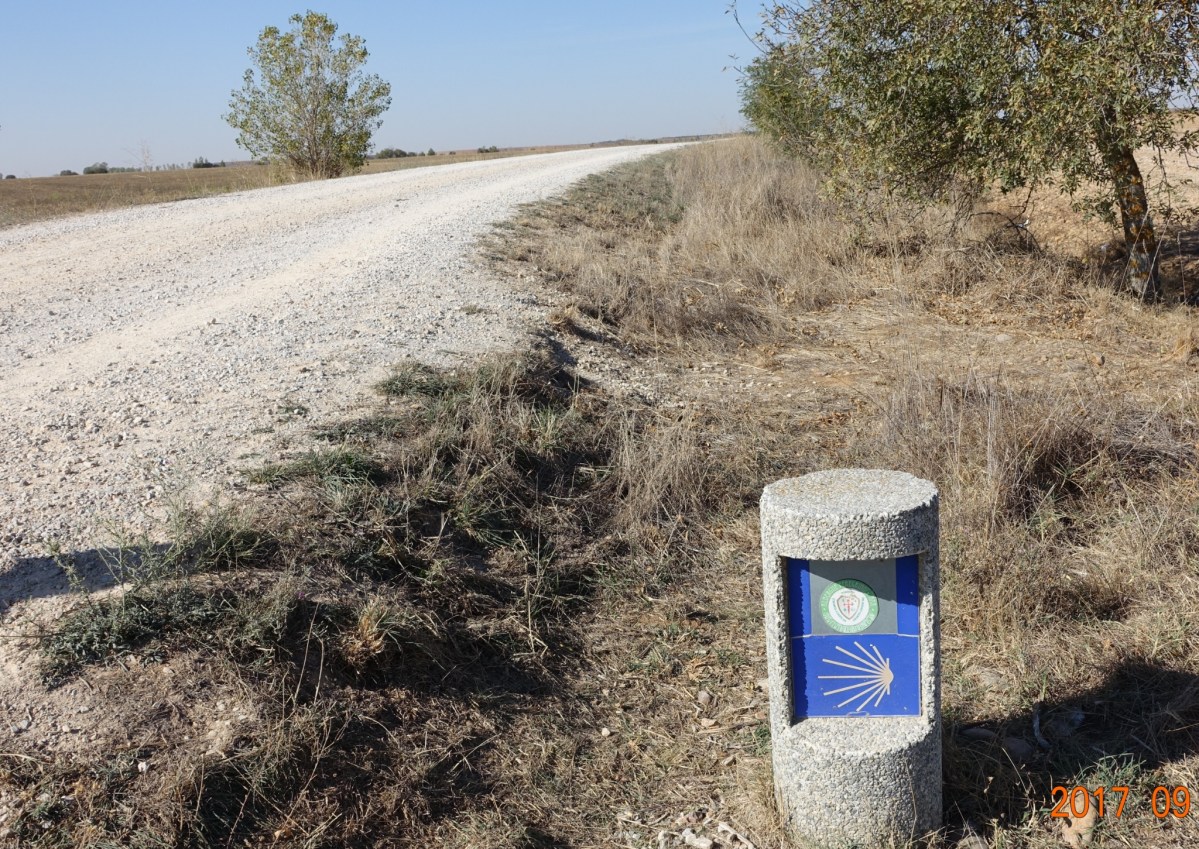
And here is a more modern way marker in this part of Spain. I have only seen this particular style of way marker since we entered the Province of Palencia, so my guess is that these are a regional addition to the Camino pathway in this province.
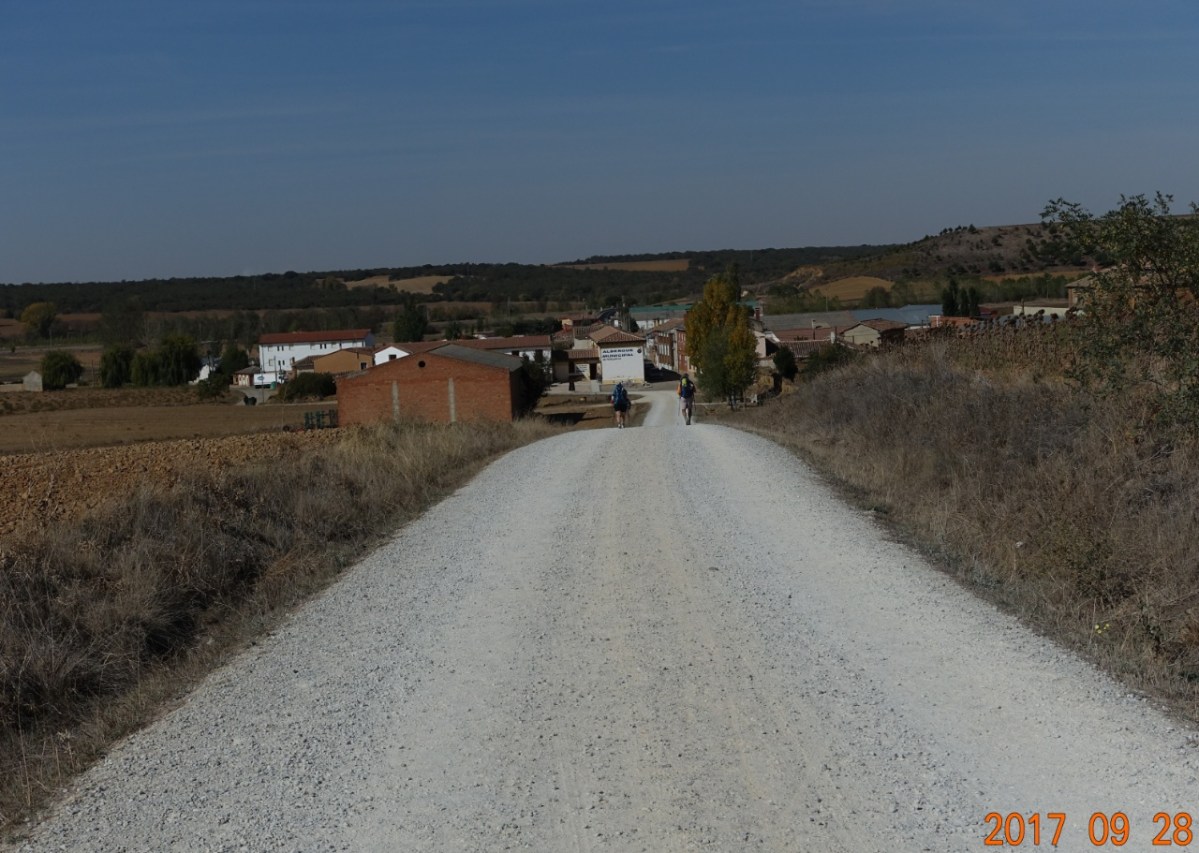
After a few hours in the sun on the flat meseta, we come to a slight hill, and over the top is Calzadilla de la Cueza. This is a little town with a population of 60, primarily in existence because of the Camino de Santiago.
The gentleman who runs the hotel in which I am staying is a seasoned Camino veteran, having walked the Camino Frances route eight times. His Compostela certificates [the certificate of completion given at the pilgrim’s office in Santiago de Compostela is called a “Compostela”] are on display on the stairway in the hotel. He knows what pilgrims want and need, and he provided laundry service (yay!) for only eight Euros.
There is a church in this small town, but it was closed and locked.
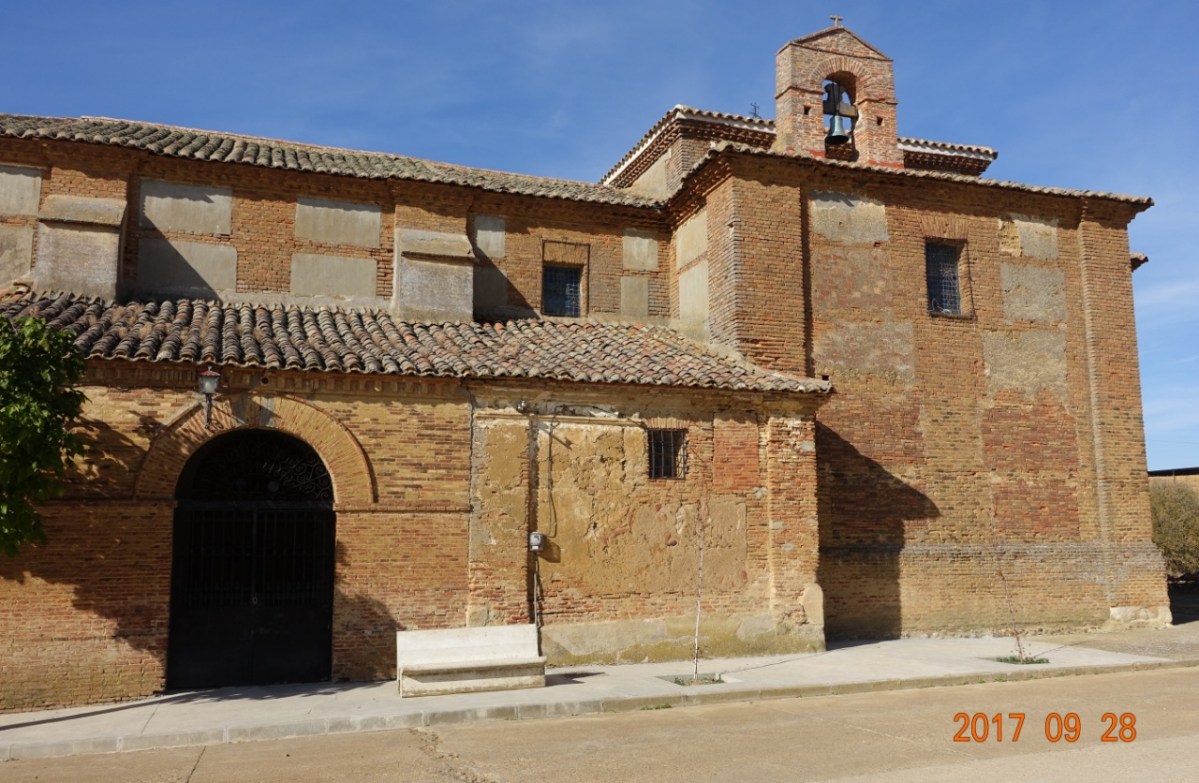
This is another church that does not have the familiar Romanesque or Gothic style. I wonder what we shall see in the next town, Sahagún? When we get to Sahagún, we shall be at the half way point on the Camino Frances route of the Camino de Santiago. Being in Sahagún means I shall be three days from León and a rest day.
Next: Walking to Sahagún and the half way point.

 James the Intrepid Pilgrim