Saturday, January 14, 2017
Hiking up to Wat Phra That Doi Suthep Part 3
A Visit to the Hmong Hill Tribe Village
After spending time visiting the temple at Doi Suthep, and descending the 309-step Naga Stairway, we were ready for the hike down. As we passed the lines of taxi-trucks, there were signs advertising going up higher on the mountain to the Bhuping Palace Garden (the gardens owned by the Royal Family) and to the Hmong Hill Tribe village. Both Tom and I were a little drawn to visit the Hmong Hill Tribe village, much more so than the Bhuping Palace Gardens. I have been to the Bhuping Palace Gardens – they are extensive and beautiful, but given that the King passed away less then three months ago, the gardens are quite busy. We hired a driver to take us up to the Hmong Hill Tribe village, about 8-10 kilometers higher up the mountain.
The Hmong is a term given to various ethnic groups who mostly inhabit the high mountainous Northern and Western regions of Thailand, including both sides of the border areas between Northern Thailand, Laos and Burma. These areas are known for their often mountainous terrain which is in some areas covered by thick forests. These Hill Tribes are the largest group of non-Buddist population in Thailand. They are farmers, and some tribes have been very successful in growing coffee and tea, notable the Akha Ama tribe.
The drive to the Hmong Hill Tribe village was slow as after we passed the Bhuping Palace Gardens, we left the main road and made our way farther up the mountain on a one-lane mostly paved road. The village was basically a market for selling much of the same trinkets that are seen in the Saturday and Sunday markets in Chiang Mai. I did not see anything unique or very interesting.
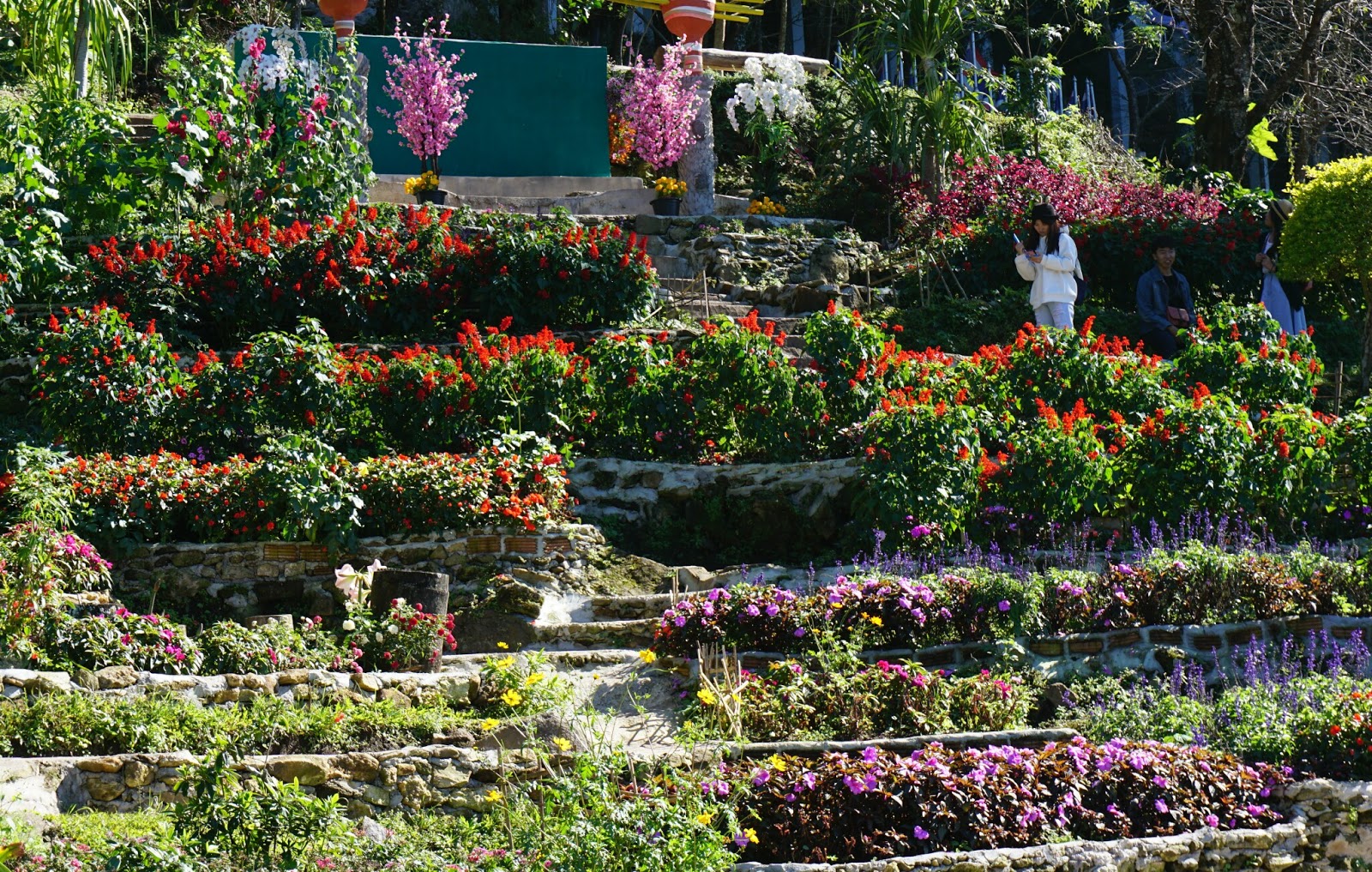 After passing through the market area, we saw this striking garden area. More extensive than I was able to photograph, the garden stretched up the hillside in terraces.
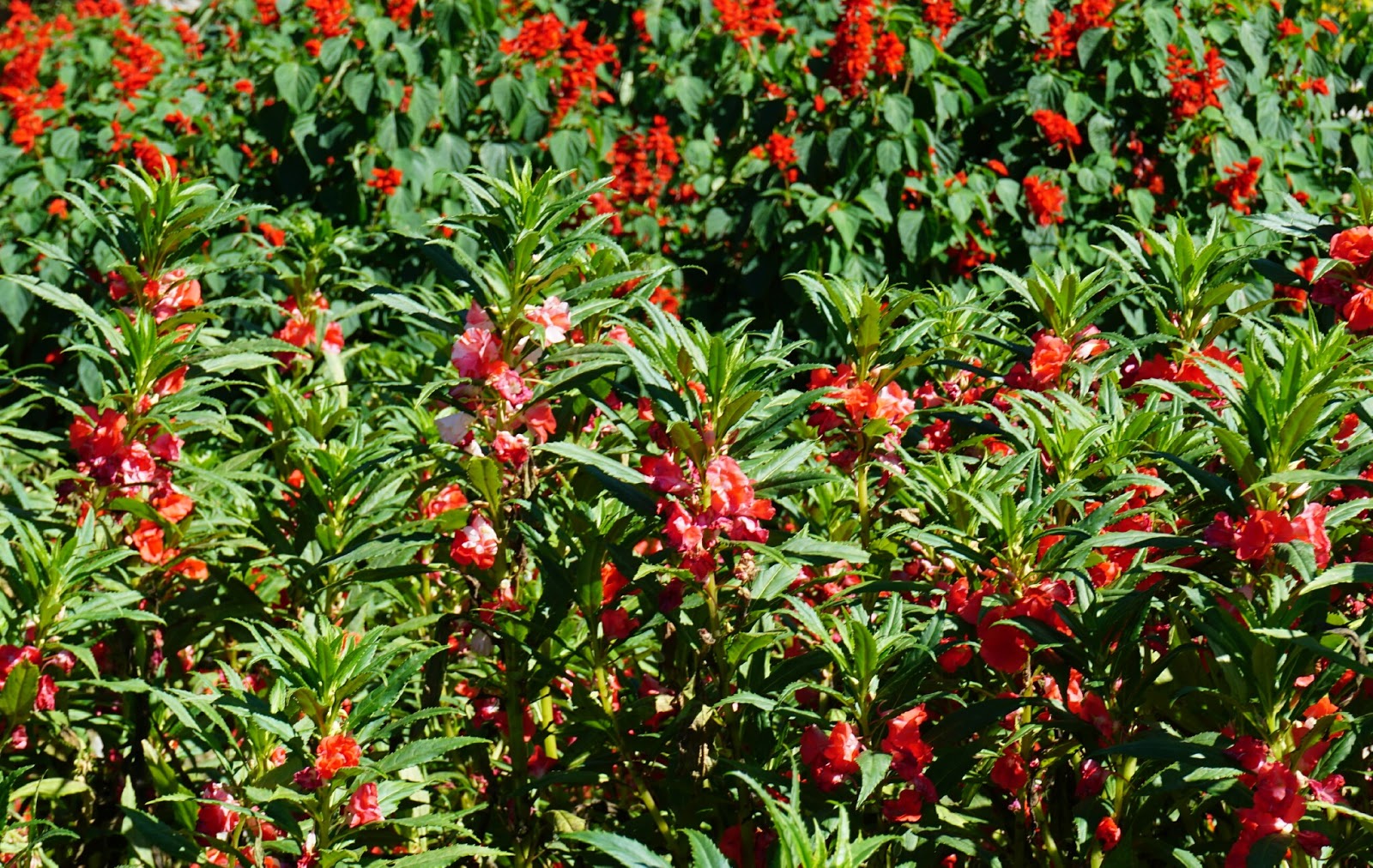 Some of the flowers look similar to the oleanders seen in Southern California.
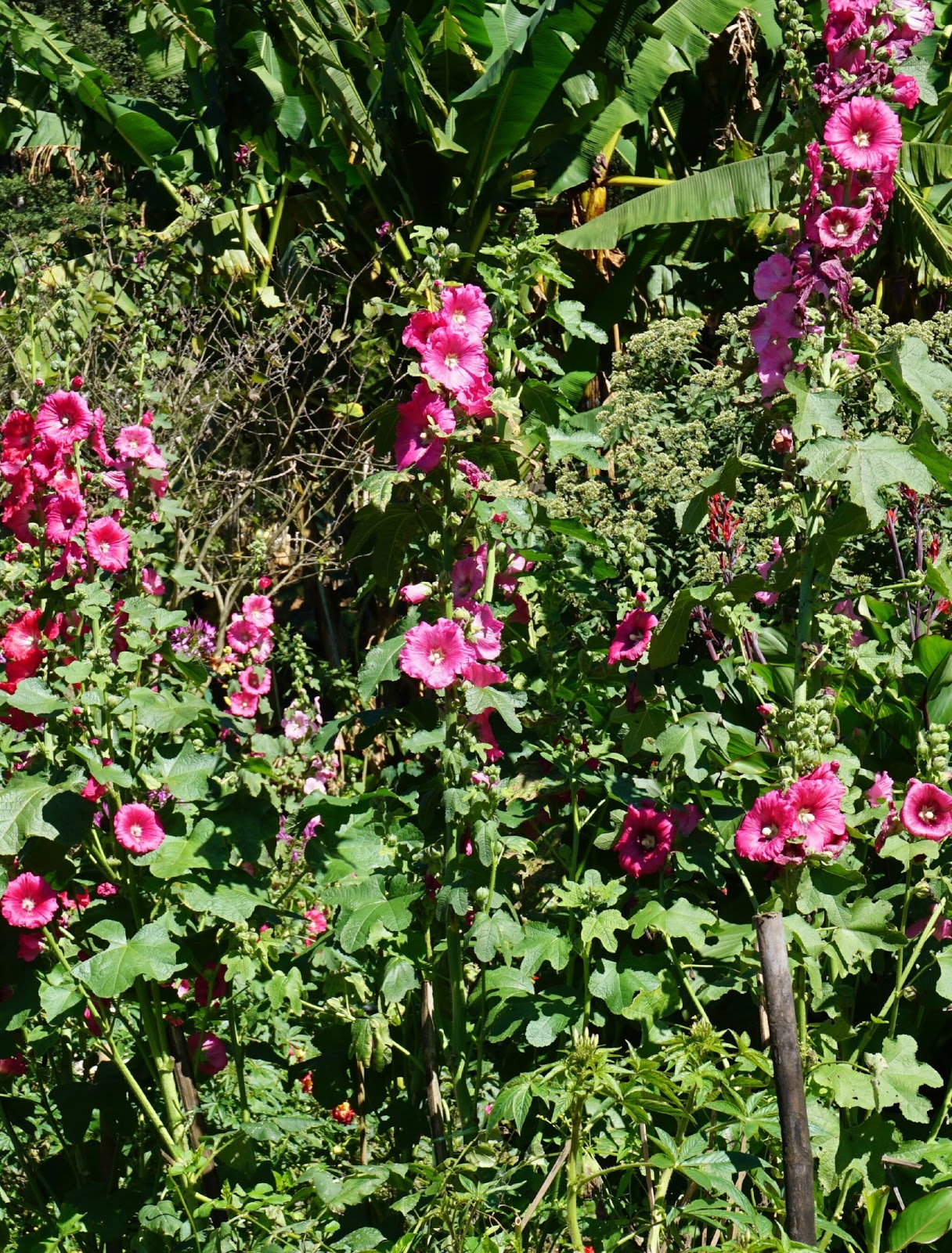 These appear to be hollyhocks, stalks of bright purple flowers.
 And an extensive field of these blue flowers. Reminds me of a few similar fields of blue flowers I saw in Spain last spring.
After taking our time taking in the gardens (and walking up and down the hillside), we returned to the truck for the drive back to the temple at Doi Suthep.
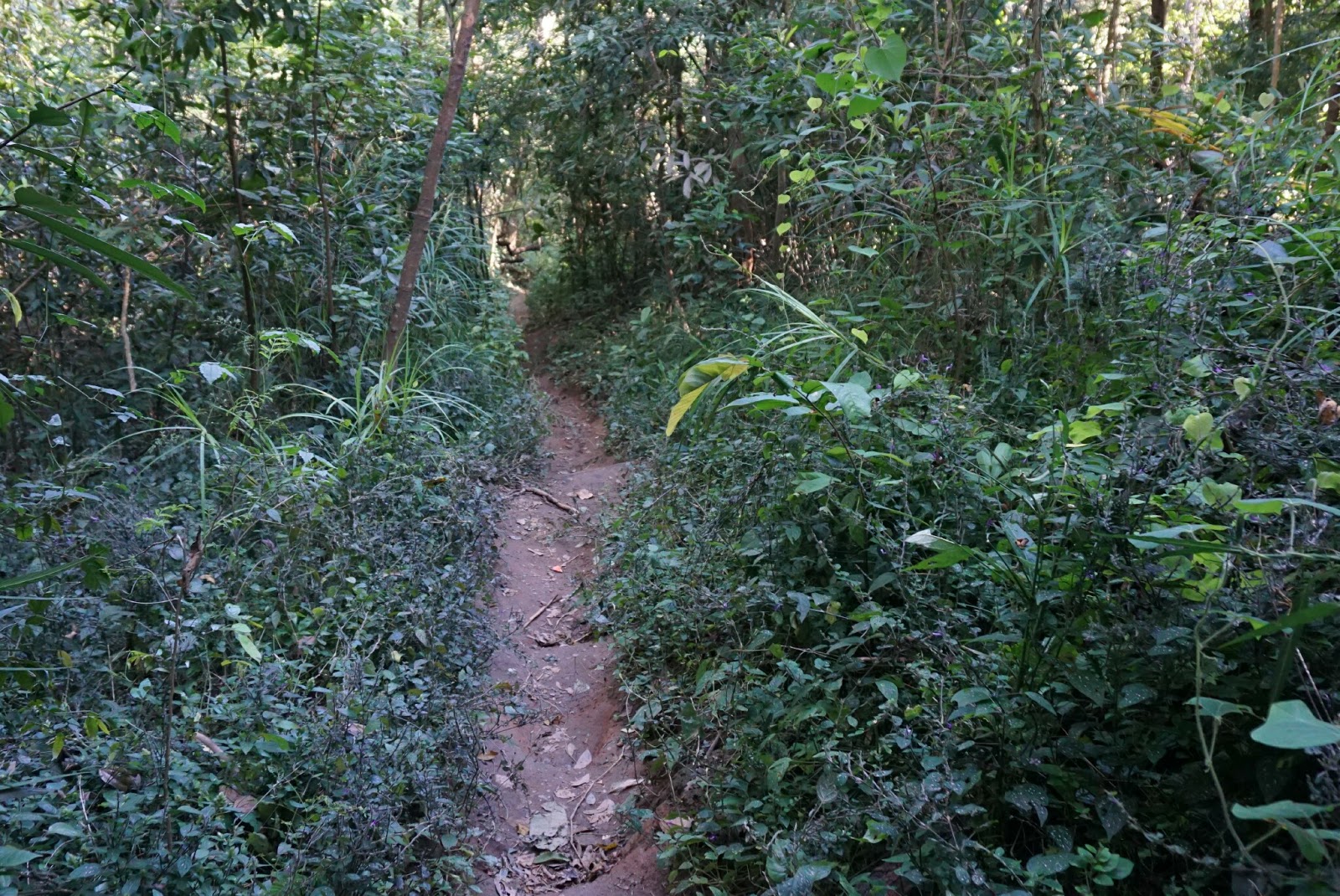 And then we started the hike down the mountain. As soon as we disappeared into the jungle, the sounds from the traffic disappeared, and we were again in the quiet of the jungle. Hiking down is not as difficult as hiking up, but is still a sweaty activity, and we took is slowly to avoid slipping on the sometime still muddy and slick trail.
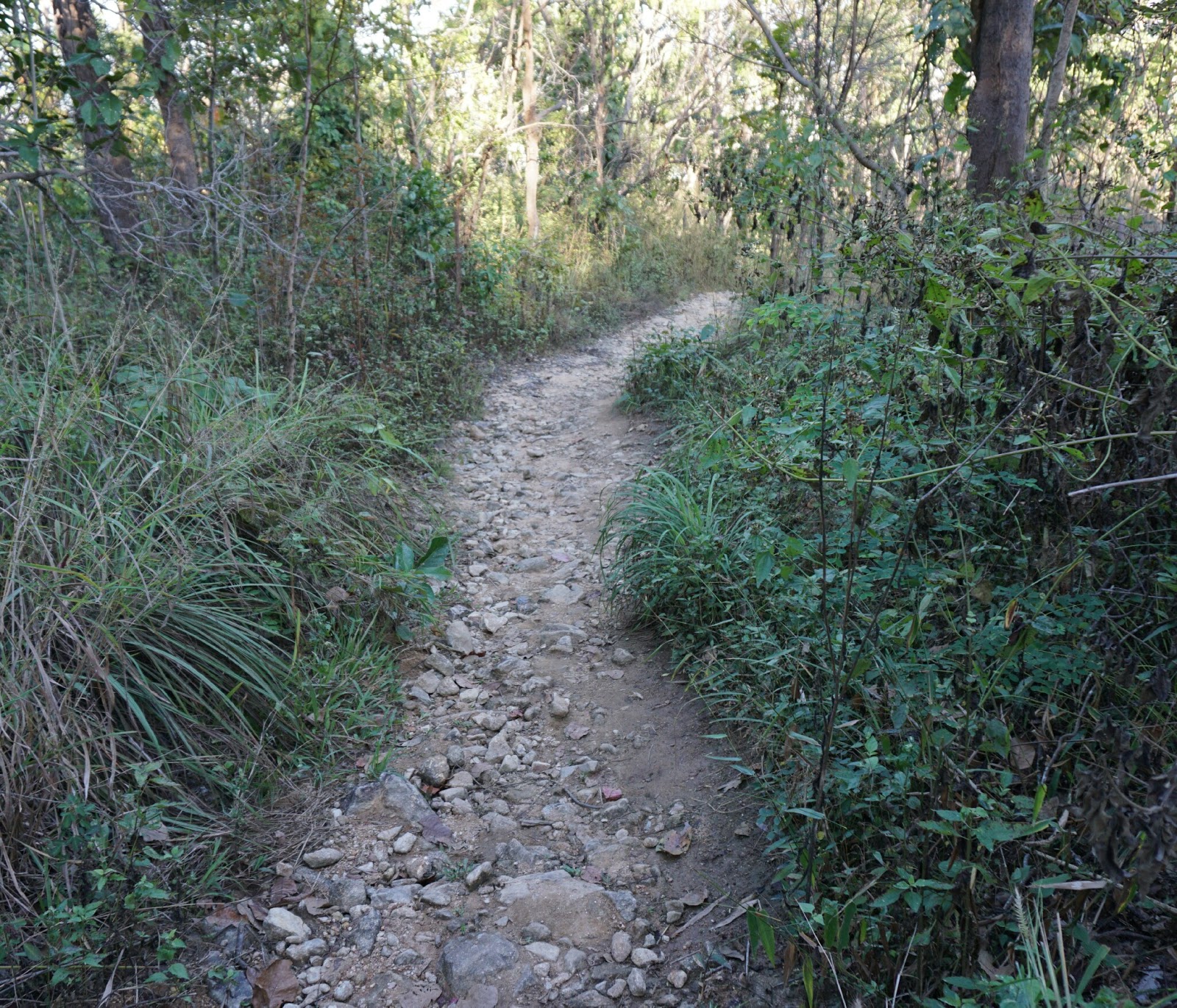 Farther down, after passing Wat Palad, the trail is less steep, and therefore less slippery, so we made good progress.
After we made it back to Chiang Mai, we went to Blue Diamond for an early dinner. There was a Kirtan chanting session set for Wild Rose this evening.
I am in the process of changing where I am staying. In my yoga-based visits to Chiang Mai, I have been staying at the 3-Sis Guest House, a small guest house in the old city owned by three sisters (hence the name 3-Sis). Poppy is one of the sisters, and she is at 3-Sis every day managing daily operations. One of the other sisters, Ice, and her husband Bowl, moved back to Chiang Mai and opened a cafe, shop, and small hotel named “See You Soon” just down the street from 3-Sis. I hung out in the cafe there last year a bit, writing and doing some work. Poppy and Ice thought that I might like to stay part of the time at See You Soon, and they arranged everything.
So before Tom and I headed to hike up the mountain, I had checked out of my room at 3-Sis and left my luggage there. When I returned from Blue Diamond, I learned that my luggage had been moved to See You Soon, and was already in my room there. Very nice. I checked in at See You Soon, got a shower, and went to Wild rose to join about 50-60 people for the Kirtan chanting. It was great fun.
Next: Return to Wat Lok Molee

 James the Intrepid Pilgrim