January 20, 2016
Shopping at Jolie Femme Silk
Today is lunch and shopping with my Thai friend, Jo Sugunasil. Jo was raised in Chiang Mai, lived much of her adult life in the U.S., and returned to Chiang Mai in her retirement. Jo has a busy life, so we rarely see each other when I am in Chiang Mai. Jo has a car, so we are going out east of the old city to a restaurant she knows close to the Jolie Femme Silk factory and showroom.
My day started as usual, with my morning meditation at Wat Chedi Luang, then breakfast at 3-Sis. and then I skipped yoga today to spend the afternoon with Jo.
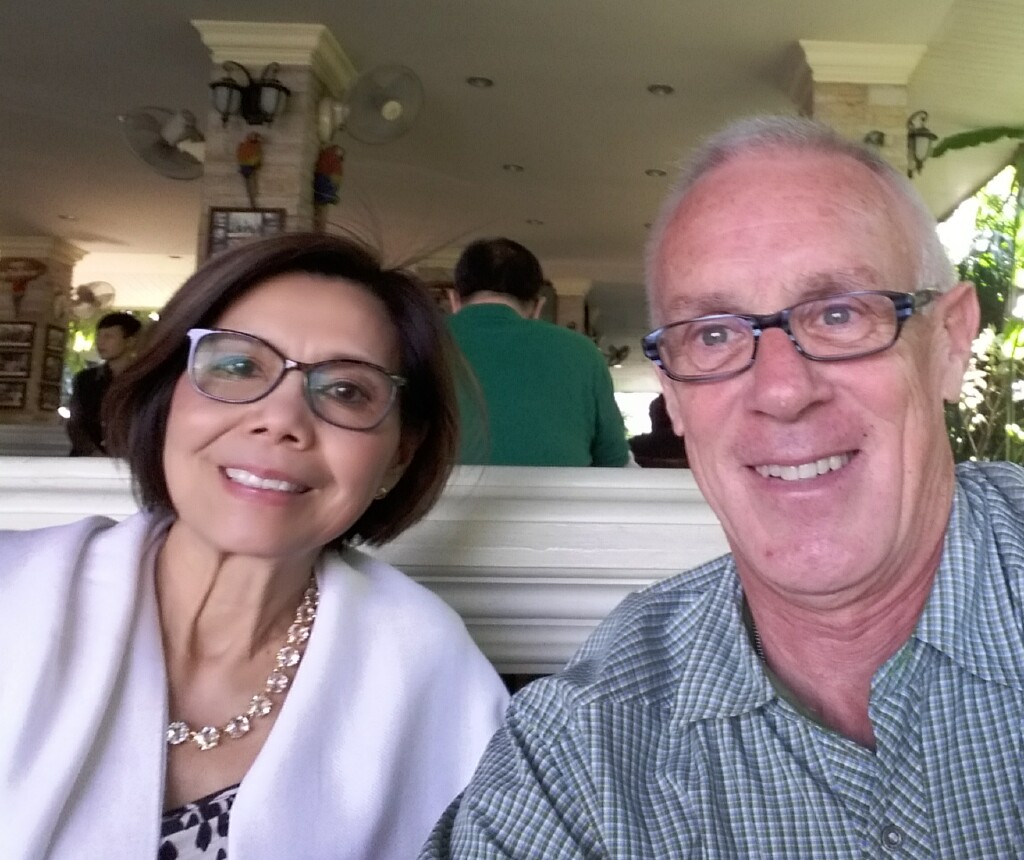
Jo picked me up at 3-Sis and we headed out of the old city to lunch. I have been to this restaurant before, with Jo, and also with her sister and brother-in-law. I do not know its name or where it is other than it being east of the old city and across the Mae Ping River. I know that it is a nice setting and the food is good – the important things. Jo and I had a nice, leisurely lunch, talking and catching up.
She even took our picture, and I just realized that this is the first picture of me in Chiang Mai on this trip – yes, I am really in Chiang Mai.
We went to Jolie Femme Silk, and they have examples of the silkworms at various stages in the development, and how the silk is made, washed, dyed, and woven. I have seen the process before in Thailand and in Cambodia, but every time it is very interesting.
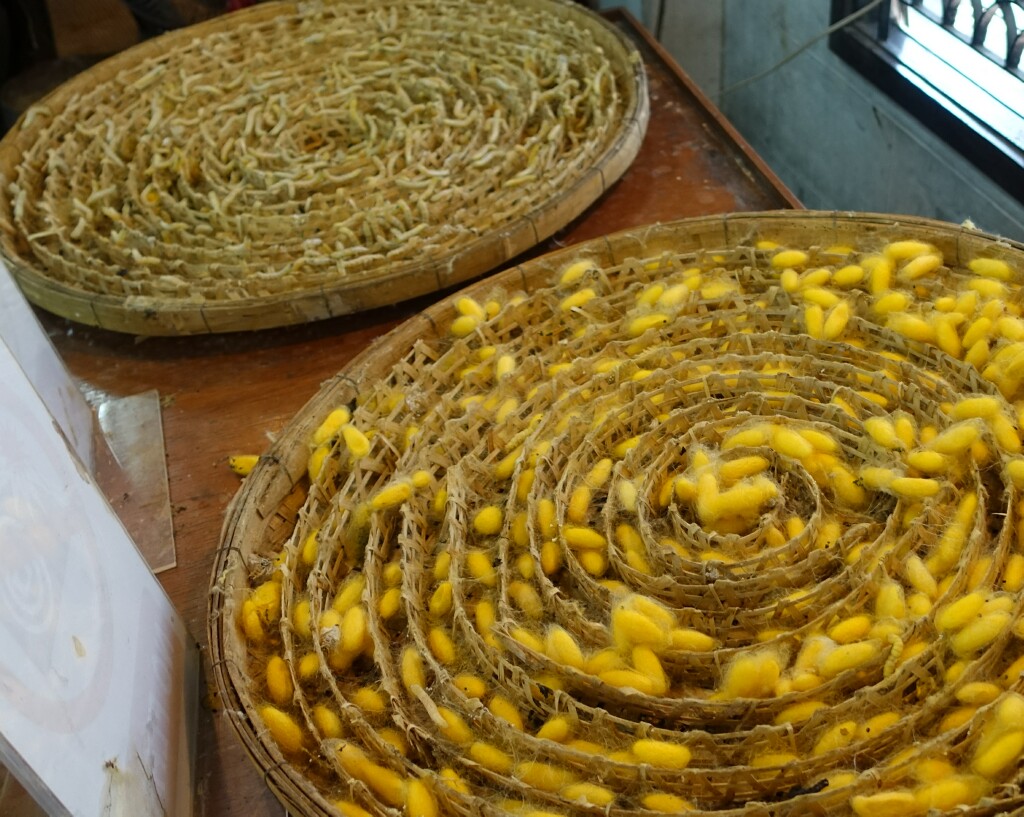
The silkworms are really little worms. They eat only mulberry leaves, which grow very well in southeast Asia. And then they spin soft yellow cocoons around themselves.
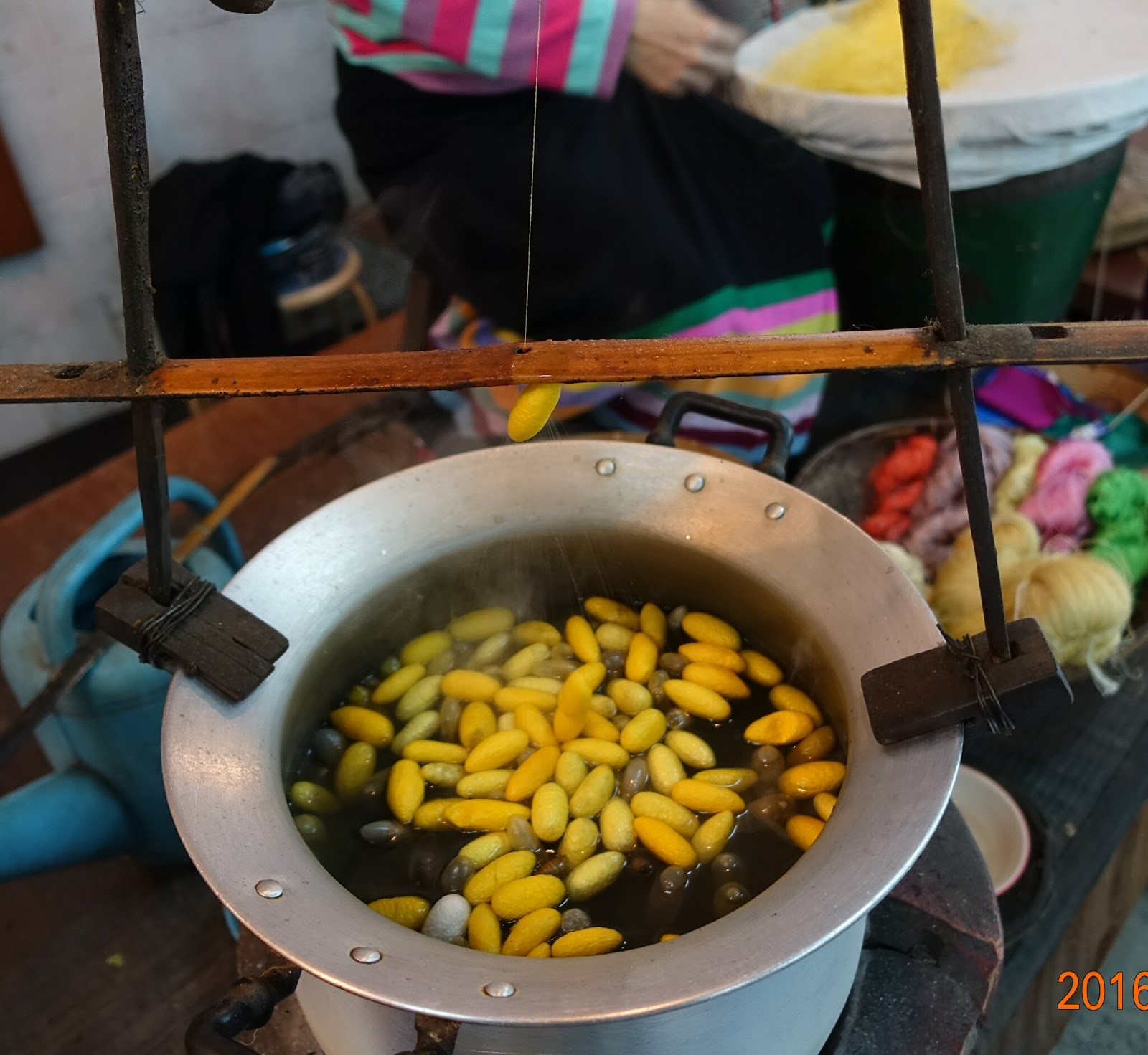
It is almost impossible to see in the picture (and difficult to see in person), but there is a strand from almost all of the cocoons in the pot going up to the hole in the metal cross-bar. all of those strands combine to make one silk thread. The other end is gradually pulled and wound onto a spool.
When the spool is full, the silk is dried, washed, dyed, and then woven.
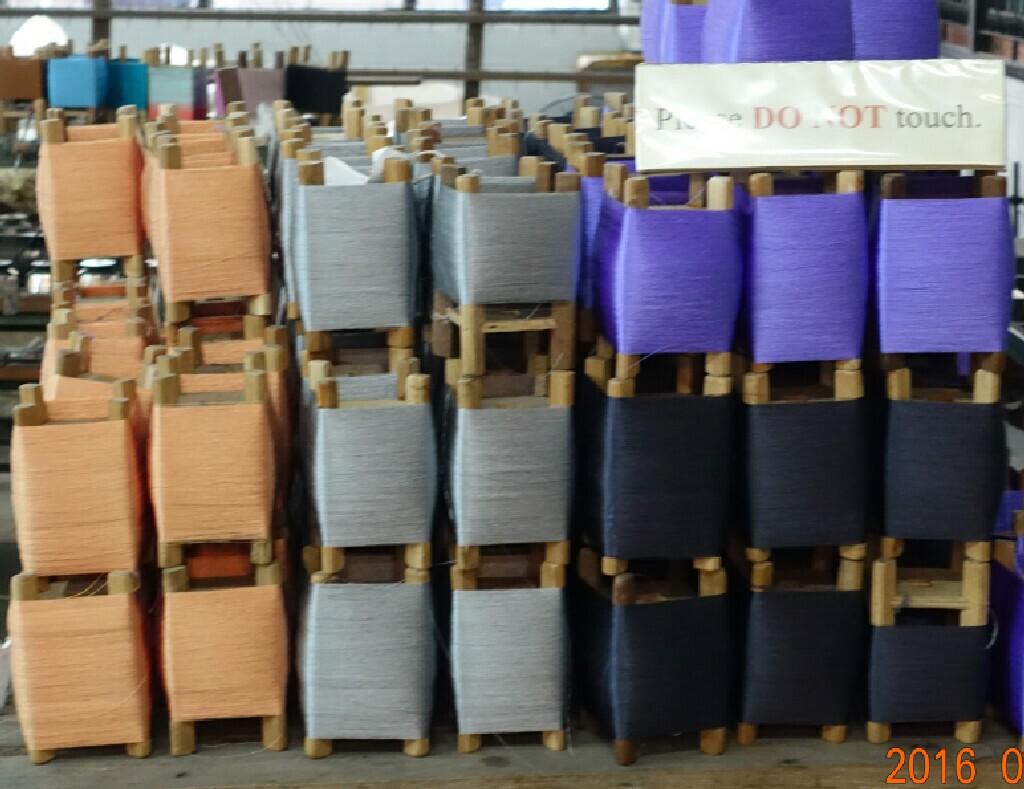
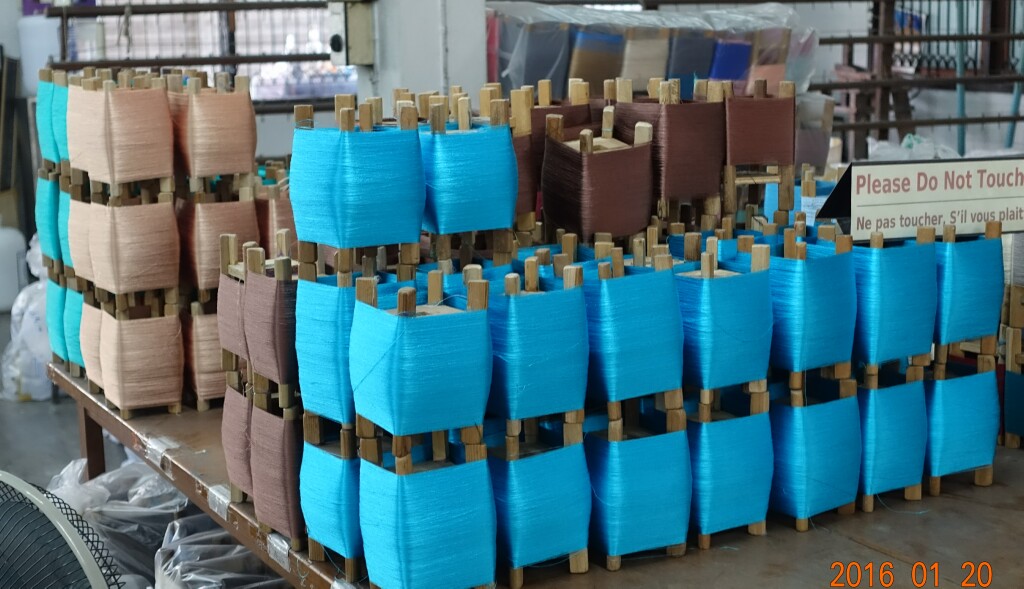
There are stacks and stacks of silk in many, many colors on these square spools ready to be woven. There was not a lot of production or weaving taking place today, only a few weaving machines in action. The weaving taking place was all hand-weaving, where a skilled person is operating the weaving machine instead of a computer. Beautiful fabrics. And the showroom is full of equally beautiful silk products (no photographs allowed in the showroom).
Wat Phra Singh
After an enjoyable time at lunch, visiting, and shopping with Jo, I headed out for a walk around part of the old city. My first stop was Wat Phra Singh, only about 300 meters west of Wat Chedi Luang. Wat Phra Singh, like Wat Chedi Luang, is a very important temple to the Buddhist people, and bus loads of tourists go to both every day. Wat Phra Singh has been given the status of Royal Temple of the First Class, one of only two in Chiang Mai (the other being Wat Srisupan). Wat Phra Singh is old, with construction said to have begin in 1345 when King Phayu, the fifth king of the Mangrai Dynasty, had a chedi built to house the ashes of his father. Later a viharn (worship hall) and other buildings were added.
Wat Phra Singh is a temple associated with the zodiac year of the great snake (also known as the year of the dragon). I was born in the year of the dragon, so it is said that I should feel a connection to a “year of the great snake temple” like Wat Phra Singh. Alas, I feel no such “connection” to Wat Phra Singh. During the time in which the Burmese ruled Lanna (northern Thailand) from 1578 to 1774, many of the Buddhist temples were abandoned and fell into serious disrepair. After the Burmese were pushed out, Wat Phra Singh was was restored in 1782. Further extensive restorations too place on all of the buildings in the 1920s, and again in 2002.
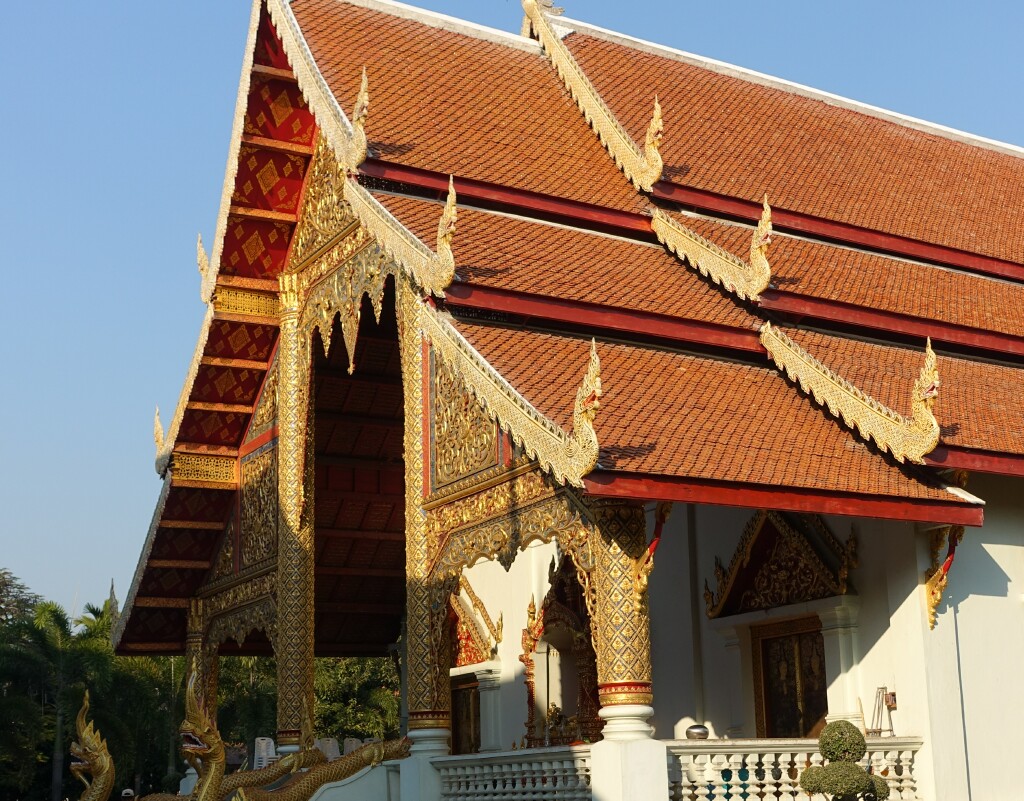
Wat Phra Singh is a very nice temple with many interesting buildings, a large viharn, a large chedi (apparently undergoing restoration), an ubosot (special ordination hall), a Ho Trai (temple library). This photo shows part of the main viharn at Wat Phra Singh.
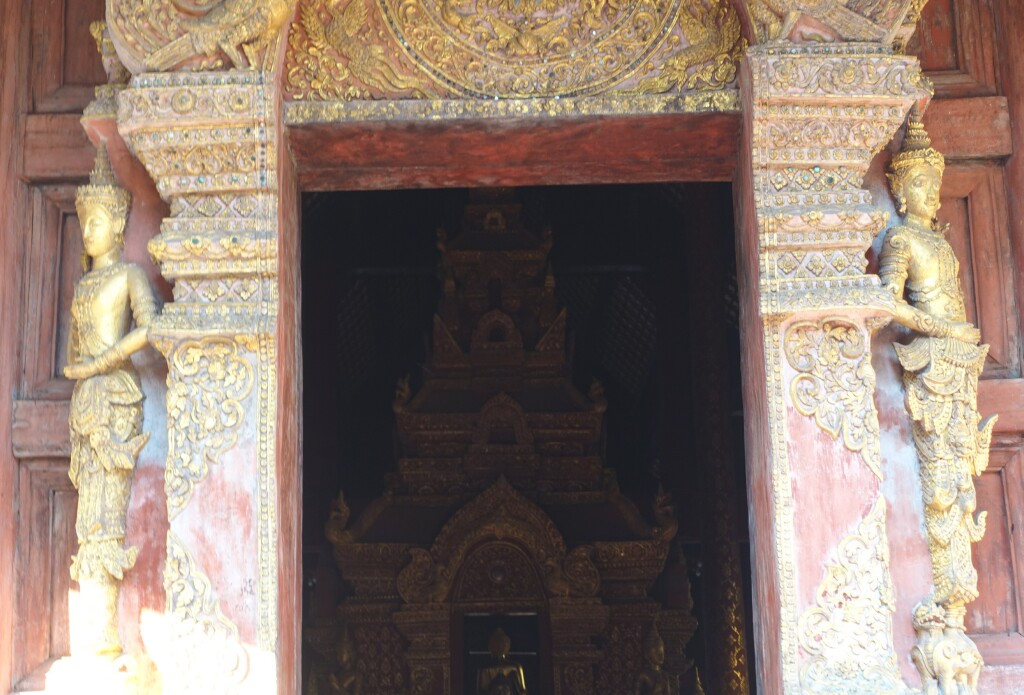
Entrance to the ubosot, flanked by the two large carved thewada.
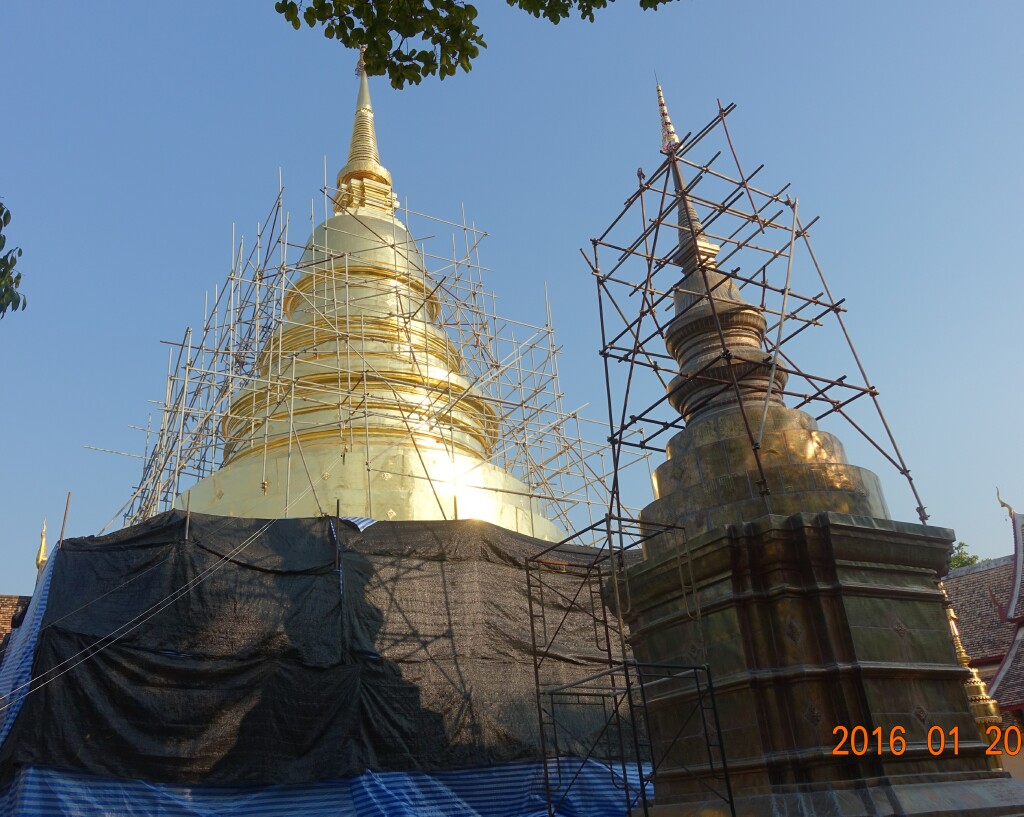
The large chedi and a smaller, flanking chedi, both undergoing restoration.
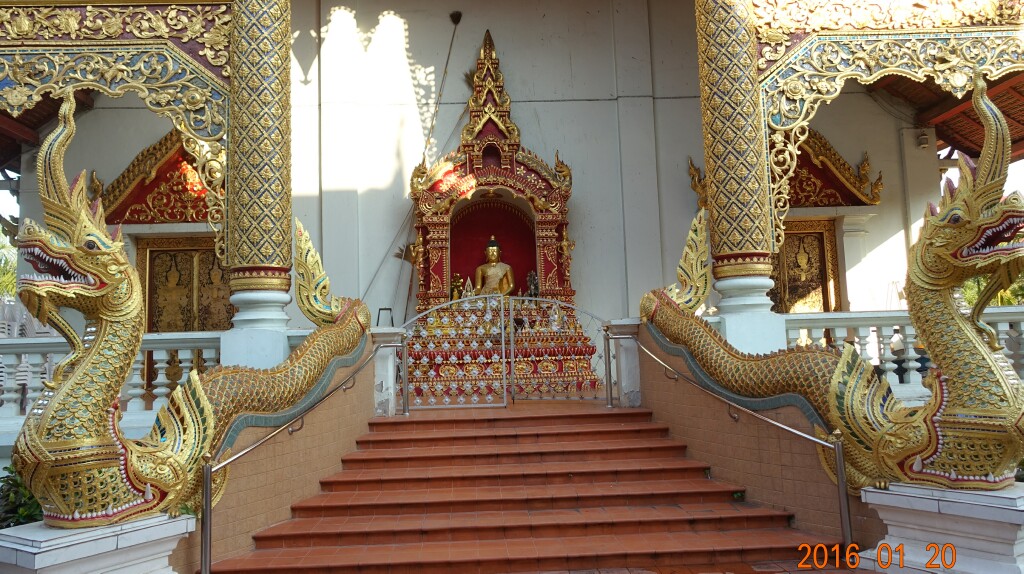
The rather ornate back side of the main viharn. Almost all viharn open to the east to greet the rising sun. The rising sun is also representative of birth. I have seen no viharn that open to the west, facing the setting sun, also representing death.
Therefore, while this is fairly ornate, there are no “back doors” to the viharn, as they would be opening to the west, and from what I have seen, that just is not done.
Almost all viharn have only one set of front doors, occasionally side doors, but I have seen none with back doors.
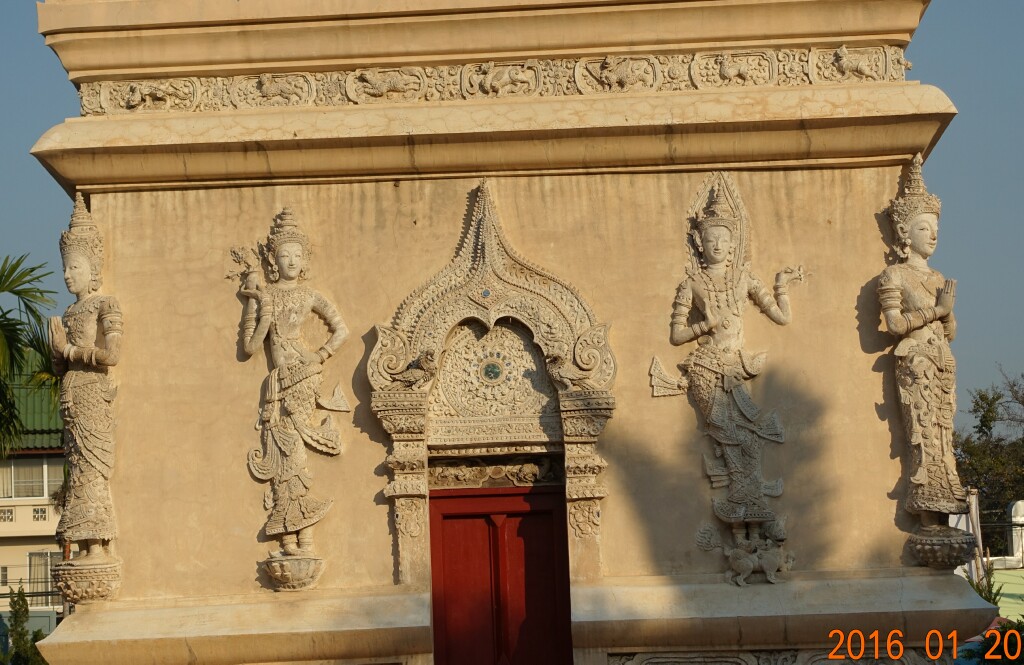
Carved in the stucco on the Ho Trai (library) are these fanciful praying and dancing thewada, all appearing female.
Around the North Wall
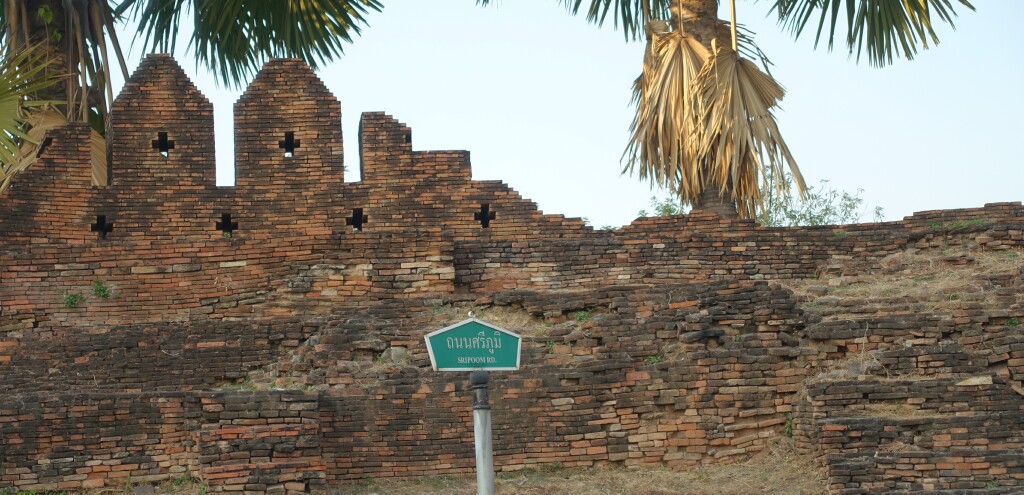
I continued my walk around the north half of the wall. Here is part of the wall at the back of Hua Lin corner (the northwest corner).
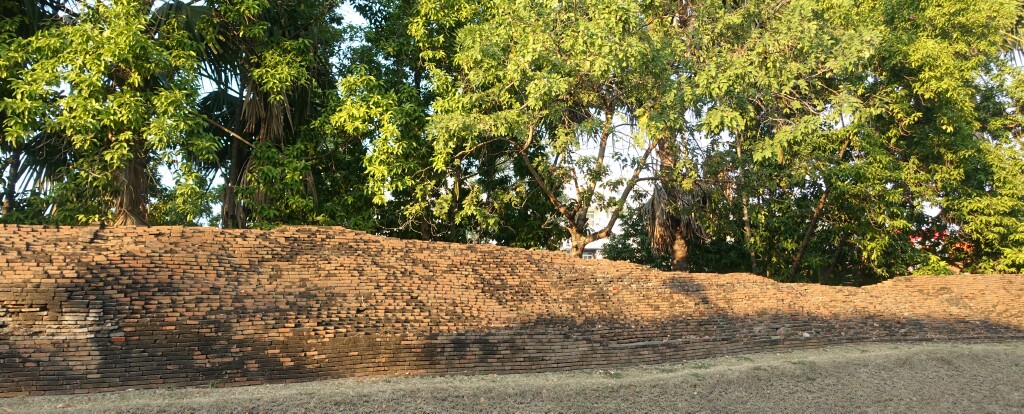
A good part of the wall still exists on the north side, though not as high as it was once. After 800 years or more, still existing is pretty remarkable.
With a nice lunch visiting with a long-time friend, followed by a walk around part of the old wall, it was another good day in Chiang Mai.
Next: Wat Pan Tao

 James the Intrepid Pilgrim