January 15, 2016
Wat Jed Yod
Friday morning started with what has become my normal and familiar routine:
- Morning meditation, 6:30 AM at the foot of the large chedi at Wat Chedi Luang
- Breakfast at 3-Sis
- A little e-mail catch-up
- Yoga, 10:00 AM at Wild Rose Yoga
Tom from Australia had expressed some interest in seeing a couple of my favorite temples that are difficult to get to by walking – not close, not terribly far, but difficult in the routing and traffic patterns. After the yoga class, Rose and John mentioned a little cafe behind Akha Ama Coffee called the Secret Cafe. Knowing that it was very close to Wat Phra Singh and it would be easy for Tom and I to get a red truck there to take us to the temples, we set out from Wild Rose on foot to the Secret Cafe. When we arrived, who did we see but Rose and John and an Italian we also knew from yoga class. We had a nice coffee break and snack at the Secret Cafe.
We negotiated with a red truck driver to take us to the two temples and wait for us while we were there and take us back to Wat Phra Singh for 400 Baht ($14).
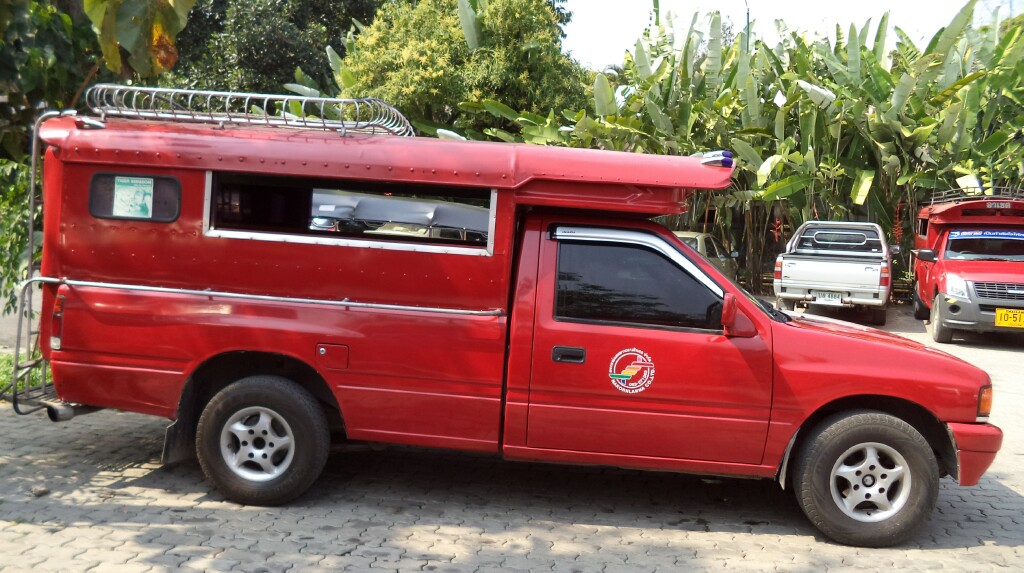
There are a number of colored trucks seen commonly in Chiang Mai. These are shared-ride services. Each color goes to a general area. Red trucks go around the main city, and are plentiful. Yellow trucks go to and from the Doi Saket area east of town, I think white trucks go to Lampung, blue trucks go north to Mae Rim and beyond, and there are green trucks and burgundy trucks. All of the trucks are pickup trucks with two rows of bench seats in the covered back. (They are also called “Song Taew” where in Thai, “song” is two, and “taew” is row — two rows of seats.) You can flag down a red truck, tell them where you are going, and if they are going in that direction, pay the fee and get in the back. You will likely be with other people, and they will stop to drop off and pick up people on the way to your destination. For most trips around the city, the fee for Thai people is 20 Baht, or about 75 cents, and for tourists, it varies depending on where you are going, but very inexpensive. You can also negotiate with a driver for a private ride, almost like a taxi, which is what we did.
Wat Jed Yod
Wat Jed Yod (sometimes spelled Chet Yot) is a temple that dates back to 1455 when King Tilokarat planted a bhodi tree on the grounds and then established a temple. The official name of the temple is Wat Photharam Maha Wihan. By 1476 he had established a large sanctuary in this monastery for the commemorating of 2000 years of Buddhism. The following year the 8th Buddhist World Council was held at Wat Jed Yod.
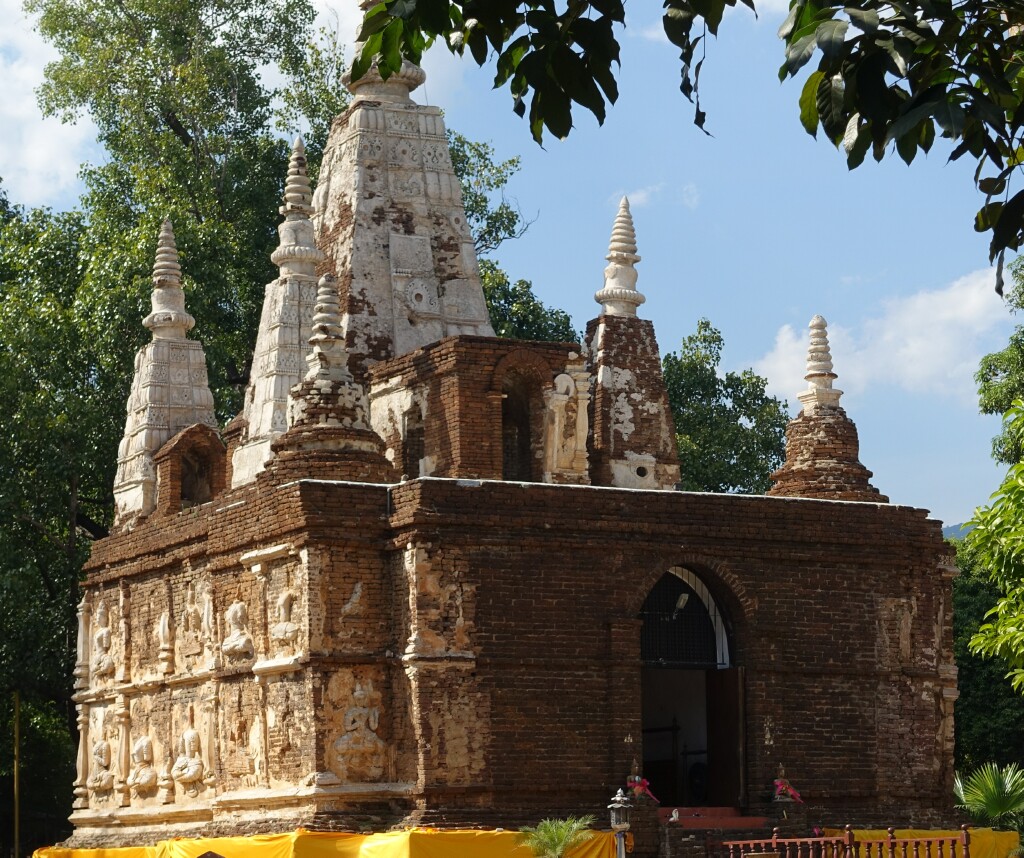
The name Wat Jed Yod is for the seven spires on the main, windowless viharn (worship hall). In Thai, jed (or chet) is “seven,” and yod (or yot) is “spire.” This picture shows six of the seven spires. This is a very small viharn, with a small worship area,
On the sides of the old viharn are thewada carved in stucco (thewada are “angelic beings that live in the heavenly realm,” or angels). These are some of my favorite thewada depictions, partly because I love the old carvings, and partly because of the artistry. Thewada have no gender, and depending on the design and the artist sometimes look very male, and sometimes very female.
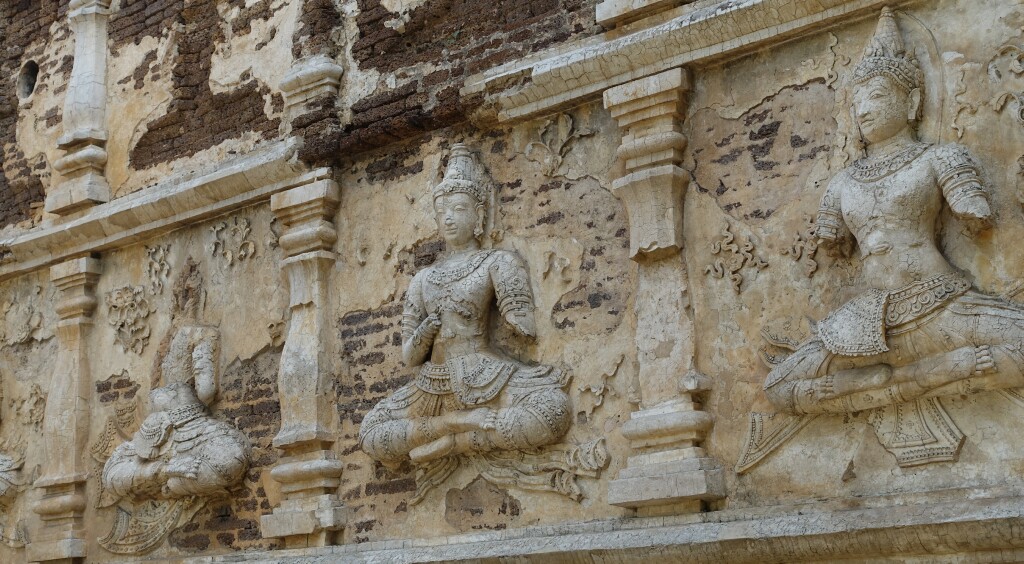
Carved stucco thewada on the side of the old viharn.
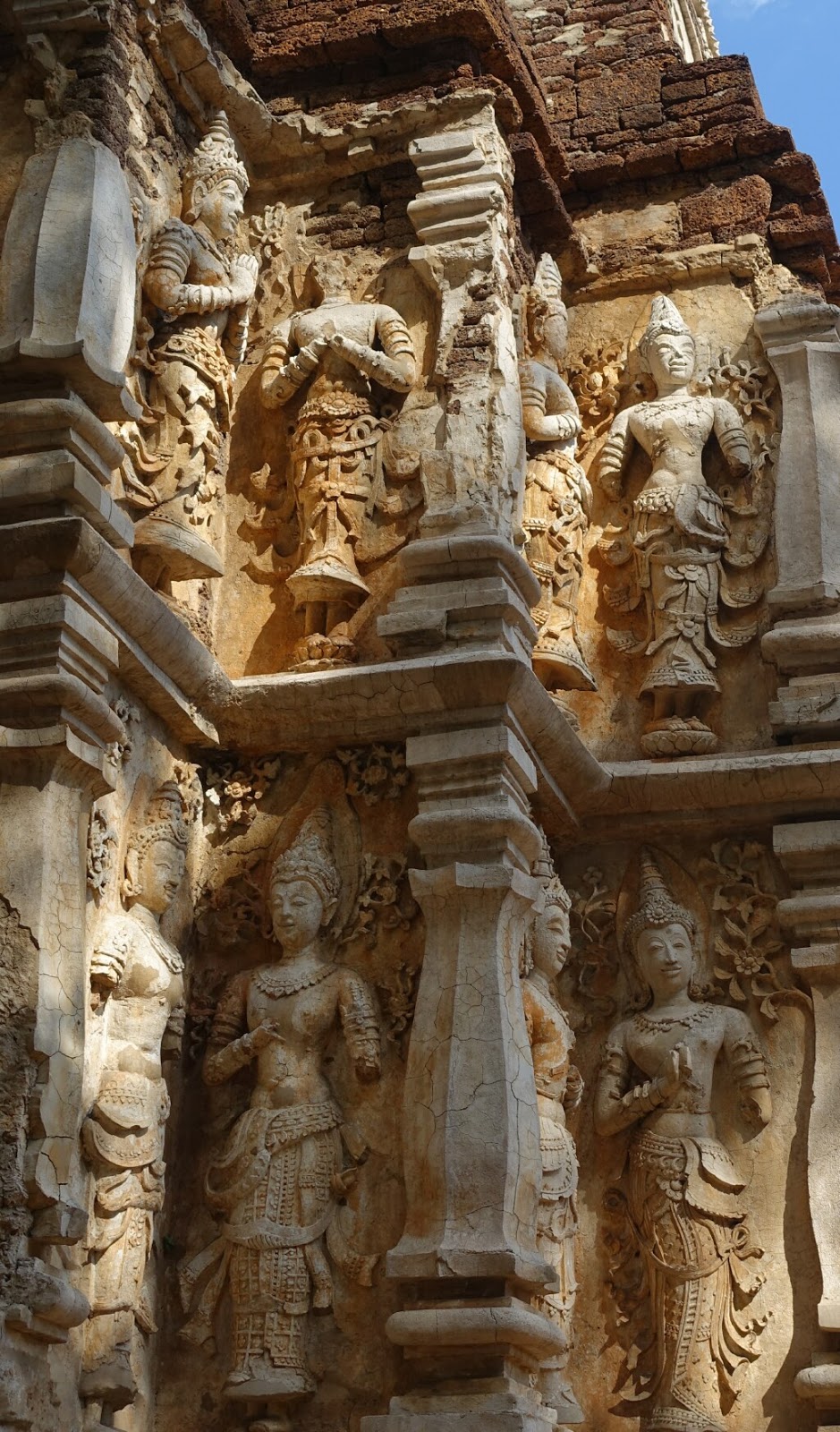
Detail of the thewada at the northwest corner.
Wat Jed Yod is spread out over a few acres, with much open space, in an almost park-like setting. In addition to the old vihard are several chedi and a more modern-looking viharn.
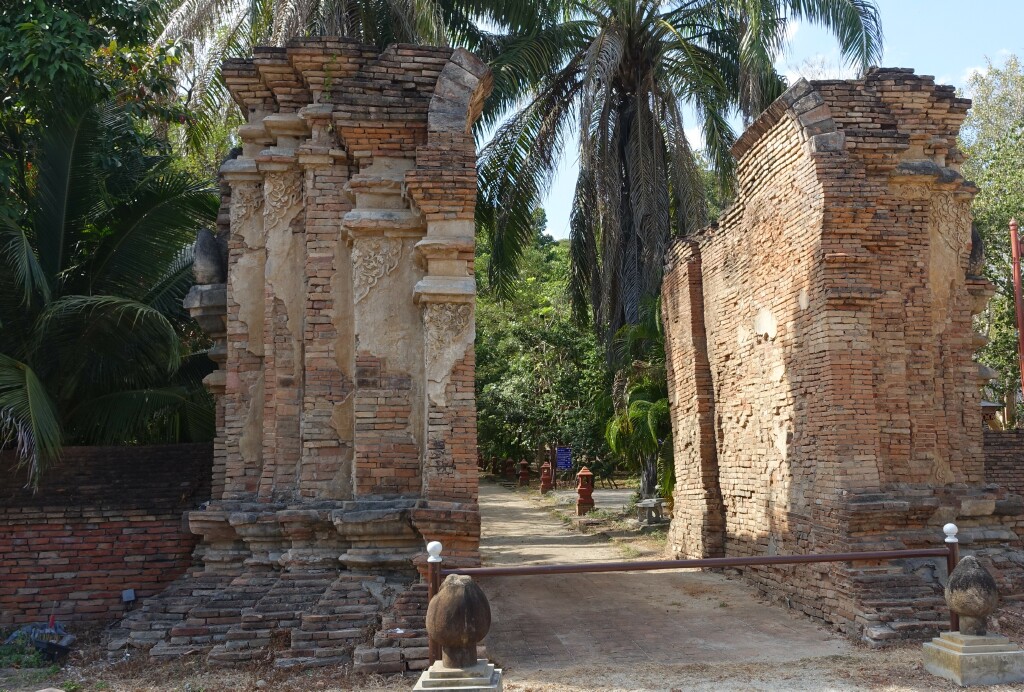
This is what I believe to be the old, now unused, entrance to the Wat Jed Yod temple complex at the eastern edge of the property. The path goes directly west from this entrance to the newer viharn, and then to the old viharn. Most viharn, including these, open to the east to greet the rising sun.
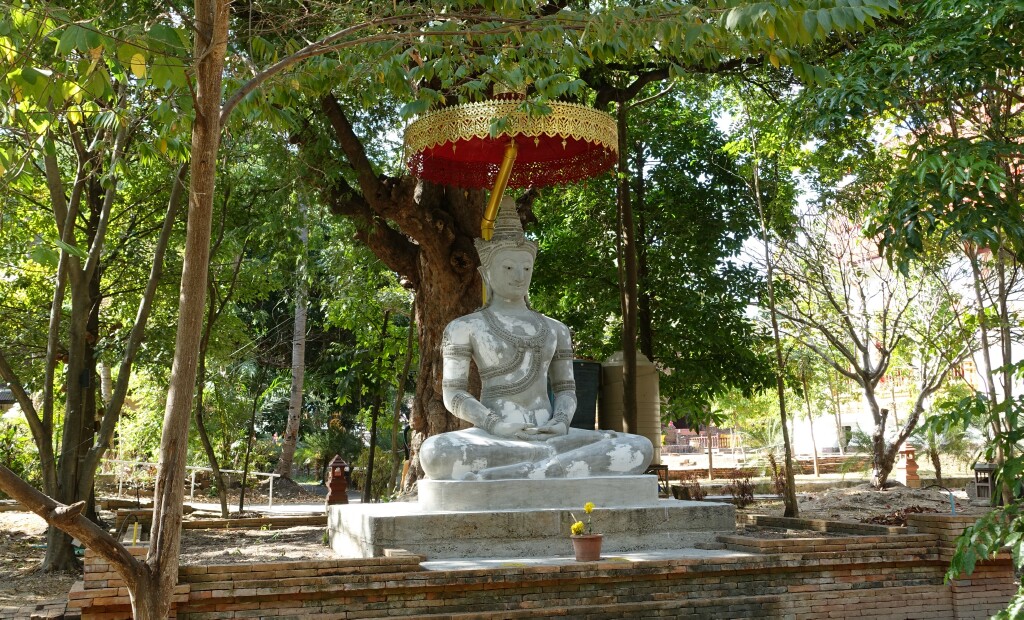
Walking from the old entrance, this Buddha statue and small prayer area is passed. There may have been a structure here in the past. From the photo, the openness is evident.
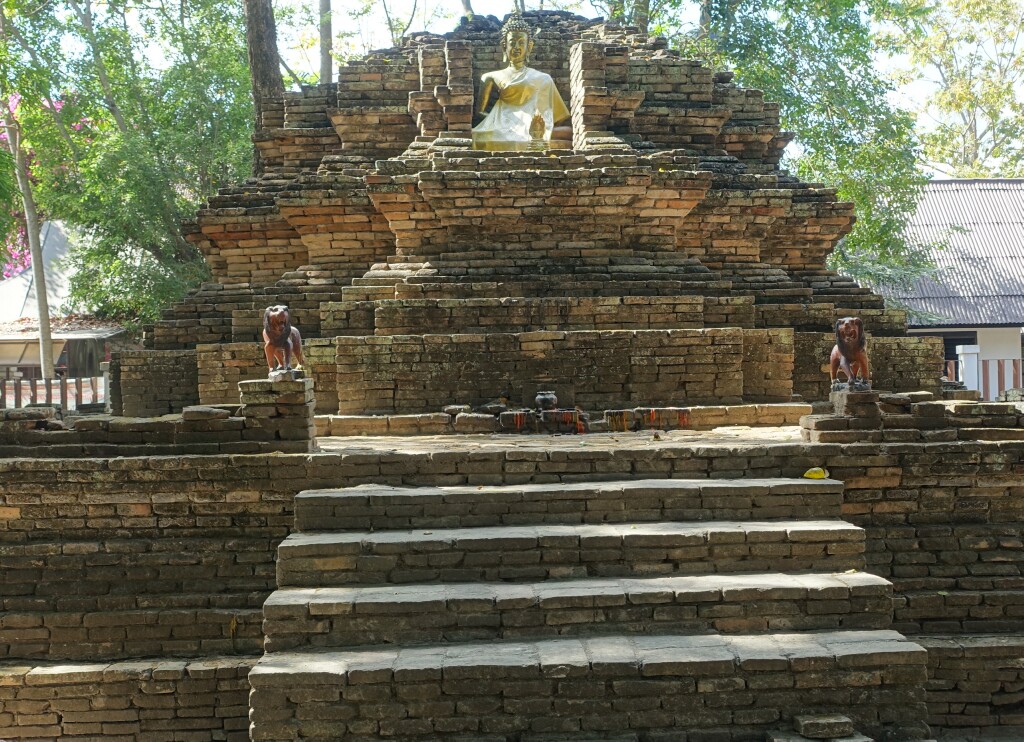
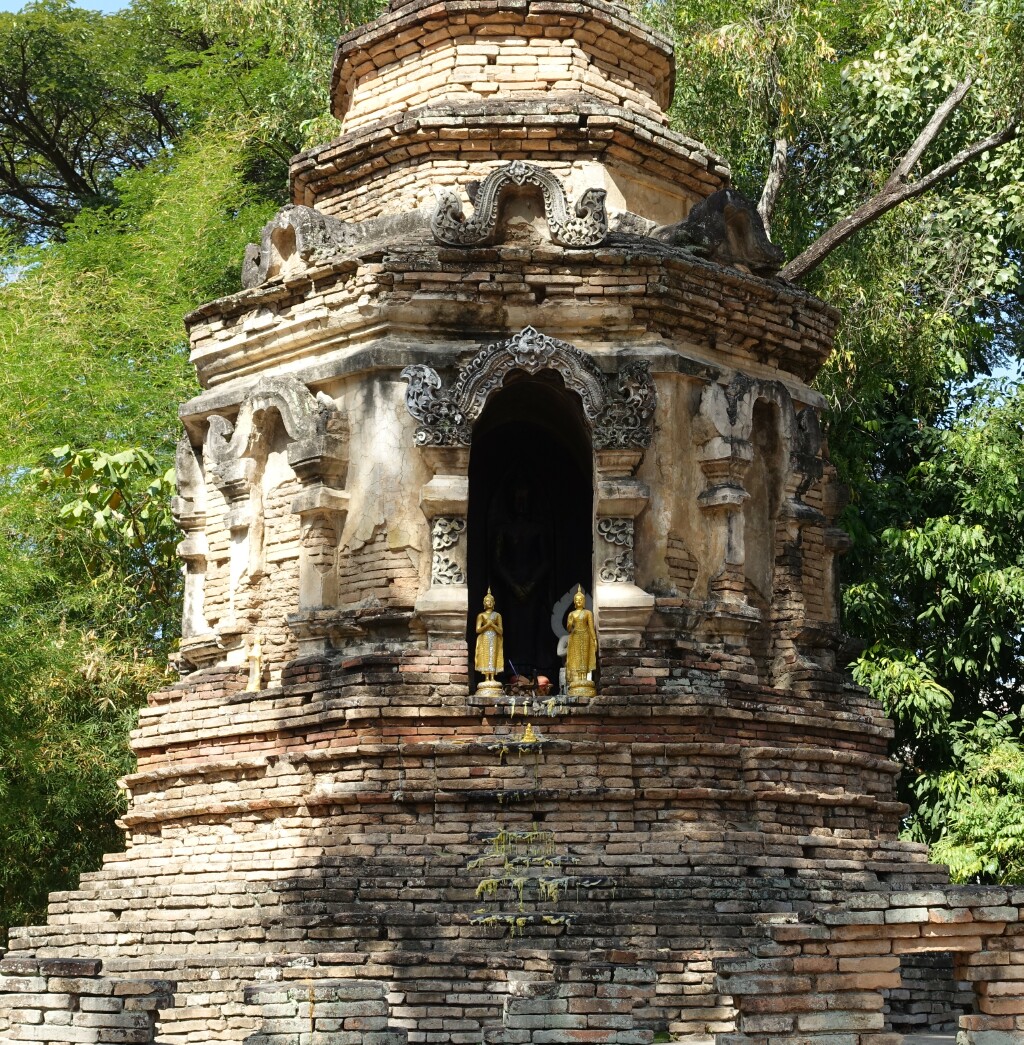
One of several old chedi on the Wat Jed Yod temple grounds. This is next to and slightly behind the old viharn. From the look, it is very old, and in need of renovation and/or restoration.
Another of the several old chedi at Wat Jed Yod.

The King Tilokarat Chedi.
After King Tilokarat died in 1487, he was cremated in a golden coffin and his ashes were interred in this chedi, built by his nephew, Phya Yod Chiangrai who succeeded him on the throne of the Kingdom of Lanna.
When I was here last year, it was under renovation. It appears that almost all of the brickwork has been restored, and the look is almost too new.
Wat Umong
Wat Umong was built in 1297 by King Manglai of the Kingdom of Lanna. Umong is the Thai word for “tunnel”. There are tunnels with Buddhist images below the chedi which can be easily explored. These tunnels were supposedly built by the King and painted with bush scenes so they could keep a famous but mentally deranged monk within the grounds of the monastery as he had a habit of just wandering off into the bush for days on end. The painted scenes are almost gone, but slightly evident in a few places. The monastery was later abandoned and sat unused until the 1940s.
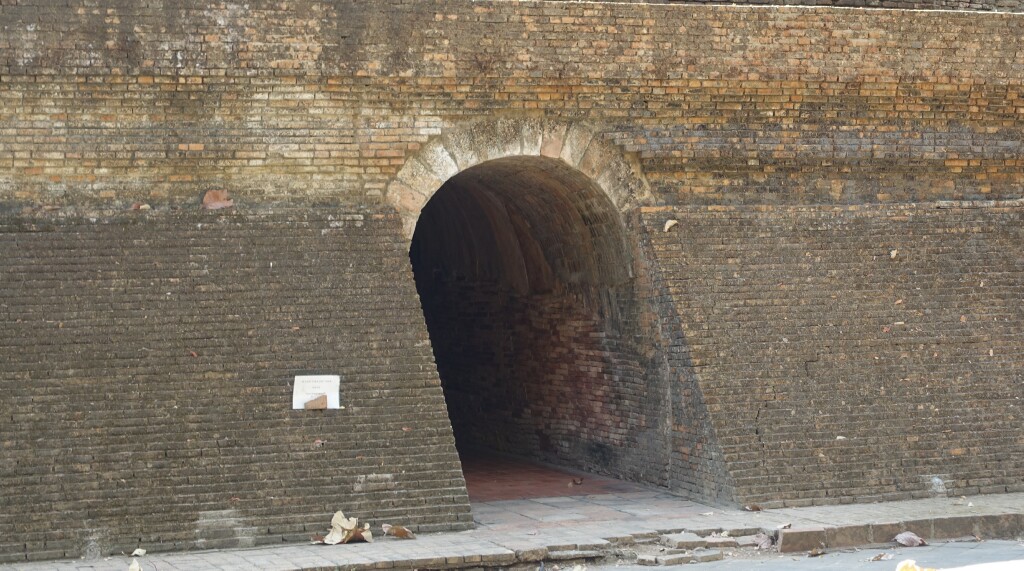
Entrance to the tunnels at Wat Umong
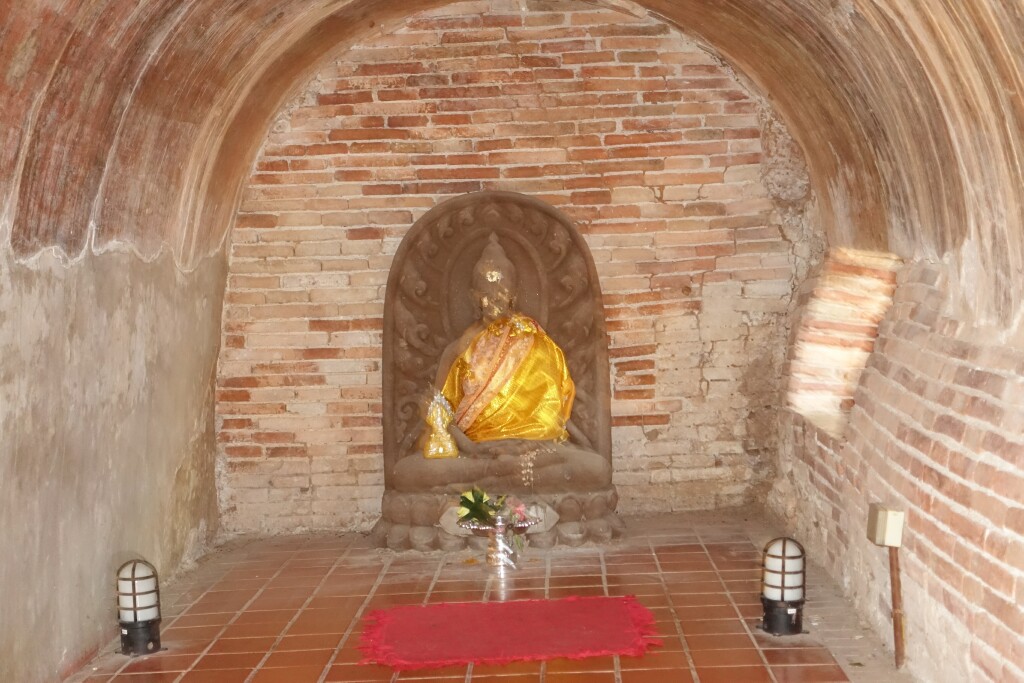
One of the worship area at the end of one of the tunnels.
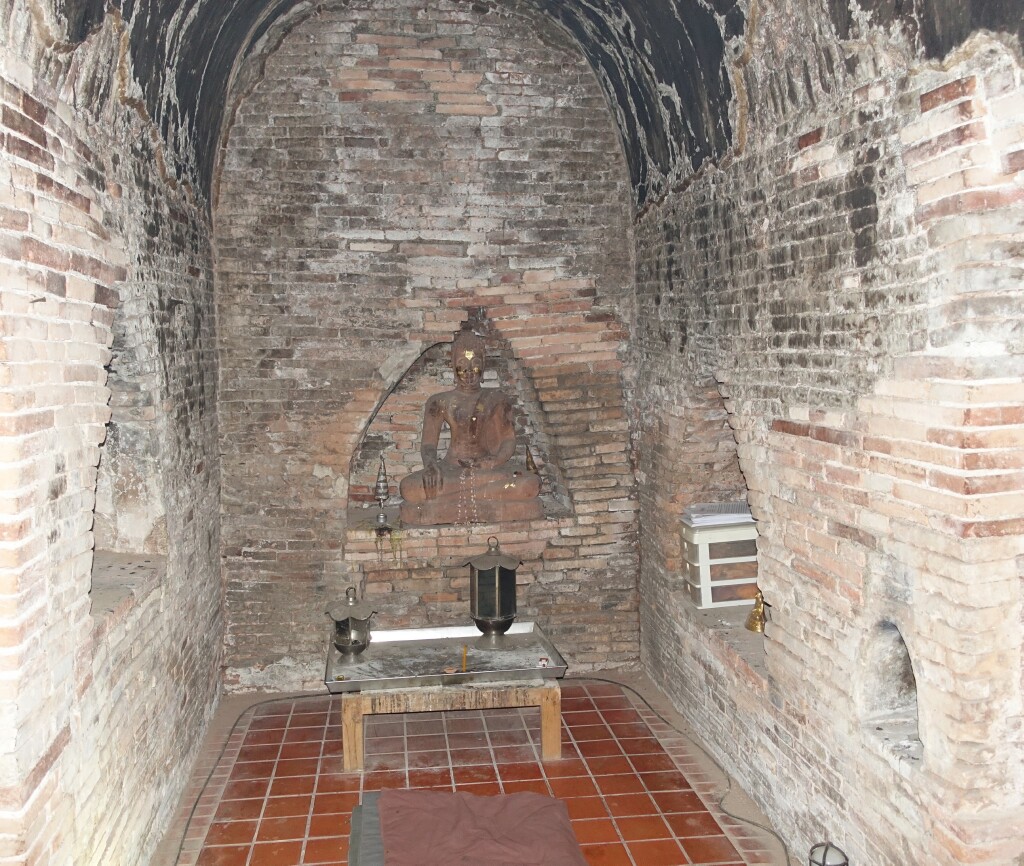
Another worship area. Soot from candles is evident here.
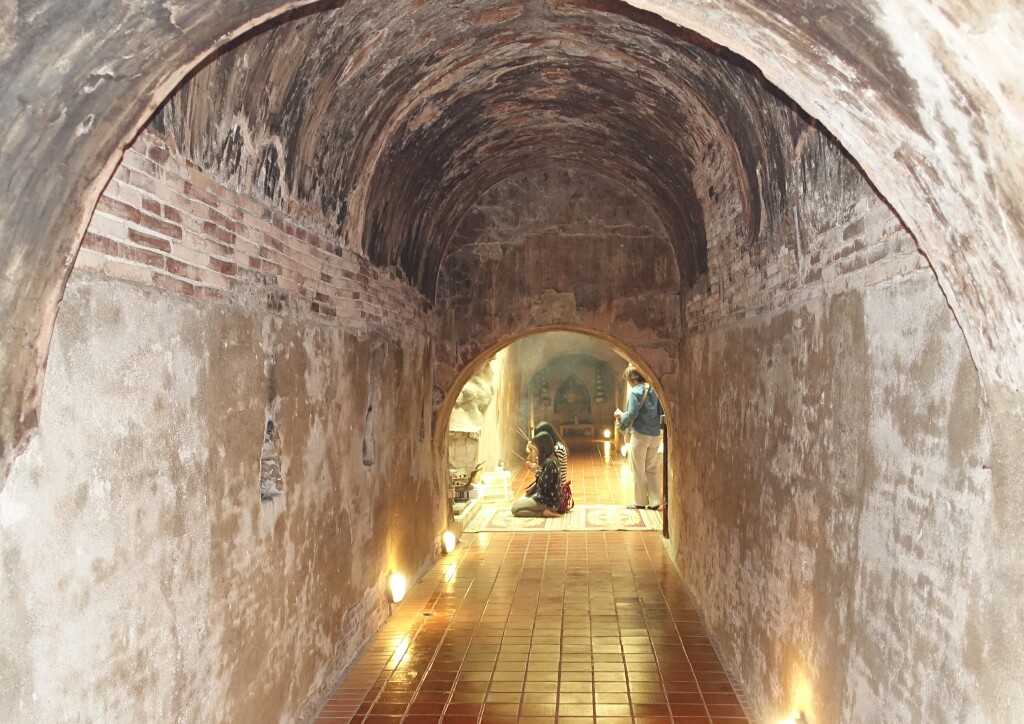
Thai people praying at a worship area in the tunnels.
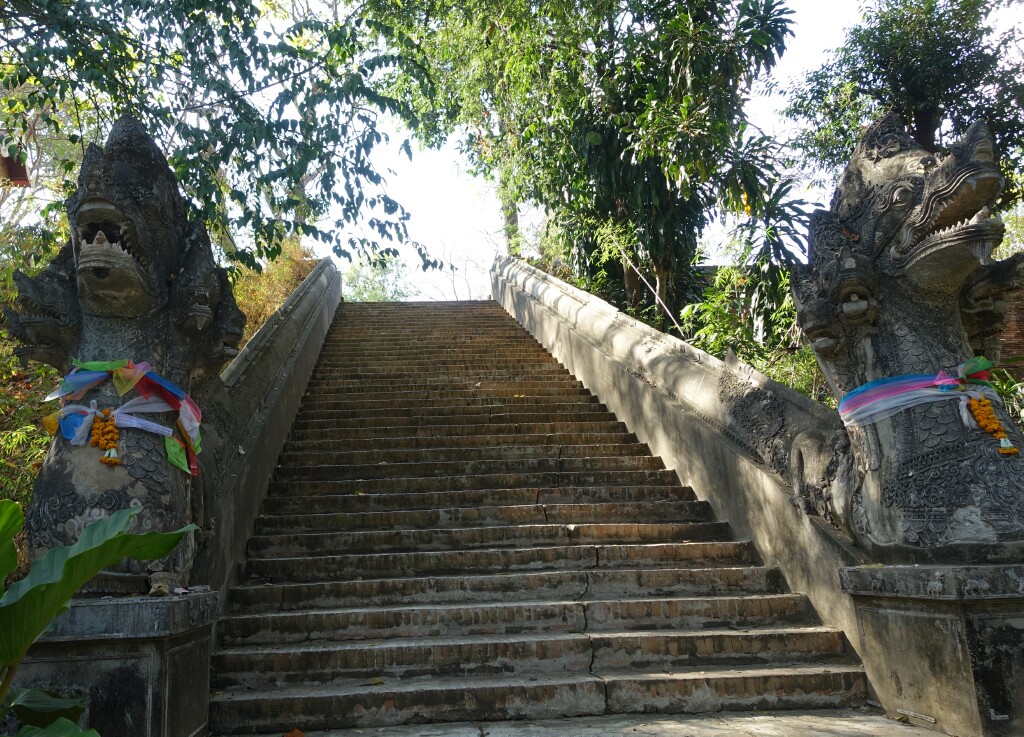
The Naga stairway leading up to the large chedi at the south end of the tunnels.
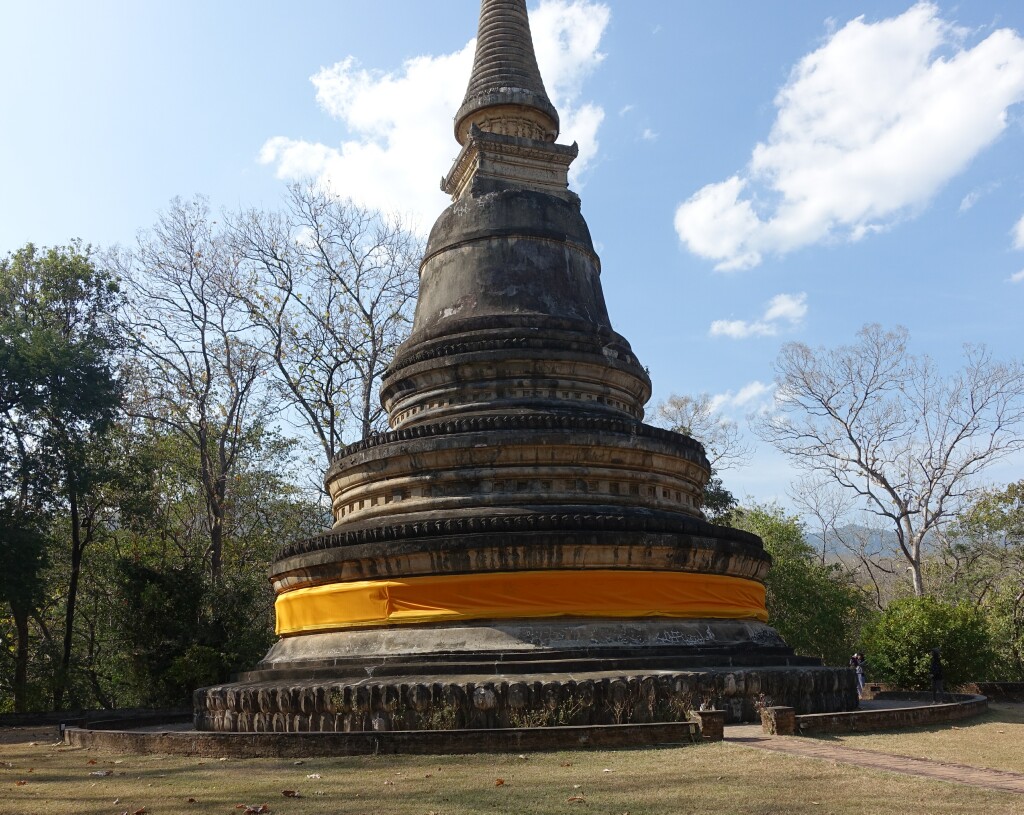
The large chedi at Wat Umong
Even though we did not walk, it had been a long, hot day, and I was tired. The red truck dropped us at Wat Phra Singh, as we had agreed, and Tom and I headed in separate directions to our temporary homes. After getting cleaned up, resting for a bit, and checking e-mail, I had a small dinner, and returned to 3-Sis to catch up on some of my work.
Next: Local Temples

 James the Intrepid Pilgrim