January 16, 2016
Temples in the Old City
Once again my daily and familiar routine set the day forth:
- Morning meditation, 6:30 AM at the foot of the large chedi at Wat Chedi Luang
- Breakfast at 3-Sis
- E-mail review and catch-up
- Yoga, 10:00 AM at Wild Rose Yoga
After yoga, I walked around the west half of the old city, from Suan Dok gate north to Hua Lin corner, and then east to Chang Puak Gate, the gate on the north side of the wall. Being a very hot afternoon, I turned into the old city and visited Wat Chiang Man.
Wat Chiang Man
Wat Chiang Man was built by King Mengrai in 1297 as the first temple in the new city as a place to live and worship while he supervised the construction of Chiang Mai.The temple holds several very old and important Buddha images.
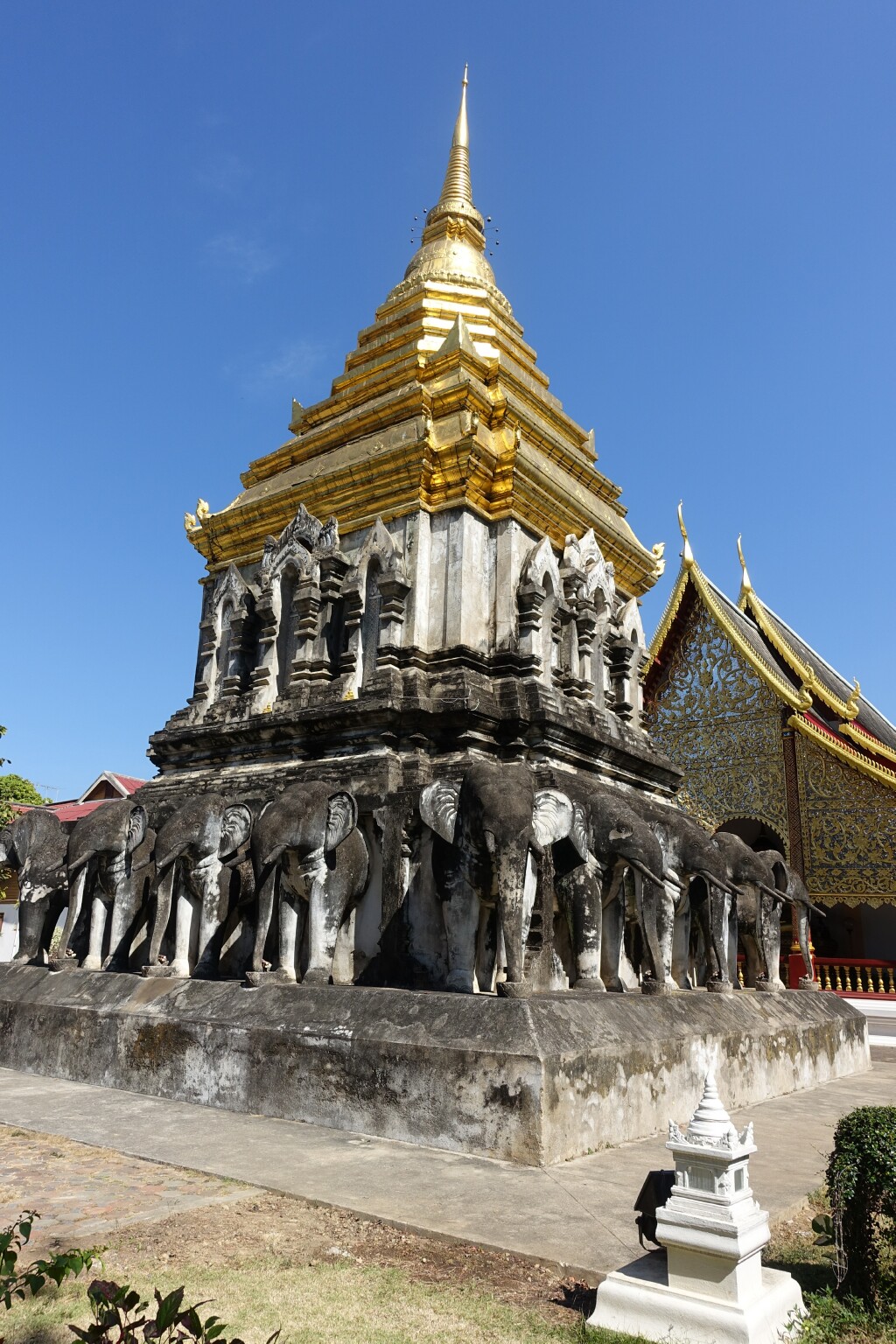
The chedi, likely the oldest structure in Chiang Mai, named Chang Lom Chedi (elephant chedi), sits on a square base supporting a second stone level surrounded by 15 life-sized brick and stucco elephants seeming to emerge from the stone. At the top is the gilded part of the chedi containing a bell-shaped relic chamber underneath the pinnacle.
Because of its historic importance and interesting design, people are drawn to the chedi, and there are always people having their picture taken here.
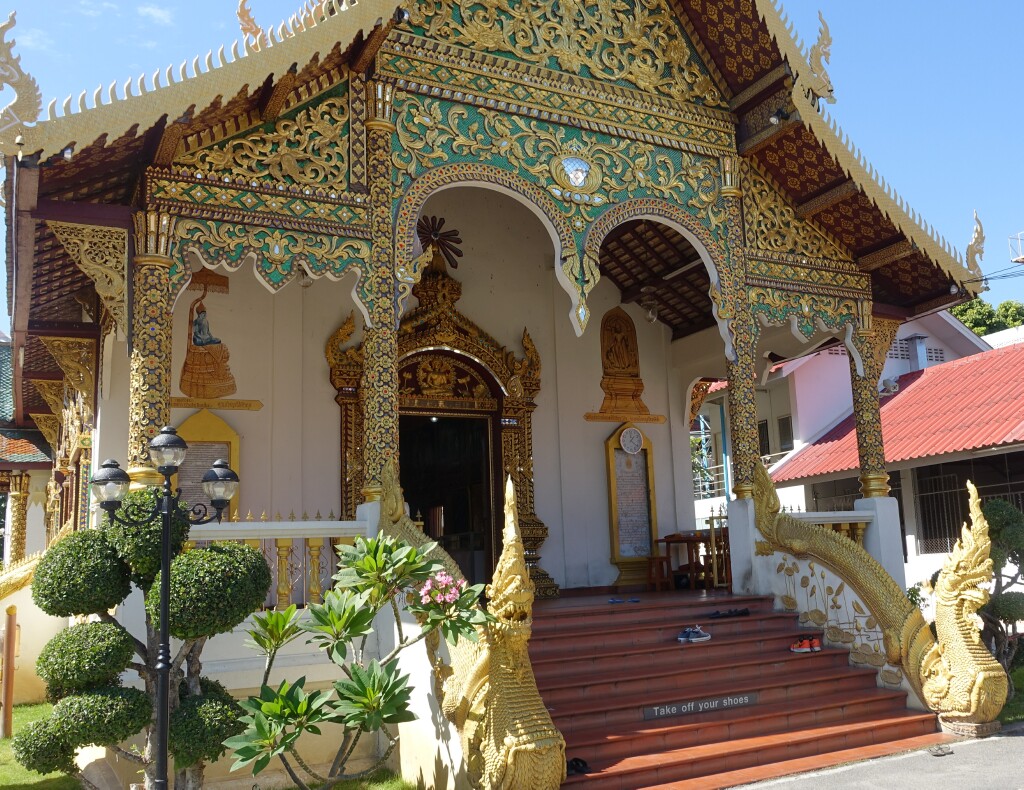
This is the smaller of the two viharns (worship halls) housing two important statues of the Buddha.
The first, called Phra Sae Tang Khamani, is a 10 cm (4 inch) tall statue carved out of a clear quartz crystal. It is said that this statue was crafted in 200 AD for King Ramraj of Lopburi, and brought to Lamphun by Queen Jamadevi in 662. It was transferred to Chiang Mai by King Mengrai in 1296 after he conquered Lamphun.
The second, called Phra Sila, is a marble statue depicting a standing Buddha taming an elephant. This statue dates to the 10th or possibly the 8th century and allegedly has rain-giving powers, and thus is featured during the Songkran festival (Buddhist new year) at the end of the dry season (mid-April).
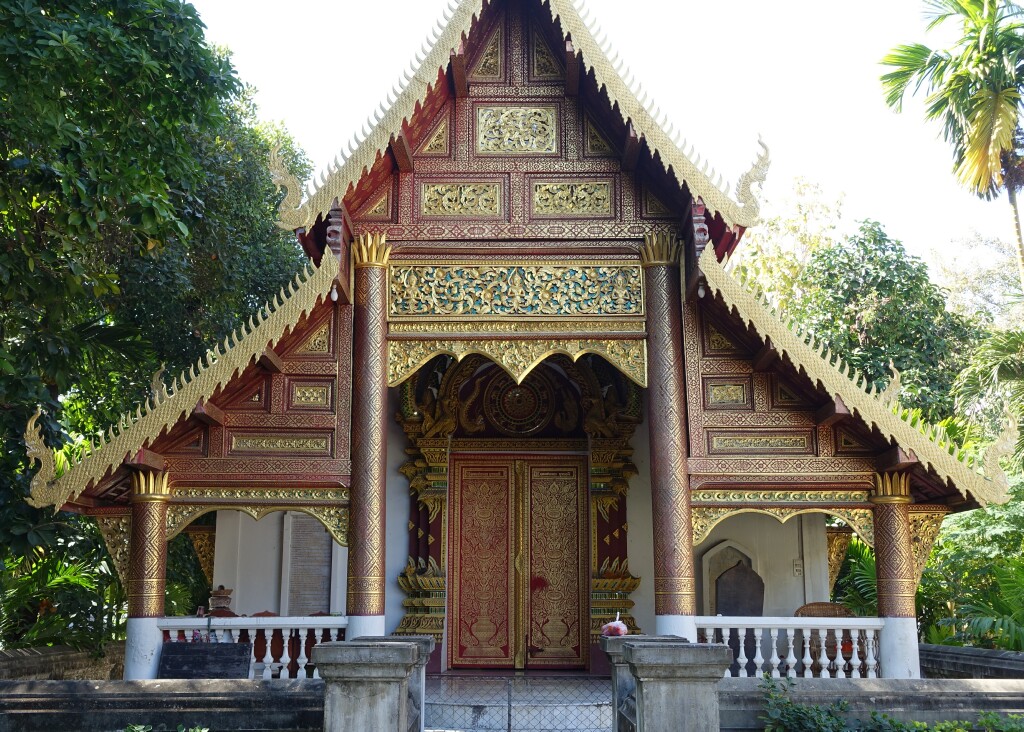
This is what I thought was a third, fairly simple viharn. Every time I have visited Wat Chiang Man, the doors of this were closed. I have now learned that it is a Ho Trai, a Temple Library.
Wat Lam Chang
Wat Lam Chang is very near Wat Chiang Man, less than 100 meters away. This is allegedly where King Mengrai kept his working elephants when he was supervising the building of the city. Lam Chang translates to “elephant stable” so this story makes some sense.
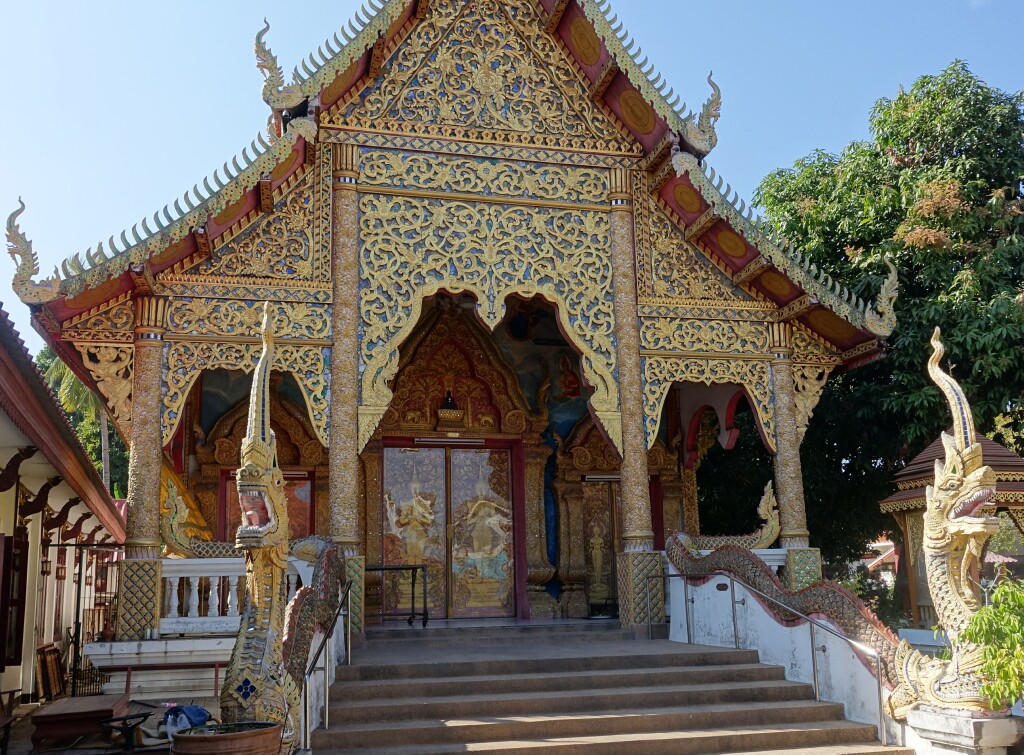
The main viharn at Wat Lam Chang is quite nice, adorned by very detailed and intricate naga (serpent) on the stairway banisters.
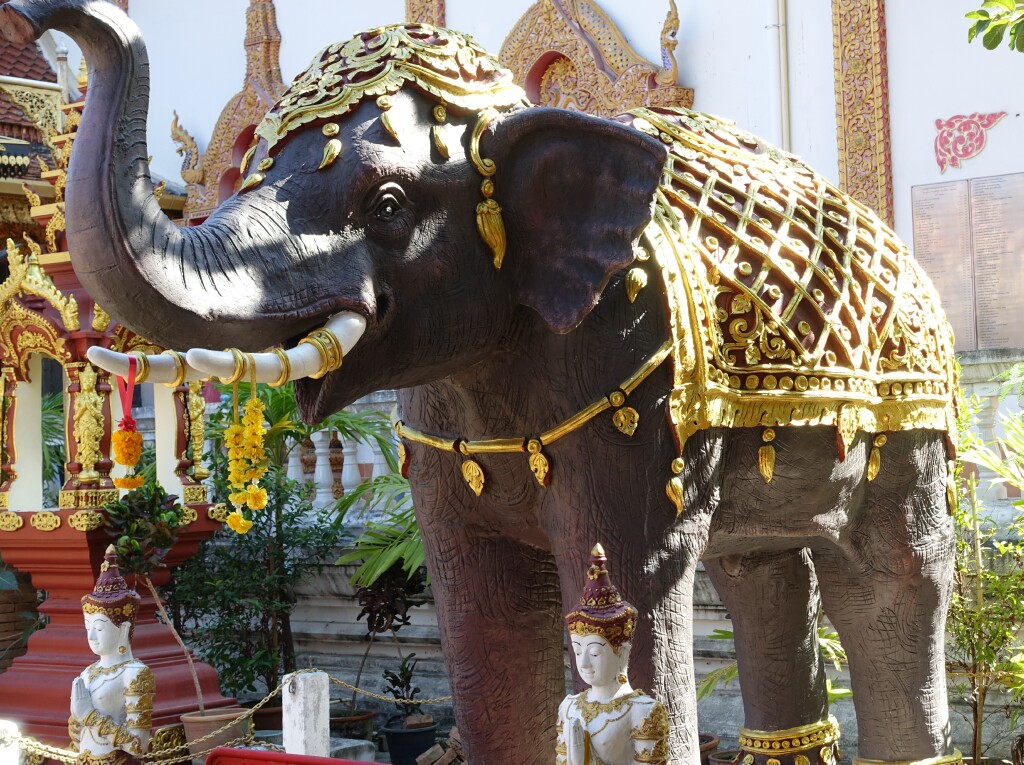
By the main viharn is this full-sized elephant statue, supporting the idea that this was the elephant stable temple.
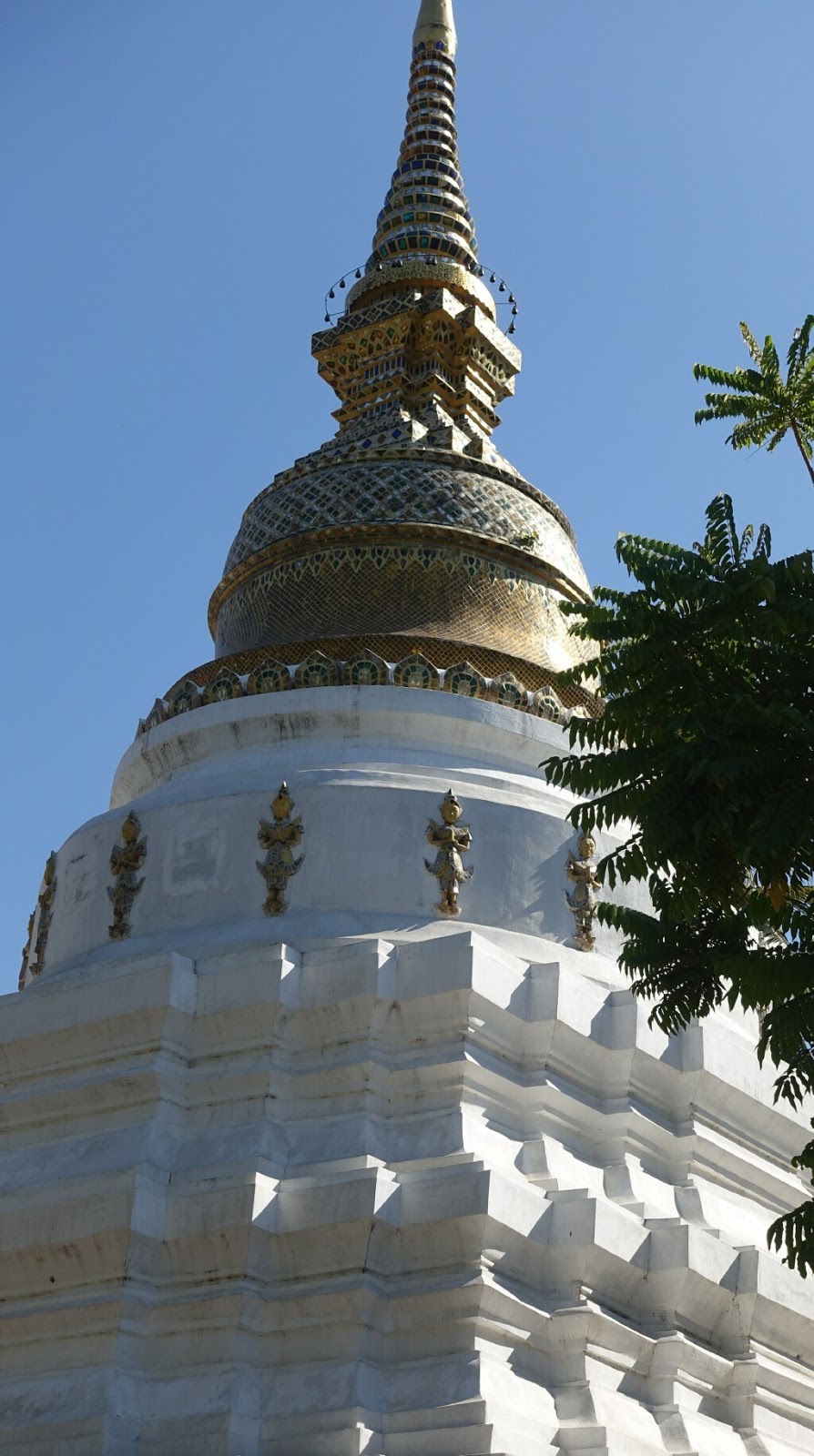
An intricately designed chedi at the back of the main viharn
Wat Ban Ping
I passed Wat Ban Ping while walking south towards 3-Sis from Wat Lam Chang. While supposedly old, the main viharn looks very new. I learned that the viharn had been destroyed by fire in 2002 and the rebuilding was only completed in 2008. Located very near the city center, this is an old temple, but not much information is available.
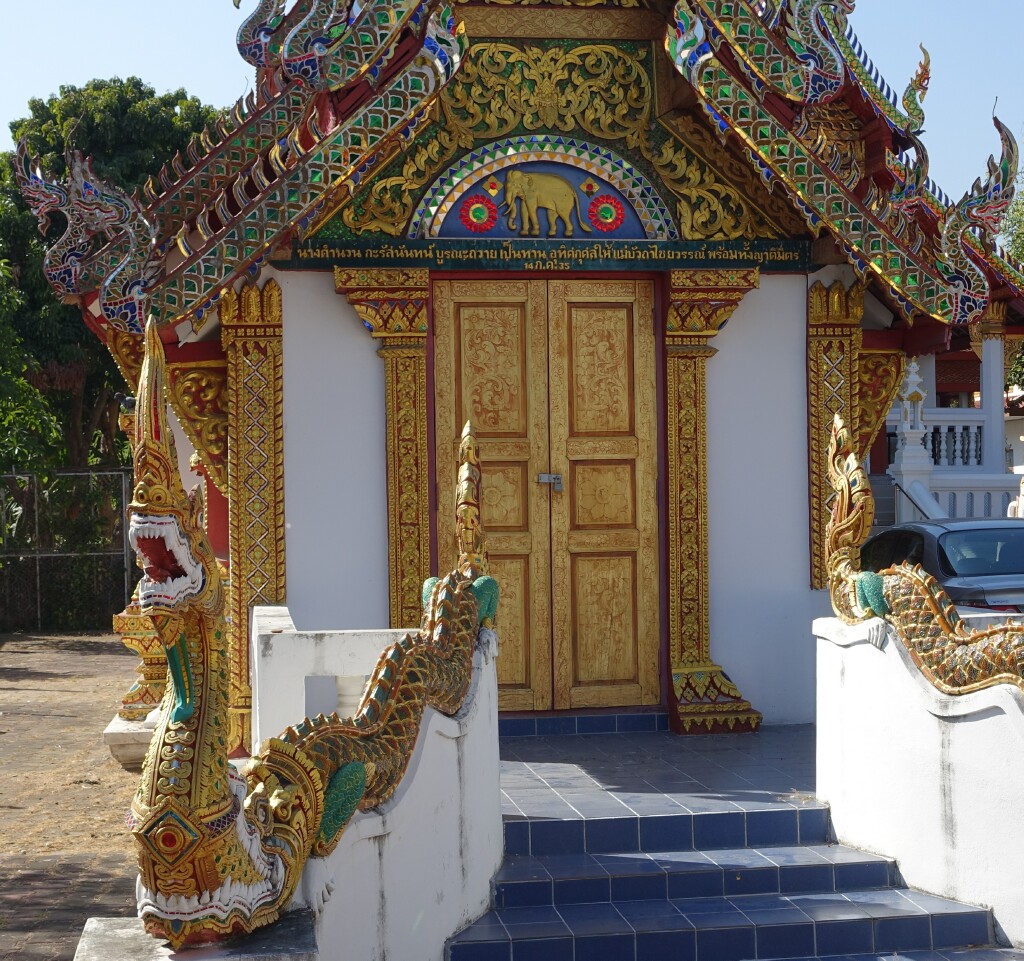
The ubosot (ordination hall) at Wat Ban Ping, a very small structure, nicely designed. This is clearly an older structure.
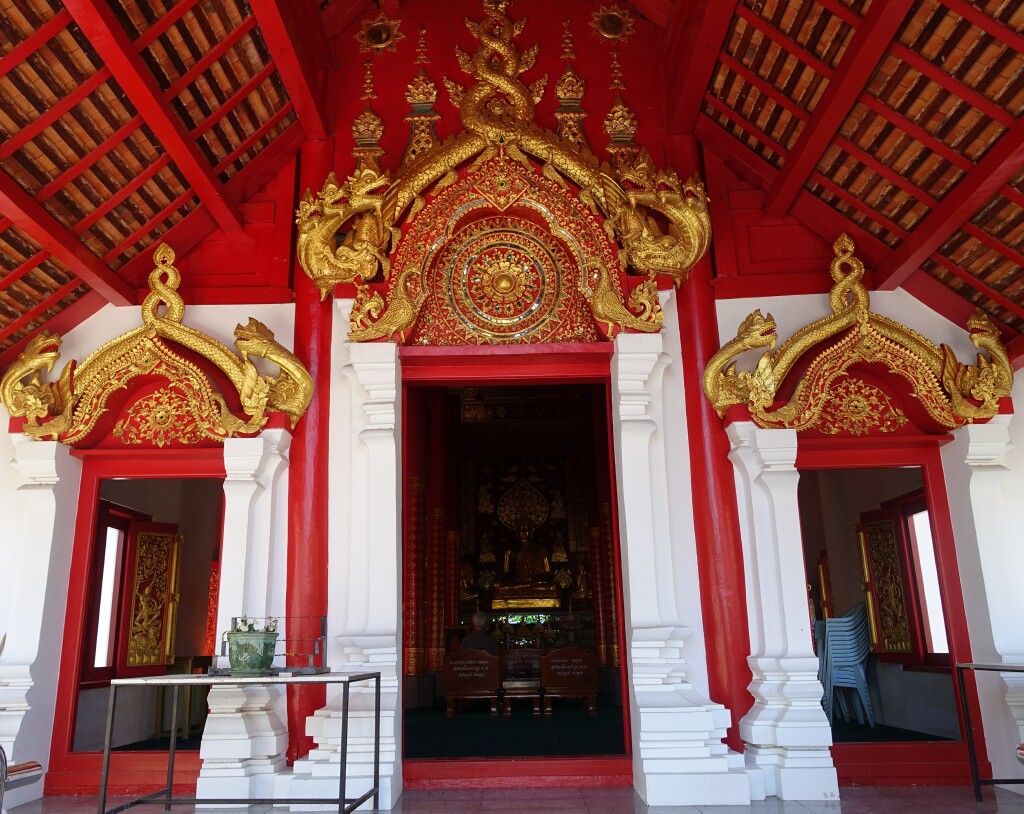
The obviously newer-looking main viharn at Wat Ban Ping.
Wat Umong Maha Thera Chan
This is another local temple in the old Chiang Mai city. Little detail about its age or historical significance can be found.
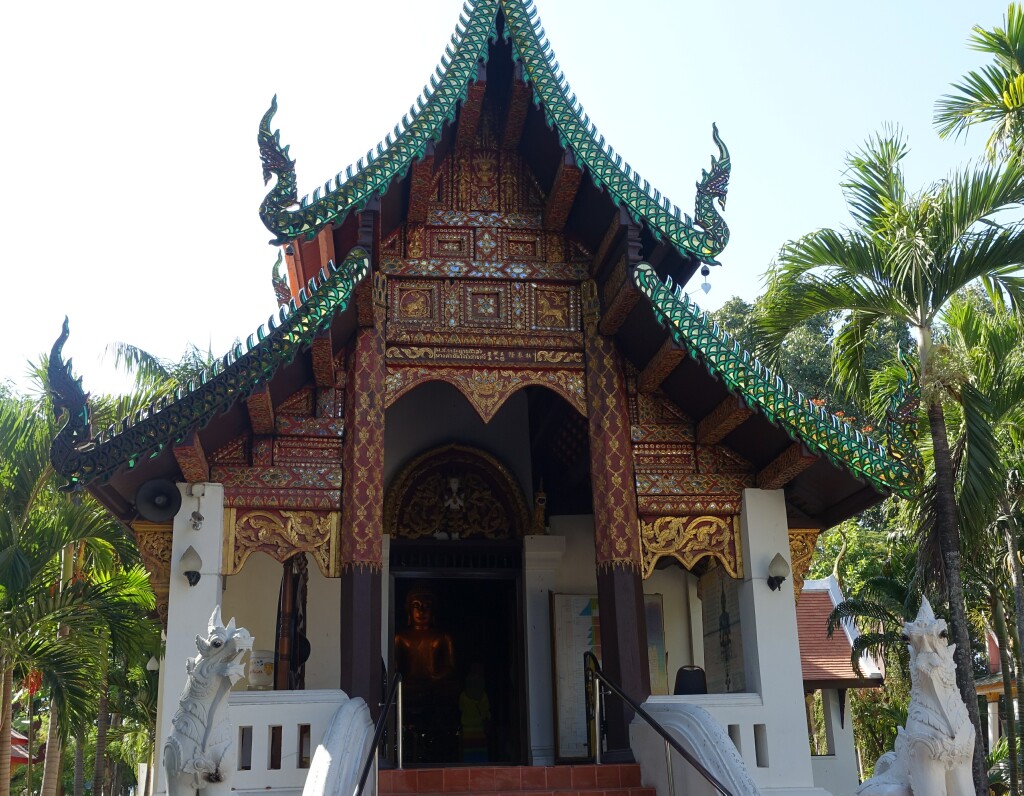
The main viharn is simple, yet very rich in its design.
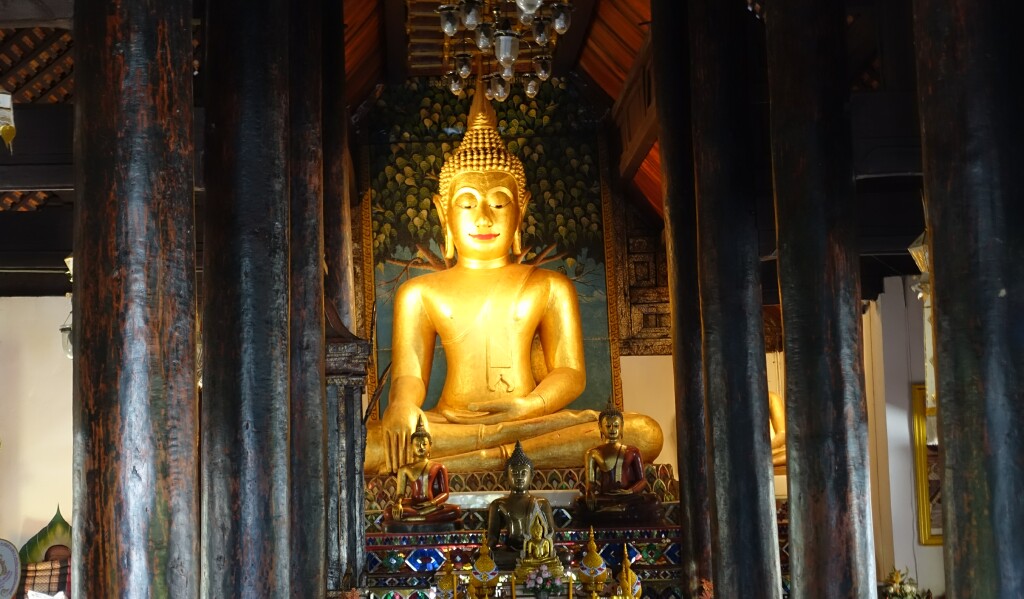
Inside the viharn is dark, rich teak wood, very elegant in appearance.
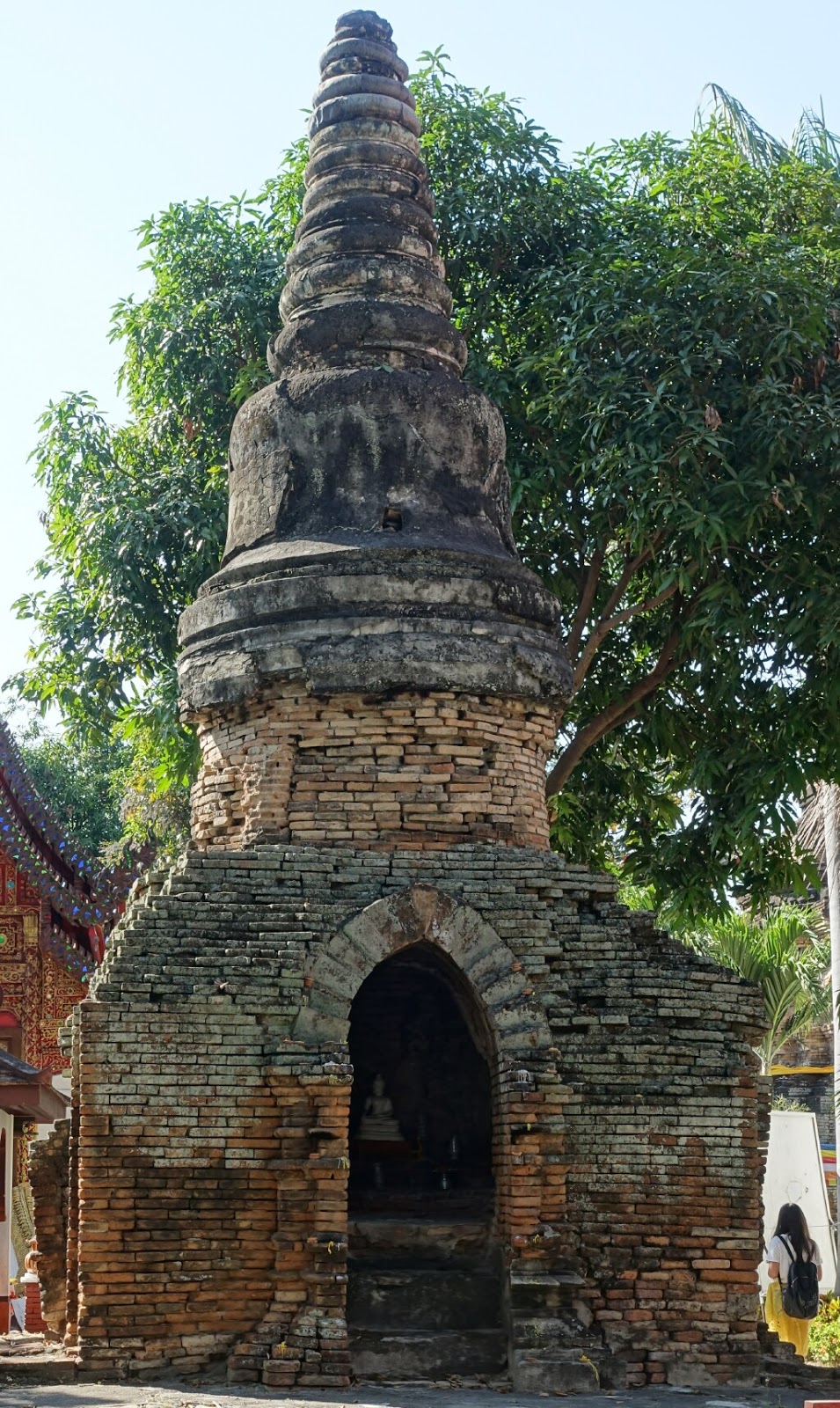
In the old chedi behind the viharn is a niche, called the monk’s cave, in which monks sometimes go to meditate in relative isolation.
After a hot afternoon walking around the old city visiting temples, I returned to 3-Sis, got a shower, and into clean clothes, worked for a while, and then headed down to Ole’ for a Mexican-style dinner.
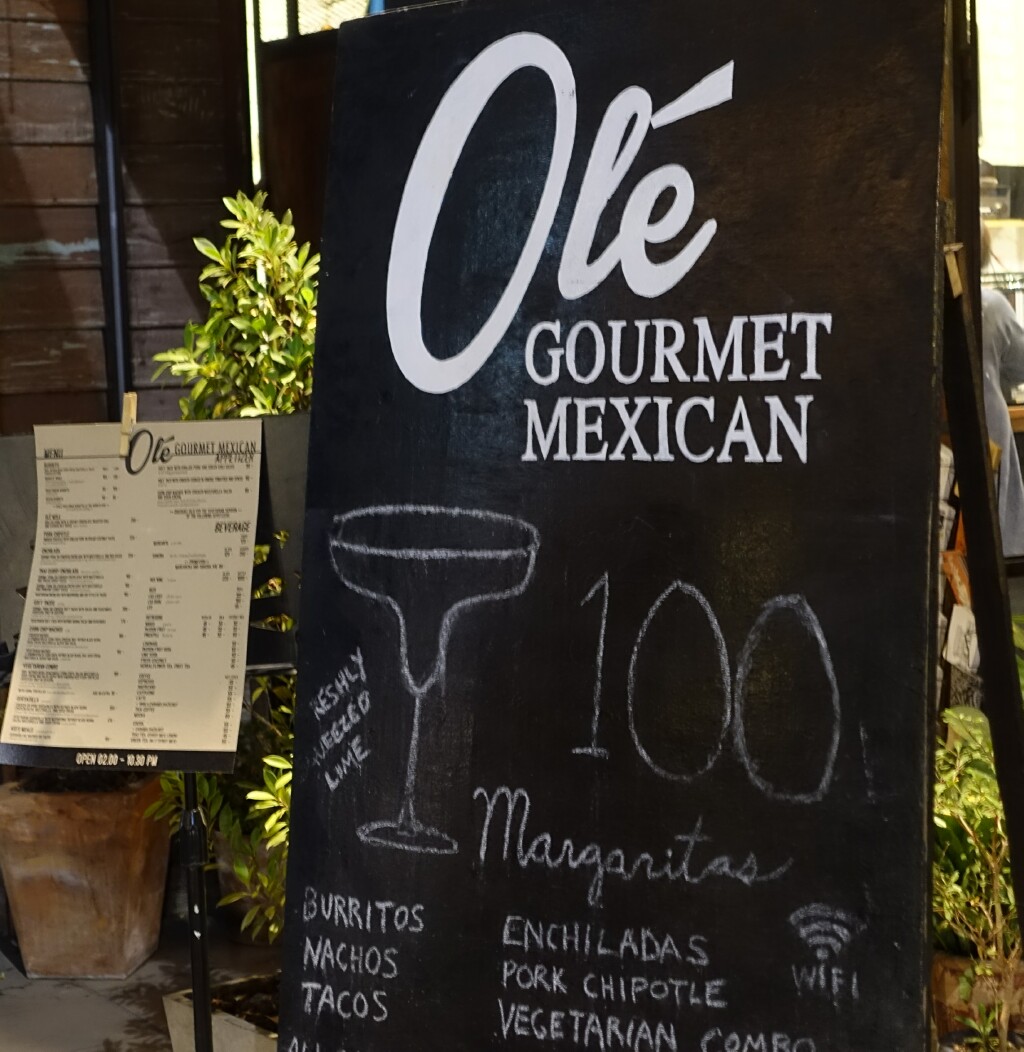
The Ole’ sign and simple menu. Owned by the woman who owns Bird’s Nest Cafe’, both serve organic, locally-sourced food.
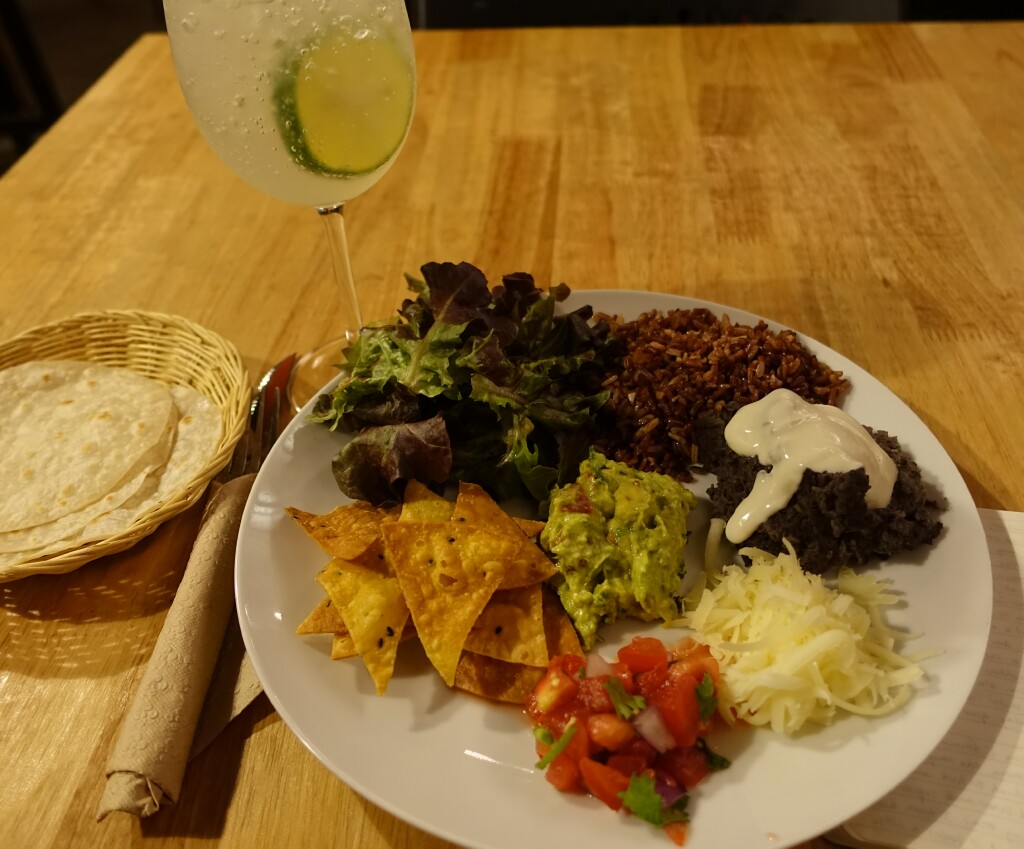
My dinner was a lime soda (soda-water plus a generous squeeze of lime) and the vegetarian plate, the fixings to make a few small tacos. Very delicious.
Next: Hiking Up Doi Suthep

 James the Intrepid Pilgrim