January 17, 2016
Wat Phra That Doi Suthep
This temple is often called “Doi Suthep,” although that is the name of the mountain on which it is located. Doi means mountain, and Suthep is the name of the mountain. And I think “Phra That” in the name means that the temple houses some important relic of the Buddha. Wat Phra That Doi Suthep is a Royal Temple of the Second Class.
There is much mythology and legend about the temple’s founding, said to have been in 1383. Over time the temple has been expanded and made more extravagant.
White Elephant Legend
Quoting Wikipedia:
According to legend, a monk named Sumanathera from the Sukhothai Kingdom had a dream. In this vision he was told to go to Pang Cha and look for a relic. Sumanathera ventured to Pang Cha and found a bone. Many claim it was Gautama Buddha’s shoulder bone. The relic displayed magical powers: it glowed, it was able to vanish, it could move and replicate itself. Sumanathera took the relic to King Dhammaraja, who ruled Sukhothai. The eager Dhammaraja made offerings and hosted a ceremony when Sumanathera arrived. However, the relic displayed no abnormal characteristics, and the king, doubtful of the relic’s authenticity, told Sumanathera to keep it.
King Nu Naone of Lan Na heard of the relic and bade the monk to bring it to him. In 1368, with Dharmmaraja’s permission, Sumanathera took the relic to what is now Lamphun, in northern Thailand. Once there, the relic broke into two pieces. The smaller piece was enshrined at Wat Suan Dok. The other piece was placed by the king on the back of a white elephant which was released into the jungle. The elephant is said to have climbed up Doi Suthep, at that time called Doi Aoy Chang (Sugar Elephant Mountain), stopped, trumpeted three times, then dropped dead. This was interpreted as an omen. King Nu Naone immediately ordered the construction of a temple at the site.
The Temple
Starting from the road, there are 309 steps to the level of the large gold chedi. I have counted several times and get 307 most of the time.
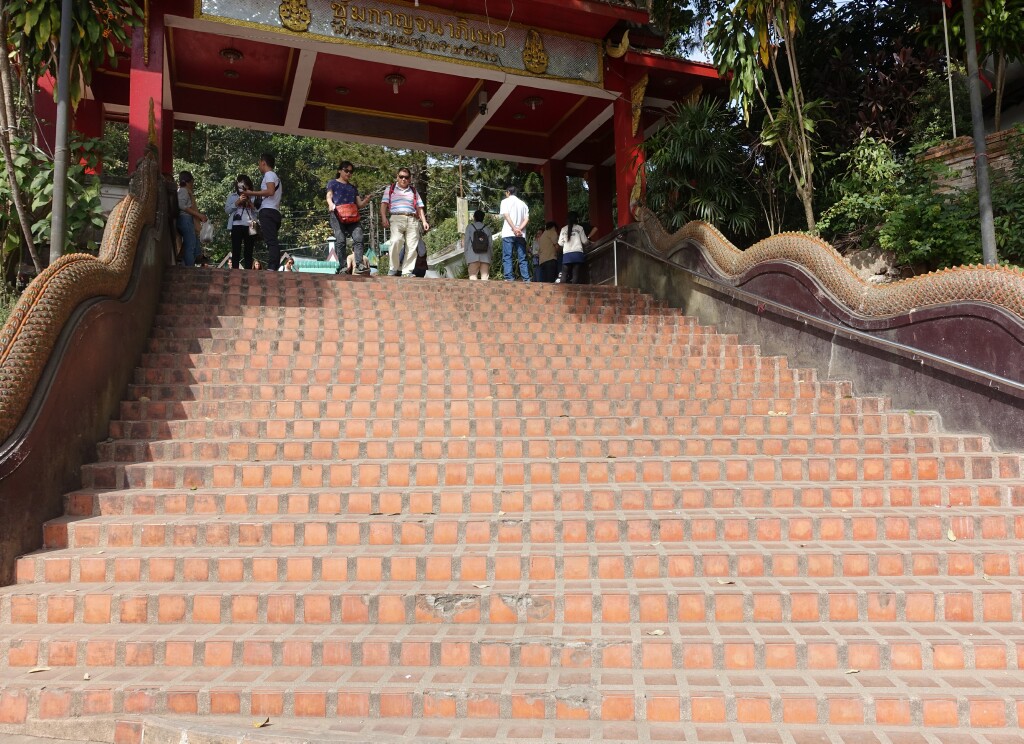
Start of the stairs up to Wat Phra That Doi Suthep
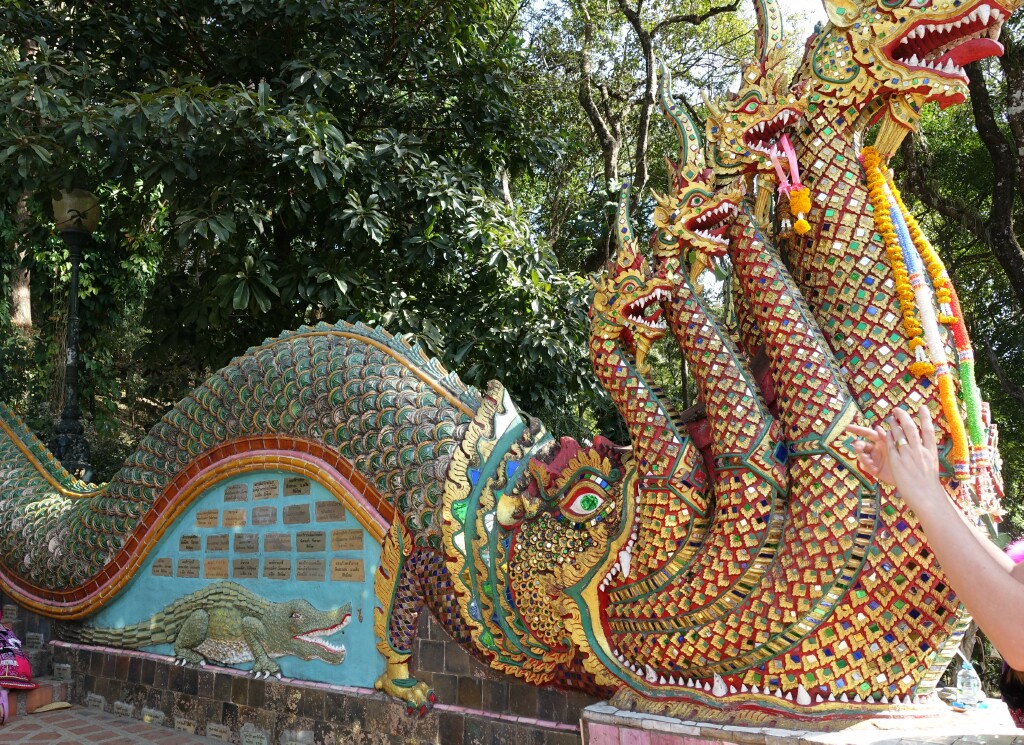
The seven-headed serpent at the base of the last long section of stairs.
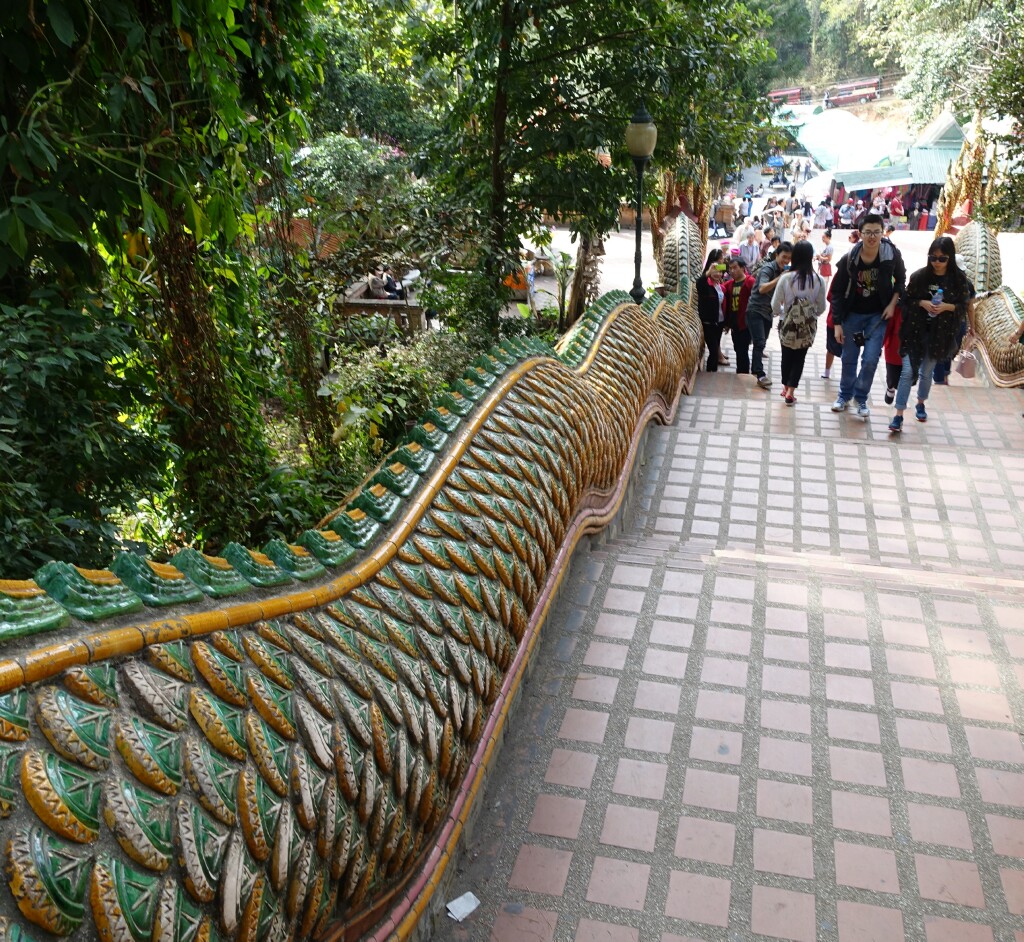
Looking back down the long section of the stairway.
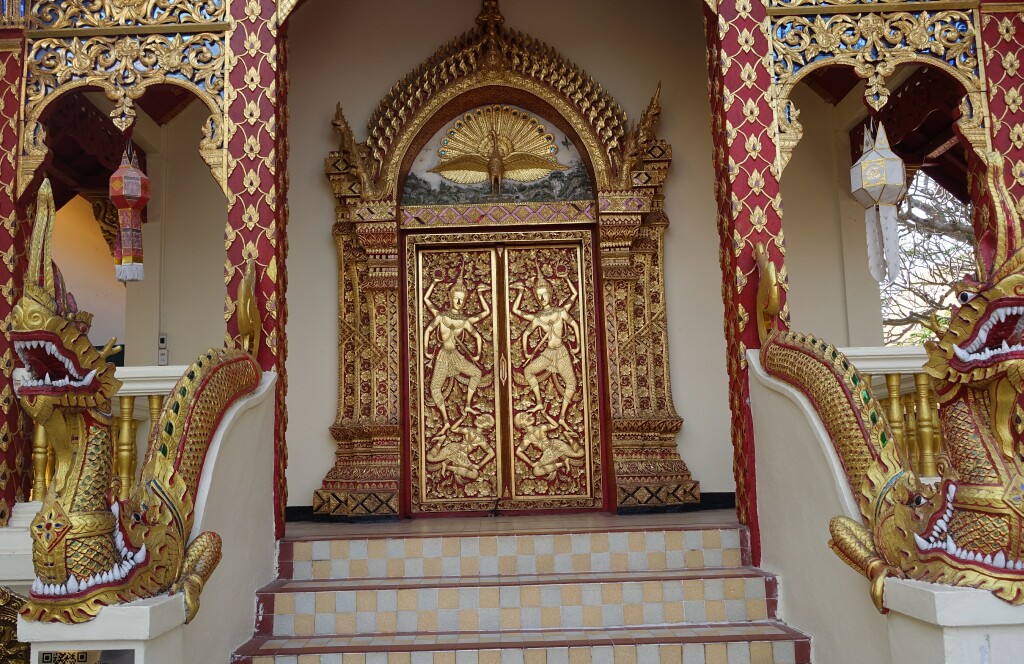 I think every time I have been here, I have taken a picture of these dancing, four-armed thewada on the doors to a viharn in the temple area. It just looks so fun.
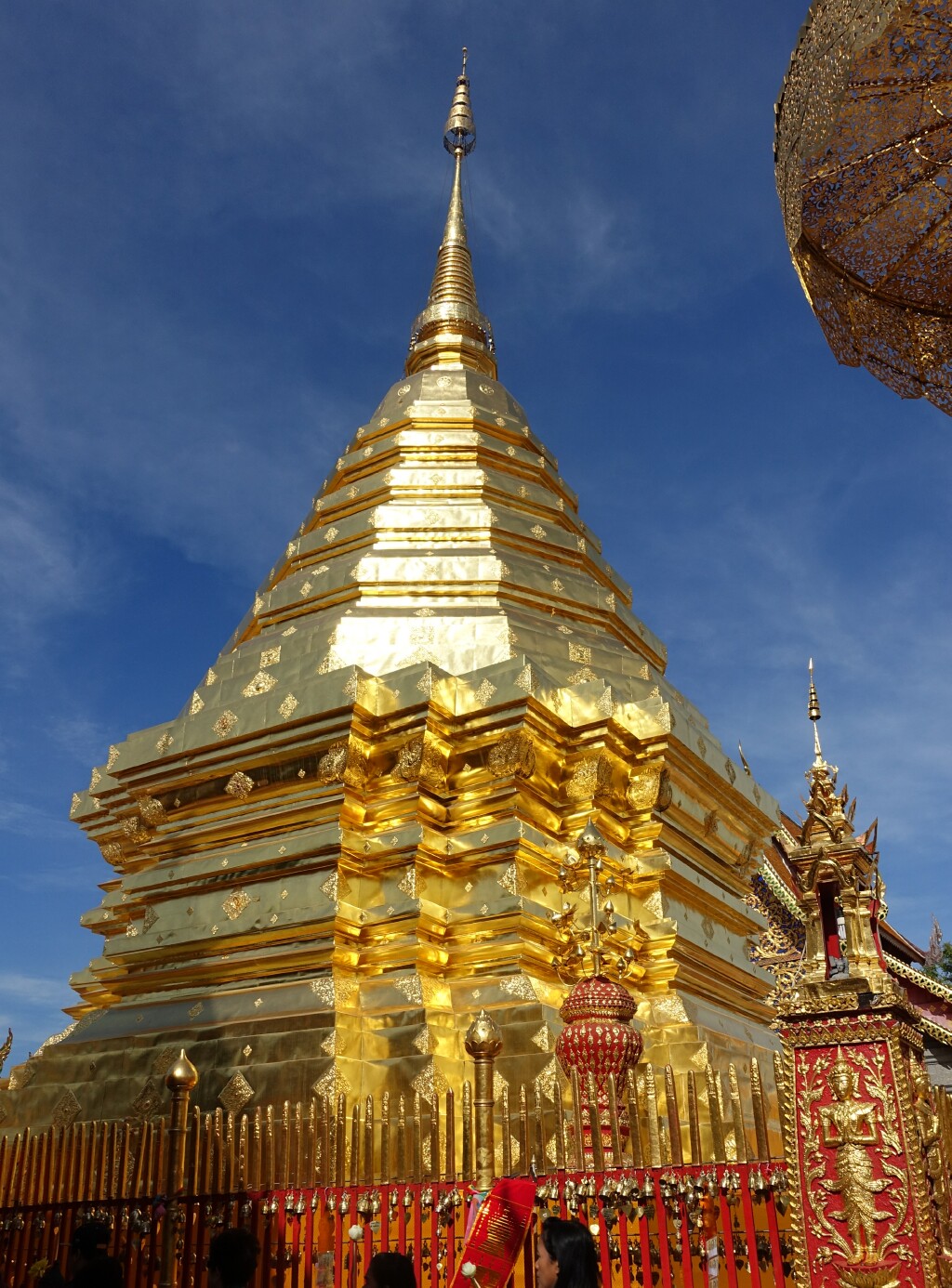
The golden chedi at Wat Phra That Doi Suthep. It is remarkable. The base is square (as opposed to round).
This area is always crowded, especially at this time of year (the high season … meaning high tourism).
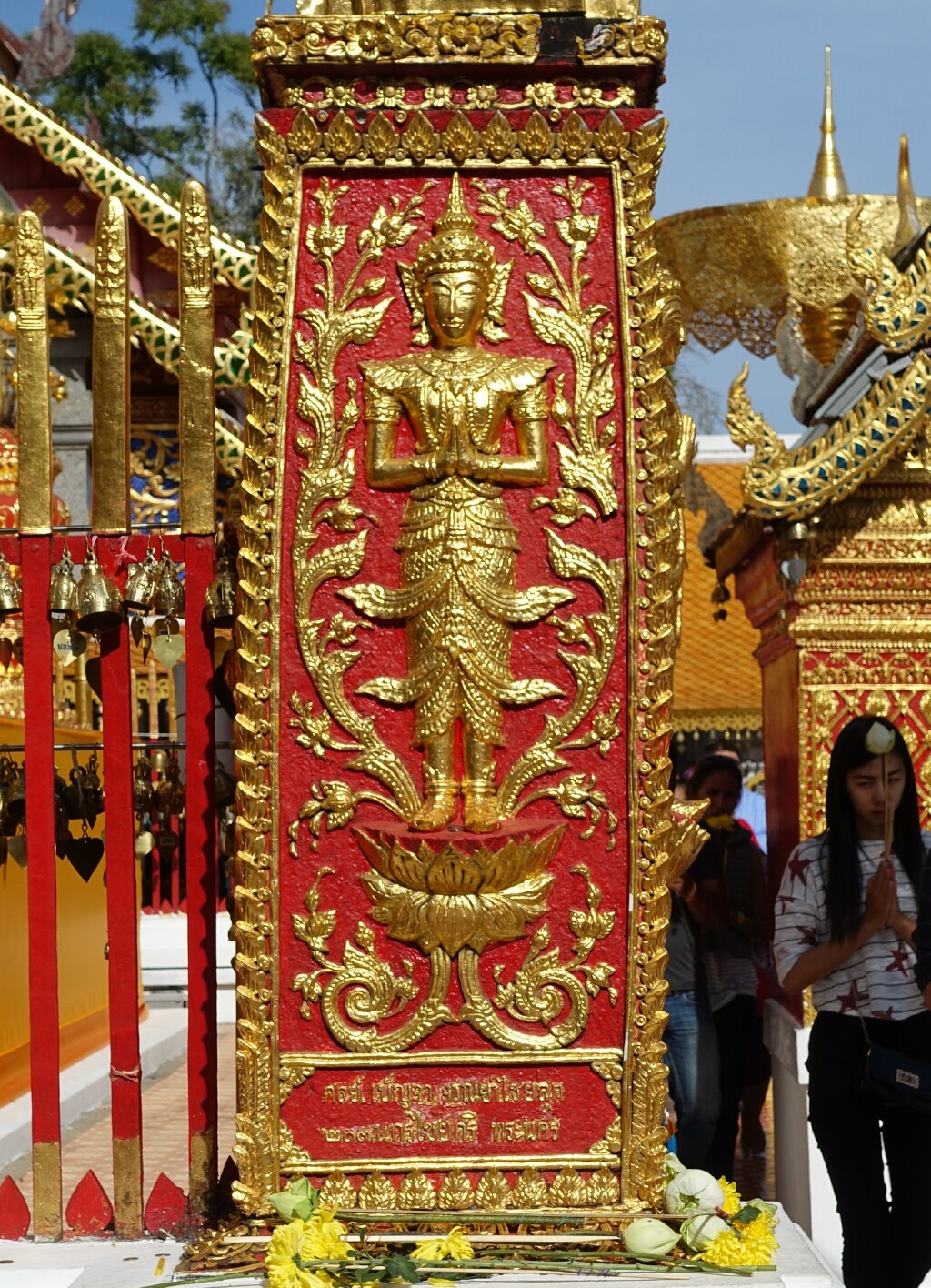
A corner post with a praying thewada.
Even with the crowds, there are always Thai people praying here. They hold a flower and walk three or seven times in prayer around the base of the chedi.
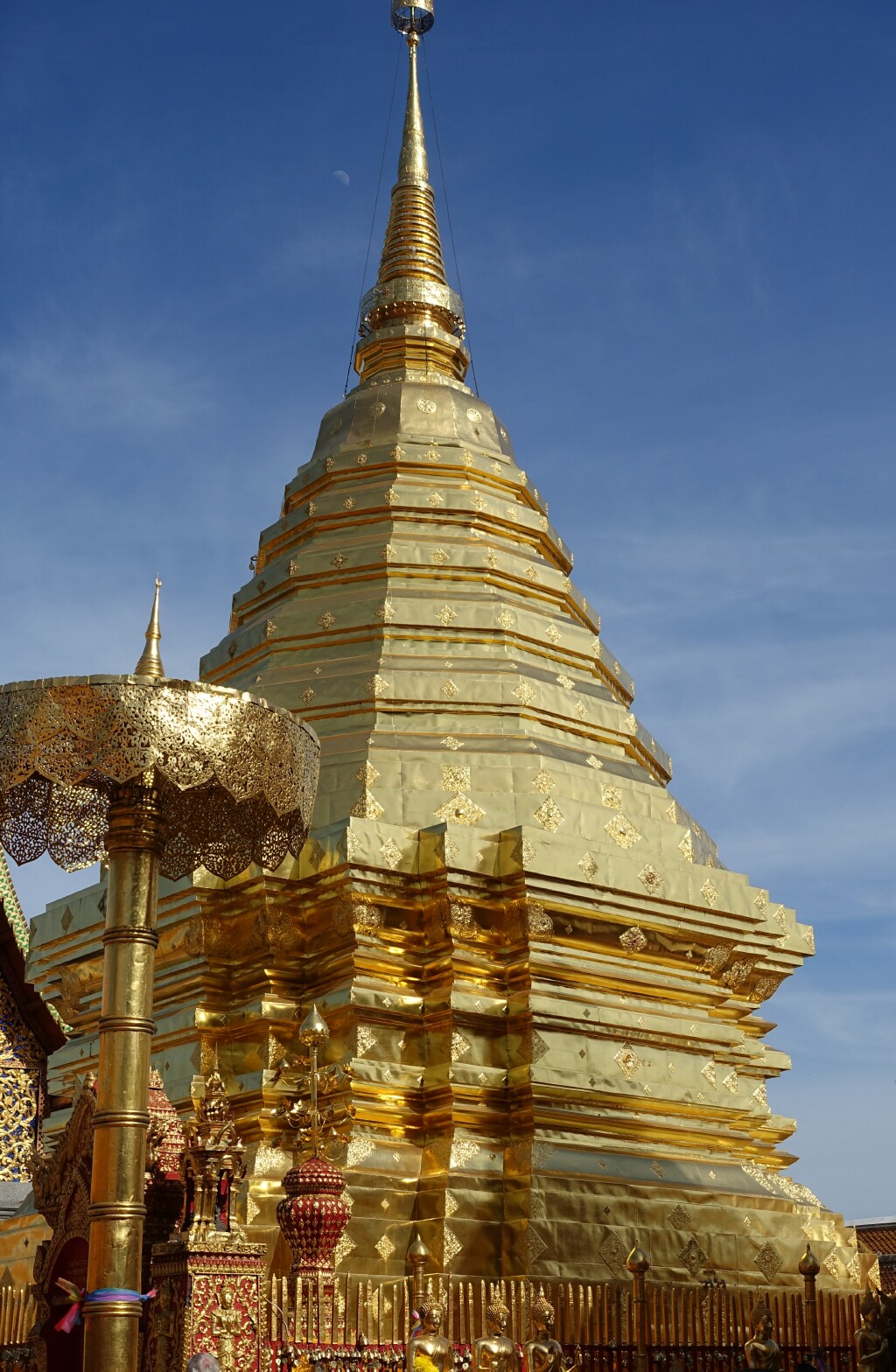
A view of the gold chedi from a different corner.
After walking around the temple area for awhile, eating my snacks and drinking water, I headed back down the mountain. Hiking down is easier, but it is steep and at times precarious. There are many leaves, and one must be careful to avoid slipping.
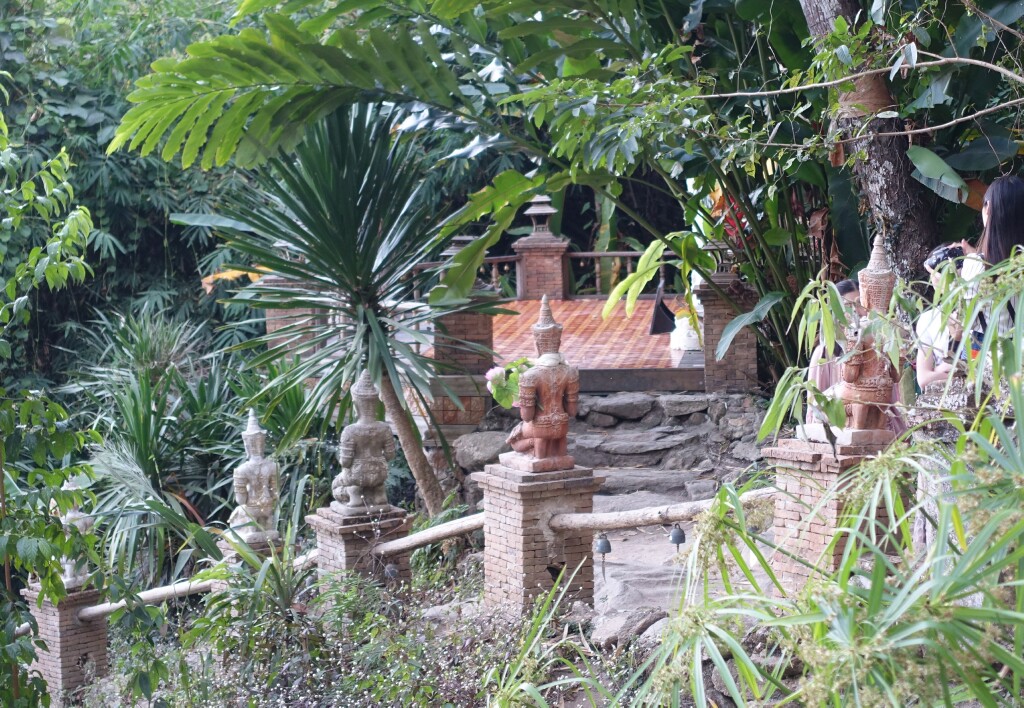
I got to and crossed the road, and then I was back at Wat Phalad where part of the trail is lined with these kneeling thewada.
From there is was another 30 minutes back down to the trail head, then another hour or so back past Chiang Mai University, past Wat Suan Dok, into the old city through Suan Dok Gate, and eventually back to 3-Sis. According to my fitbit, it has been a 28,500 step day.
It is Sunday, and the Sunday Night Market. After a shower and a change of clothes, I got a foot massage to end the day.
Next: Wat Chedi Luang at Night

 James the Intrepid Pilgrim