January 2, 2016
Early Morning at Wat Chedi Luang
My pattern in past visits is to go to Way Chedi Luang in the early morning for a morning meditation in the shadow of the large chedi (pagoda). The mornings are cool, and because traffic and tourists are not yet in full force, it seems very peaceful.
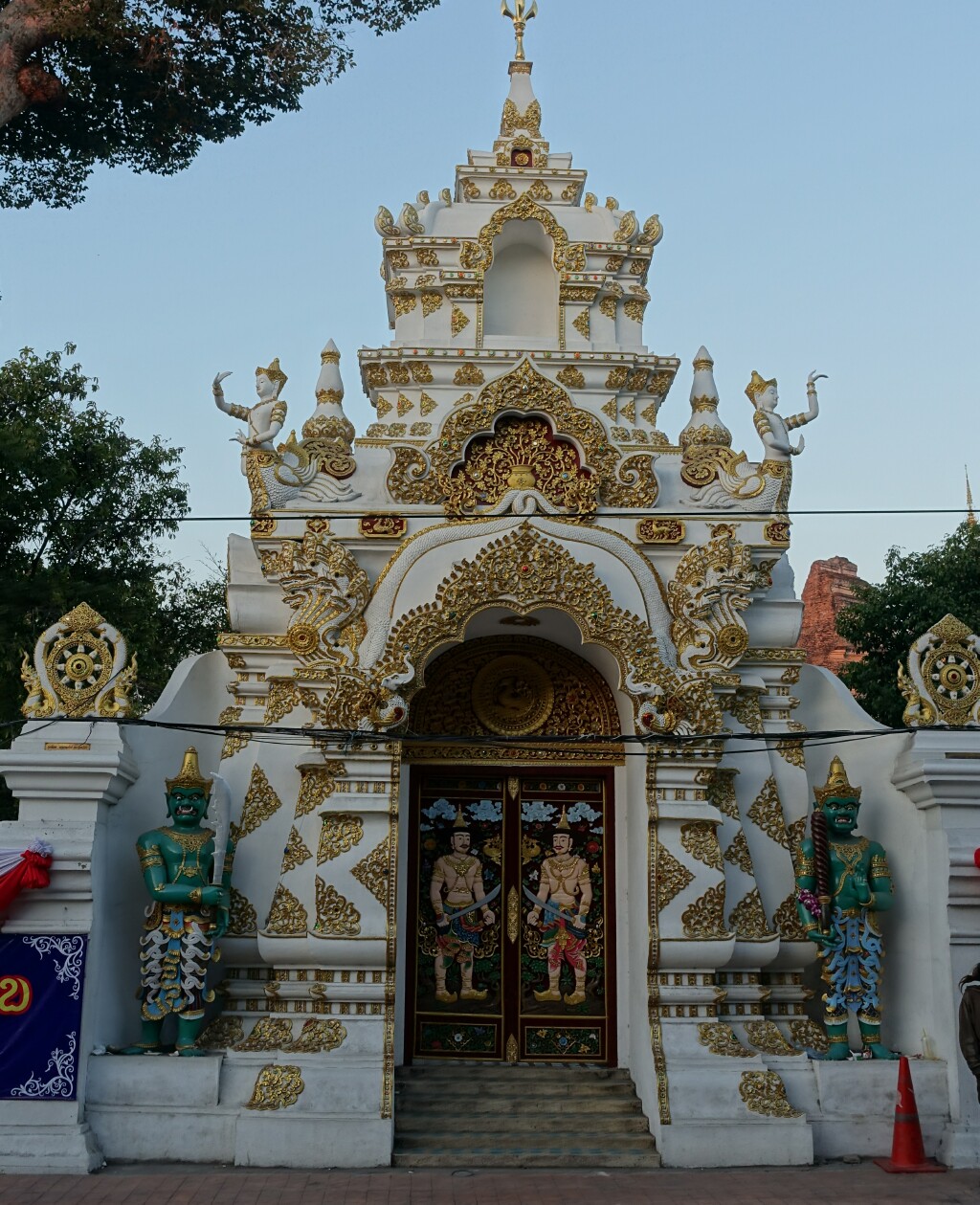
Being early (about 6:30 AM), the doors of the new pedestrian entrance are closed, and I enter through the main vehicle entrance. The new pedestrian entrance was under construction last year when I was here, and was completed shortly after I left. It is beautifully artistic and almost ceremonial in its look.
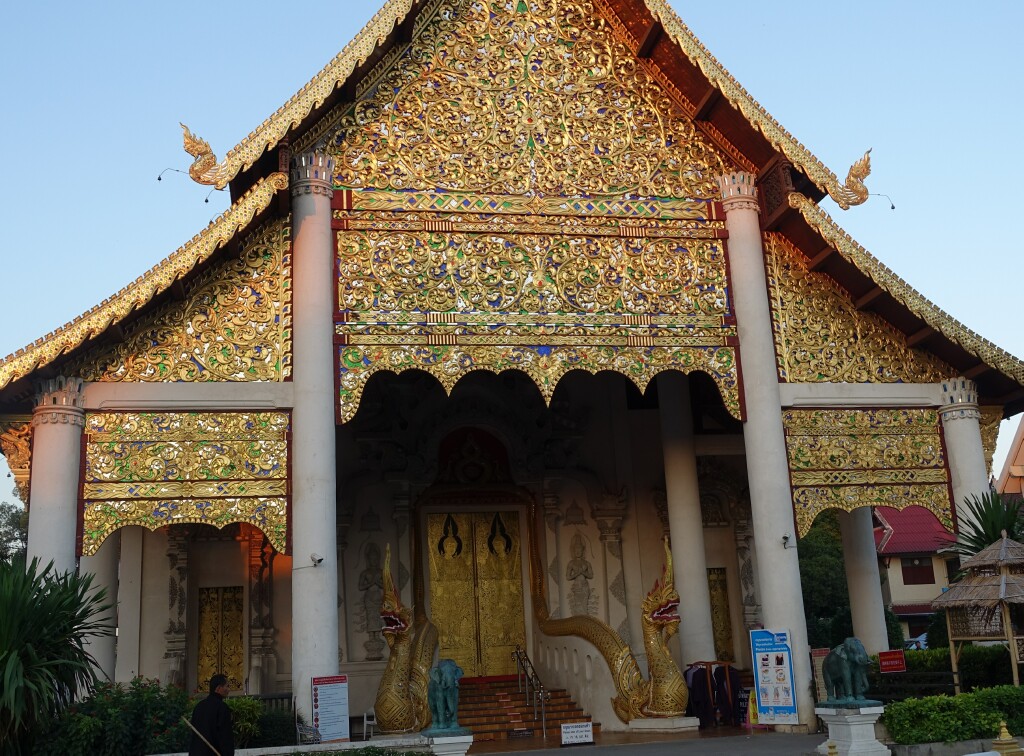
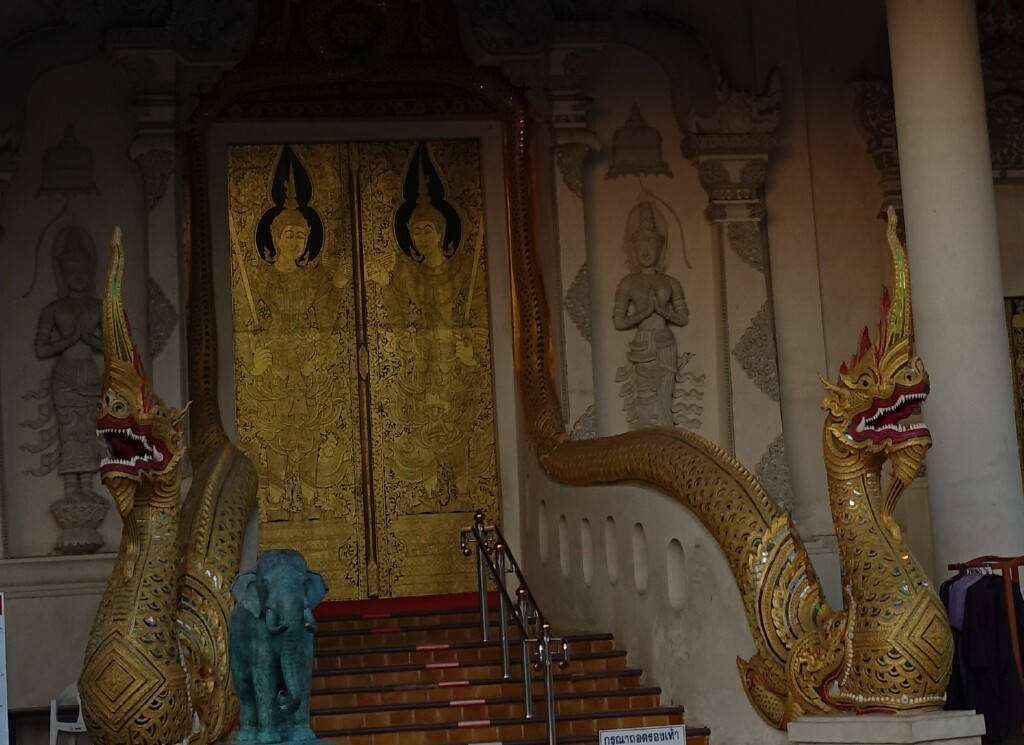
The doors of the large viharn (worship hall) are also closed this early. The paintings of the thewada (angelic beings that live in the heavenly realms…angels) on the doors are visible. The temples in northern Thailand are much more exuberantly artistic in style than the comparatively subdued temples in central Thailand (Bangkok). On the central Thai temples, there are no naga (dragon-like serpents) on the stairway banisters, no other creatures, and no paintings or other depictions of thewada on the doors or walls.
Central Thailand and Northern Thailand were two different countries until the 19th century. Northern Thailand was a country called Lanna, and there is Burmese influence in the structures as the Burmese were in control from the mid-1500s for almost 200 years. Then in the late 19th century, Lanna and Siam merged as western interests in the vast northern teak forests grew larger. Siam officially came to be known as Thailand in 1949.
I’ll get a better picture of the thewada and naga soon – they are beautifully artistic.
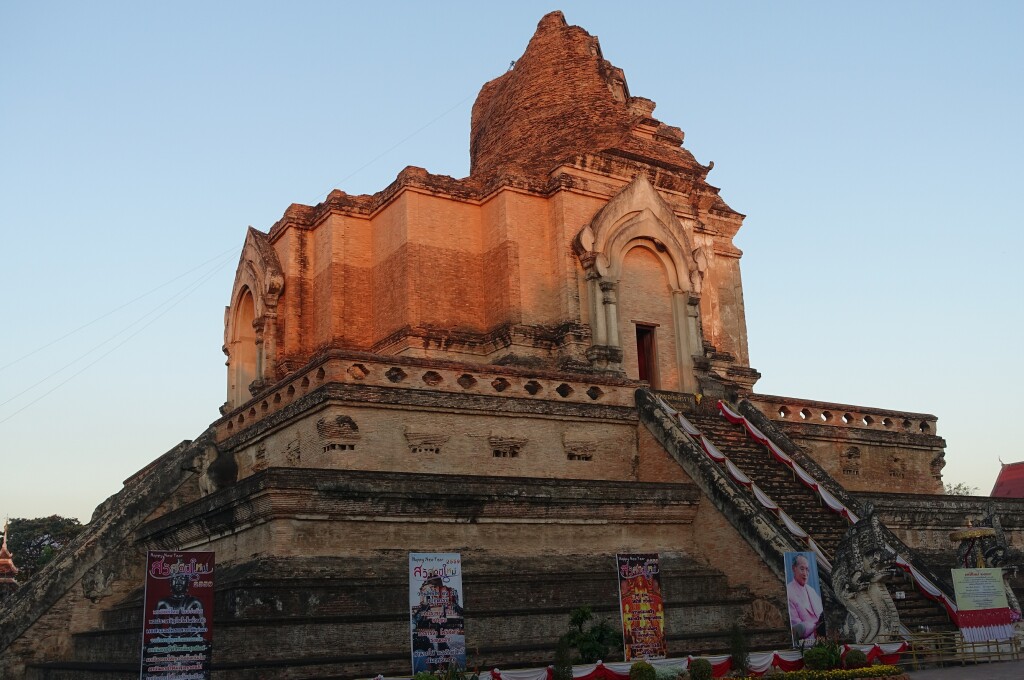
The doors of almost all of the viharn (worship halls) open to the east to greet the rising sun. If a temple has a chedi (pagoda), it is almost always at the back of the main viharn (some temples have more than one viharn…there are no set rules). I walk around the viharn, and there is the chedi at Wat Chedi Luang in the early morning sun, simply beautiful. It is strong, powerful, and large. Construction of the chedi started in the 14th century and was finally completed in the mid 15th century. In 1468, the Emerald Buddha was installed in the eastern niche (what looks like a door at the top of what almost appears to be stairs in the picture). This chedi was the largest structure in Lanna for hundreds of years. In 1545, the top was destroyed by an earthquake. There have been a few restorations, but the top is left unfinished as there is no documentation of how it looked, and to restore it improperly would be to dishonor it.
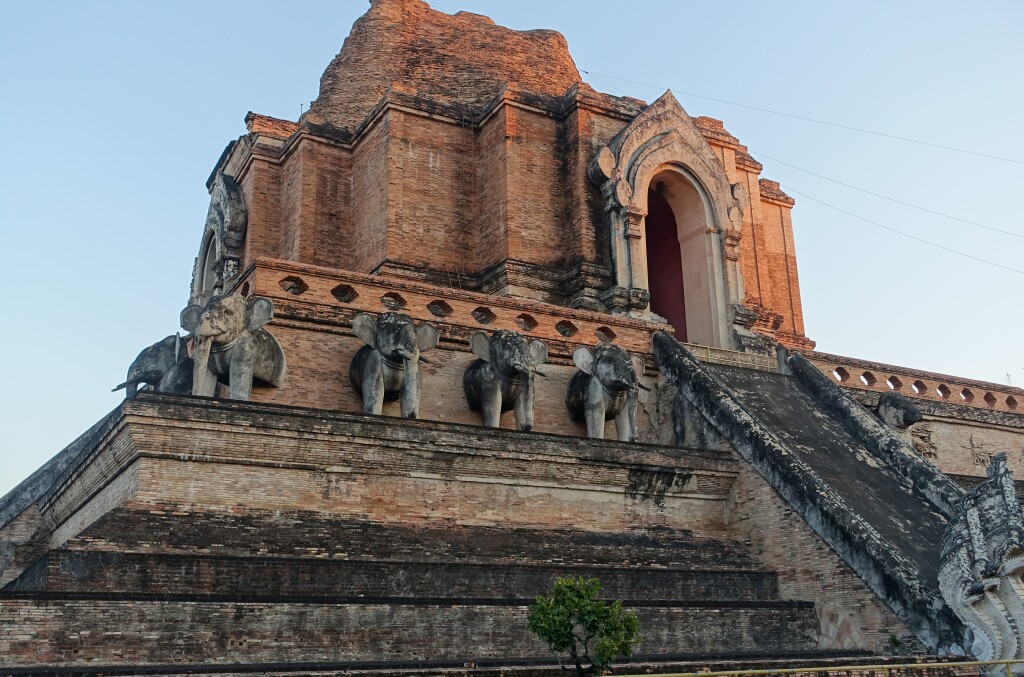
I sit in almost the same place each morning for my meditation, and this is my view, looking almost directly north.
Next: Another Walk Around the Wall

 James the Intrepid Pilgrim