Friday 24 January 2015 Last Day Walk
Last night in the lobby of the 3-Sis Guest House, I met a brother and sister from Washington State (my home state), and I saw them again today at breakfast. They are just starting a short leisure visit to Chiang Mai after couple weeks of business elsewhere in SE Asia. I told them of my plans to visit a few of my favorite temples being that this was my last day for this visit to Chiang Mai, and they asked to come along.
Wat Chedi Luang
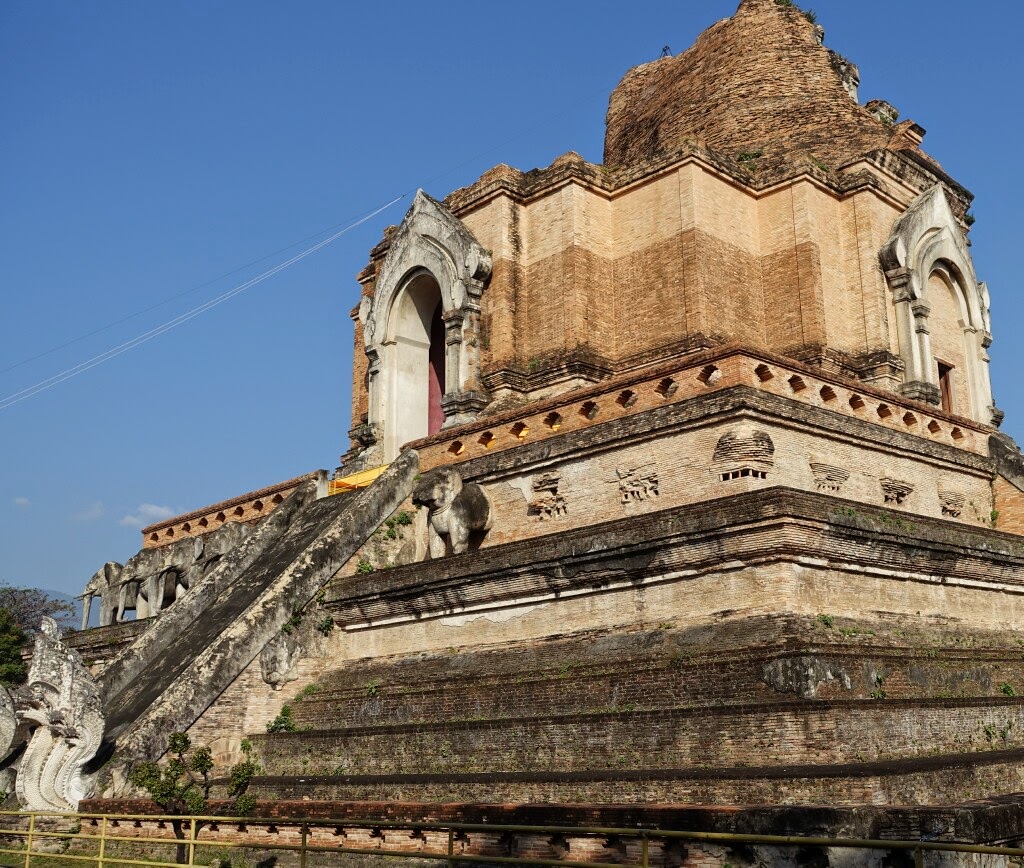
We first walked across the street to Wat Chedi Luang. They were both very impressed with the old chedi, the site of my daily morning meditation for the past month.
I’ll miss sitting in meditation next to this chedi every morning. Being over 550 years old, and surviving major damage by an earthquake 470 years ago, it is majestic, feels powerful, and strong. Every day I see people just drawn to it, as am I. Wat Chedi Luang is an unforgettable icon of Chiang Mai.
The Three Kings Monument
We walked about 400 meters north to the Three Kings Monument. These are the three kings who built Chiang Mai. and the monument is practically in the center of the old city.
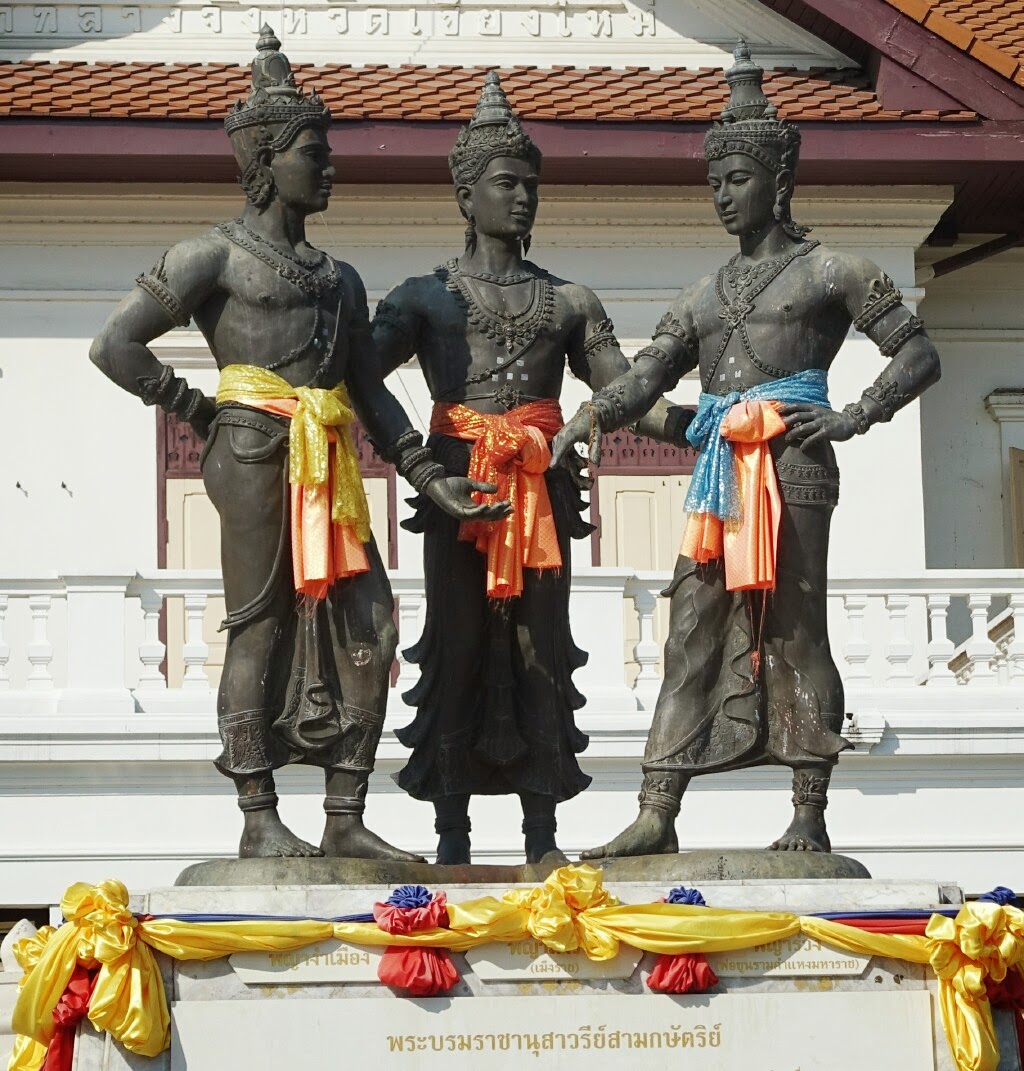
King Mengrai, the founder of Chiang Mai in the center; his contemporary and reportedly good friend King Ramkamhaeng of Sukothai on his right; and King Ngam Muang of Payao on King Mengrai’s left. It almost looks as if King Muang is pointing as if to say, “Here is where we shall build the new walled city.” I just love their attitude!
Many people miss the museums. There is a historical museum behind the monument, and a cultural museum across the street from the monument. Both museums are very good and rich with information.
Wat Lok Molee
Just outside the moat on the north, and about 300 meters west of Chang Puak Gate (the only gate on the north side of the wall, originally only for royalty to enter the old city) is Wat Lok Molee.
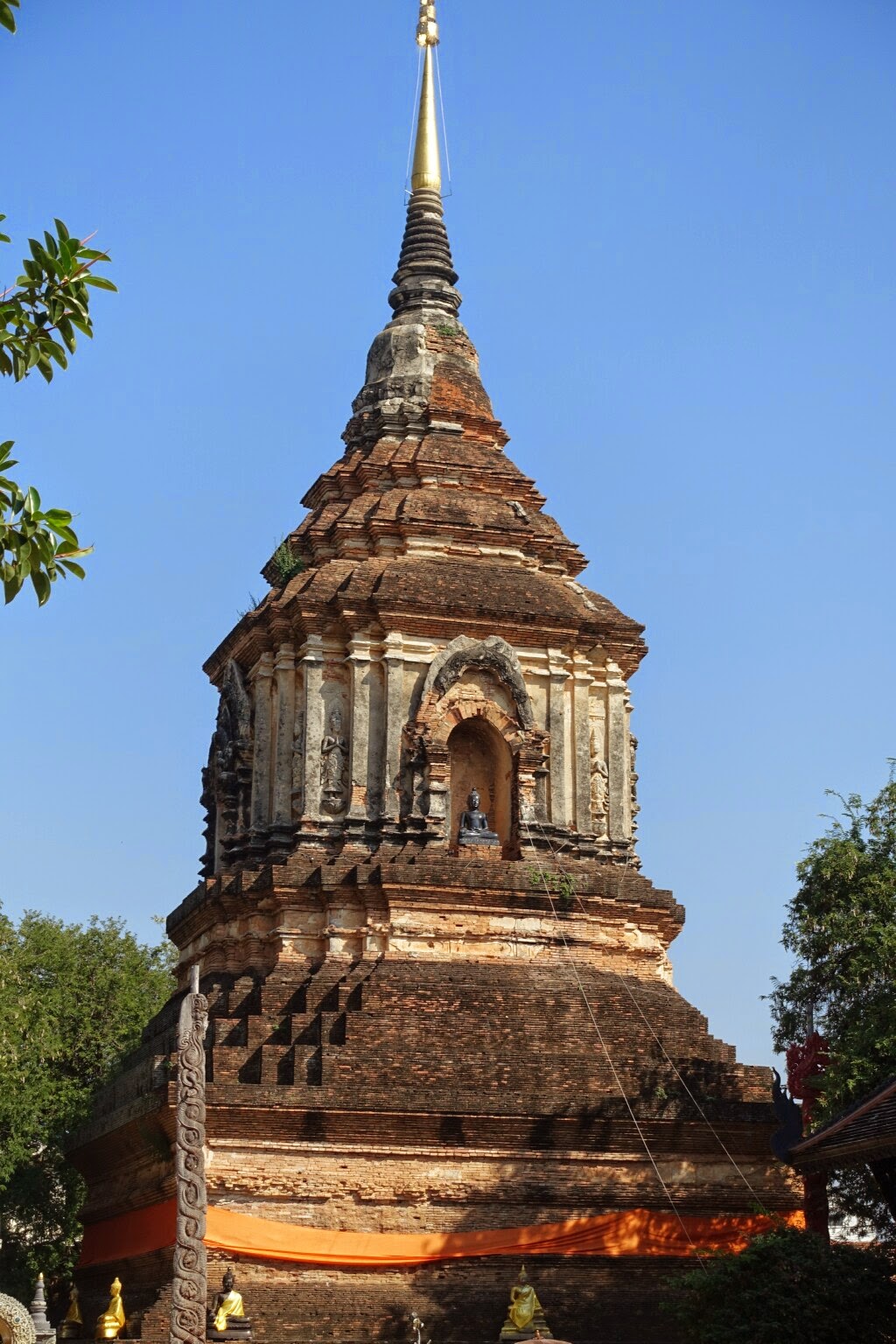
This is a temple that is almost as old as Chiang Mai. My understanding is that this temple was originally built by King Mengrai and in the large chedi is enshrined the remains of King Mengrai’s family.
The chedi is large, tall, and majestic.
The buildings are newer, having been rebuilt much more recently.
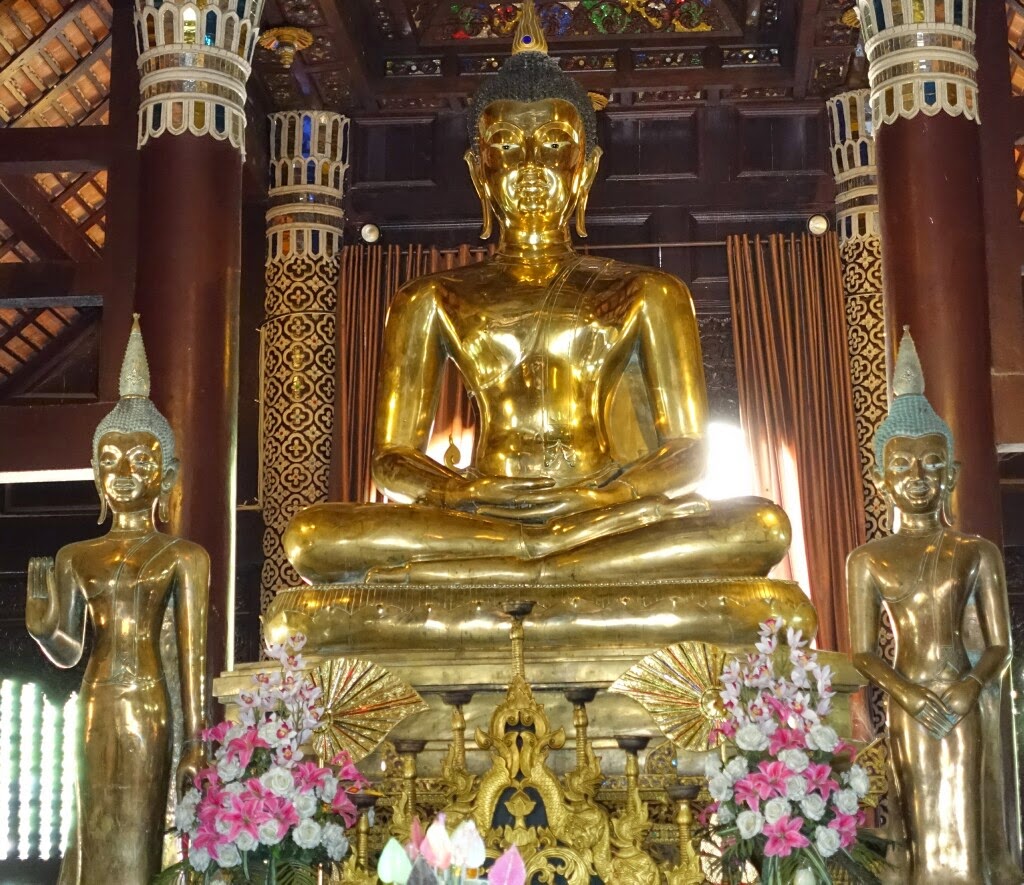
The beautiful teak viharn (worship hall) is especially unique in that it opens to the south, while almost all temple viharn open to the east to greet the rising sun. This is a picture of the large Buddha in the viharn, one of my favorites in Chiang Mai.
Wat Chiang Man
Wat Chiang Man is the oldest and first temple built in the Chiang Mai walled city, having been built in 1297 by King Mengrai and used as his encampment as he supervised the construction of the new capital city Chiang Mai.
The two main viharn are nice. The larger viharn was renovated in the 1920s, and the smaller houses two important Buddha statues. One of these is the Crystal Buddha (Phra Kaew Khao), about 10 cm high, carved out of a clear quartz crystal. with the gold covered wooden base and colden canopy, there are 6 kg (!) of gold in the base and canopy of this statue. The second sgnificant Buddha statue is stone, depicting a standing Buddha while taming an elephant. It is likely from Sri Lanka from the 8th or 10th centuries. It is supposed to have rain-giving powers.
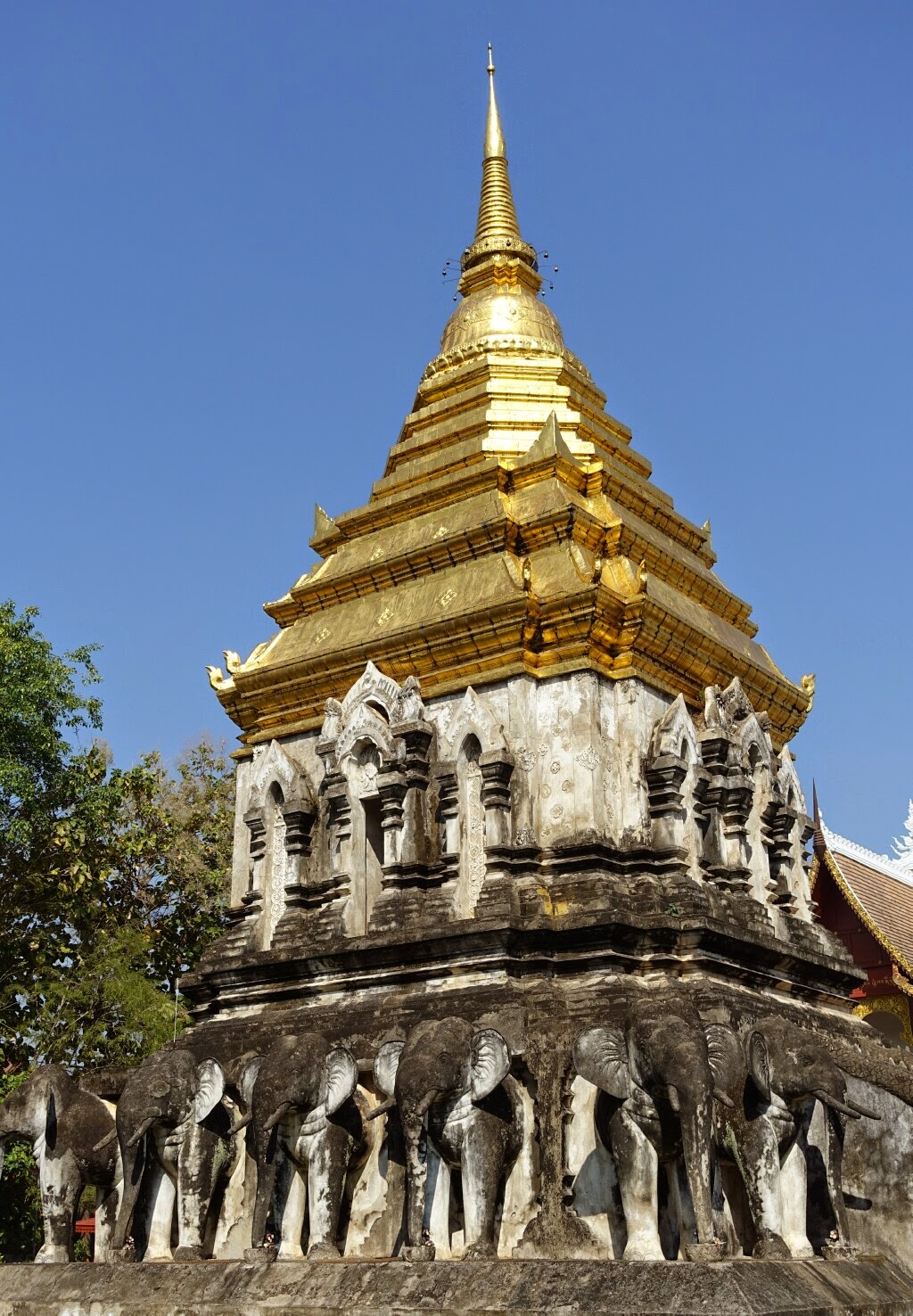
One of the most significant icons of Wat Chiang Man is the chedi in the back of the main viharn. Often called the “elephant chedi” it has a square base on which 15 life-sized elephant statues appear to be holding up the upper tiers on their backs.
A striking and memorable part of Chiang Mai’s history (but there is no shortage of memorable parts of Chiang Mai’s history).
After Wat Chiang Man, it was time to return to The 3-Sis, get a shower, change clothes, finish packing, and check out.
And after checking out, I found the brother & sister down the street at a cafe, told them I was going to two more of my favorite temples for my last day, and they decided to come along. These are farther away, so we hired a red truck, also called a songthaew. These are typically shared-ride taxis, but can be hired for privat trips, as well.
Wat Jed Yod
Our first stop was Wat Jed Yod, sometimes spelled Wat Chet Yot in English … a Year of the Small Snake temple. Jed is seven, and Yod can mean spire. On the main viharn (worship hall) are seven stone spires. Wat Jed Yod is a very old temple, dating to about 1455. The design of the temple and grounds is a copy of the Mahabodhi temple in Bagan, Burma, which is in turn a copy of the Mahabodhi Temple of the Bodh Gaya in northern India, the location where the Buddha attained enlightenment. King Tilokarat planted a bodhi tree at Wat Jed Yod in 1455, and 20 years later had established a large sanctuary in the monastery, likely to celebrate or commemorate 2000 years of Buddhism. The following year, in 1477, the 8th Buddhist World Council was held at Wat Jed Yod.
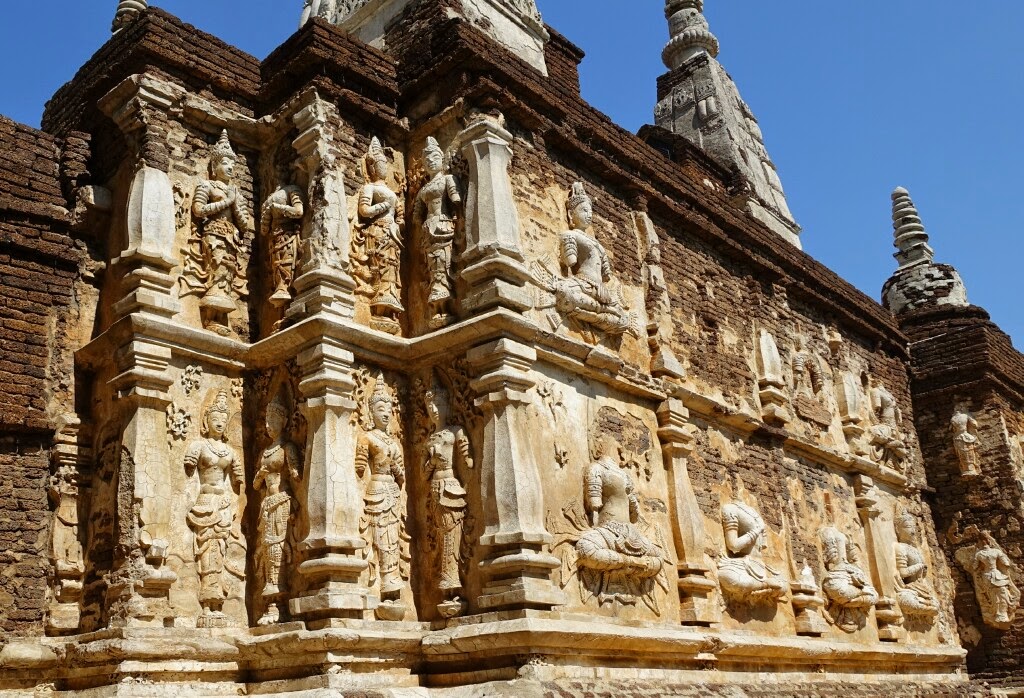
I have been to Wat Jed Yod many times, and my favorite of the many structures is the carved thewada (angelic beings that live in the heavenly realms) on the sides of the main viharn. They are carved in stucco, over 500 years old, and still quite beautiful.
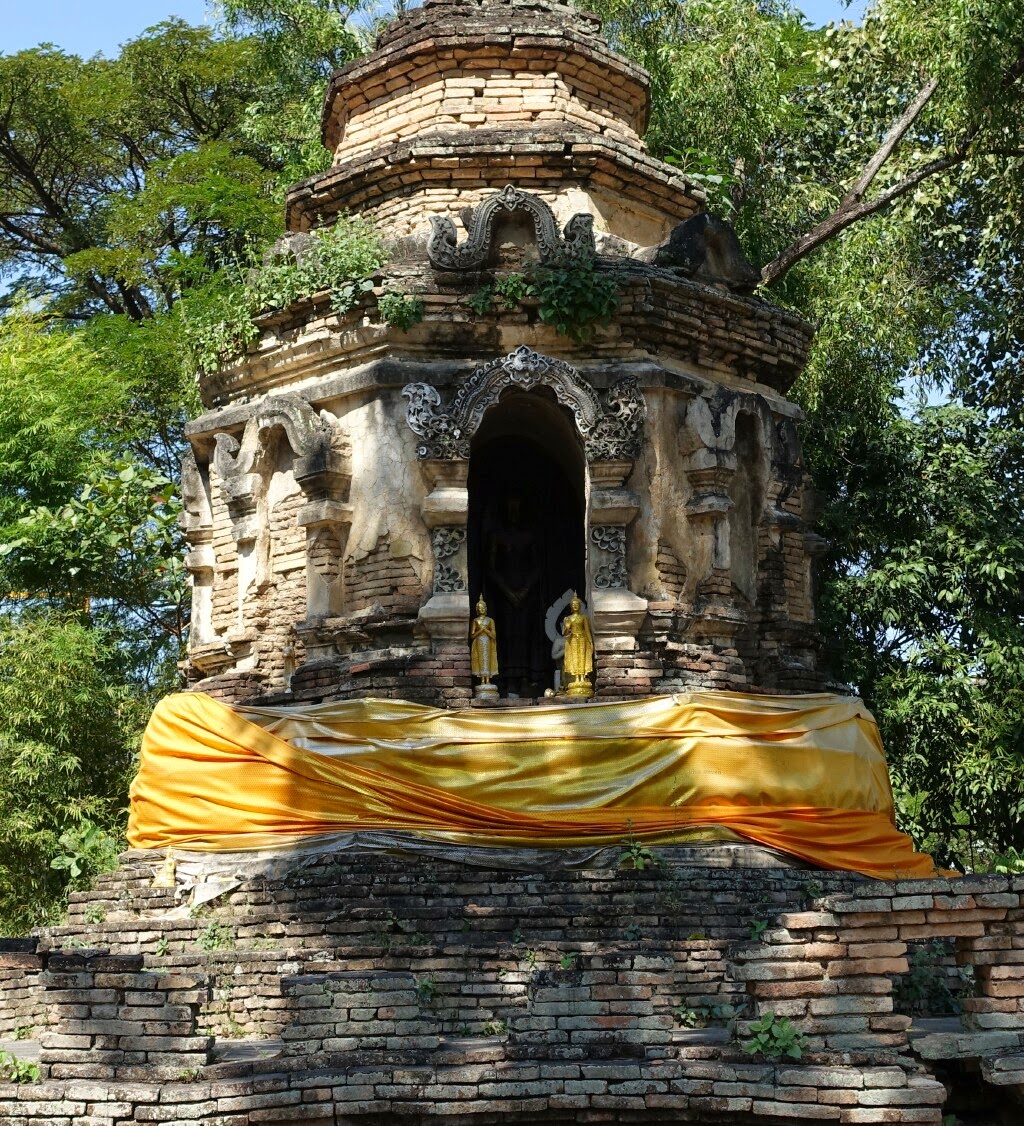
Another of my favorite structures are the three old Lanna-style chedi (bell-shaped on bases with alcoves on four sides for Buddha statues), two of which are still intact and standing, and one that is mostly gone. They all have a great presence and seem to evoke good energy.
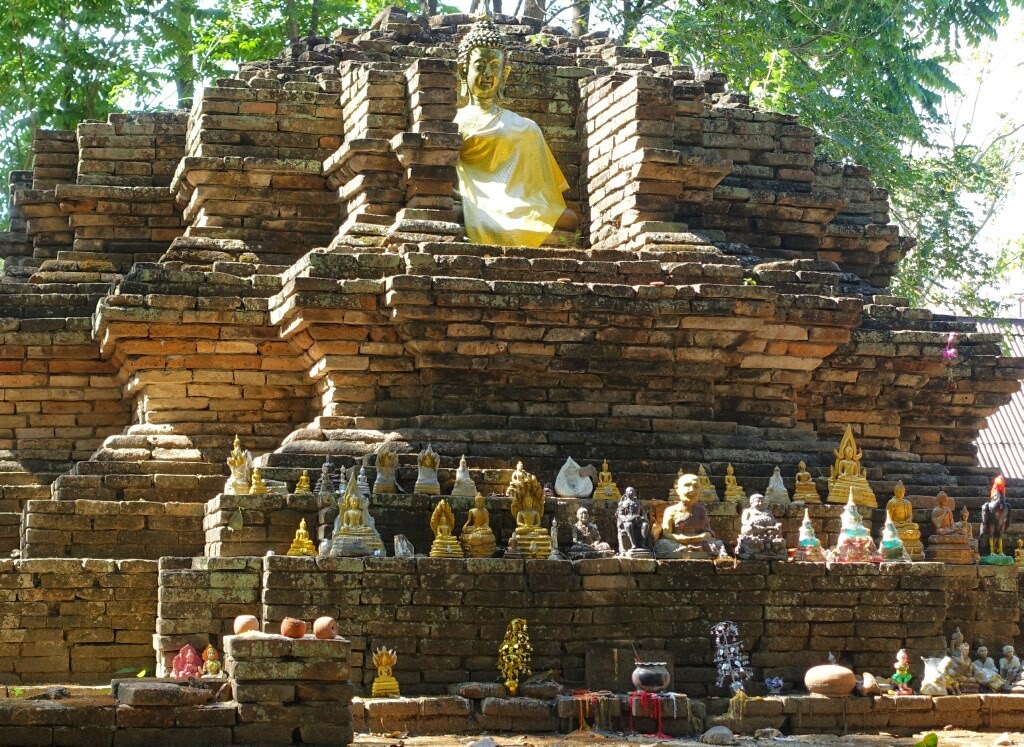
This is a picture of the chedi near the current entrance that is mostly gone, but still a place for daily prayers by many Thai people.
Wat Suan Dok
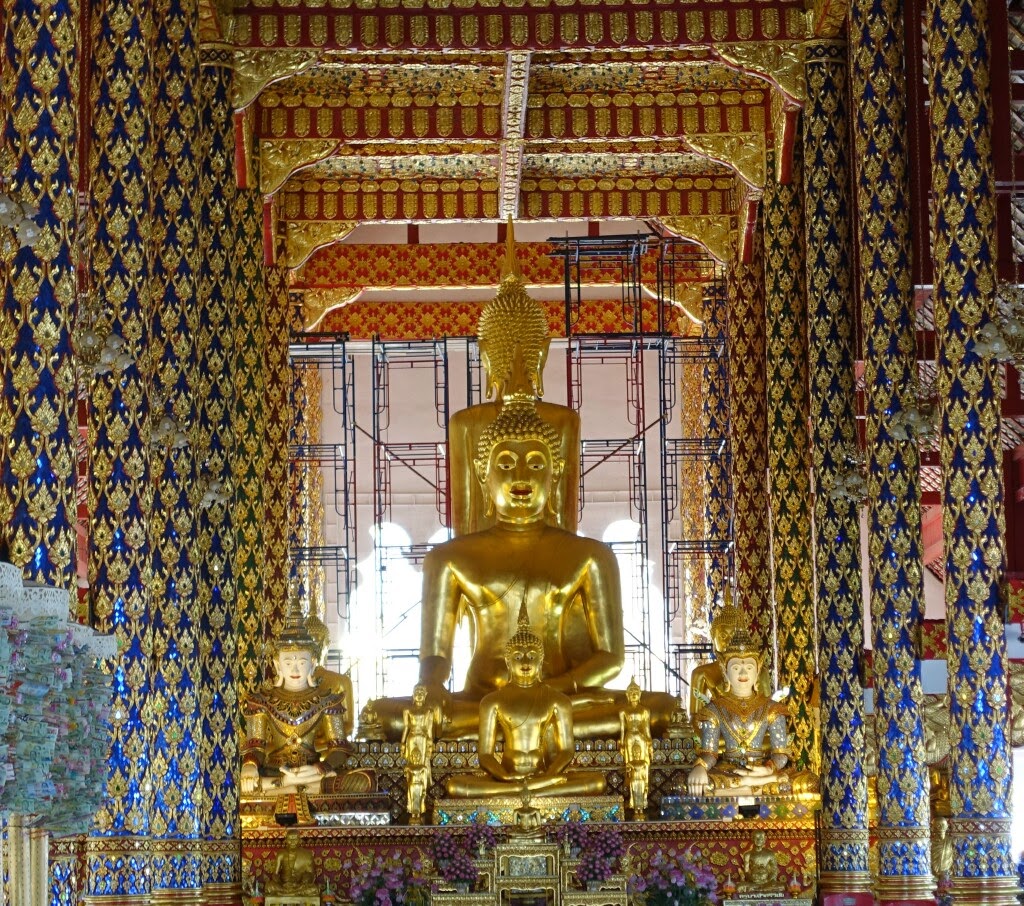
After some time wandering around the grounds of Wat Jed Yod, we headed over to Wat Suan Dok. I have been to Wat Suan Dok several times on this visit, so here are just a couple of the pictures.
The first is the inside of the large viharn. This is a very large building, and the standing Buddha facing the scaffolding in the back is about 20 meters high.
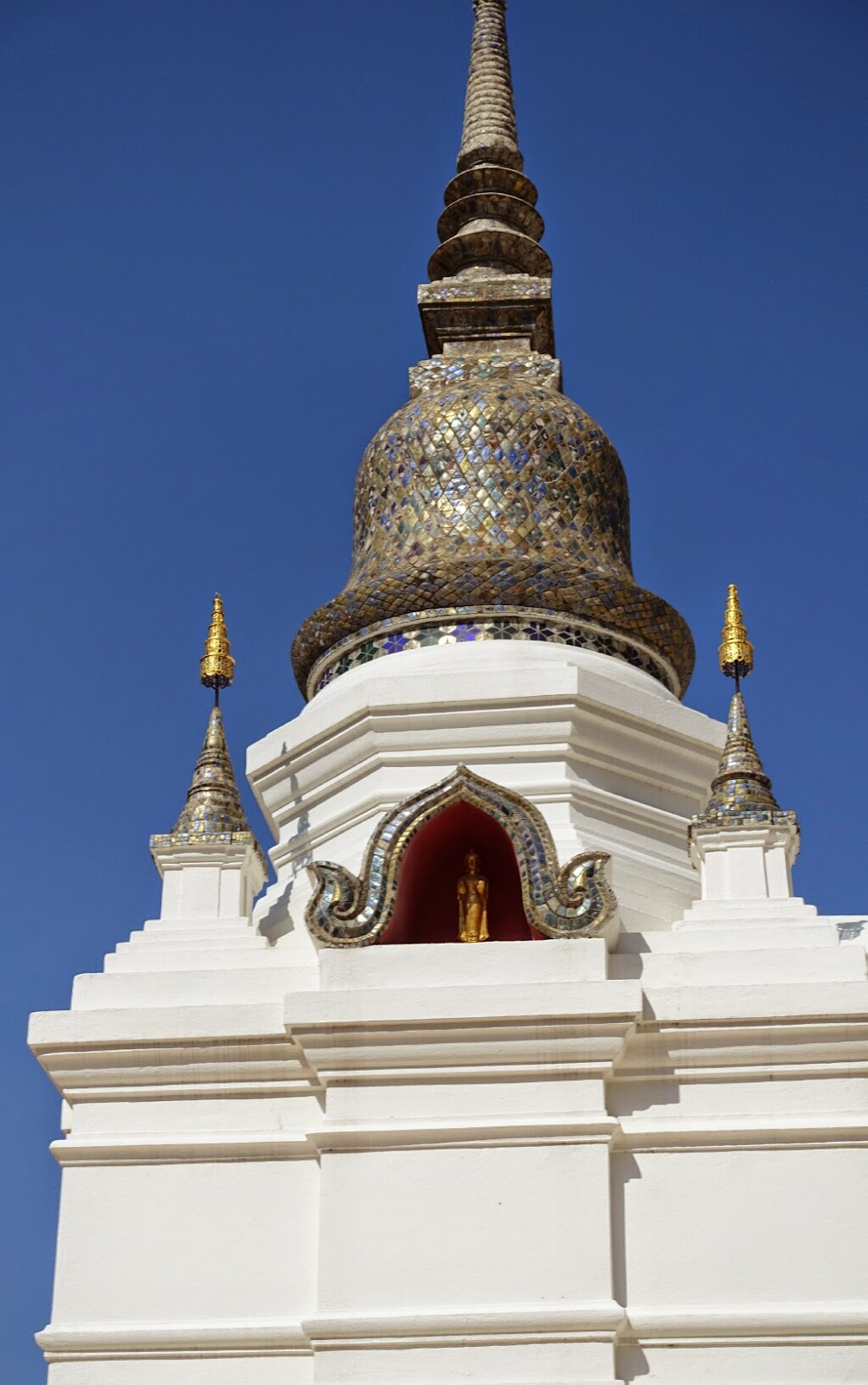
This the top of one of the secondary chedi around the large gold chedi in which the Buddha relic is enshrined. I love the textured tile making up the bell-shape top.
We headed back to the old city and short walk around, ending up at Lila Thai Massage across from Loco Elvis (the Mexican restaurant) for a nice hour-long foot massage.
I then returned to Boutique della Pasta for my final meal in Chiang Mai. It was as memorable as are all meals at Boutique della Pasta, a very good Italian restaurant.
Next: The Journey Home

 James the Intrepid Pilgrim