Friday, 23 January 2015 Last Full Day (?)
This is my last full day in Chiang Mai. All right, that is not quite true, because tomorrow the plane does not leave until 11:55 PM, so on one hand that is a full day, but I’ll only have a room until noon, and will leave 3-Sis for the airport at 8:30 PM. It is close to a full day, and today, Friday, is my last full day with a room.
The morning evolved with my normal routine. I did a morning meditation by the large chedi at Wat Chedi Luang, then had breakfast. Some shopping took most of the rest of the morning, including walking out to Blue Diamond to get some Hill Tribe coffee they sell.
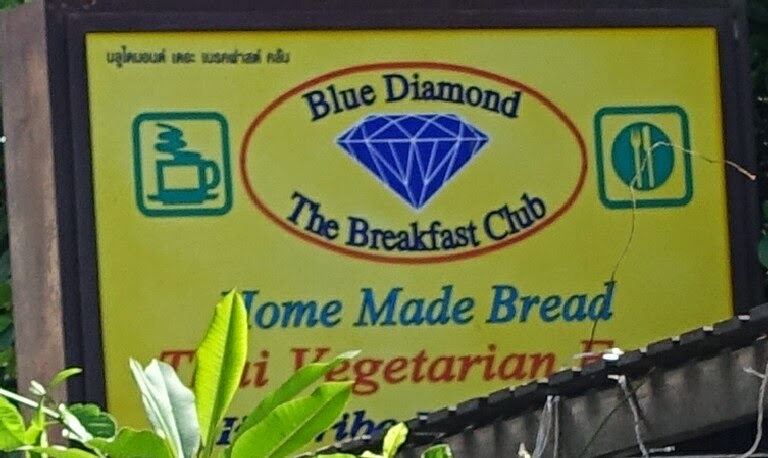
Thai coffee is so popular in Thailand that there is almost none for export, thus Thai coffee is seldom seen for sale outside Thailand. After shopping and a shower, I walked out to Loi Kroh Massage School for my last hot stone oil massage of this visit.
Wiang Kum Kang and the Temple Ruins
More than 700 years ago, King Mengrai started building his new capital city farther south and closer to the Ping River from present-day Chiang Mai. The river repeatedly flooded, much of the city was left buried in mud, and was abandoned. King Mengrai moved the location of the new city across the Ping River, farther north and farther to the west, to the location where Chiang Mai was built. The location of the old, original city is called Wiang Kum Kang. In 1984, remnants of the old city were discovered, and archaeological excavations were begun at several sites.
A year ago, my Thai friend Jo sent me two links to You-Tube videos describing the ruins of the city King Mengrai had started building at Wiang Kum Kang, This peaked my interest, and I made a mental note that if I were to return to Chiang Mai, I would want to visit the ruins at Wiang Kum Kang. I made that mental note a year ago, and in the preparations for this trip, forgot about it.
After the hot stone oil massages with Jang, we typically sit and have tea, often with other teachers from the massage school. Jang has asked me about what I like to do in Chiang Mai, and I have told her about how I like to visit the temples, learn about their history, and observe their similarities and differences in construction and artistry. At my last massage, Jang said that if I was interested in seeing the ruins of an old city pre-dating Chiang Mai in an the area south and across the Ping River, she could take me there. She told me that she lives right by some of the excavated ruins. This reminded me of Wiang Kum Kang, and when I asked her if that was the name of the ruins, she said it was the name of the rural area in which she lives, about 5 km south, slightly east of Chiang Mai, and across the Ping River. I accepted her very kind and generous offer. This seemed almost too good to be true. Not only had I almost forgotten about Wiang Kum Kang, I was going to be taken there by a friend who lives right in that area.
We rescheduled my last hot stone oil massage for 1 PM on Friday so there would be more time for me to walk around and photograph the ruins before Jang would have to come back into town for her next appointment. I made sure my camera battery was charged, and the spare battery was also charged before I walked out to Loi Kroh.
Wiang Kum Kang
When King Mengrai chose a location for the new capital city in the late 1200s, he chose the area now called Wiang Kum Kang along the east bank of the Ping River, about 5 km south and slightly east of the current Chiang Mai city center. After construction was started, the new city flooded several times and was abandoned. King Mengrai chose a new location for the city, north of Wiang Kum Kang, and west of the river, on higher ground. This new location became what is the current city of Chiang Mai. Even after repeated floods, Wiang Kum Kang was an active city during the reign of the Mengrai dynasty into the 16th century. Wiang Kum Kang was then lost from history for many years after Chiang Mai was conquered by the Burmese in 1558. The belief is that the area was more seriously flooded and finally abandoned. The old remnants of Wian Kum Kang were mostly buried under 3-6 meters or more of mud and dirt and all but forgotten.
In the late 1700s, people started moving back into the area, and it was called Chang Kham village. In 1984, the Department of Fine Arts Unit 4 discovered remnants of the old city, and archaeological excavations were begun, gradually expanding to nine locations. The Wiang Kum Kang city and/or temple archaeological ruins are in nine locations, of which I visited five.
Wat Ku Padom
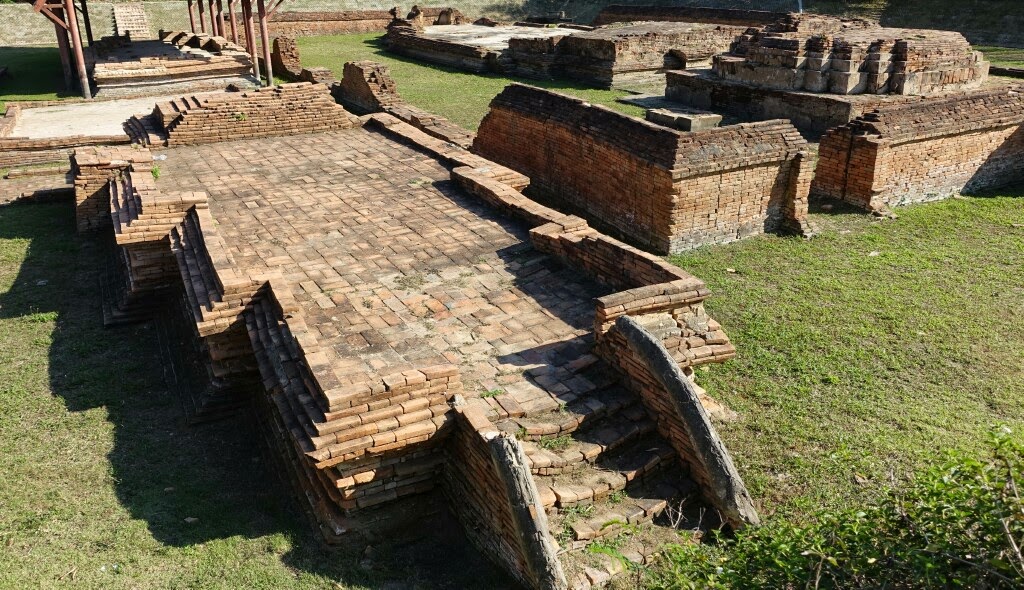
Wat Ku Padom ruins
The Wat Ku Padom location was less than 100 meters from Jang’s home in this very rural area. This particular temple is noted for having been well-preserved while being buried for more than 700 years.
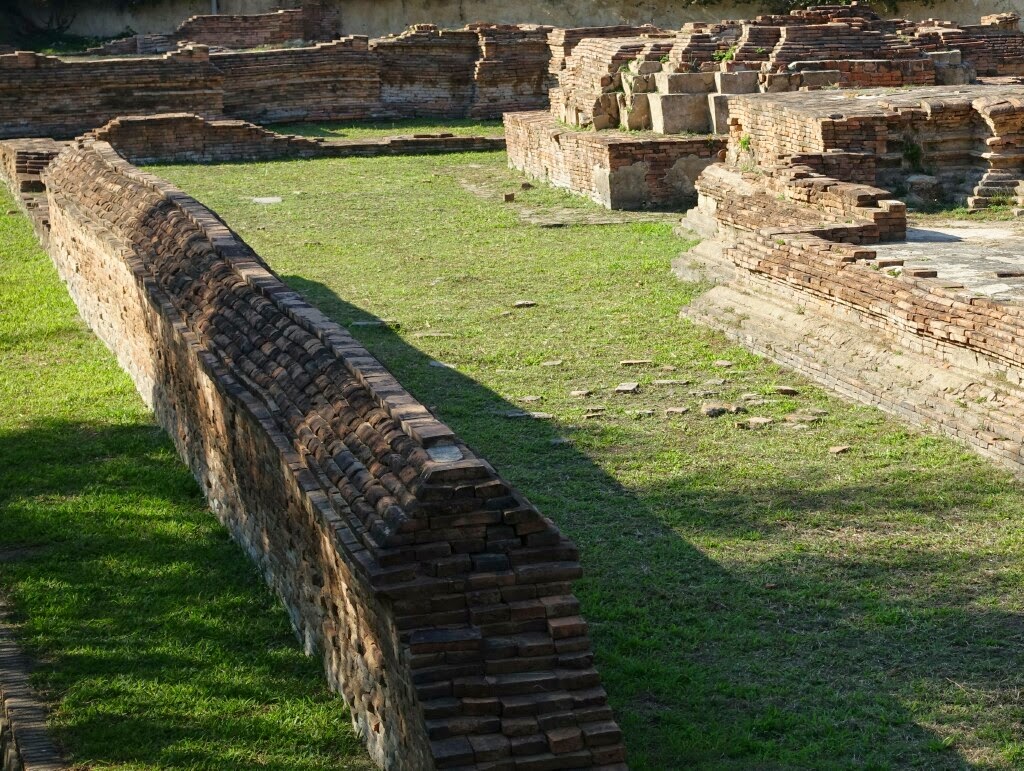
Wat Ku Padom wall ruins
Another view of part of the Wat Ku Padom excavated structures. This appears to be a wall delineating the temple area.
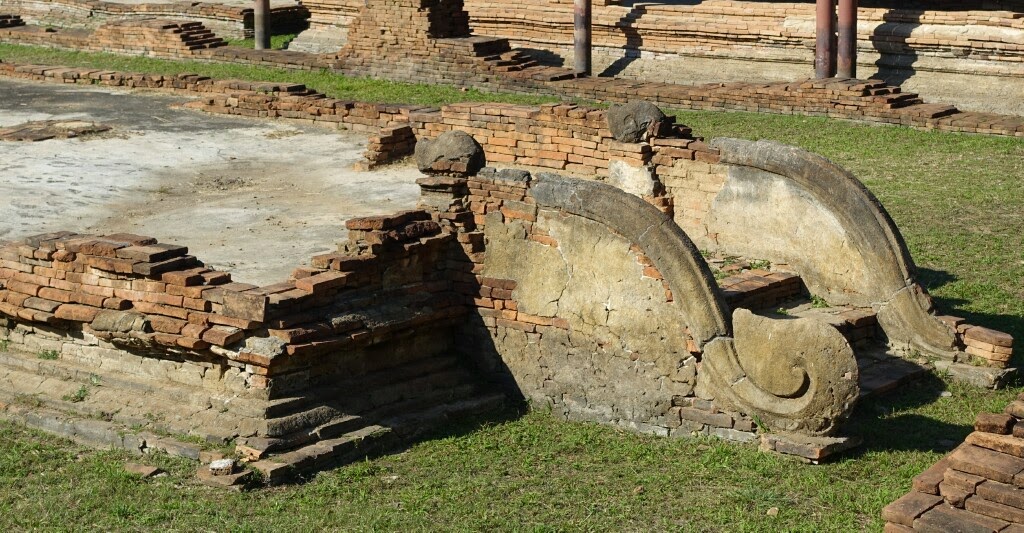
Wat Ku Padom viharn entrance
This is the entrance to the viharn (worship hall) with the styled stucco stairway having survived hundreds of years of being buried in mud and dirt.
Wat Chedi Liam (formerly Wat Ku Kham)
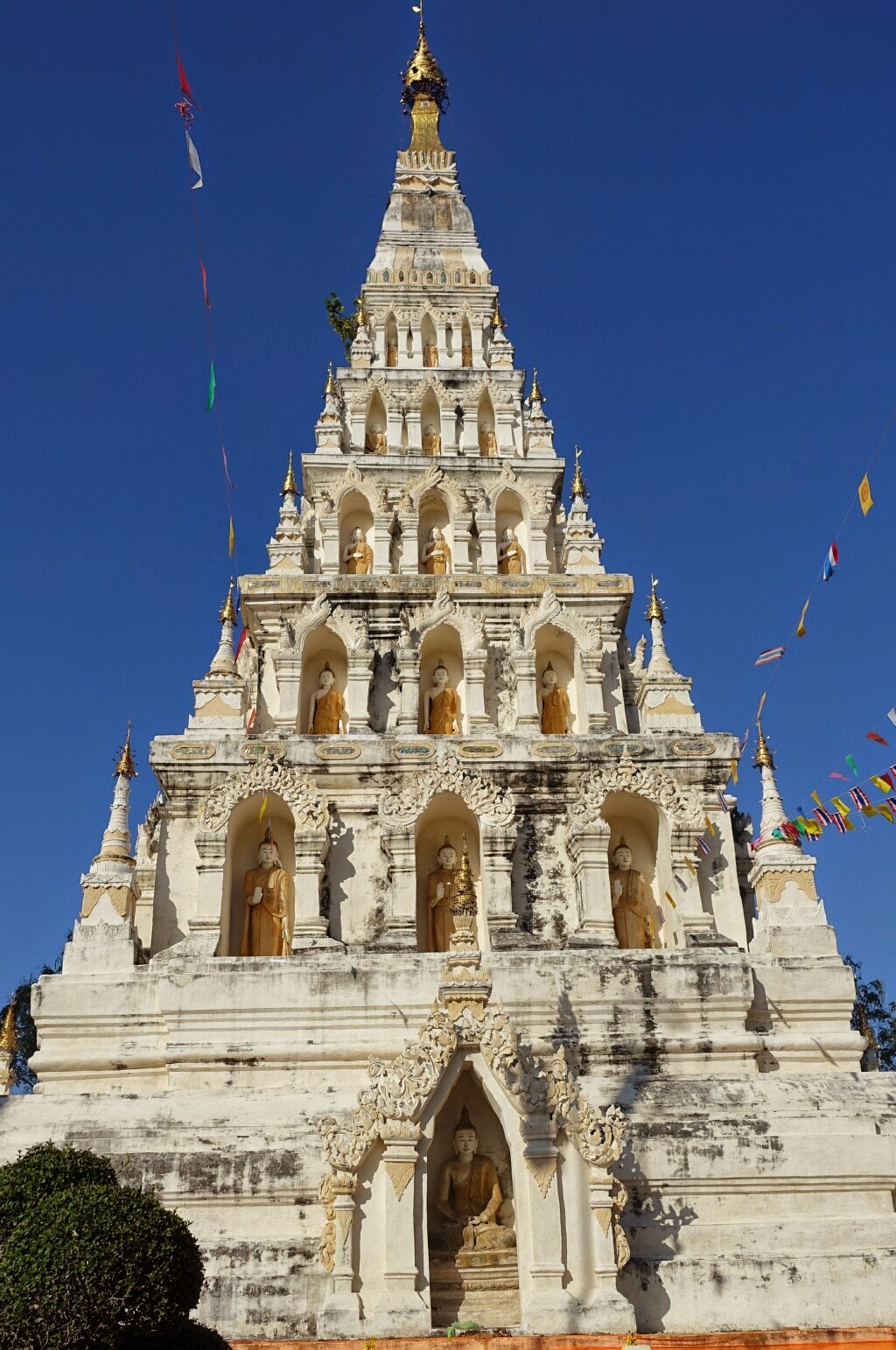
This is a continuously active temple, although much was uncovered in the archaeological digs in the late twentieth century. The base of this large chedi was flooded and buried in mud and dirt, even while the adjacent temple was in day-to-day use.
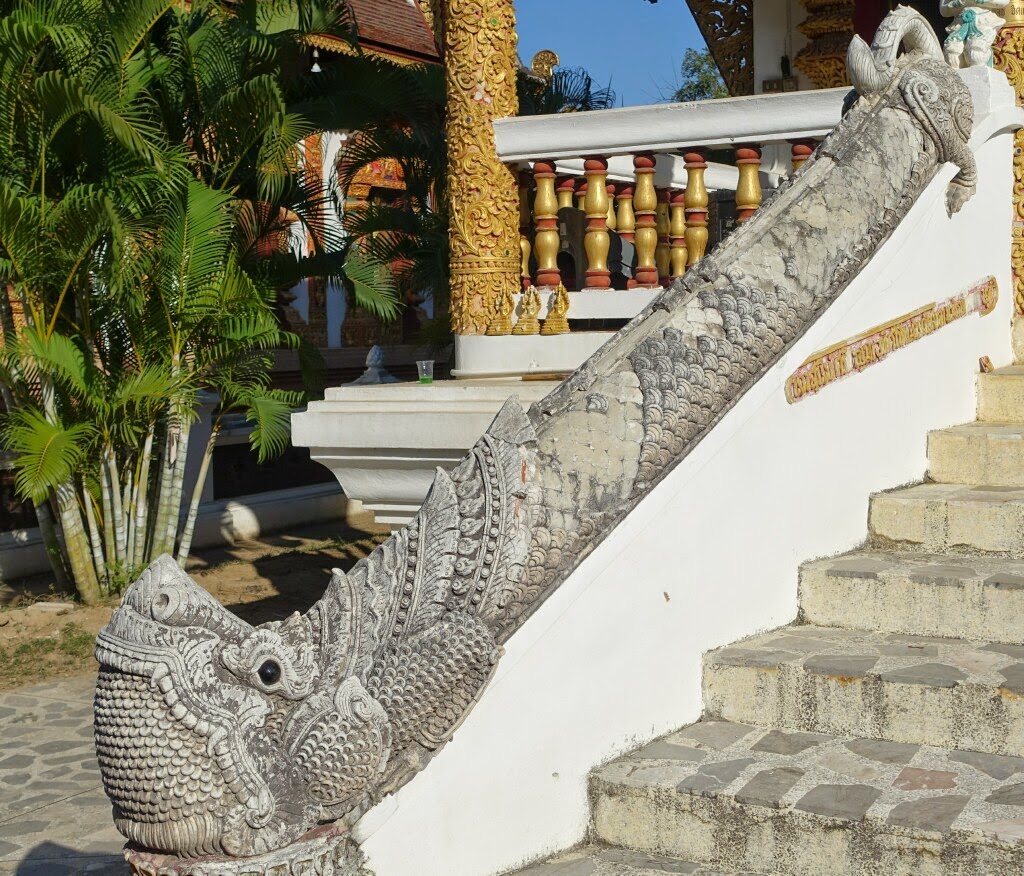
The banister of the stairway to one of the adjacent viharn (worship hall) includes this very interesting creature. I am not sure if this is a naga or a mom, but it is very artistic, and different than any others I have seen at the many temples I visited.
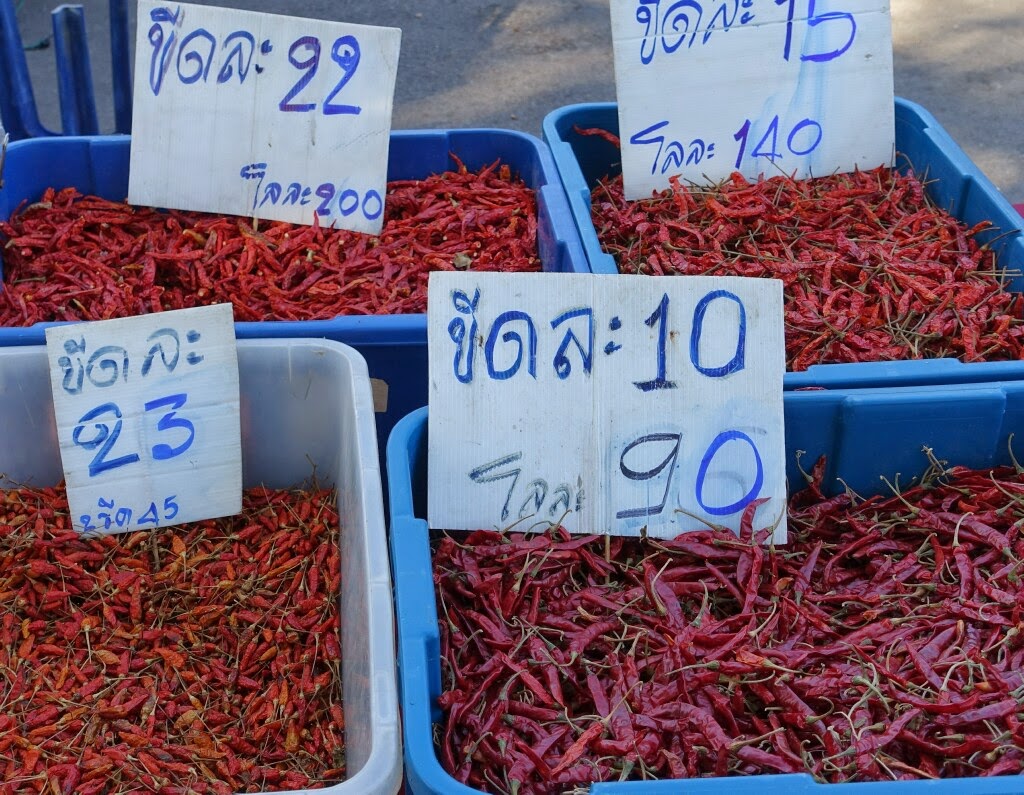
Chilies in the Wiang Kum Kang Market
Adjacent to Wat Chedi Liam is a local market, Jang was shopping while I wandered through to get to the temple to take photographs. The chilies caught my eye – Thai food is really spicy because the Thai people really do use chilies in their cooking. Here are four different types of chilies, the smallest being the most expensive (and probably the hottest).
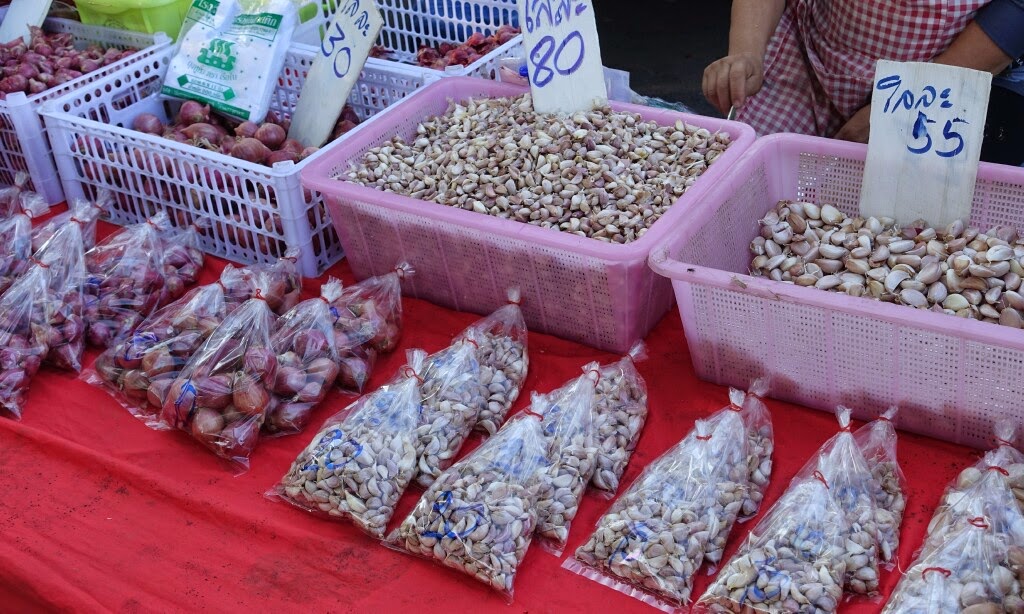
Garlic and Shallots in the Wiang Kum Kang Market
The Thai people also like garlic and shallots. I see these at every market, and the plentiful selection suggests that they use garlic and shallots a lot.
Wat E. Kang (Monkey Temple)
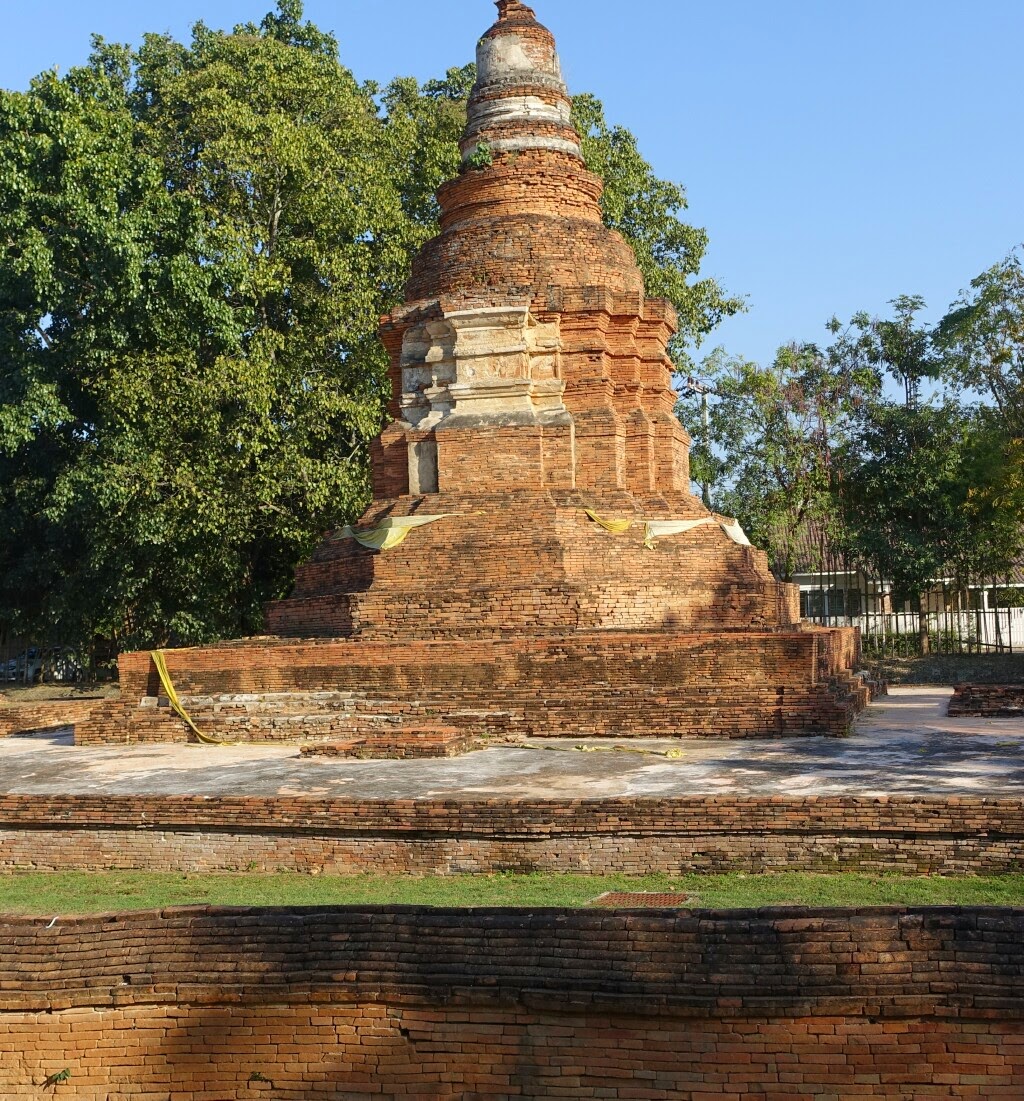
Wat E. Kang is called the Monkey Temple because of a large number of old world monkeys that lived near the site prior to its excavation and restoration. Old world monkeys are known as kang in the local Thai dialect.
The chedi at Wat E. Kang is large and mostly intact.
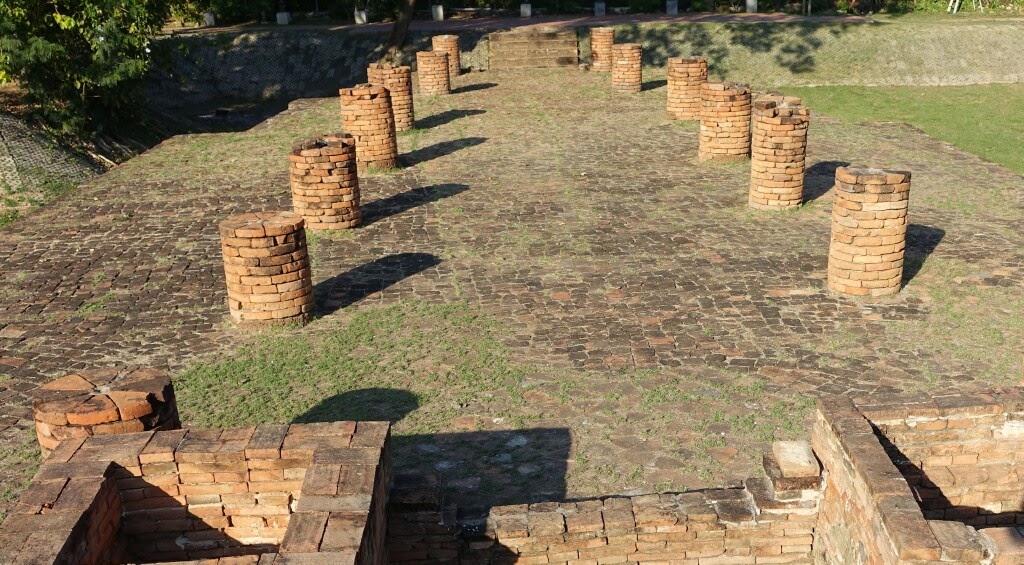
These look to me to be the footings for pillars that would support a roof. This is directly to the east of the chedi (pagoda), very typical of northern Thai temples, where the viharn (worship hall) doors open to the east to greet the rising sun, and the chedi is behind the viharn.
Wat Pu Pai
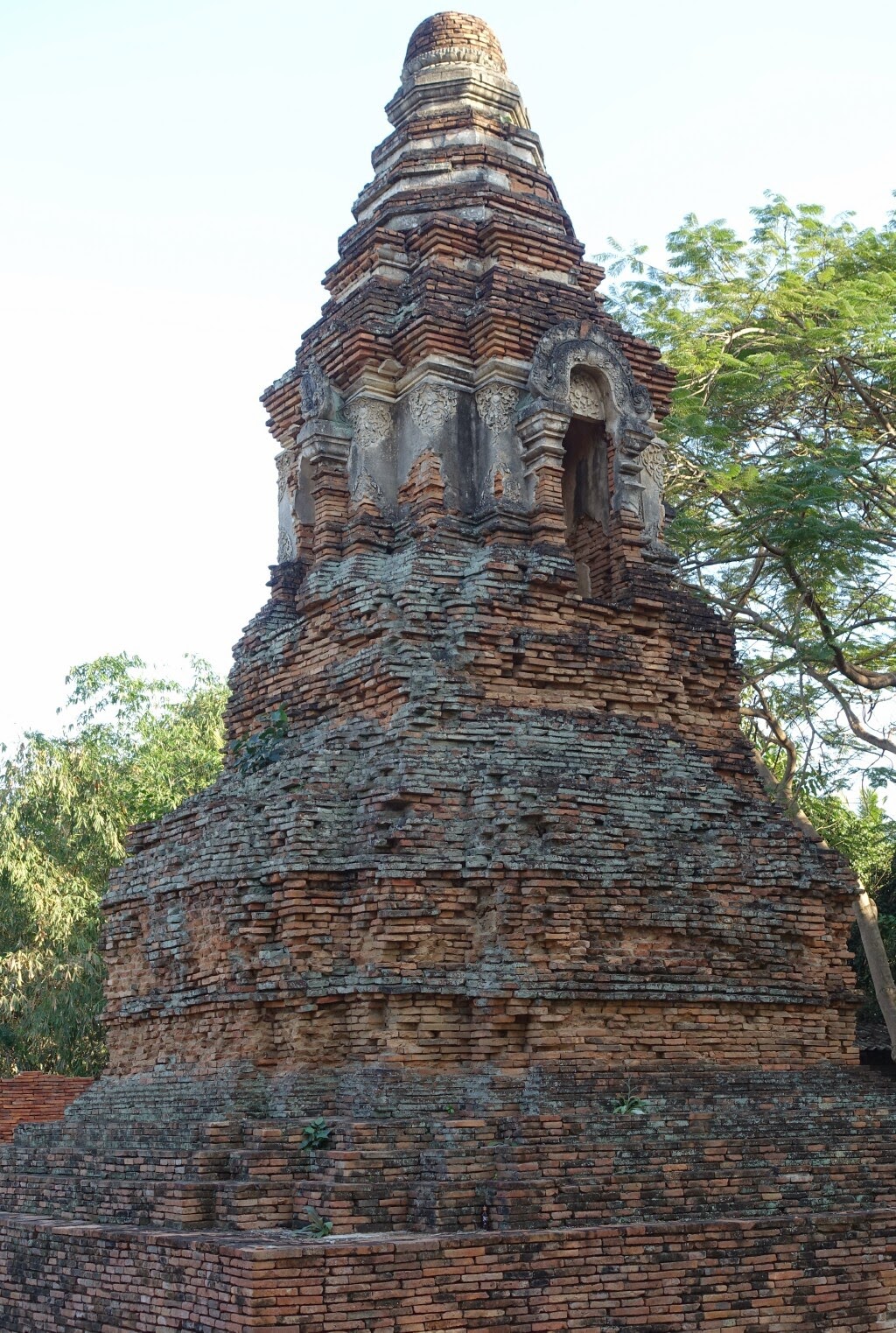
Wat Pu Pia (also spelled as one word, Wat Pupia) is also known for having survived well after being buried in dirt and mud for hundreds of years. some of the stucco was preserved as well as the layout. You can see in the picture some of the stucco (the lighter, off-white sections near and above the archway).
Pupia was a name given by the locals. The official name of this temple did not appear in any historical documents. The chedi had been left in near-complete condition, and was the only part visible before the excavation that was started in 1985. Evidence showed that two constructions of viharn were on top of each other.
The chedi has a tall base, then the body with 4 niches on each side for Buddha images, topped with a small bell shape. At each niche appears decorative stucco of floral and spiral designs.
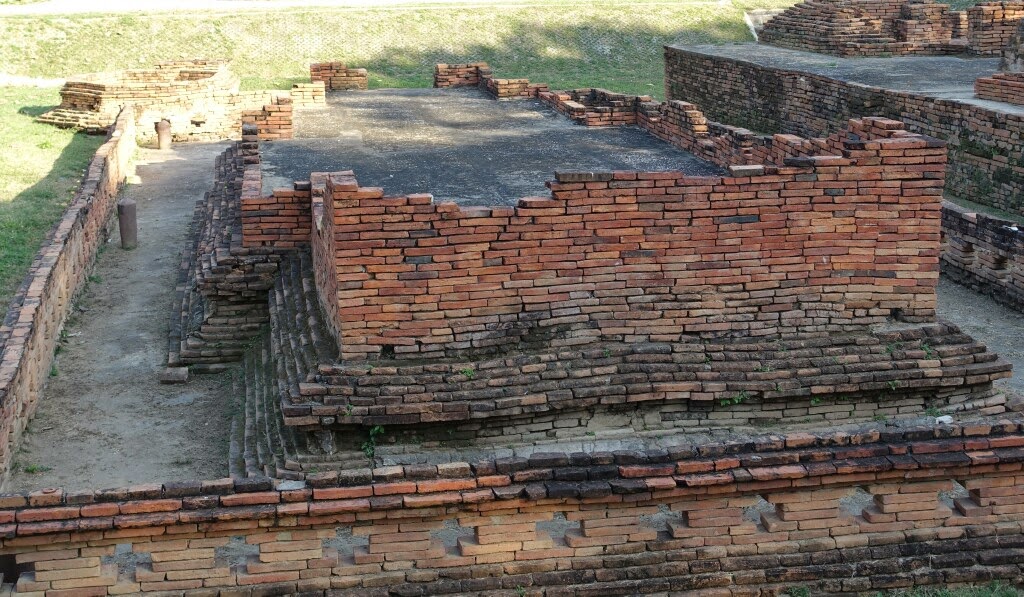
Some of the viharn structure at Wat Pu Pia.
Wat That Khao “White Stupa Temple”
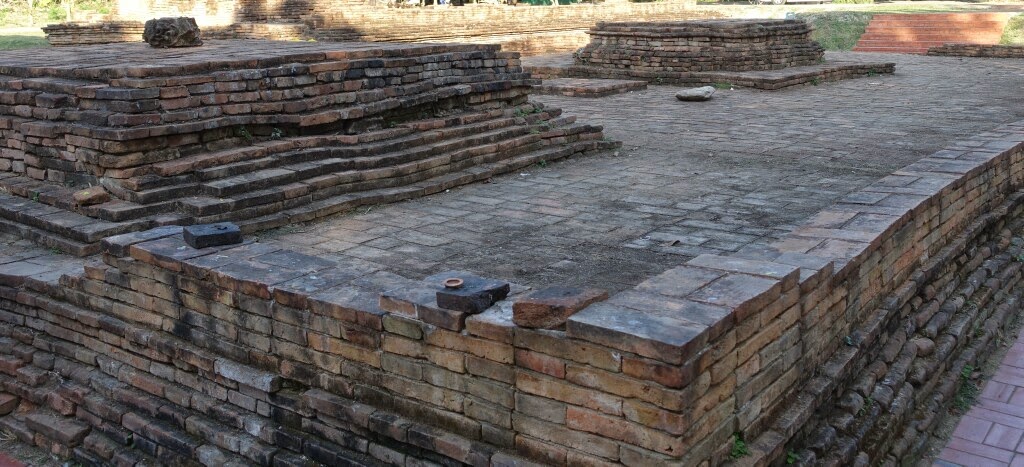
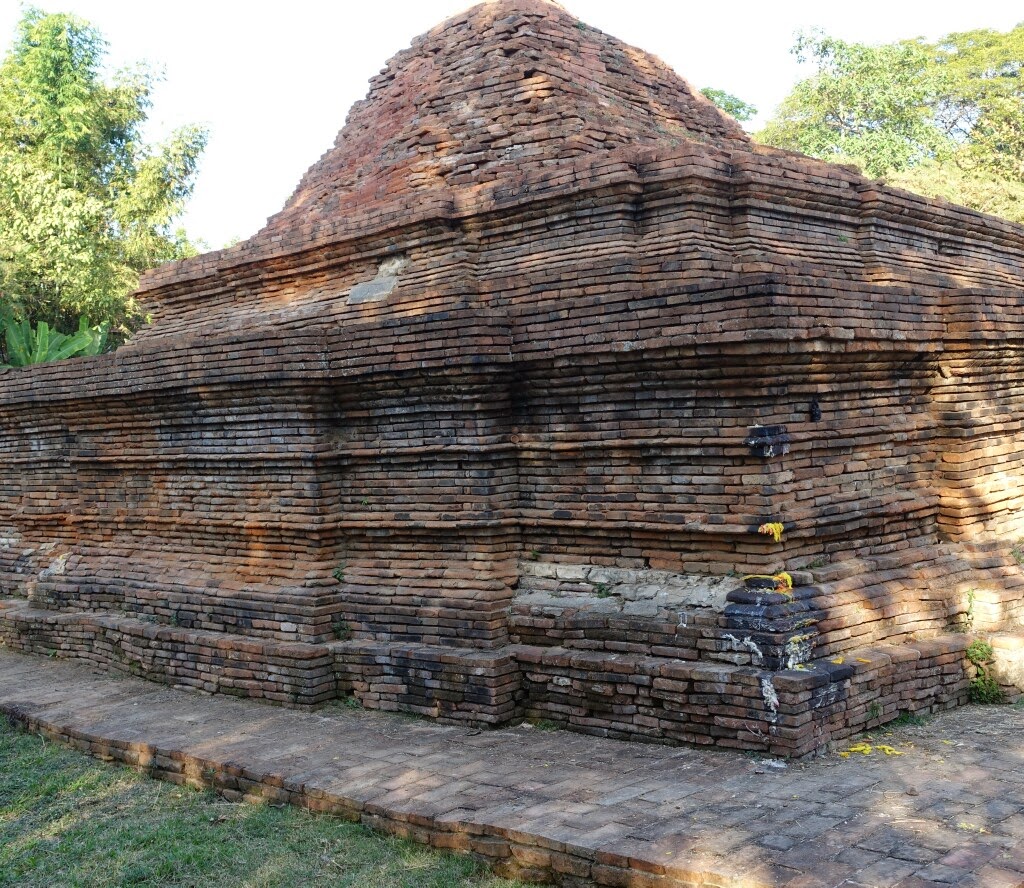
The chedi at Wat That Khao was white at one time. Most of the white stucco is now gone after having been buried in the mud for hundreds of years.
What a great day! I had almost forgotten about Wiang Kum Kang, and due to the kindness of a friend, Jang, here I was, right there. There is much more to learn, and more to see. It was a great day.
For dinner, I headed back to The Duke’s and I had a small steak, salad, fries, and a coke. Their steaks are from Australia, it was cooked perfectly, and tasted great!
Next: The Last Day Walk

 James the Intrepid Pilgrim