Sunday, 18 January 2015 A Lazy Sunday
Sunday was a kind of lazy day, at least as far as walking around old Chiang Mai city. I met my friend Aaron at 3-Sis for lunch, and we walked down to the Khao Soi place a little way behind the Three Kings Monument. not really wanting more spicy food, I had just chicken with rice.
The Northern Thai dish Khao Soi can be very spicy. It is a very popular noodle dish in northern Thailand and Laos. The name Khao Soi translated means “cut rice”. This name may have come from the Burmese word for noodles which is “khao swe”. Or it may refer to the process of making the rice noodles, where the dough is steamed, then rolled and cut with scissors.
The little restaurant is not a tourist place, the almost all the patrons are Thai. The food is good, and inexpensive. I bought lunch, including Jasmine tea, and for both of us, the total was under $3, and we left quite full.
Being Sunday, I did go to Walking Street Chiang Mai (the Sunday Night Market) and got a foot massage from Nam, my favorite foot massage person. Like usual, she had a big smile.
Monday, 19 January 2015 Walk to Wat Kate Karam
Wat Kate Karam is a very charming smaller temple, across the river to the east of Warorot Market. The name Wat Kate is really a name that does not translate to English well. On the temple grounds are the name in English as Wat Ket, Wat Kate, and Wat Gate. The first sound is not a hard Kuh sound or a hard Guh sound, it is really in between those two sounds. The translator has a dilemma, and thus the different spellings.
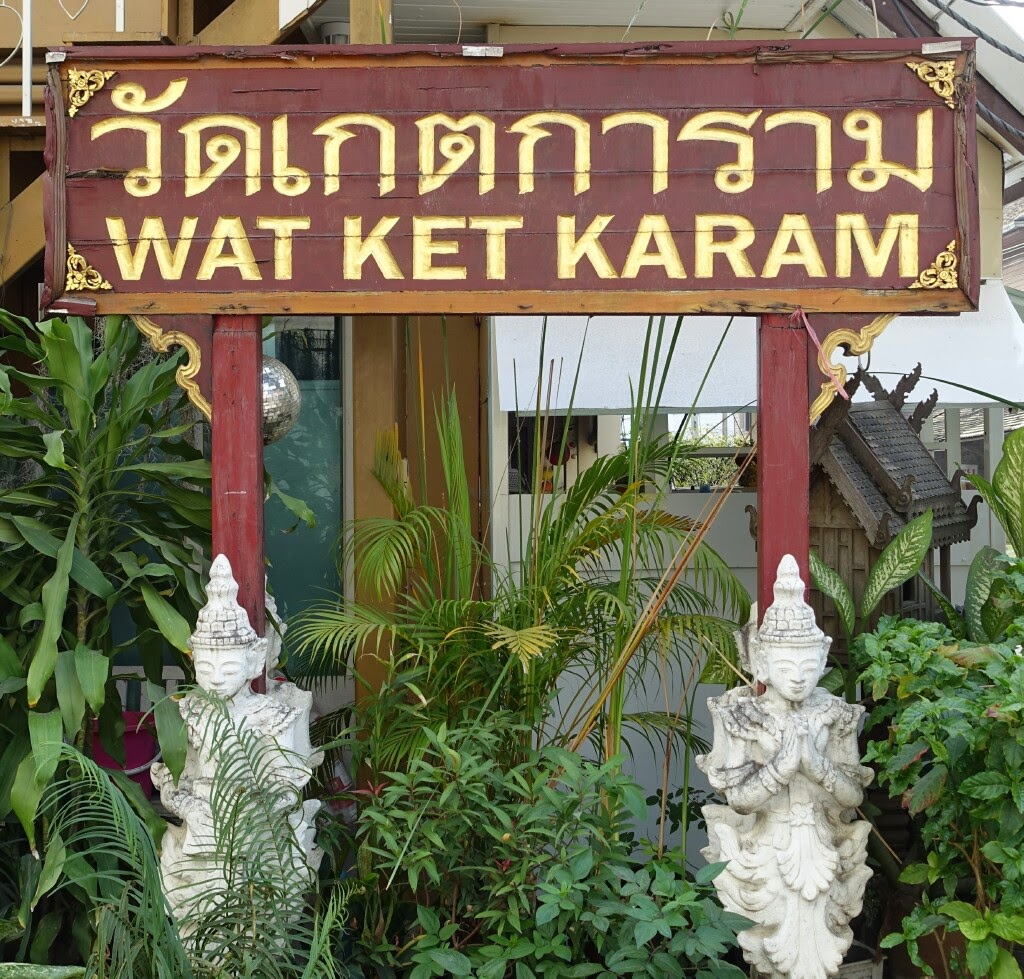
The temple is not highly popular, and is not prominent in guide books, so even though I know where it is, I feel very glad to find it again. I have always entered from this entrance. I learned that this is a back, not the front. Most temples have only one way in and out. Wat Kate is a little unusual with its having two entrances. Notice the spelling, “Wat Ket Karam”. And the two thewada are bowing, welcoming you in.
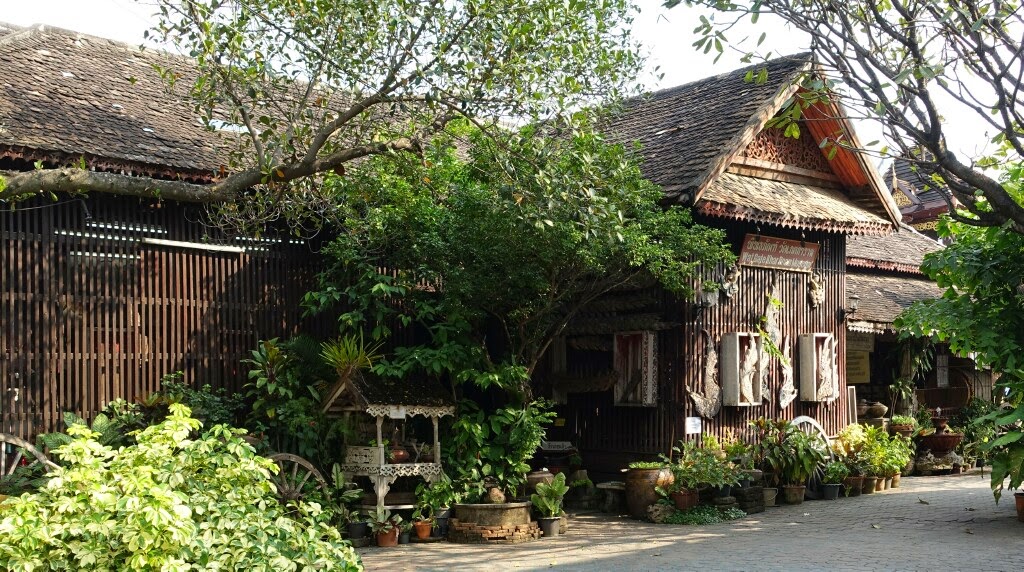
One of the really special features at Wat Kate is the charming museum of old artifacts. Wat Kate is very old, dating back to about 1328, and this is a collection of old Lanna historical items. The museum was established fairly recently, in 1999, in the former abbot’s living quarters (the abbot is the head monk in charge of a temple).
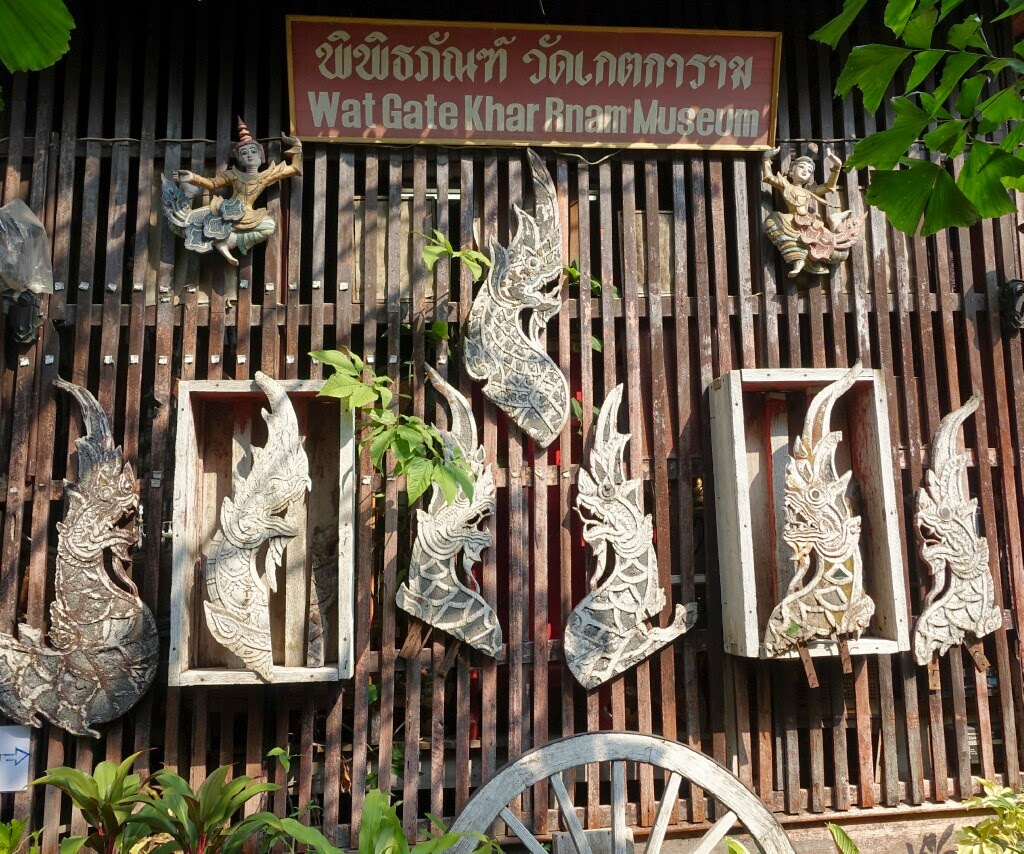
Notice on the sign, another spelling, this time Wat Gate Khar Rham. I love the carved dragon heads and flying thewada holding up the sign.
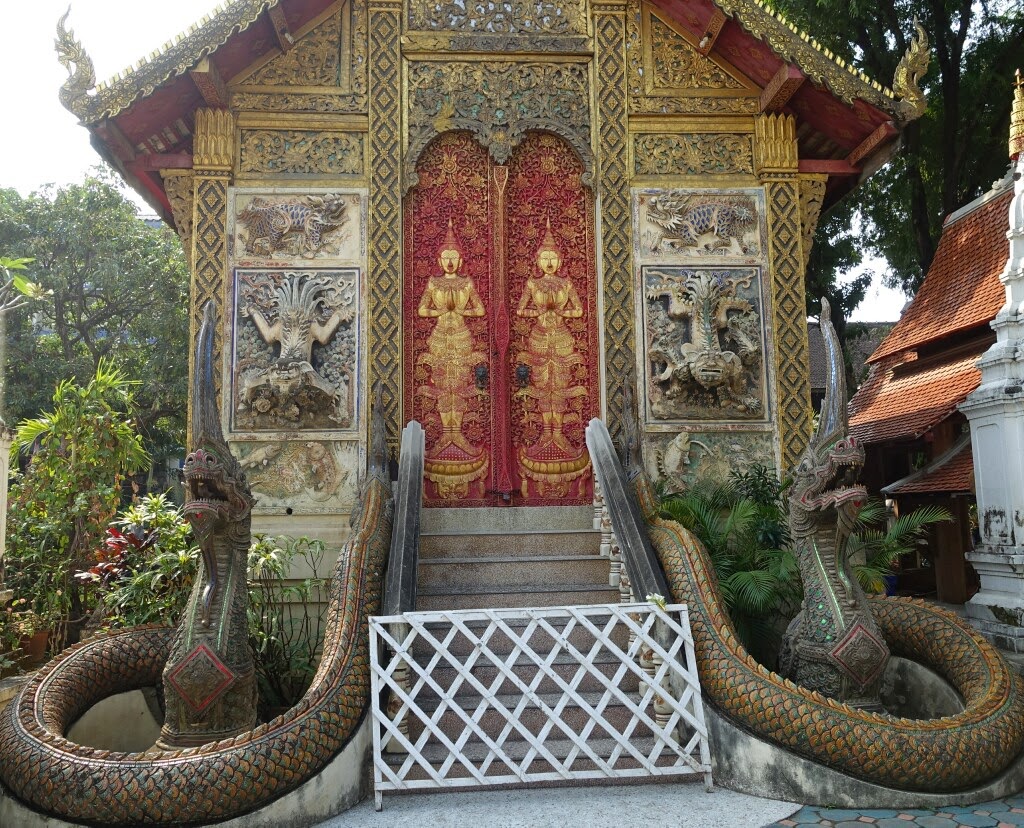
This is a secondary viharn at Wat Kate, and every time I have been here, the doors are closed and the stairway blocked. Here, the Naga serpent tails on the stairway banisters are more elaborate than at most temples. The thewada on the doors are very nice, and there are two mom (pronounced moam) creatures on the walls flanking the doors. A very elaborate and artistic structure; I love it.
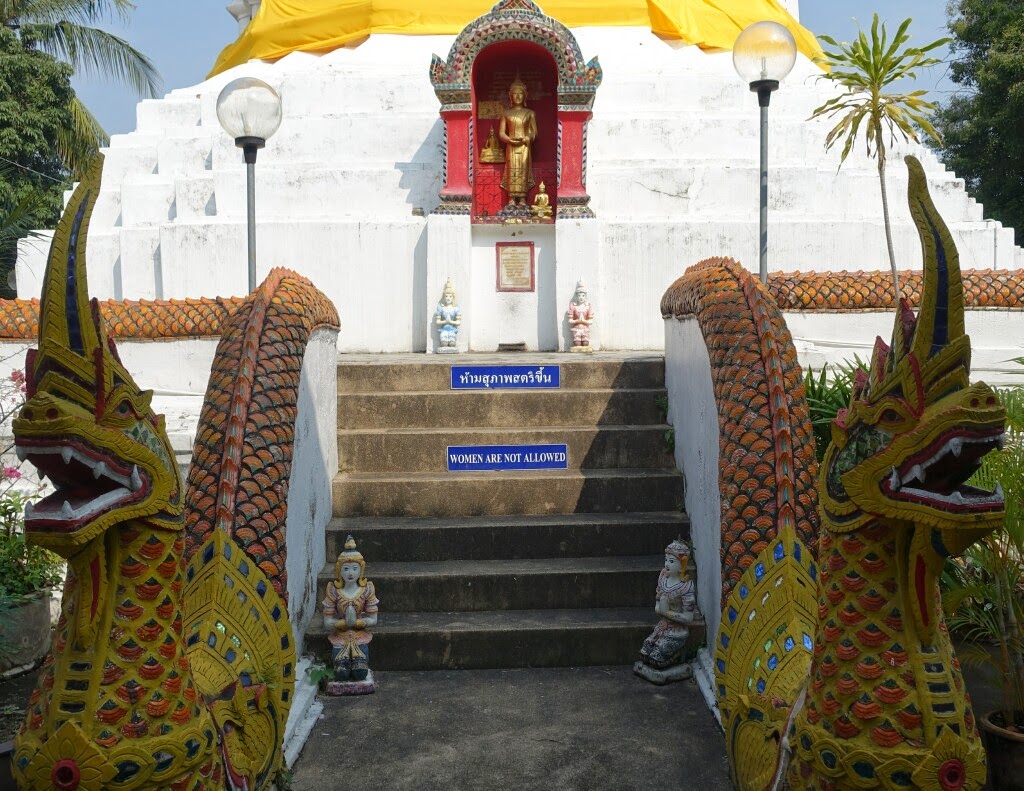
The base of the chedi in the back of the temple grounds is square-shaped, and each of the four sides is guarded by these elaborate Naga. The blue signs on the steps read “women not allowed” which is a protection concept. This means that under the chedi, someone is buried, and it may also mean that it was sacrificial. Not allowing women is to protect them from being corrupted or tainted by the bad spirits. It is a cultural thing.
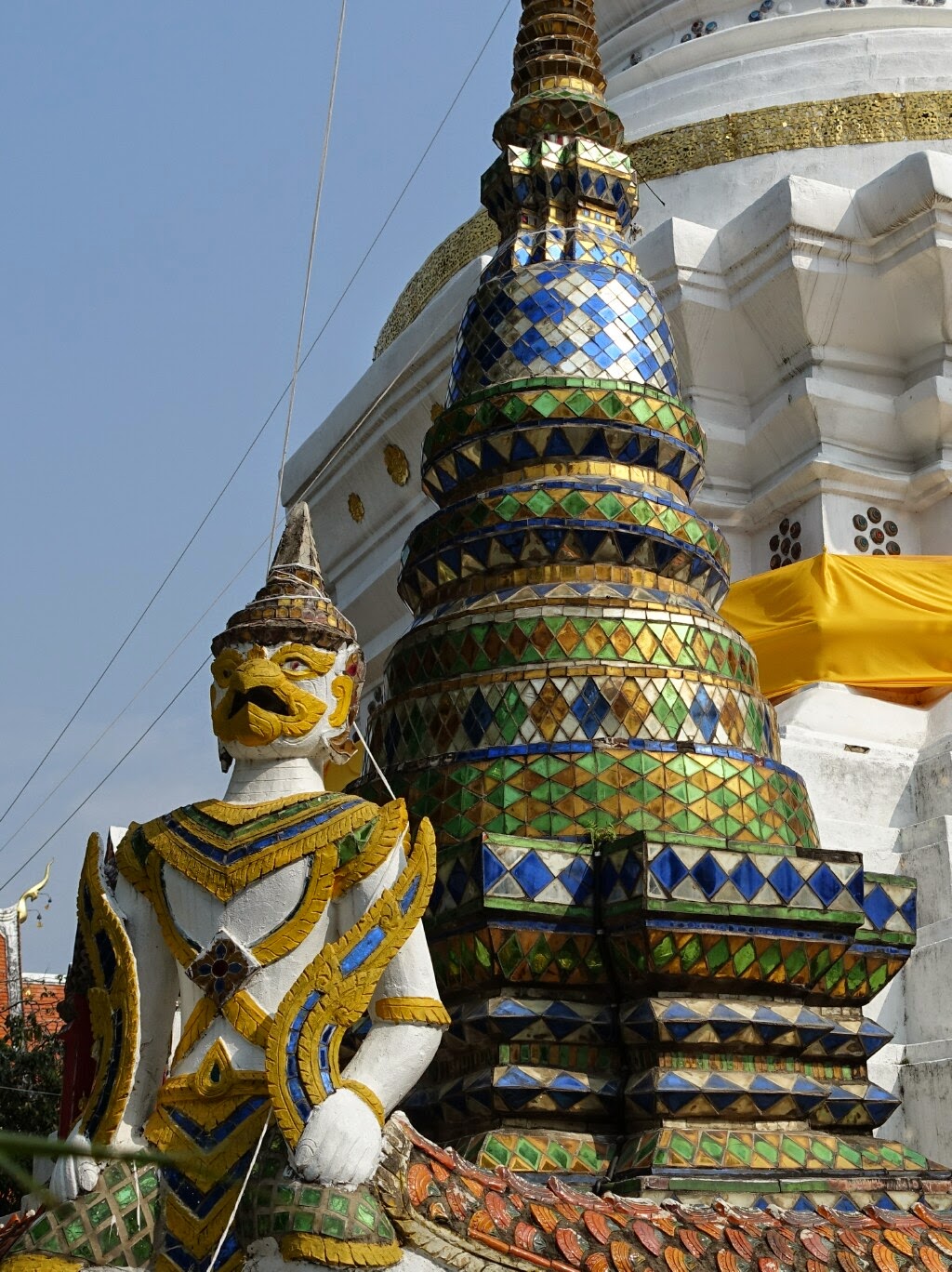
At the four corners of the chedi are these smaller chedi-like pillars with a garuda standing sentry-like in front. A garuda is a part eagle, part human, and very powerful. The garuda is on the national emblem of Thailand. the garuda is the sworn enemy of the naga, and I have been told that when both are shown together, it reflects peacefulness and harmony.
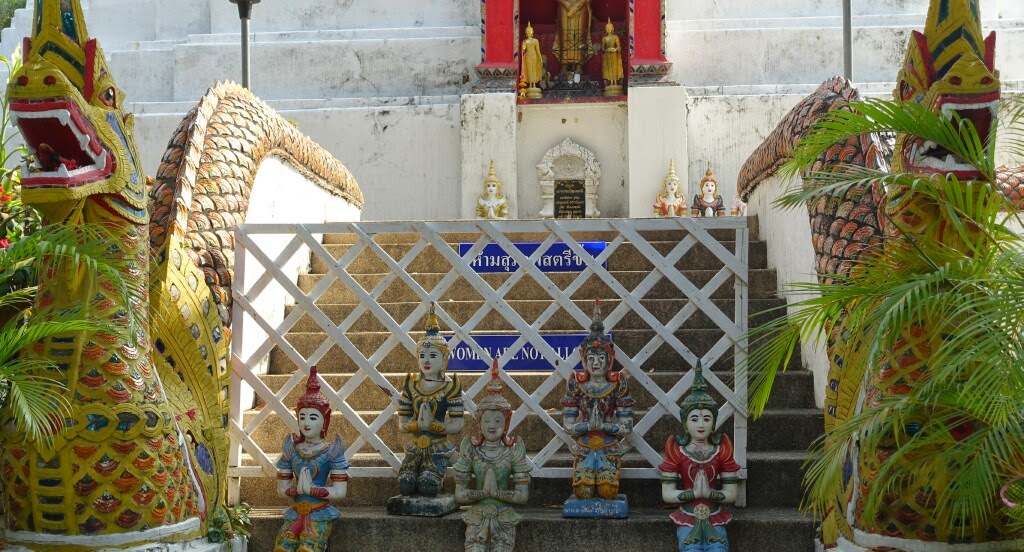
Another of the stairways to the chedi, blocked by a fence, and five small very female-looking thewada statues. (Thewada are essentially what we would call angels, and have no gender. The gender is a manifestation of the artist and our mind.)
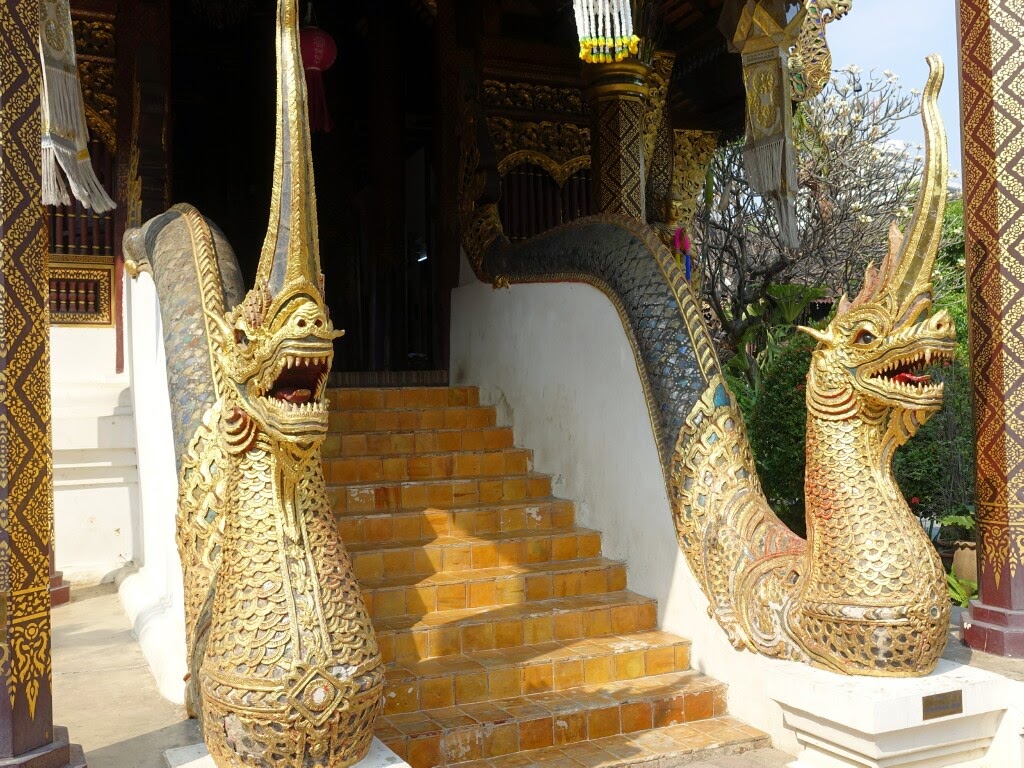
The naga at the stair of the main viharn (worship hall) at Wat Kate Karam. These are very elaborate and beautiful.
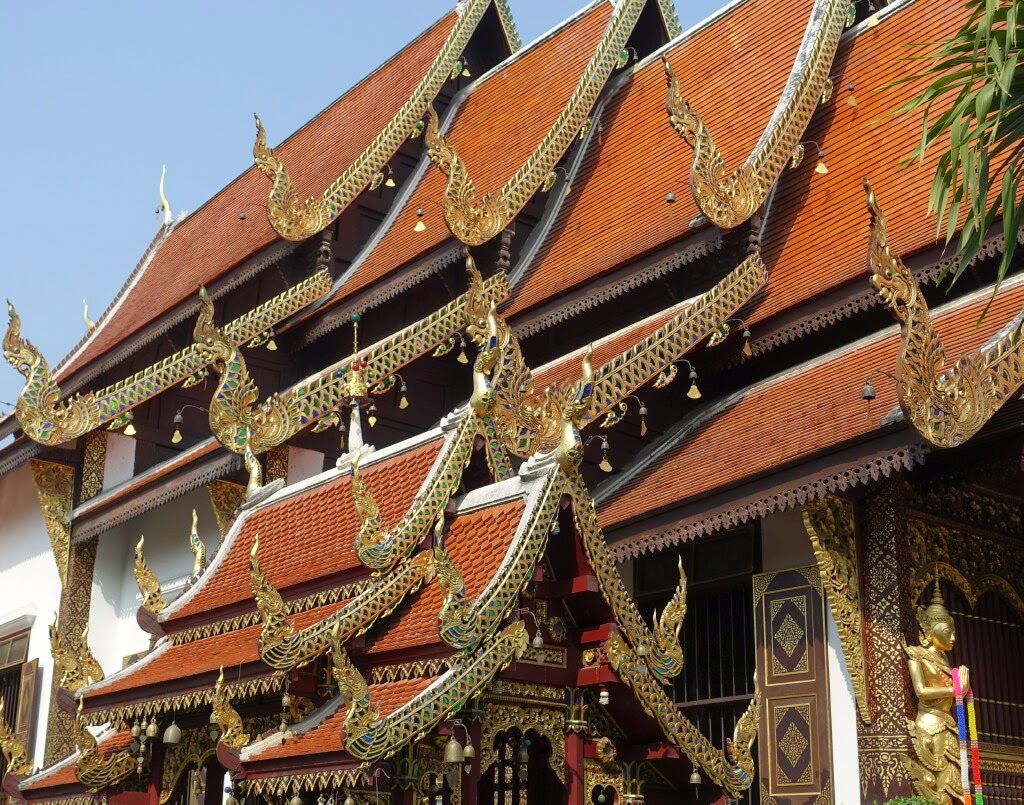
Looking at the roof with the various layers and the elaborate decoration to the edges of the tiers, this is what people tell me is a distinctive Lanna style temple design.
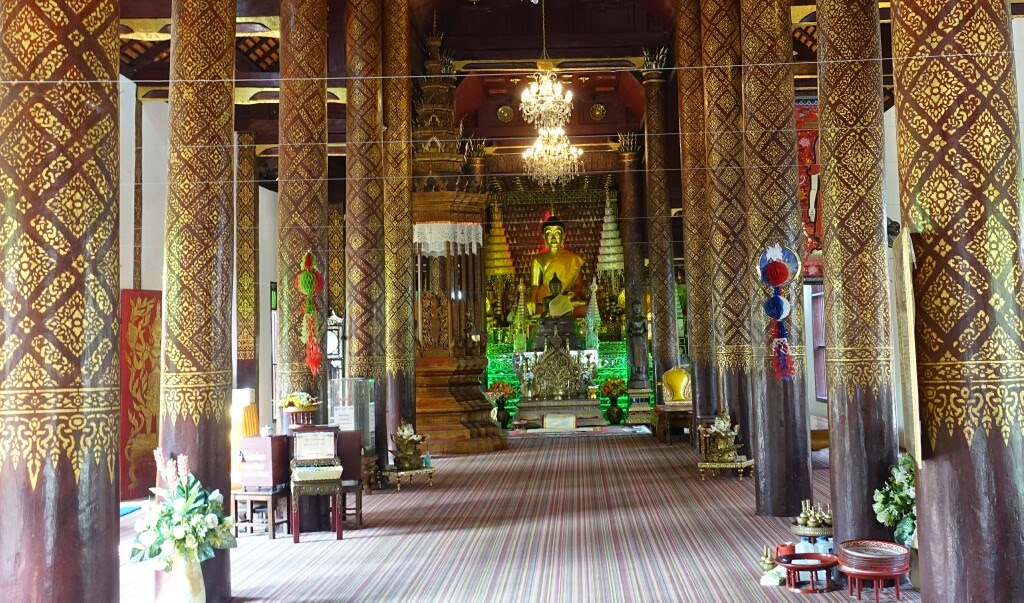
And inside the main viharn, the large decorated teak pillars are quite striking. The mood is respectful and dignified.

\On the doors are these very dignified, and serious looking thewada. The artist or designer made the gender more ambiguous in this example. Thewada have no gender (angelic beings which live in the heavenly realms), and sometimes appear distinctively male and sometimes distinctively female. It is typically easy to tell that the painting or carving is a thewada, but the gender is not always identifiable, nor is it germane.
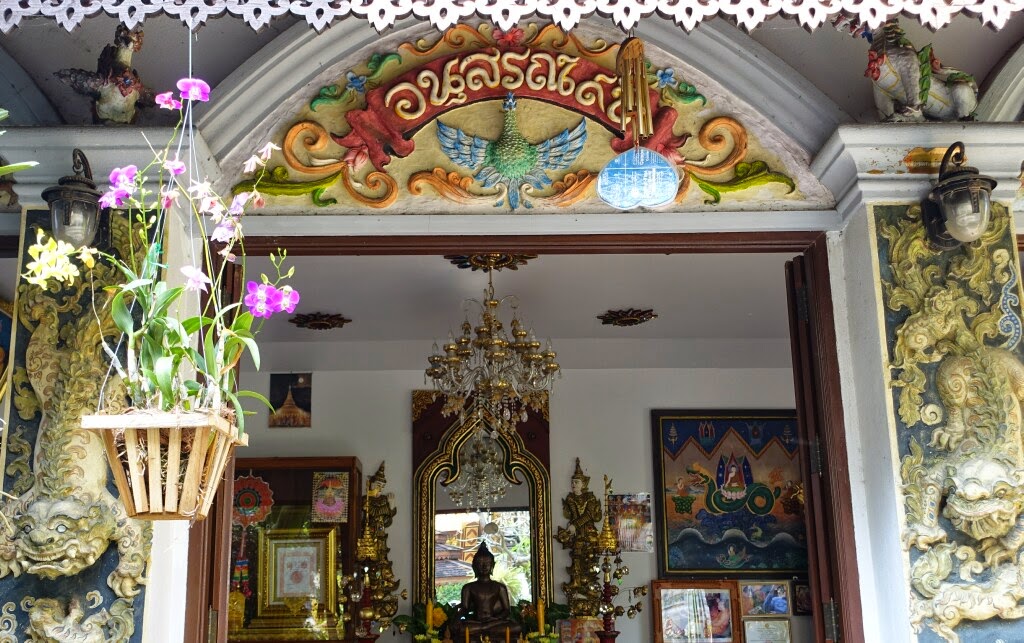
On what appears to be a temple office or perhaps the abbot’s office, there are the mom creatures again, on either far side of the doorway. I do not know what these are. They are not quite moms, but then again, they may be.
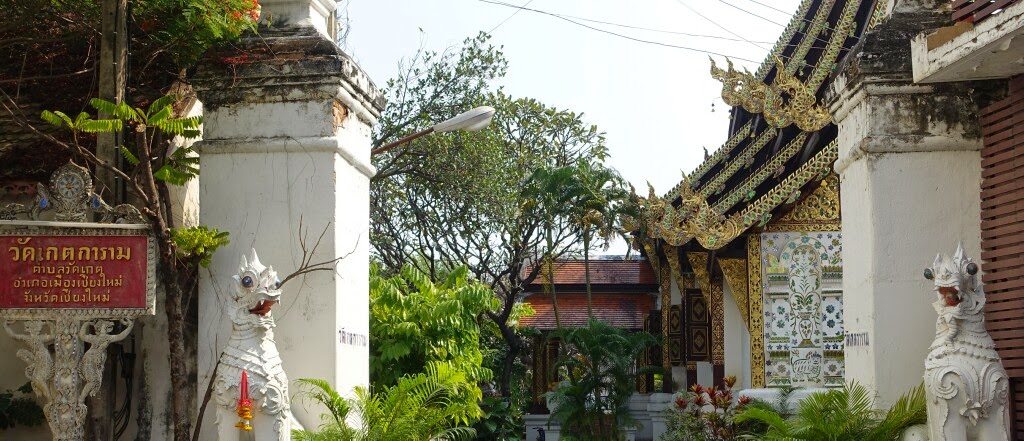
At the back entrance, I finally said goodbye to Wat Kate Karam, one of my favorite temples in Chiang Mai.
Next: Elephants and the Flower Market

 James the Intrepid Pilgrim