Tuesday 13 January 2015 Five Temple Journey Part 3: Two Local Temples
We headed north from the Chom Thong district back in the direction of Chiang Mai. We were soon heading up what is known as Canal Road, a highway on the west and south of Chiang Mai that runs mostly along a canal. I had two smaller, local temples on my list to see, and I do not remember why. I recall something about bell towers, so it may be that whoever recommended them liked the bell towers. We shall see what is there. The driver knew the smaller roads and after we left Canal Road, we were soon at Wat Mai Huai Sai, a small local temple.
Wat Mai Huai Sai
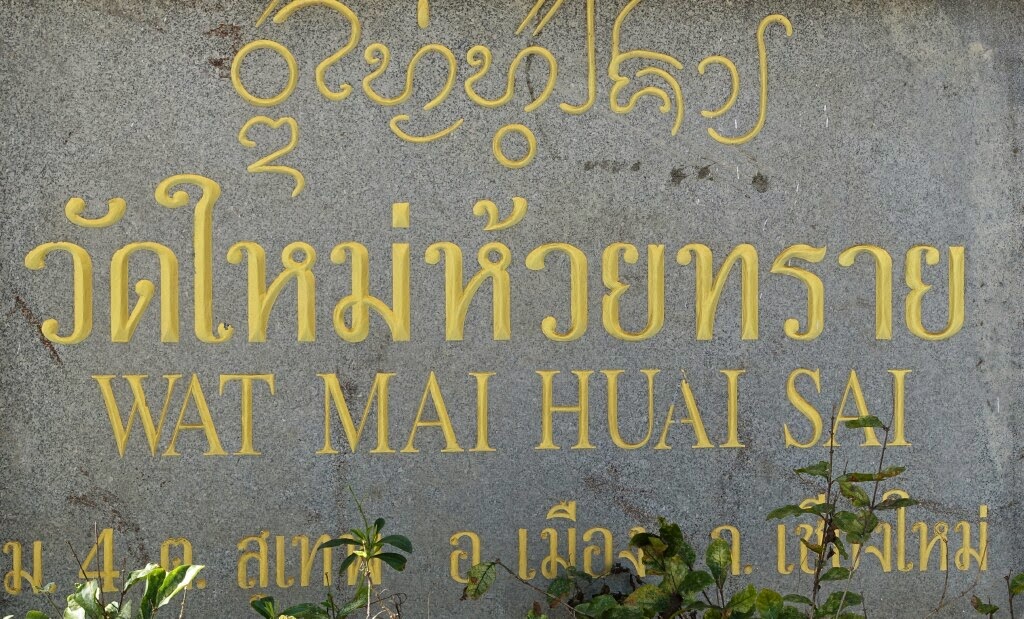
The sign for Wat Mai Huai Sai. We are there.
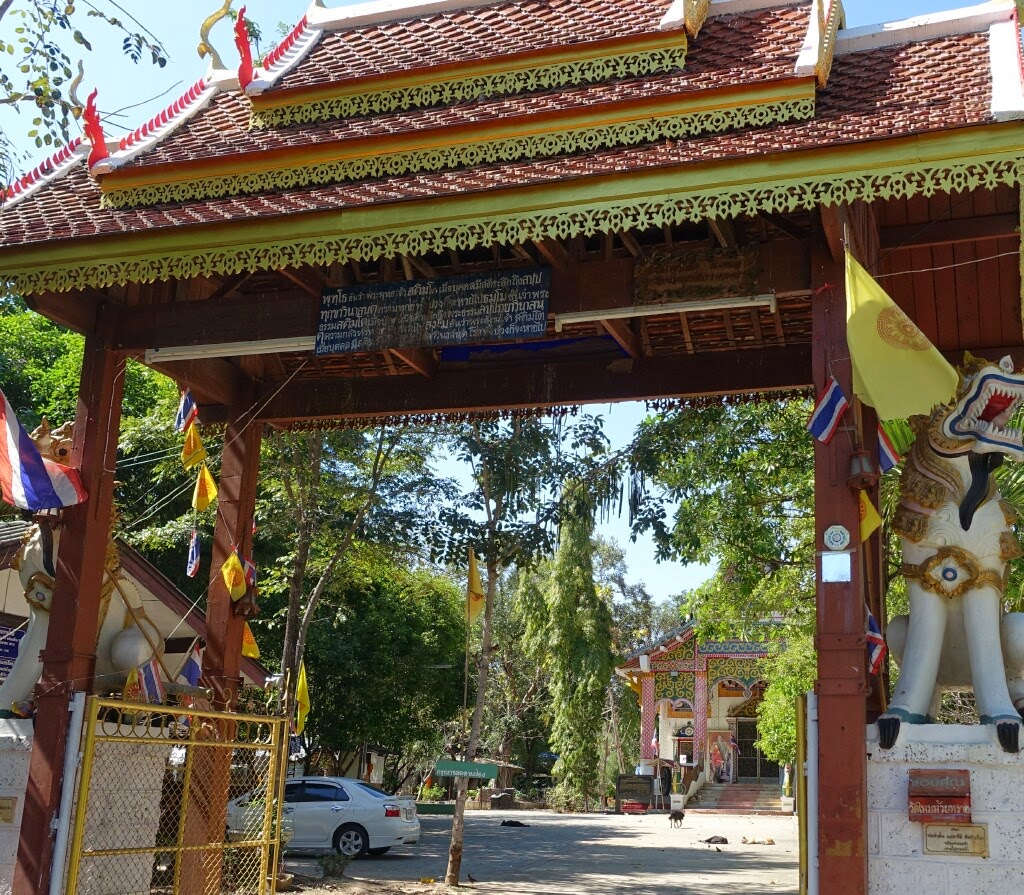
The entrance. Nice, not as elaborate as some, but nice.
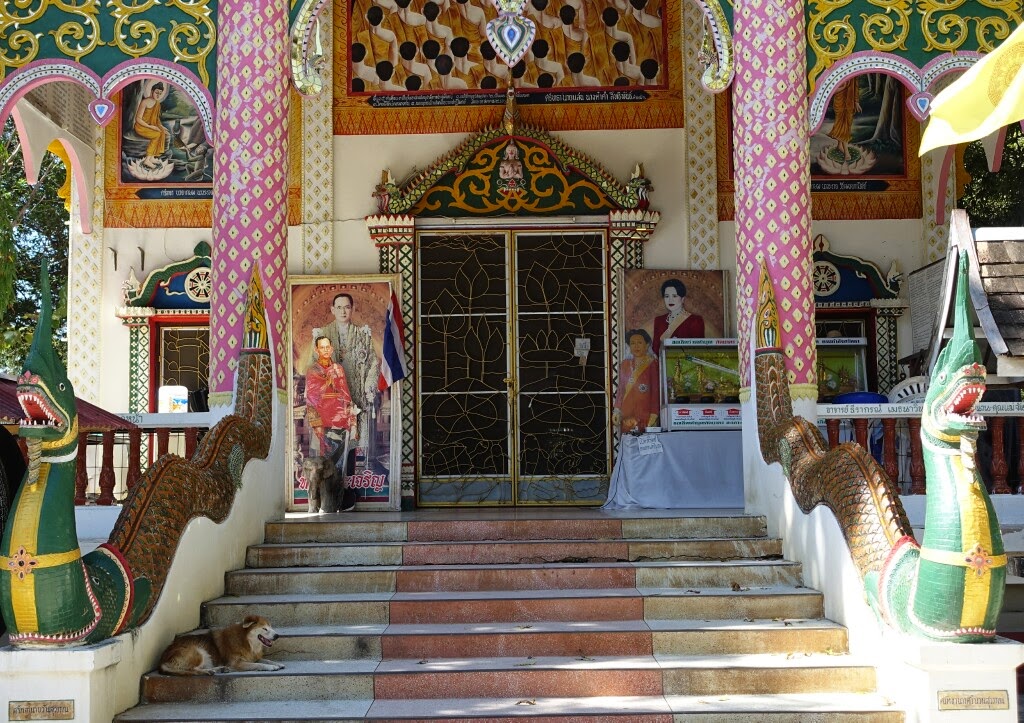
The entrance to the main viharn. Again, not elaborate, but much more artistic than many in Bangkok. The doors were closed, so I did not try to enter for a picture.
There is also a secondary viharn in the back by the chedi, a little more elaborately decorated. It too was closed.
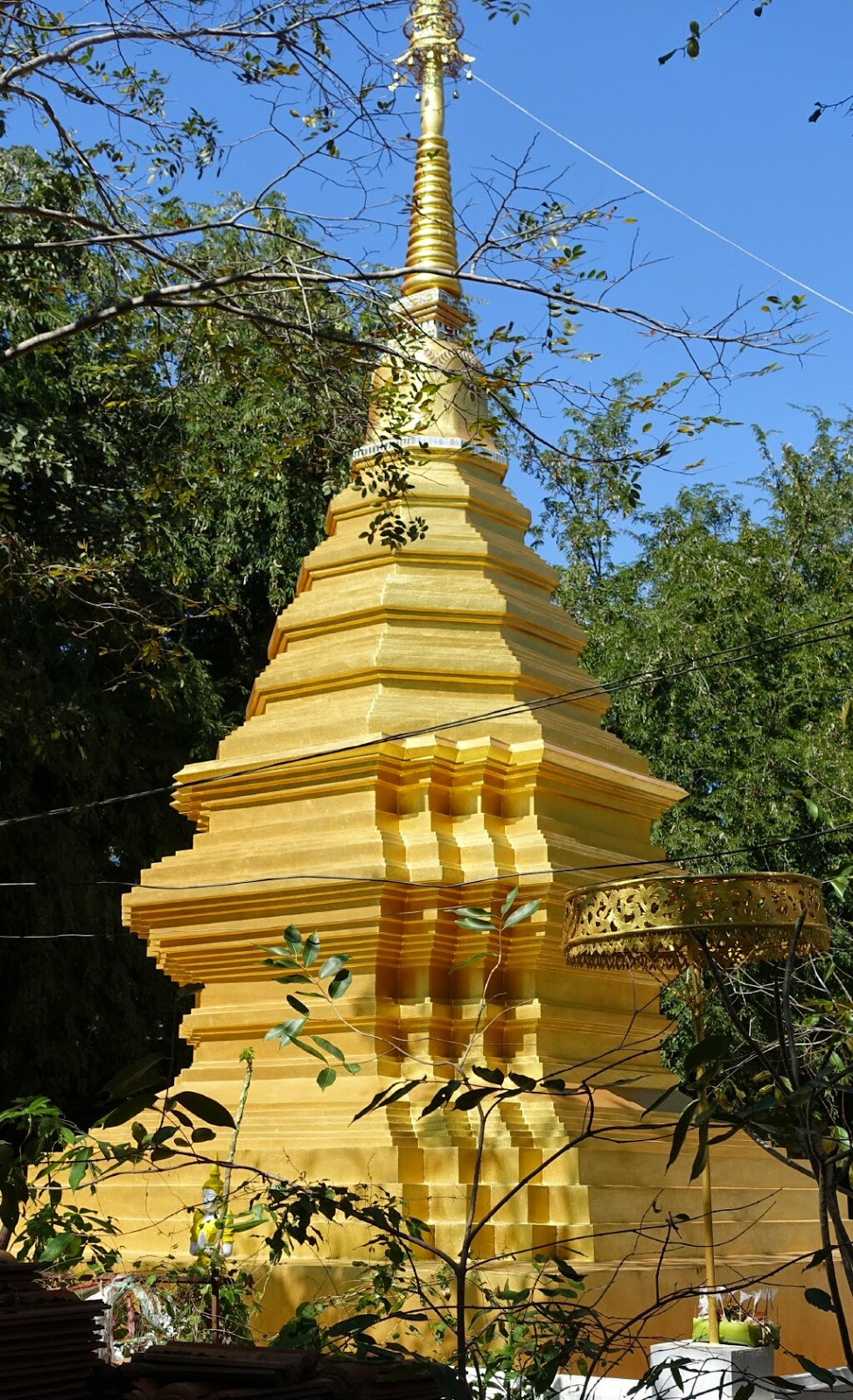
A fairly large gold chedi in the back of the viharn.
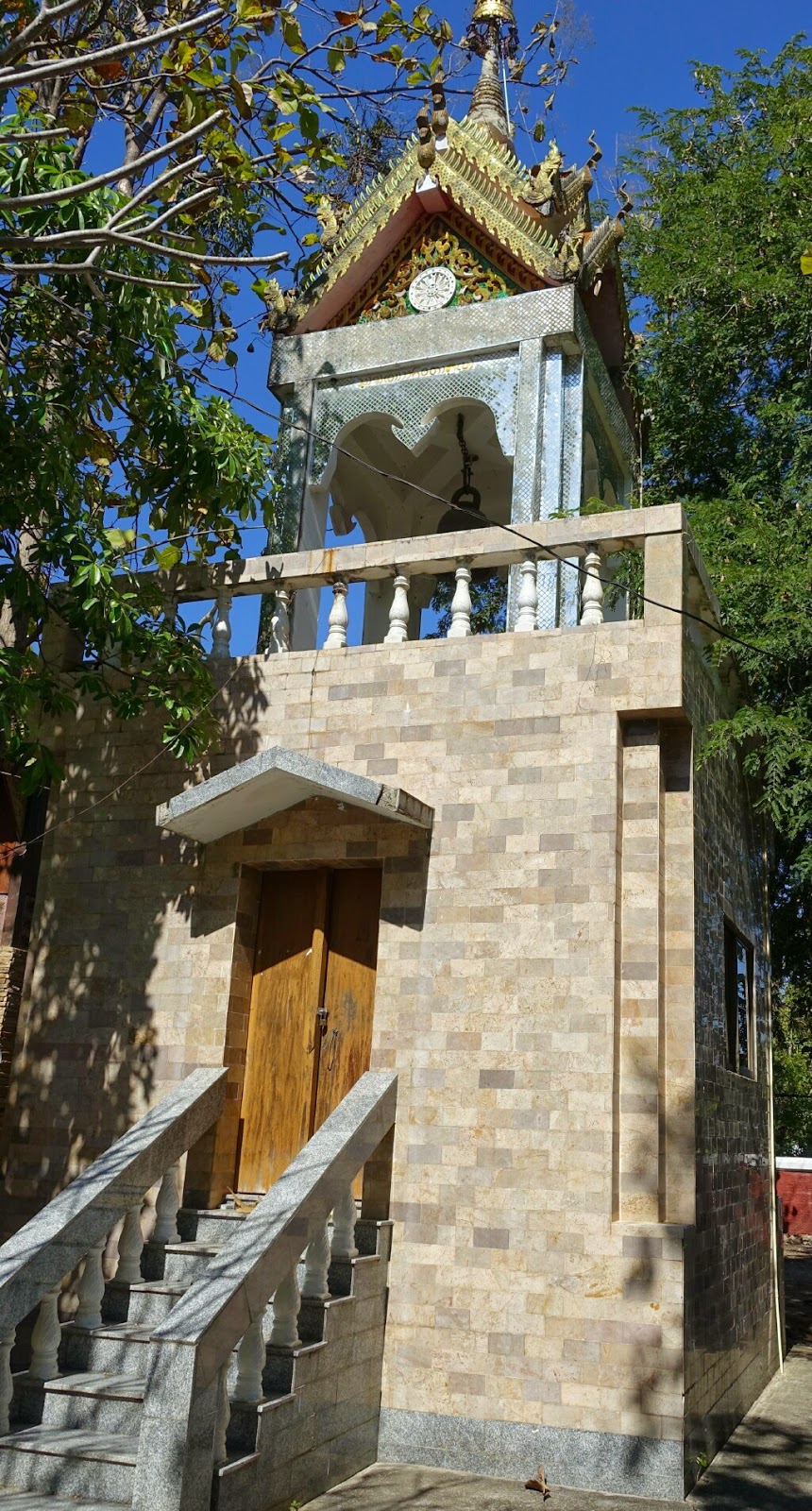
And the marble bell tower. Very different in style than the other buildings at Wat Mai Huai Sai. The doors were closed, but there was a rope by which I ran the bell. A very nice, and loud sound.
We saw no people at Wat Mai Huai Sai. No monks, no caretakers, nobody. That is likely why all of the doors were closed.
Wat Pong Noi
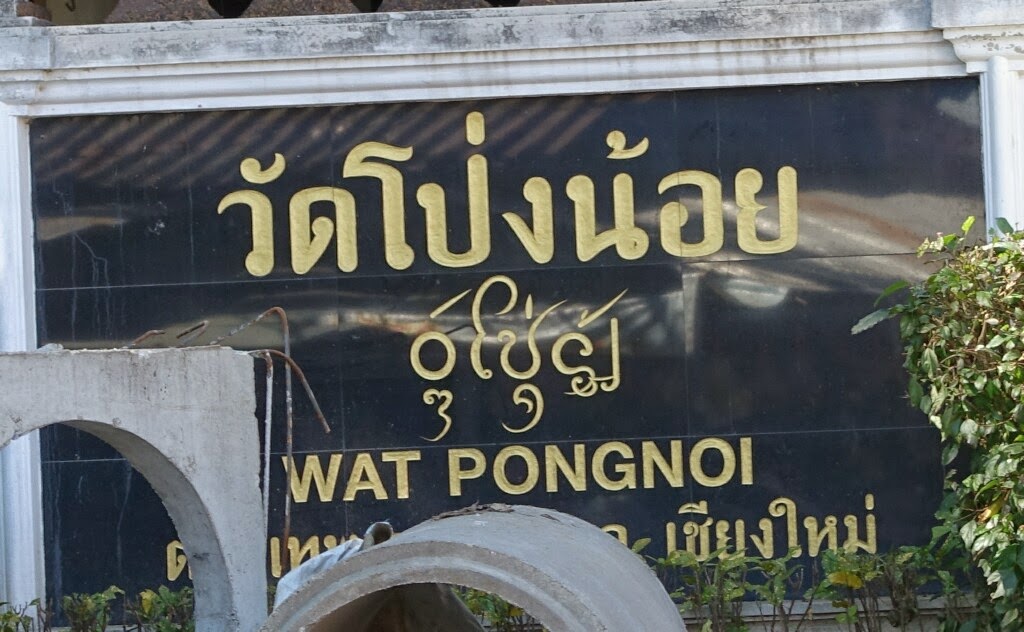
The driver knew the back roads, almost alleys, and we were very quickly at Wat Pong Noi. The sign is in the midst of some drainage reconstruction. A “pong” is sometimes a hill (it can also mean dust), and “noi” means small, so I believe this to be a temple built on a small hill.
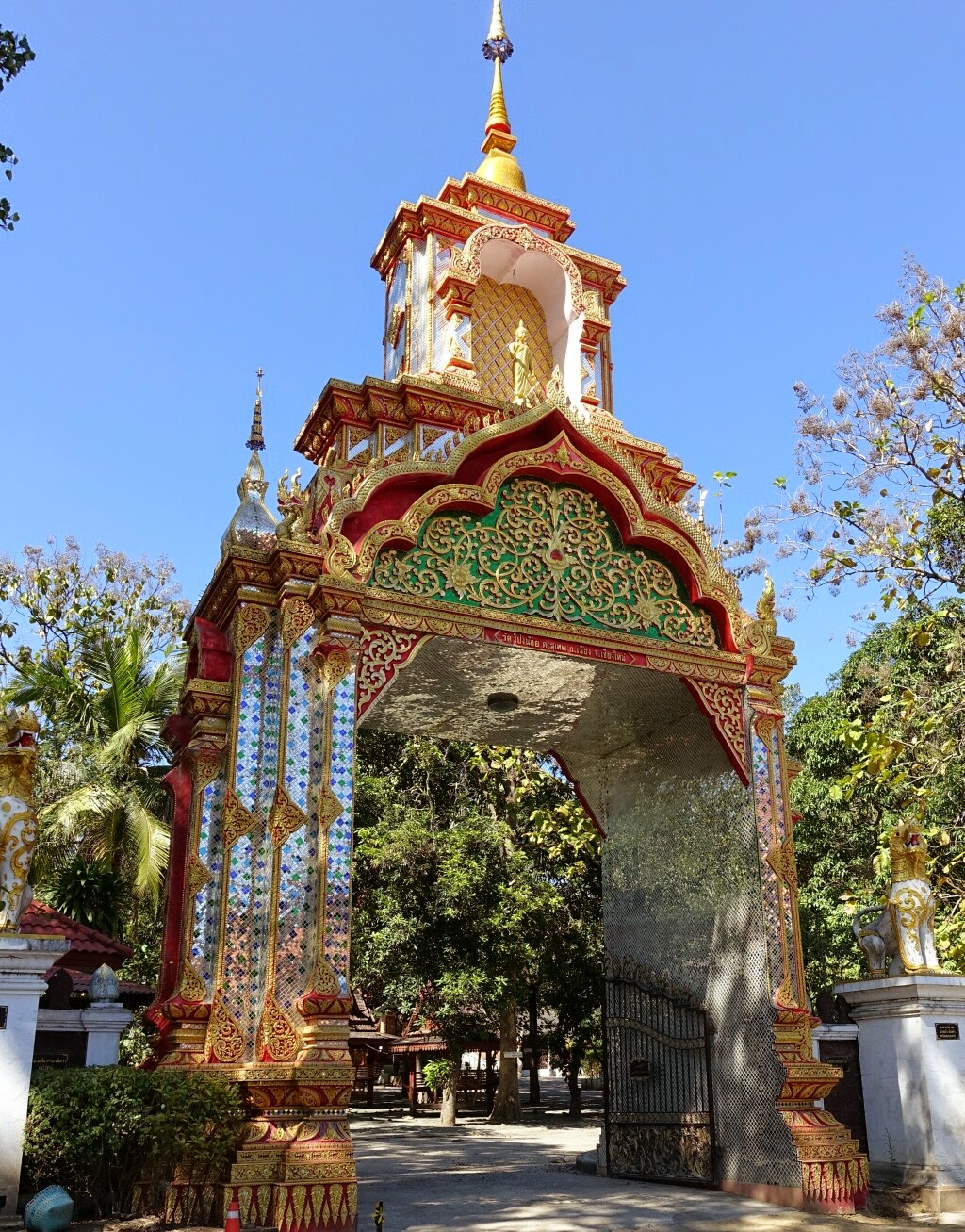
The entrance to this small temple is fairly elaborate, colorful, and detailed for a small, local temple. Even the entrance at Wat Chedi Luang is not this elaborate (although a new pedestrian entrance is being built at Wat Chedi Luang, and it looks as if it will be more elaborate than the old one.
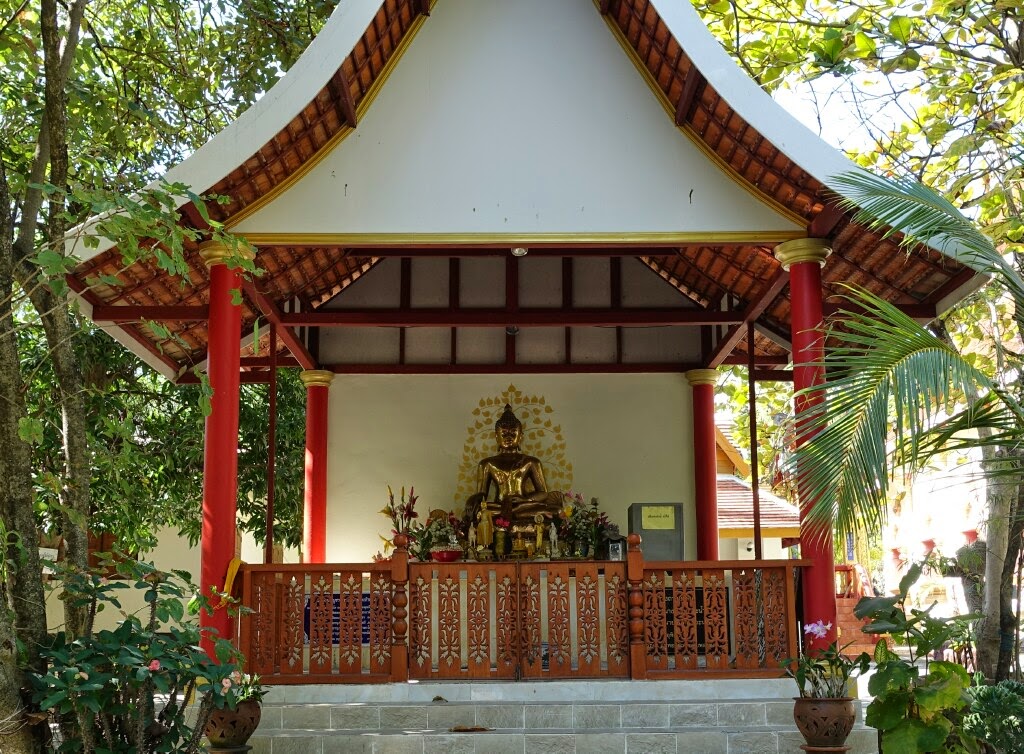
There is an outdoor worship area in the courtyard, maybe to make is more convenient for the locals to worship as they walk by than going into the viharn.
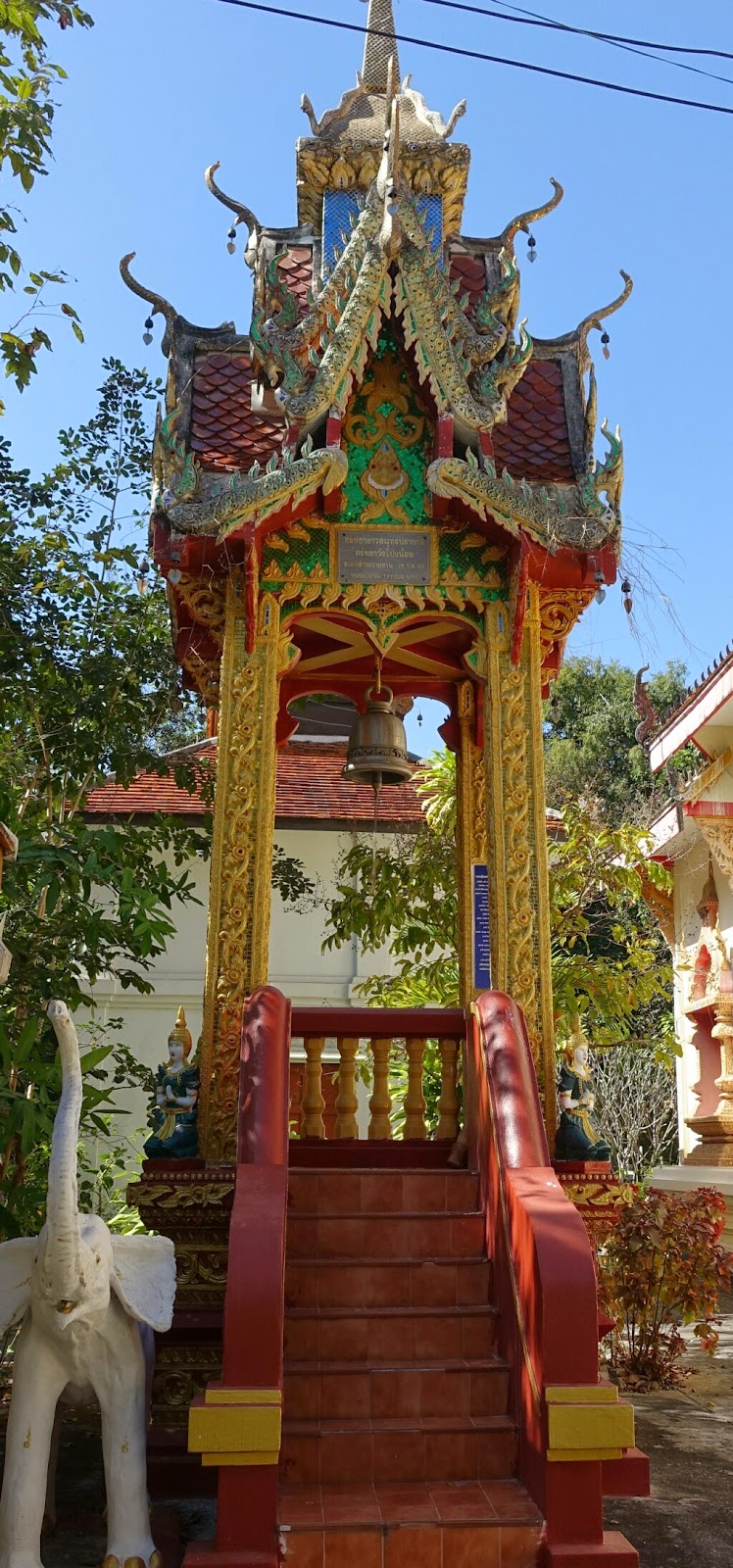
Here is the bell tower, off to the south of the main viharn. This is much more elaborate, consistent with the style of the entrance and other buildings here. It did not appear that I could ring the bell, so I did not (although I wanted to).
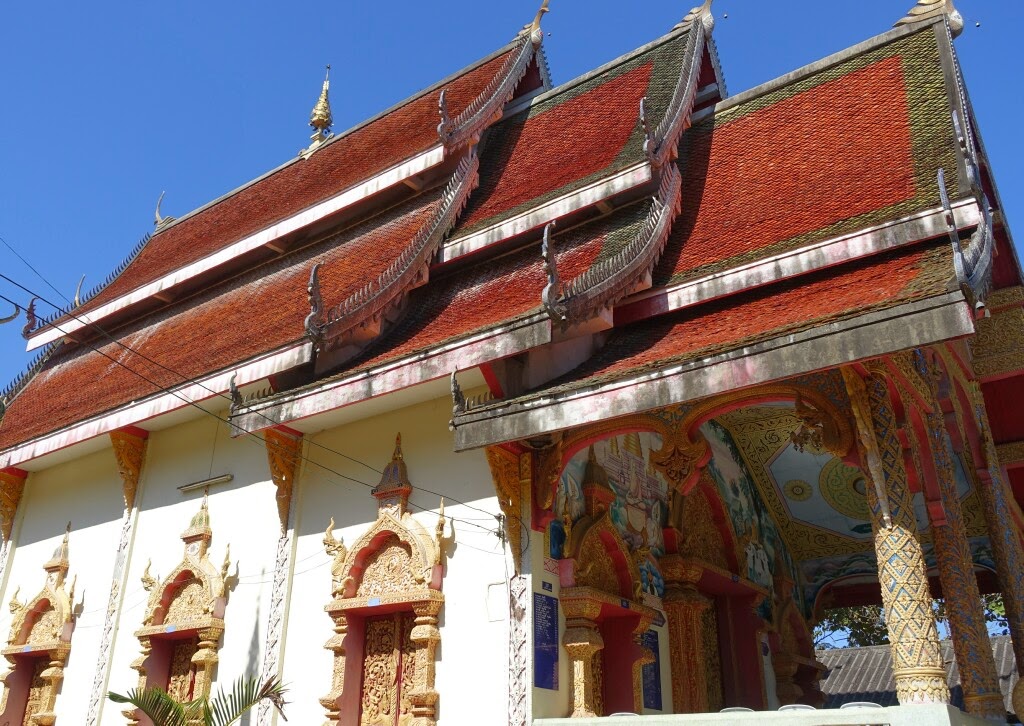
The side of the main viharn. with the multiple-layers to the roof, this is Lanna-style. given the detail and elaborate decoration, I was a little surprised to not see thewada depictions on this viharn.

The front of the main viharn, showing the Naga. It is difficult to see in this picture, but this looks like a dragon coming out of the mouth of a serpent or lizard-like creature (not a snake, as this serpent has feet). I thought that the serpent was the Naga, and the dragon was the Pithaya. I have learned that is not quite right (although there are many interpretations). Sometimes this is considered one animal, the Naga. But I am hearing that the Naga is coming out of the mouth of a Makara. I will have to learn more, the actual story may be elusive.
We also saw no people at Wat Pong Noi — no monks, no care takers, nobody. Wat Pong Noi is an interesting local temple.
Next: five Temple Journey Part 4: Wat Rampoeng

 James the Intrepid Pilgrim