Saturday, January 10, 2015 The Rain Subsides, Part 1: Wat Nantharam
The rain seems to have passed and the sun is breaking through the clouds occasionally. and the clouds are whiter today; it is noticeably brighter out, a nice change from the very dark past two days. This is also Children’s Day in Thailand, a day of families focusing on their children. There are many events for the children, and thankfully, it is unlikely to rain today.
I walked out to Moon Muang Road (the inner road on the east side of the wall/moat) to a small bakery that makes delicious raisin rolls. I had a coffee and a raisin roll, and while the coffee was average, the raisin roll was outstanding. A nice start to the morning walk.
Wat Nantharam
I then set out for a walk south of the old city to find Wat Nantharam. Something I read indicated that in addition ot a large school and monk school, they grew ancient-style medicinal herbs at Wat Nantharam. This quest should not be difficult, as Wat Nantharam it is on Nantharam Road, about 3/4 km south of Chiang Mai Gate. So I set off on the 2.5 km walk with a raisin roll in my stomach.
I did find Wat Nantharam. The monks there were preparing for a Children’s Day celebration later in the day, and the few to which I spoke did not speak much English. I did not find evidence of the medicinal herbs, but there was a section where some dogs were a bit protective, so I stayed away from that area. (Maybe the dogs are protecting the herb garden…not too sure about that.)

The entrance to Wat Nantharam. It is difficult to make out, but it says in Thai and English “Wat Nantharam” in gold letters on the silver sign to the left of the elephant pillar. (OK, I assuming that the Thai letters say Wat Nantharam…I cannot read Thai. I am guessing that is a pretty safe assumption.)
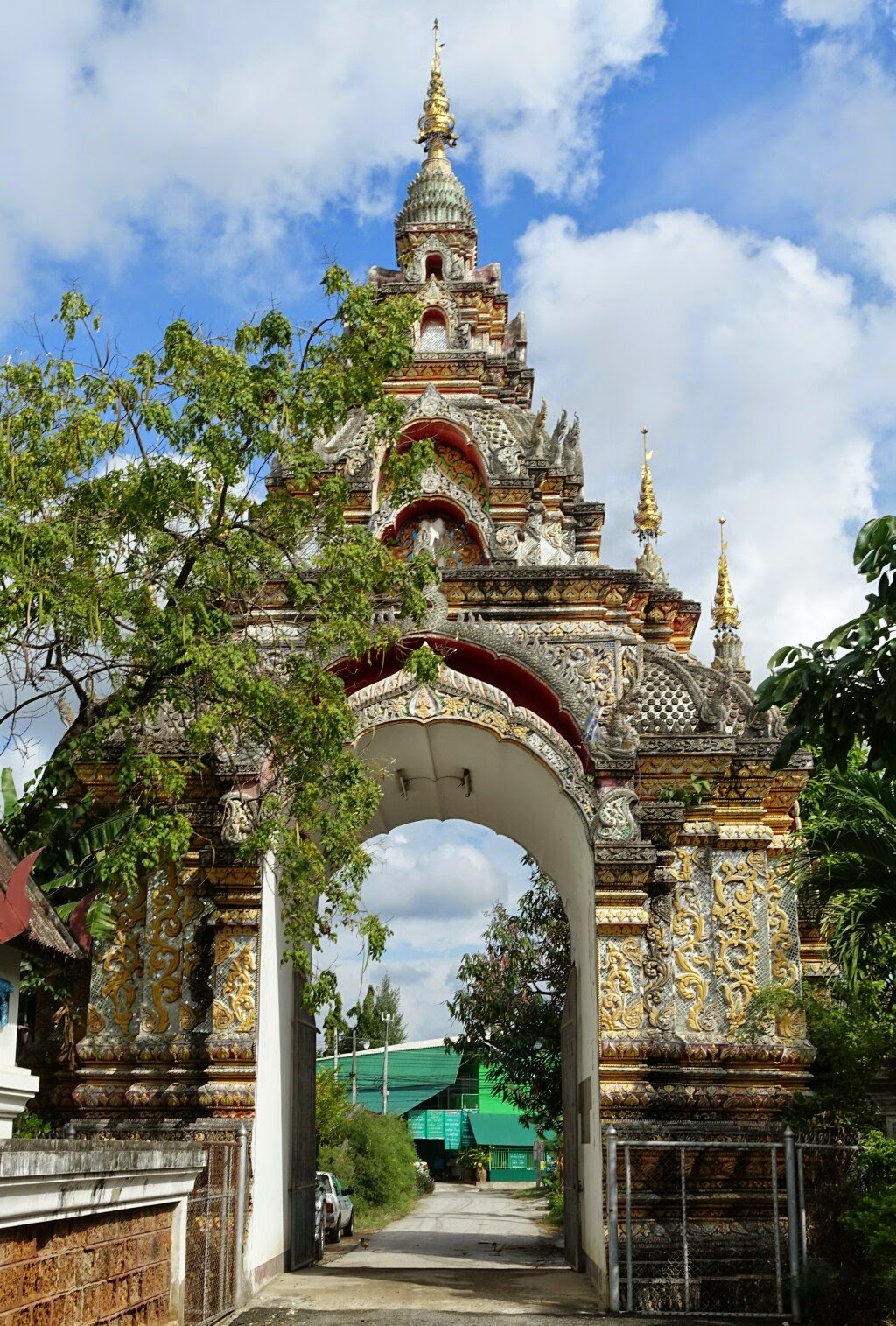
An old, rather ornate gate to Wat Nantharam. Beyond this is what appears to be a school. I suspect this was once the main entrance because of its size and proximity directly east of the main viharn (worship hall). Walking though this entrance, one would be able to go directly into the main viharn.
All temple viharn open to the east to greet the rising sun. I have found only two exceptions, and am still trying to find out why. The exceptions are Wat Lok Molee where the viharn opens to the south, and Wat Srisupan where the main viharn and the silver ubosot open to the north. Now is opening to the east a rule? I do not know, but I have visited many, many temples, and there is a profound consistency, even at Wat Palad, way up in the jungle, all four of the viharn open to the east.
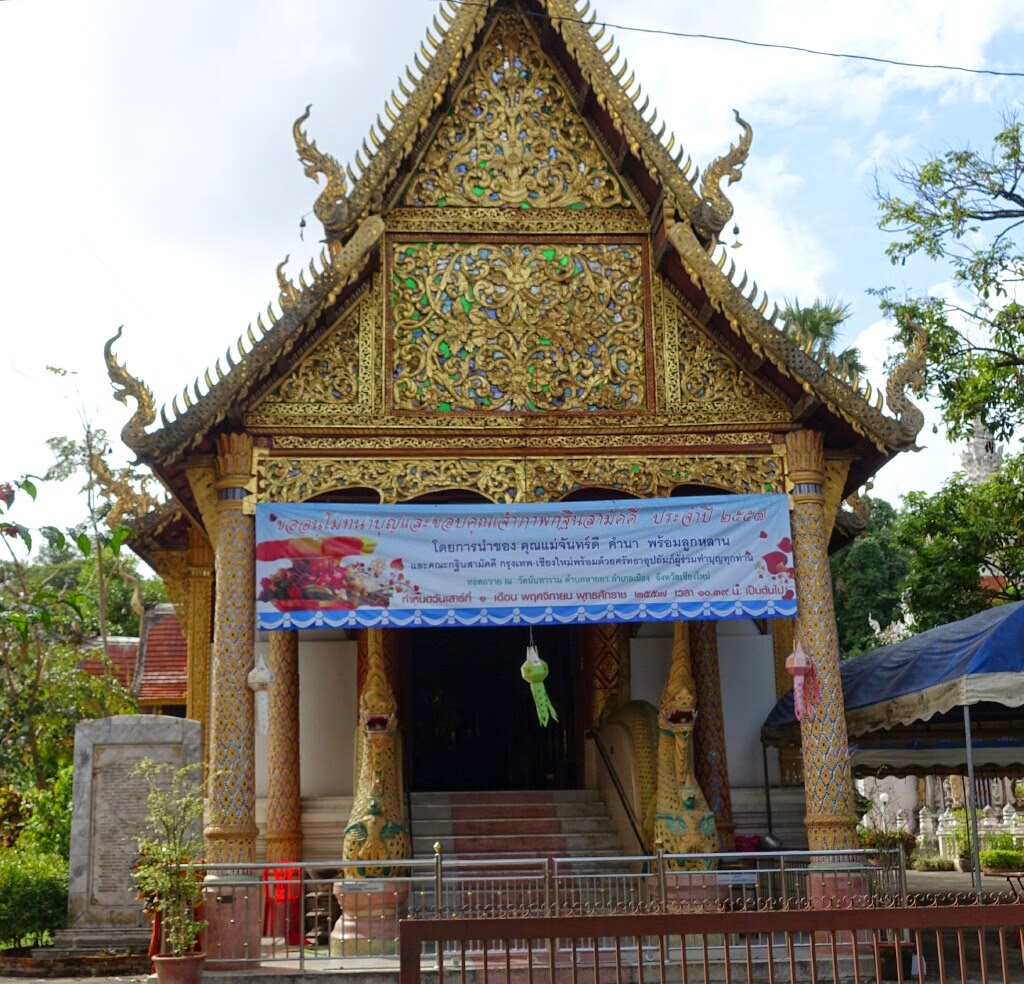
Here is the main viharn at Wat Nantharam. And this view is coming directly from the old entrance gate.
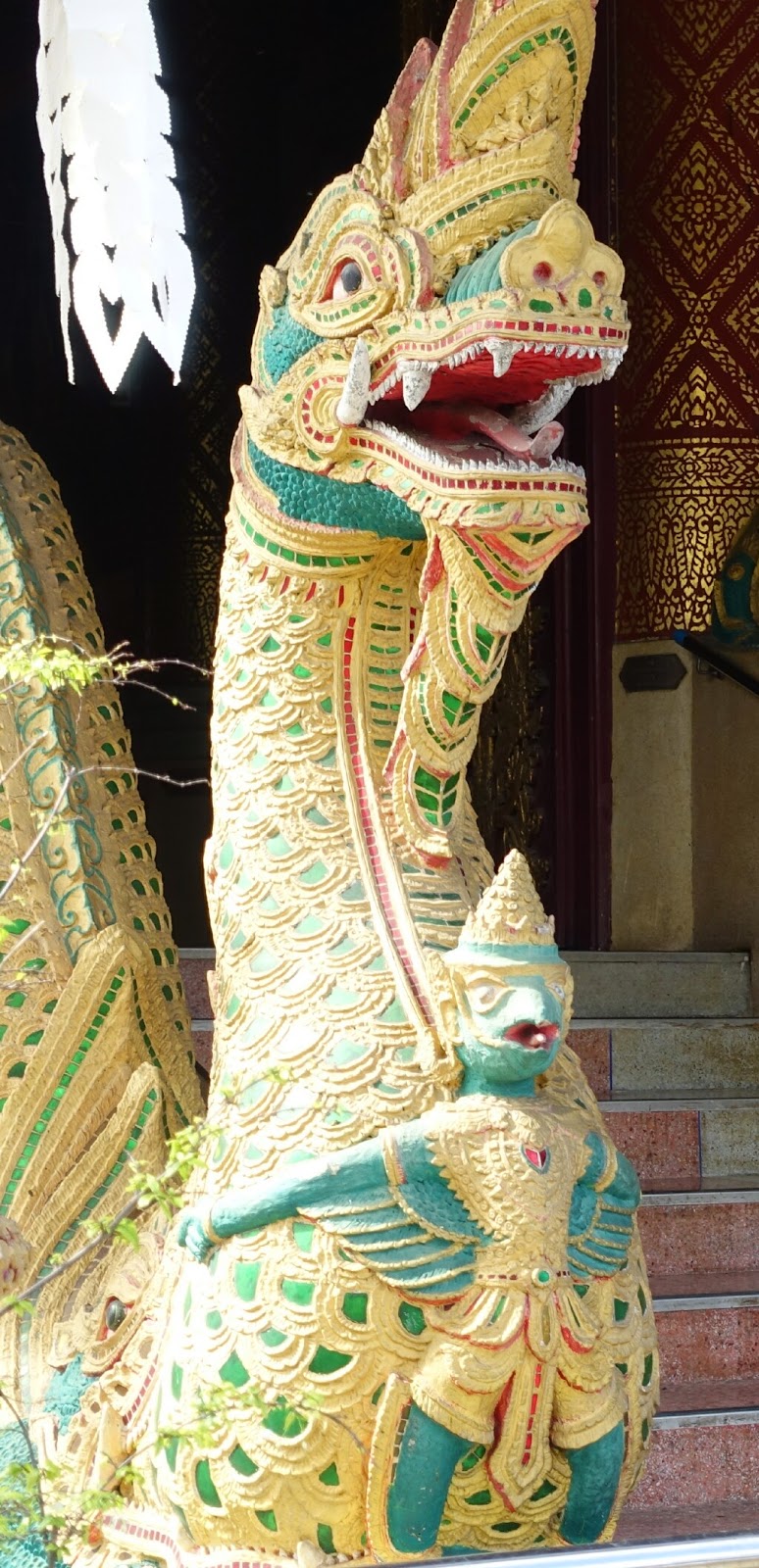
Notice on the front of the Naga (mythical serpent creature we often call a dragon), the Garuda (the smaller human-bird creature, also mythical). One of the reasons the Naga is at the temple, and depicted on the banisters of many viharn stairways is the Naga wanted to be a monk, but only humans are allowed to be monks, so to be close to the temple, the Naga took on the role of protecting the temple from the Garuda. The Garuda and Naga are sworn enemies. This picture shows to Garuda as small, but I have read that their wingspan was 5 meters, or about 15 feet, so perhaps the Naga is just very large.
I have also heard that (like many things) there are good Garuda and bad Garuda. The Garuda is depicted on the Thai National Emblem, adopted by King Rama VI (King Vajiravudh) in 1911. The Garuda is said to be the most powerful, righteous, and merciful of all beings. This does not sound like an enemy of the temple that the Naga must protect against. So there is more to the story, and I am sure I will learn more.
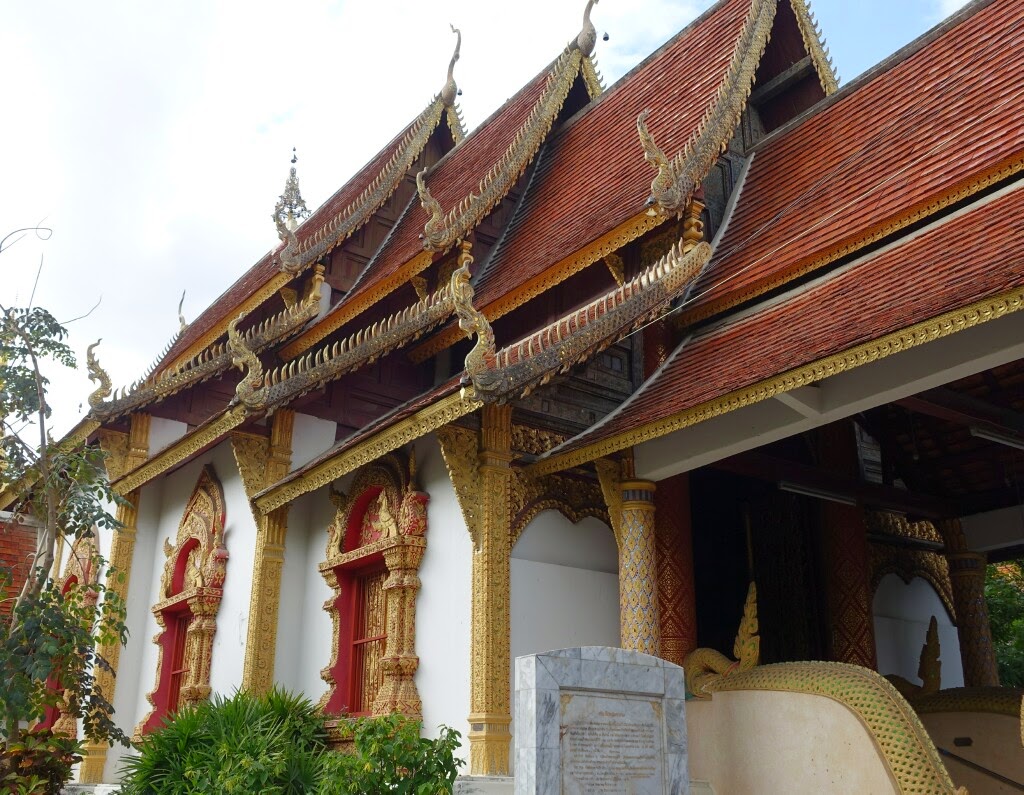
The side and roof of the main viharn. The multi-tiers and the adornments make this clearly a Lanna-style, not a Burmese-style viharn. This is really a quite large and beautifully constructed building.
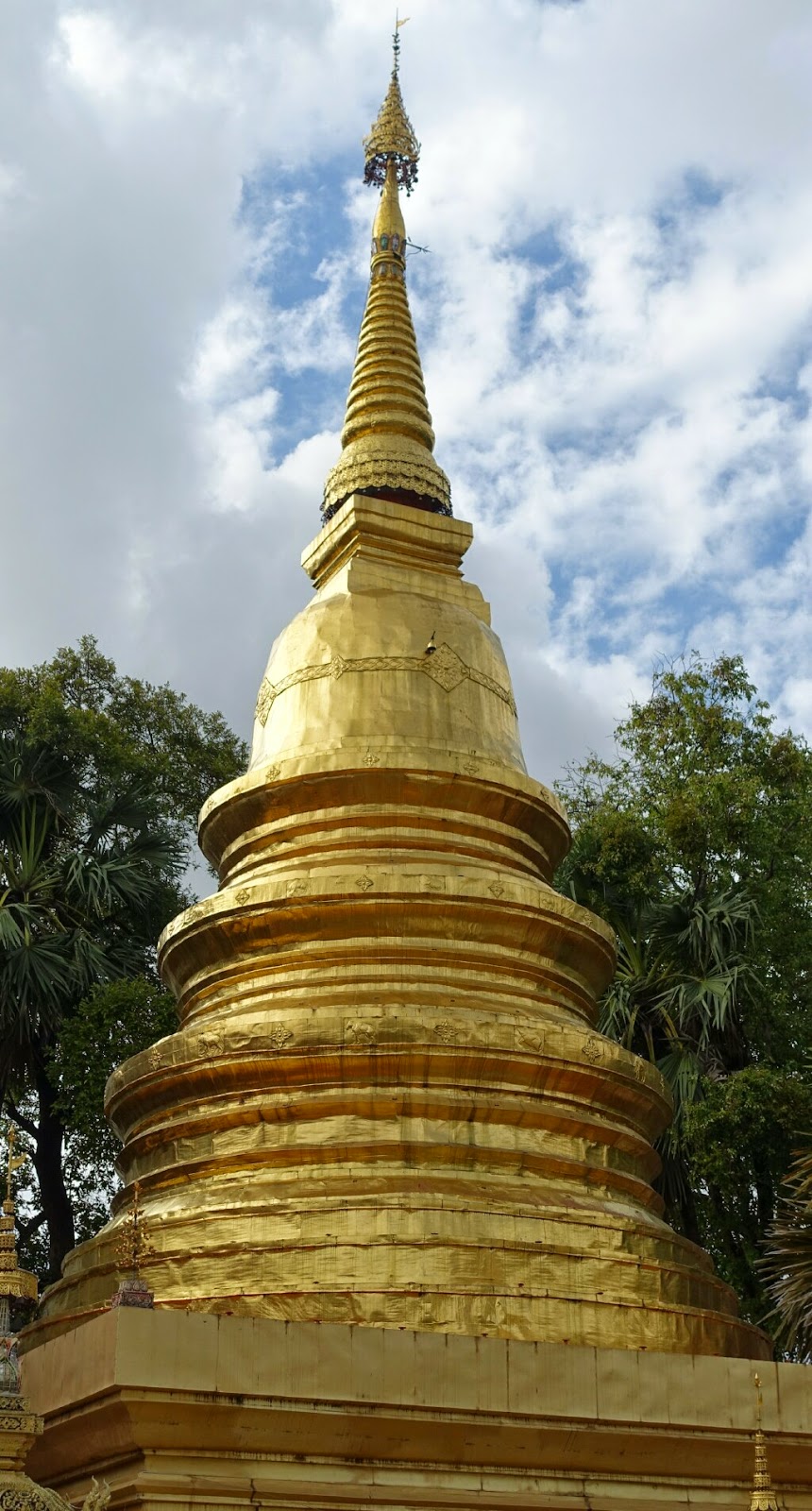
In the back is this large gold chedi. The remains of someone very important are enshrined here for this large a chedi to be so large and prominent.
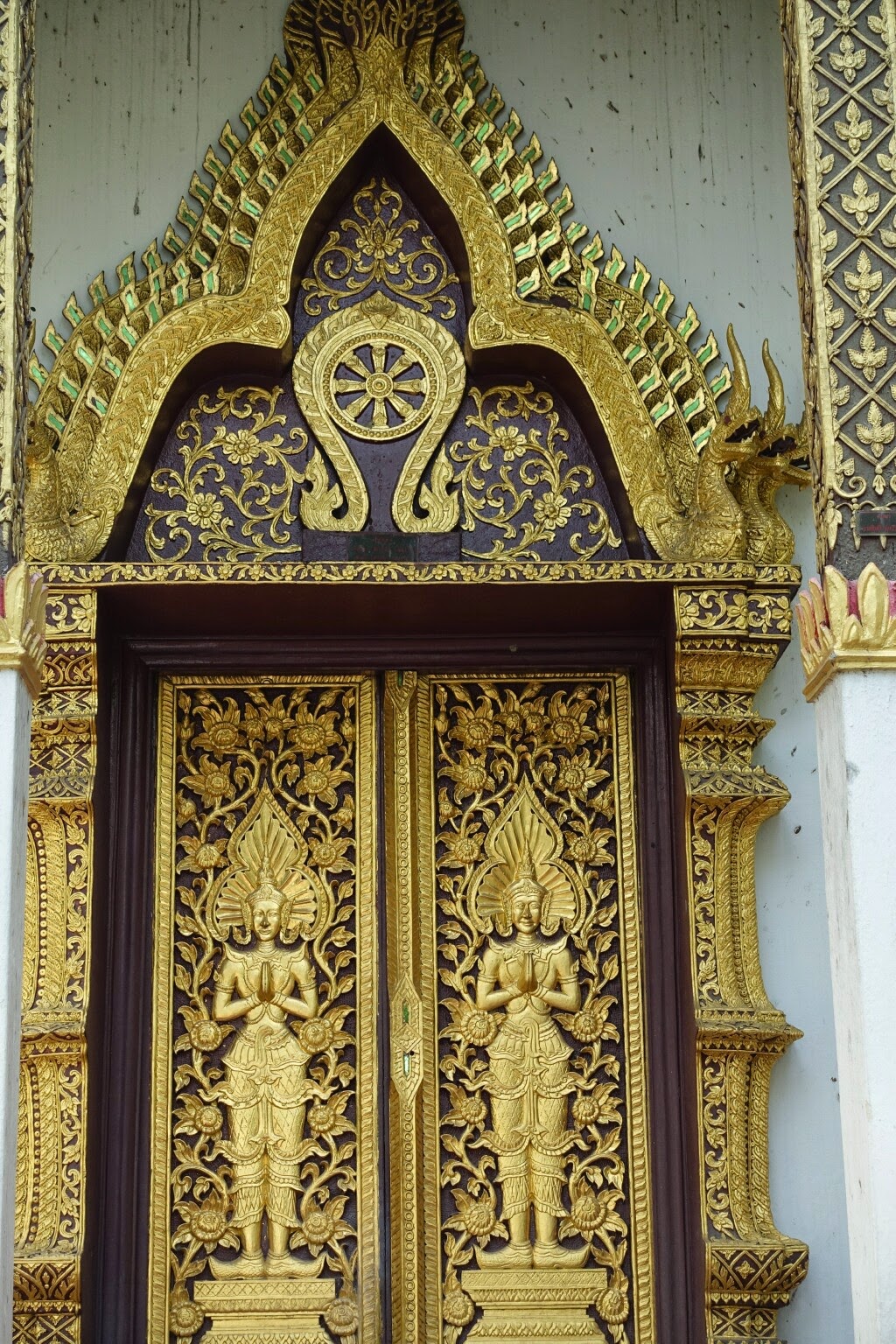
Very ornate doors to the secondary viharn, slightly to the north of the main viharn at Wat Nantharam.
Next: Wat Srisupan

 James the Intrepid Pilgrim