28-Dec-2013 Saturday
My back was feeling better this morning; not perfect, but definitely better. After a final breakfast with my Irish botanist friend Tom Curtis, he was off to the Chiang Mai train station and I was off to see more temples. There is one temple in particular that I am rather surprised I have not yet seen. In all of my reading about and exploring the temples in Chiang Mai, I somehow missed a very historic temple, Wat Chiang Man, sometimes listed as Wat Chiang Mun. This is the temple King Mengrai build at his camp where he lived while overseeing the construction and building of Chiang Mai. This might be a small challenge to locate, as the location on the map did not match my recollection of the area in which the temple is to be. We shall see if my memory is good.
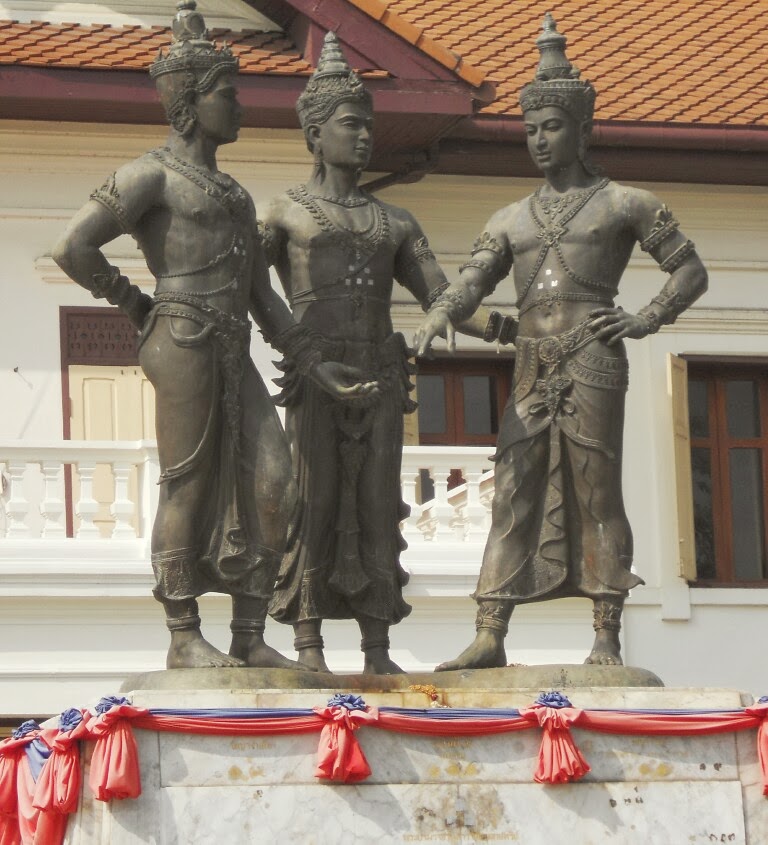
On the way to find Wat Chiang Man, I stopped to see the Monument to the Three Kings, King Mengrai and his friend
s, King Ngam Muang of Phayao and King Ramkhamhaeng of Sukhothai, who he enlisted assistance in planning, laying out, and building Chiang Mai. The square around the monument is undergoing a massive reconstruction and replanting, and while the monument is there as usual, everything surrounding is in construction shambles. I love this monument, the three kings show such a confident attitude. I walk by this monument almost every day. The construction and replanting is underway in earnest with a dozen or two workers present every day.
Wat San Muang Ma Luang
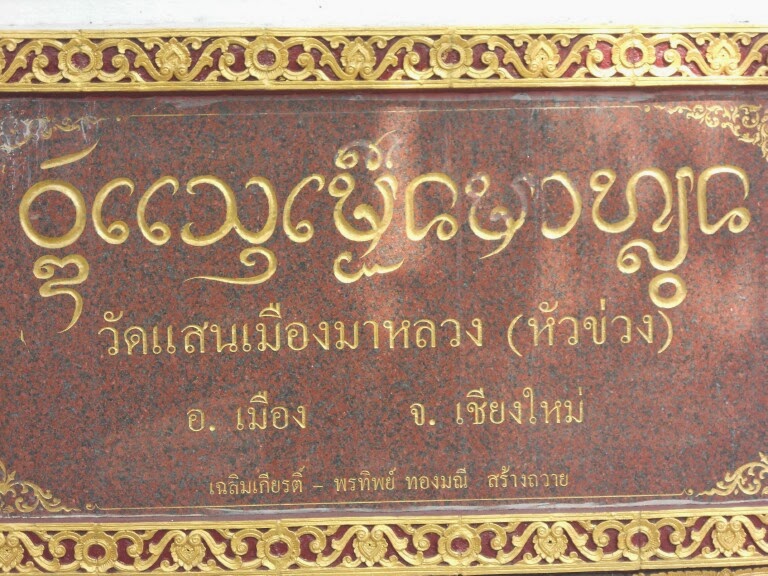
On the way to find Wat Chiang Man, I wandered down a lane into an old Lanna/Burmese style temple, the name shown on the sign in the old Lanna language (Lanna was a country made up of northern Laos and northern Thailand prior to the late 1700s). I learned that this is Wat San Muang Ma Luang. Wat is temple, San is ten-thousand, Muang is city, and Luang is “really large.” So it is not clear what it means, something like the temple of the really large city of 10,000. (This provoked an interesting discussion with the staff at 3-Sis.)
Wat San Muang Ma Luang is undergoing a major restoration. Here are a few of the many photos I took.
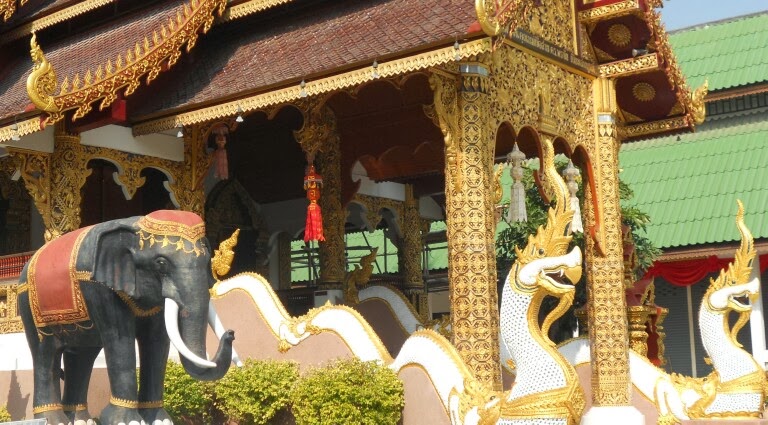
The largest viharn (worship hall) is flanked by the naga and pitaya (serpent and dragon) icons along the stairway, as is very common for temples in northern Thailand. I was surprised to see the elephant. While a part of Thai culture, elephants are not common figures at temples, except sometimes guarding the temple entrance.
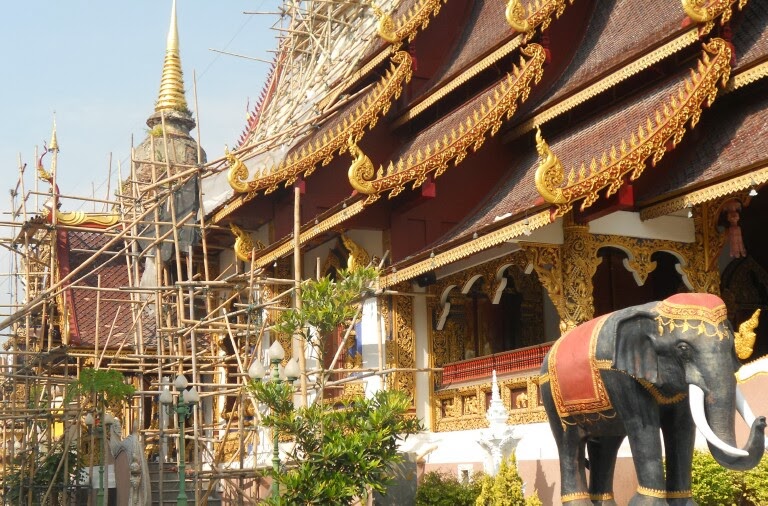
Further down the side of the viharn, the scaffolding is evident and extensive. There were men working on the roof while I was there.
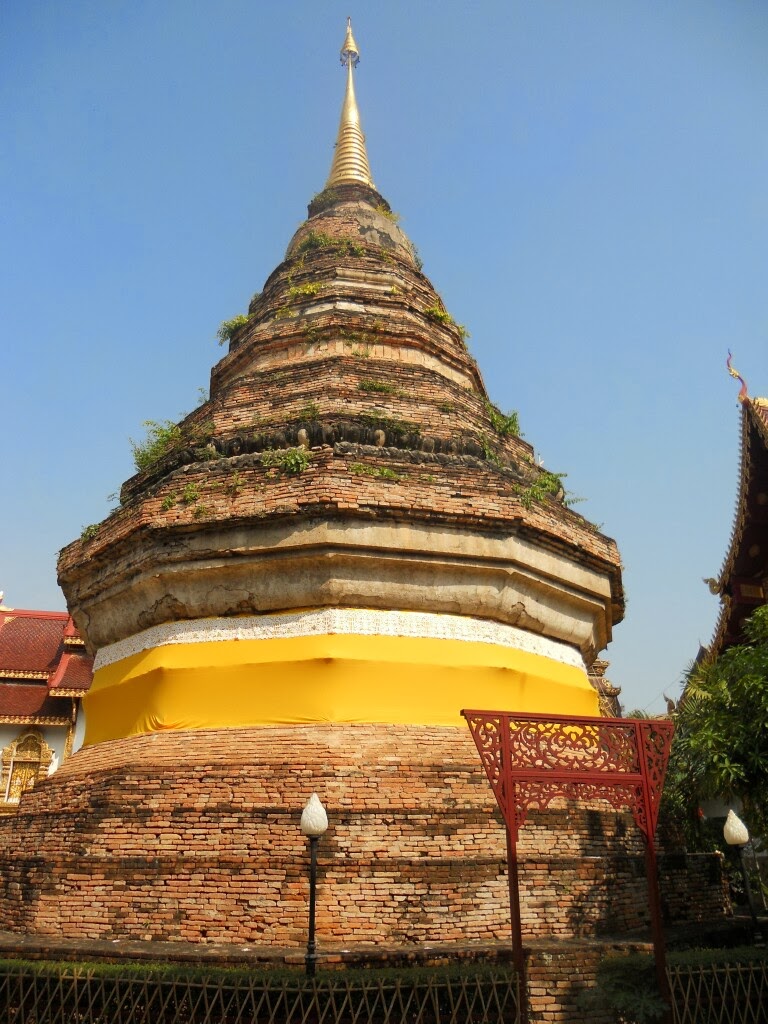
At the back of the viharn stands this very old chedi (pagoda). I am no expert, but my guess is that this chedi is at least 450 – 500 years old, putting it at the early to mid 1500s. So far, I have found very little information about the history of this temple.
Wat Chiang Man
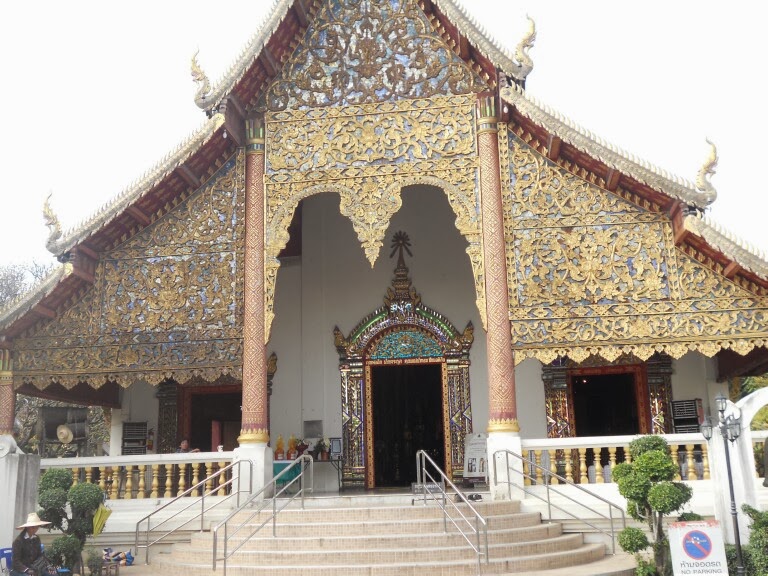
After leaving Wat San Muang Ma Luang, I did locate Wat Chiang Man, about where the map indicated. My memory of the area was slightly off. Wat Chiang Man is historically quite important, having been the first temple built by King Mengrai in the old city about 800 years ago. The viharn structures have been restored or replaced. They are too new and modern to be 800 years old. It is common that temple structures are replaced throughout the life of a temple. That is why a temple is much older than the structures, meaning that the temple was on the grounds longer than the age of the actual structures.
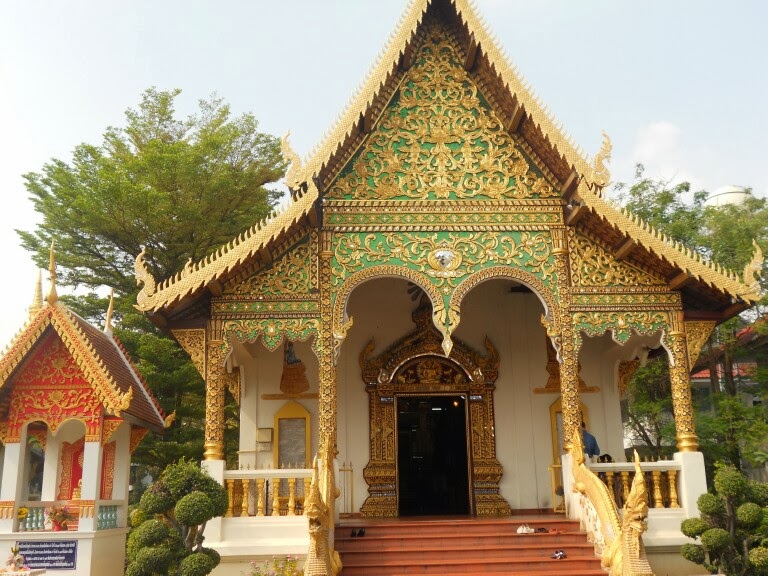
The second of the viharn, beside the first one is also quite modern looking and newer than 800 years.
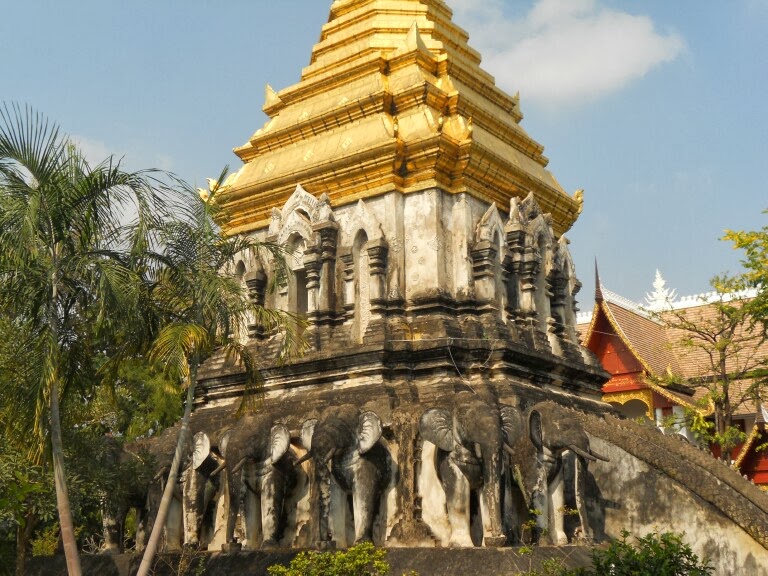
The older, more famous “elephant chedi” at the back of the temple grounds is quite old, an original structure. This is a very famous chedi, pictures of it with the elephants surrounding the base are often used in tourist brochures of Chiang Mai. Given the historical significance and for all of the research I do, it is still a surprise to me how I missed seeing this temple in past visits.
Visiting the Chiropractor
I made my way back out to Rajavej Hospital again this afternoon. I arrived early as I expected there to be paperwork to complete. I told the reception people why I was there, and they directed me to another desk where I completed a relatively short form. I was then directed to Dr. Philip Parry’s waiting area and almost immediately into his room. All of this took place quickly, well before my appointment time. He discussed my problem, made a skillful examination, tested some of my reactions and muscle strengths. He concluded that my L4 was out, and made a couple of simple and gentle adjustments. The muscle tests changed noticeably for the better, and some of my pain subsided. I will see him for a follow-up on January 2, just in case there are still lingering problems. I was out looking for transportation back to 3-Sis before the scheduled time of my appointment.
This was a good day, fairly low-key, no yoga class, but interesting things to see and I am pretty confident that my back will now make much better progress.
Next: Sunday and Walking Street Chiang Mai (also known as the Sunday night market)

 James the Intrepid Pilgrim